

Struggling with manual data entry from your scales? This often leads to errors and slower production. You need a seamless way to connect your weighing equipment to your management systems.
Integrating industrial scales involves using hardware interfaces and software APIs. At Weigherps, we create custom software for our PC scales. We use APIs to connect them directly to your ERP, providing a precise, automated data flow and solving key production pain points.
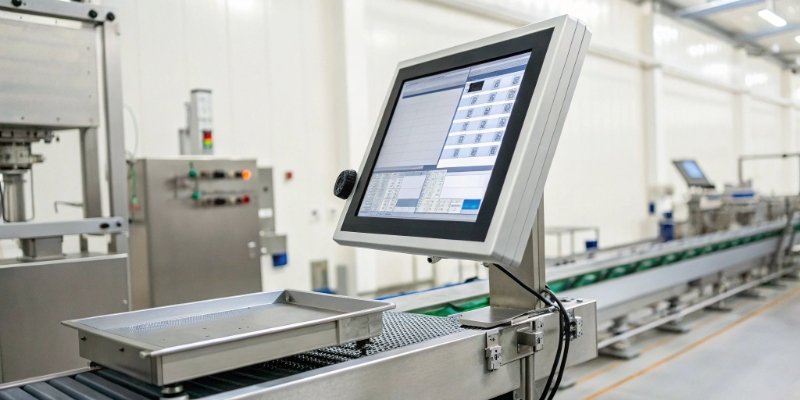
Getting this integration right is a game-changer. It transforms your scales from simple measuring devices into powerful data collection points for your entire operation. A connected scale provides real-time information1 that can improve efficiency, reduce waste, and give you a clearer picture of your business. Let's break down how this integration works with the different systems you already use.
What is ERP system integration?
Are your business departments working in separate silos? Is getting a complete picture of your operations a constant challenge? ERP integration can solve this by unifying all your systems.
ERP integration is the process of connecting your Enterprise Resource Planning (ERP) system with other business applications and hardware. This creates a single source of truth across your company, from production to finance, improving efficiency and decision-making.

Why Integration Matters
In my 18 years in this industry, I've seen countless companies struggle with data silos2. The accounting team has one set of numbers, and the production team has another. ERP integration3 breaks down these walls. When you connect your systems, information flows freely. For example, when an industrial scale weighs a batch of raw materials, that data can instantly update inventory levels in the ERP. This means your purchasing department knows exactly when to reorder, based on real-time information, not on a report from last week. It eliminates guesswork.
Common Integration Methods
The most powerful method for this is using an API, or Application Programming Interface. Think of an API as a specialized translator that allows two different software systems to talk to each other securely and efficiently. At Weigherps, we leverage this technology directly. We develop custom software that lives on our PC scales. This software uses an API to establish a direct, secure line of communication with your specific ERP system. It's like we build a private bridge just for your data to cross.
The Payoff
The benefits are immediate. You reduce or eliminate manual data entry errors, which are a huge source of hidden costs. You get real-time inventory tracking4, which helps you reduce carrying costs and avoid stockouts. Your production and sales forecasting becomes much more accurate. And finally, compliance reporting becomes simpler because you have a clear, auditable trail of data from the factory floor all the way to your financial reports.
How do manufacturing execution systems work together with ERP systems?
Does your ERP plan the work perfectly, but you have no idea what's actually happening on the factory floor right now? This gap between planning and reality causes major production headaches.
A Manufacturing Execution System (MES) acts as the crucial bridge between your ERP’s high-level plans and the real-time operations on your factory floor. The MES takes production orders from the ERP and manages the actual manufacturing process, sending live data back.

The ERP-MES Relationship
I often explain this relationship using a simple analogy. Think of your ERP as the company's "brain." It makes the strategic decisions: what products to make, how many, and by when. The MES, on the other hand, is the "nervous system" on the factory floor. It takes the brain's commands and ensures they are carried out correctly. It manages the workflows, guides the operators, and tracks every step of the production process in real time. Without the MES, the brain is disconnected from the body's actions.
The Role of the Scale
Industrial scales are critical sensors within this nervous system. Imagine your ERP sends an order to the MES to produce a 500 kg batch of a specific product. The MES directs an operator to the weighing station. Our integrated scale pulls up the recipe. As the operator adds ingredients, the scale sends the exact weight data to the MES. The MES verifies that the weight is within the allowed tolerance. Once the batch is complete, the MES reports the exact material consumption and production completion back to the ERP.
The Data Flow
This creates a seamless feedback loop. Here's how the information typically moves between the systems:
| System | Data Sent to Other Systems | Data Received from Other Systems |
|---|---|---|
| ERP | Production Orders, Bills of Material | Production Status, Material Usage Reports |
| MES | Work Instructions, Recipe Setpoints | Real-time Weight Data, Quality Checks |
| Scale | Precise Weight Measurement, Lot Number | Recipe/Order Information from MES |
This automated flow ensures your ERP has perfectly accurate, up-to-the-minute data for inventory, costing, and scheduling. At the same time, the MES ensures every product is made exactly to specification.
How would MES and ERP systems be associated with a DCS system?
Do you run complex, continuous processes like in the chemical or food processing industries? Are you struggling to align your high-level business goals (ERP) with your moment-to-moment process control (DCS)?
A Distributed Control System (DCS) manages the physical process itself. It gets its instructions from the MES, which translates ERP plans into actionable steps for the DCS. The DCS executes these steps and sends process data back through the MES to the ERP.

Understanding the Tiers of Control
In factory automation, we often talk about a pyramid structure. Your ERP is at the top (Level 4), handling business planning. The MES is in the middle (Level 3), managing factory operations. At the base (Levels 2 and 1) is the process control5 layer, which includes systems like a DCS or PLCs. A DCS is designed for the high-reliability, real-time control of continuous processes. It's the system that is actually opening a valve, starting a motor, or adjusting a heater based on sensor feedback.
The Flow of Information
Let's walk through an example. The ERP issues an order to produce 10,000 liters of a liquid product. The MES receives this order and breaks it down into a detailed recipe with specific setpoints, like temperatures, pressures, and ingredient quantities. The MES then sends these setpoints to the DCS. The DCS takes over, controlling the pumps and valves to transfer a precise amount of a raw material from a storage tank into a mixing vessel. How does it know the amount is precise? It relies on feedback from load cells or scales integrated into the tanks. Our weighing systems provide this critical, real-time data to the DCS, which then reports the consumption back up to the MES and ERP.
Our Role in DCS Integration
While we don't build the DCS itself, our industrial scales6 are a fundamental component of it. They act as the primary sensors that provide the high-accuracy data the DCS needs to make critical control decisions. We make sure our scales and weighing modules can communicate flawlessly with all major DCS platforms using standard industrial protocols. This ensures your entire process, from business plan to final product, is driven by accurate data.
What other systems does ERP integrate with?
Is your ERP isolated from key parts of your business, like your sales team or your warehouse? This fragmentation leads to missed opportunities and poor decisions based on incomplete data.
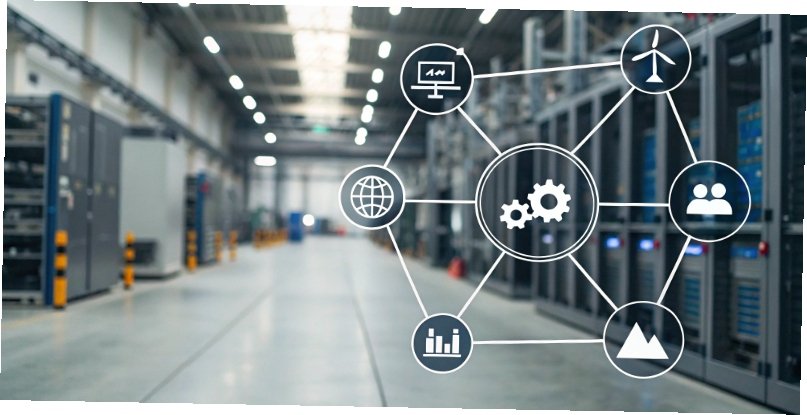
ERPs are designed as a central hub and can integrate with a wide range of systems. These include Customer Relationship Management (CRM), Supply Chain Management (SCM), Warehouse Management Systems (WMS), and, crucially, industrial hardware like weighing scales for direct data capture.
Building a Connected Enterprise
A modern business runs on a network of specialized systems. The power comes from connecting them. Here are a few key integrations and what they do:
- Customer Relationship Management (CRM)7: This links sales data and customer information directly to your production schedule. A new sales order in the CRM can automatically trigger a production order in the ERP.
- Supply Chain Management (SCM)8: This software optimizes the entire logistics chain, from your suppliers to your final customer, often using data from the ERP to manage inventory and shipping schedules.
- Warehouse Management System (WMS): This manages all warehouse operations, from receiving goods to picking and shipping orders. Pallet scales and floor scales are essential here, providing weight data to the WMS to verify shipments and manage inventory locations.
- Business Intelligence (BI)9: These tools pull data from the ERP and other connected systems to create dashboards and reports, giving leaders deep insights into business performance.
The Critical Link: Production Hardware
This is where our work at Weigherps becomes so important. An ERP system is only as good as the data it receives. By integrating our industrial scales directly into this ecosystem, you feed the ERP—and all its connected systems—with perfect, real-time data straight from the source. It replaces guesswork and manual data entry with hard facts. For example, when a package is weighed before shipping, our scale can simultaneously inform the WMS that the order is picked, tell the SCM system to schedule the truck, and update the ERP to generate an invoice. This single data point ripples through the entire organization, creating a truly connected and efficient enterprise.
Conclusion
Integrating industrial scales with your ERP and other systems isn't just a technical upgrade. It's a business strategy that automates data, boosts efficiency, and provides the accurate insights you need.
-
Explore the benefits of real-time information for improving decision-making. ↩
-
Learn about data silos and strategies to eliminate them for better data flow. ↩
-
Discover the significance of ERP integration in unifying business operations. ↩
-
Explore the advantages of real-time inventory tracking for efficiency. ↩
-
Explore the concept of process control and its importance in automation. ↩
-
Learn how industrial scales can enhance your production efficiency and reduce errors. ↩
-
Learn how CRM integration enhances customer data management and production. ↩
-
Discover the benefits of SCM in optimizing logistics and inventory management. ↩
-
Explore how BI tools provide insights for better business performance. ↩


Comments (0)