
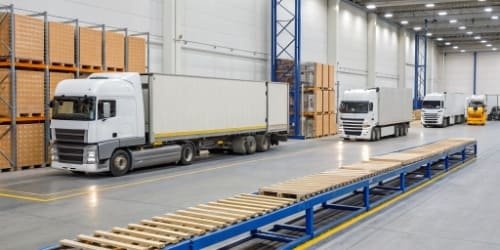
Struggling with inaccurate logistics billing and slow operations? These errors cost money and customer trust, making it hard to stay competitive. Intelligent weighing software is the simple solution.
Intelligent weighing software benefits the logistics industry by automating data capture, ensuring accurate weight-based billing, and integrating with management systems. This increases operational efficiency, reduces human error, and improves overall transparency and profitability for businesses.
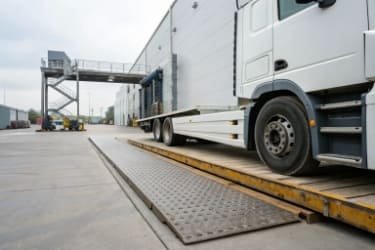
As a 19-year veteran in the industrial scale manufacturing business, I've seen firsthand how small inefficiencies can create huge problems. Many of our clients in logistics used to face daily challenges with manual weight recording. Let's delve deeper into how modern technology changes this entire process for the better.
What is the impact of artificial intelligence in the transport and logistics industry?
Are manual errors and slow data analysis hurting your logistics operations? AI can feel complex and expensive to implement, leaving you behind competitors who are already using it.
Artificial intelligence (AI) impacts the transport and logistics industry by enabling predictive analytics for demand forecasting, optimizing delivery routes in real-time, and automating warehouse operations. This leads to reduced costs, faster delivery times, and smarter supply chain management.
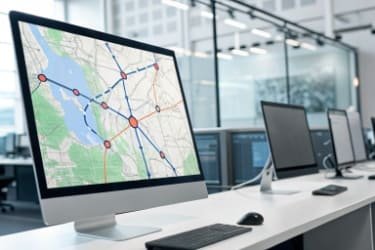
The integration of AI is driving remarkable changes across the entire supply chain. We're moving beyond simple automation to create systems that think and learn. For companies I work with, this means turning data into a powerful tool for making smart decisions.
Predictive Analytics and Route Optimization
AI analyzes historical and real-time data to predict future shipping volumes and identify the most efficient delivery routes. It considers factors like traffic, weather, and driver behavior to make adjustments on the fly. This predictive capability helps companies avoid vehicle breakdowns, reduce fuel consumption, and ensure that goods are delivered more swiftly and reliably. For a fleet manager, this means fewer miles driven and significant cost savings.
Automated Decision-Making
In warehouses and sorting centers, AI-powered systems can perceive, reason, and make decisions. This allows for the automation of complex tasks that once required human intelligence. The long-term impact is a massive reduction in manual labor and operational costs, with supply chains that can quickly adapt to disruptions.
| Feature | Manual Process | AI-Powered Process |
|---|---|---|
| Route Planning | Fixed routes, updated infrequently | Dynamic, real-time adjustments |
| Demand Forecasting | Based on past months/years | Highly accurate, based on multiple data points |
| Data Entry | Prone to human error1 | Automated and accurate |
How are automated technologies likely to impact the logistics industry?
Facing labor shortages and rising operational costs? Manual sorting and data entry are slow, repetitive, and prone to costly mistakes. Automation is the key to overcoming these challenges effectively.
Automated technologies, like smart scales and robotics, will significantly impact logistics by increasing speed and accuracy. They handle repetitive tasks, reduce human error in weighing and sorting, and provide real-time data for better management, directly boosting productivity.
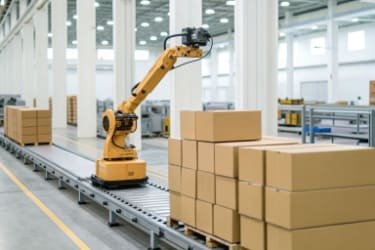
Automation is fundamentally reshaping how logistics work. I remember a client who ran a busy sorting hub. Their biggest bottleneck was the truck scale. An operator had to manually record the gross weight, look up the truck's tare weight, and then calculate the net weight of the cargo. It was slow and created long lines of trucks.
Automated Weighing and Sorting
Today, that same process is transformed. A truck drives onto a weighbridge, an RFID scanner identifies it, and our intelligent software instantly pulls the vehicle's registered tare weight. The net cargo weight is calculated automatically and sent to their management system. This process, known as weighbridge automation, eliminates human error and accelerates the entire operation.
Data Integration
These automated systems do more than just weigh; they communicate. Technologies like barcode scanning and RFID tagging integrate seamlessly with a Warehouse Management System (WMS). This provides precise, real-time data on every item, which is crucial for accurate inventory management and order fulfillment.
Reduced Manual Intervention
By replacing labor-intensive tasks with automated systems, companies can lower labor costs significantly. Automated systems operate continuously, leading to higher throughput and allowing employees to focus on more complex, value-adding activities.
How can business intelligence in freight and logistics industry reduce labour cost?
Are high labor costs eating into your profits? Managing staff for repetitive data analysis and reporting is expensive and inefficient. Business intelligence offers a way to optimize your workforce and save money.
Business intelligence (BI) reduces labor costs by automating data collection and report generation, which previously required manual work. It provides clear insights into operations, allowing managers to optimize staffing levels and assign tasks based on real-time demand and performance data.
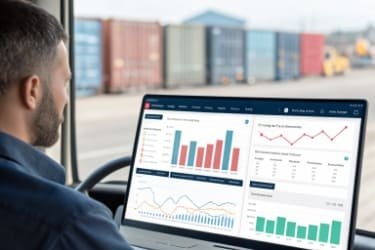
I've seen many companies where managers spend hours trying to make sense of spreadsheets. BI tools change that completely by turning raw operational data into actionable insights, helping to identify inefficiencies that are often hiding in plain sight.
Automated Reporting
Instead of an employee spending half their day compiling a daily tonnage report, a BI tool can create and distribute that report automatically. This frees up your team's time for more important duties that focus on business growth. This automation of data input and analysis is a core benefit that immediately impacts productivity.
Performance Monitoring and Optimized Staffing
BI dashboards provide real-time visibility into key performance metrics. You can track everything from fuel consumption and inventory levels to driver behavior and delivery times. This allows managers to identify cost-saving opportunities, such as optimizing routes to reduce fuel use. More importantly, it helps with demand forecasting, preventing both overstocking and understocking, which directly translates to lower holding costs and better resource allocation. With this data, you can make informed decisions to ensure you have the right number of people working at the right time, preventing unnecessary labor expenses.
How does a logistic information system help in managing transportation logistics?
Is your team struggling with disconnected data from spreadsheets, emails, and different software? This lack of unity causes delays, confusion, and mistakes. A central logistics information system is the answer.
A logistics information system (LIS) helps manage transportation by centralizing all supply chain data onto a single digital platform. It gathers, analyzes, and distributes information, enabling better decision-making, shipment tracking, and resource management for improved efficiency.
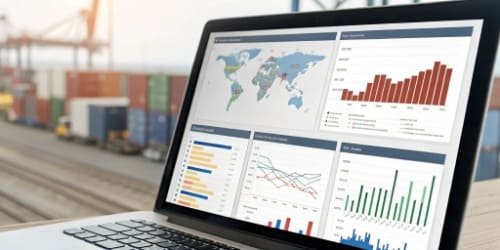
Think of an LIS as the central nervous system of your entire logistics operation. It connects all the different parts—from warehousing and transportation to order management—so they work together seamlessly. This integration gives you a level of control and visibility that is impossible with separate systems.
Centralized Data Hub
Our intelligent weighing software doesn't just display a number on a screen; it sends that crucial weight data directly into the LIS. The system then shares this information with every relevant department, from the warehouse floor to the accounting office. Everyone sees the same accurate, real-time data. This consistent flow of information between all parties is essential for modern, efficient logistics.
Real-Time Tracking and Management
An LIS provides real-time tracking2 of shipments and inventory. This visibility allows managers to monitor operations closely, identify potential delays, and make proactive decisions. Furthermore, features like route optimization3 and fleet management help reduce transportation costs and fuel consumption while shortening delivery times.
Seamless Billing and Settlement
In logistics, weight directly relates to cost and billing. My clients in freight forwarding rely on accurate weight data for invoicing. An LIS automates this process. It takes the verified weight from our scales, matches it to a customer order, and generates the correct invoice. This eliminates disputes and ensures fair, transparent transactions.
Conclusion
Intelligent weighing software is essential for modern logistics. It provides accuracy, boosts efficiency, and integrates seamlessly, giving you a clear path to greater profitability and customer trust.



Comments (0)