

Tired of costly errors from manual data entry? These mistakes disrupt your entire workflow. Intelligent weighing software is the permanent fix you need.
It replaces manual typing with automated data capture directly from the scale. Features like real-time validation, user access controls, and preset thresholds ensure that only accurate, error-free data enters your system, boosting reliability and efficiency.
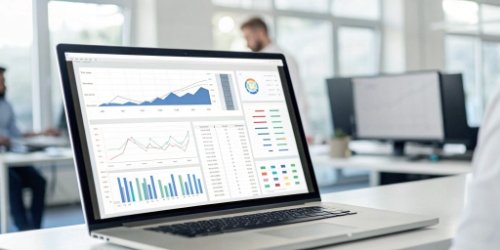
It's one thing to know that software can fix these problems, but it's another to understand how. The specific features built into these systems are the real game-changers. Let's explore exactly what makes this technology so effective and how it can transform your operations from the ground up.
What Features of Intelligent Weighing Software Help Prevent Manual Data Entry Errors?
Relying on human focus for data accuracy is risky. One slip can lead to major inventory or shipping problems. Specific software features act as your safety net.
Key features include direct data transfer from scales, barcode scanning for product identification, and customizable data fields with preset limits. User authentication and activity logs also ensure accountability, while real-time alerts flag any deviations, preventing errors before they become problems.

Let's break down these critical features. Direct data capture is the foundation. It creates a seamless link between the physical scale and your digital records. This completely removes the need for an operator to type in weights. This alone cuts out the most common source of error. But our software goes further.
Core Error-Prevention Mechanisms
Barcode and RFID scanning automate the identification of products, materials, or shipments. This ensures the correct weight is always associated with the correct item. Then, we have data validation rules1. For example, we can set acceptable weight ranges for a specific product. We call this a threshold setting. If a measurement falls outside this range, the system can flag it with an error alarm instantly for a manual check. This is your first line of defense against anomalies.
Enhancing Accountability and Control
Finally, user access controls2 are vital. You can define roles and permissions, restricting certain actions to authorized personnel. This, combined with a detailed audit trail3 that logs every action, makes it easy to trace any discrepancies back to their source, ensuring every step is accountable.
How Does Automated Data Entry in Weighing Software Improve Accuracy and Efficiency?
Manual data entry is slow and ties up your staff. This bottleneck slows down your entire production line. Automation frees your team and speeds up everything.
Automation instantly captures and records weight data, eliminating typos and transposition errors. This real-time process speeds up throughput significantly. By freeing staff from tedious manual entry, it allows them to focus on more value-added tasks, boosting overall operational efficiency and productivity.

The impact of automation is twofold. It enhances accuracy and it accelerates your workflow. When data is captured automatically from the scale, the process becomes instantaneous. A truck drives onto a weighbridge, and its weight is logged in the system before the driver can even open their door. This contrasts sharply with the old manual method of writing down numbers, walking to a computer, and typing them in.
Speed and Throughput Gains
This speed directly translates to higher throughput. In one of our client's busy warehouses, saving just a few minutes per weighing operation added up to hours of saved labor and increased capacity over a single day. For them, it meant more trucks weighed, more packages shipped, and more production batches processed without needing to extend work hours.
A Focus on What Matters
More importantly, automation shifts human focus. Instead of being data transcribers, your operators become supervisors of the process. They can manage exceptions, oversee loading, and ensure safety. These are tasks that require human judgment and add real value. This not only makes their job more engaging but also leverages their skills more effectively, improving overall plant productivity.
Why Is Intelligent Weighing Software Essential for Reducing Human Errors in Data Handling?
Human error is an unavoidable part of any manual process. These small mistakes can have huge financial consequences. Intelligent software is essential to mitigate this inherent risk.
It is essential because it systemizes the data collection process, removing human subjectivity and fatigue as factors. The software acts as a consistent, tireless worker that follows predefined rules without deviation. This systematic approach is the only reliable way to achieve near-perfect data integrity.

Humans are brilliant at problem-solving, but we are not built for repetitive, high-precision data entry. I remember visiting a client where an operator, after a long shift, keyed in "1500 kg" instead of "150.0 kg". This simple mistake caused a major billing dispute. Fatigue, distractions, and simple mistakes are inevitable. Intelligent software is essential because it is designed specifically for this task. It does not get tired or distracted. It performs its function the same way every single time.
The Cost of "Small" Errors
Think about the ripple effect of that single mistake. A misplaced decimal point can lead to incorrect billing, failed quality control, or compliance fines. Over time, these so-called "small" errors accumulate into significant financial losses and damage a company's reputation. Our software acts as a crucial control point to prevent these issues. It enforces a level of consistency that no team of humans, no matter how well-trained, can match 24/7.
| Manual Process Risk | Software Solution |
|---|---|
| Typographical Errors | Direct Data Capture |
| Fatigue & Distraction | Automated Workflow |
| Misidentified Items | Barcode/RFID Scanning |
| Incorrect Procedures | Standardized User Prompts |
| Out-of-Spec Weights | Threshold Alarms |
What Technologies in Weighing Software Help Achieve Error-Free Data Management?
You know you need better data, but what is the tech behind it? Without understanding the technology, choosing the right solution is hard. Key technologies work together for error-free results.
Core technologies include the Internet of Things (IoT) for real-time scale communication and cloud computing for centralized data storage. Application Programming Interfaces (APIs) ensure seamless integration with your existing ERP or WMS systems, creating a single, unified source of truth.

Several key technologies converge to make intelligent weighing software so powerful. At the forefront is the Internet of Things (IoT)4. As a manufacturer, this is where we excel. IoT sensors and communication modules are embedded in our weighing equipment, allowing them to connect directly to the network. This enables the scale to "talk" to the software in real-time without any human intervention.
Integration and Centralization
Next, we have APIs (Application Programming Interfaces). These are the bridges that connect our weighing software to your other business systems, like your Enterprise Resource Planning (ERP) or Warehouse Management System (WMS). This integration is crucial for creating a single, consistent data ecosystem. Weight data flows automatically where it is needed, eliminating data silos and the need for re-entry.
Finally, Cloud Computing provides a centralized, secure, and accessible platform for all this data. Your weighing records from multiple sites can be consolidated in one place, accessible from anywhere. This allows for powerful analytics, reporting, and oversight that is impossible with localized, disconnected systems. This is how you achieve a quantum leap in business development.
Conclusion
Intelligent weighing software eliminates manual errors by automating capture, validating data, and integrating systems. This boosts accuracy, efficiency, and your bottom line, making it an essential business tool.
-
Learn about data validation rules and their role in maintaining data accuracy and reliability. ↩
-
Understand how user access controls can protect sensitive data and ensure accountability in your operations. ↩
-
Understand the significance of an audit trail in ensuring accountability and tracking data changes. ↩
-
Learn about the role of IoT in enabling real-time data communication and enhancing weighing accuracy. ↩



Comments (0)