
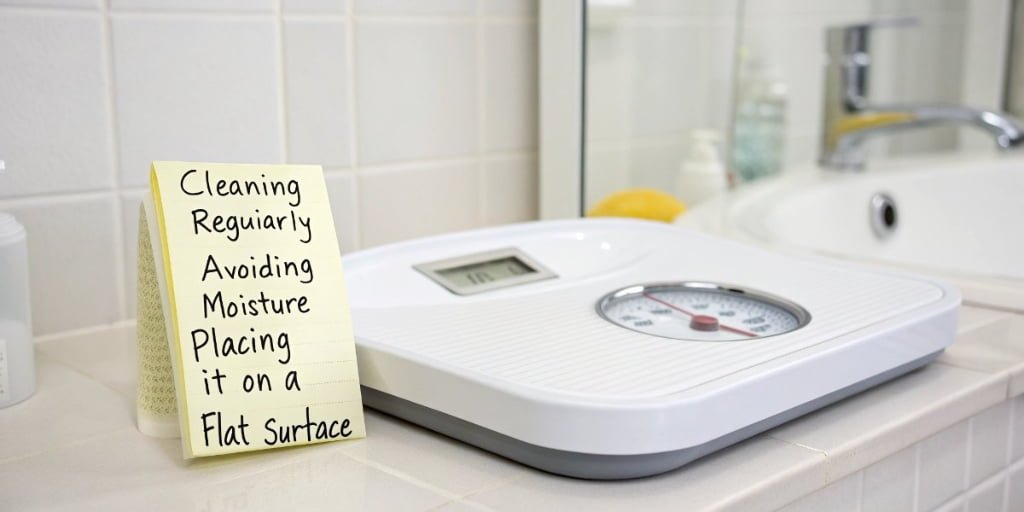
Tired of your scale giving you a different number every time? You can't trust the readings. But you can extend its life and accuracy with a few simple tricks.
To extend your scale's life and keep it accurate, always place it on a hard, flat surface. Clean it gently without harsh chemicals, and recalibrate it periodically with a known weight. These simple habits make a huge difference.
These are the basics. But as someone who has spent nearly 20 years in the industrial scale business, I want to share some deeper insights. In my world, scales must be precise and durable. While your bathroom scale isn't built for a factory floor, the same principles of care apply. Understanding why home scales fail is the first step to making them last longer. We'll look at the common problems and what you can really do about them. Let's start with a frequent question.
Do bathroom scales lose accuracy over time?
Worried your trusty scale isn't so trusty anymore? The numbers seem off, making you doubt its reliability. The truth is, all scales can drift over time, but you can manage it.
Yes, bathroom scales can lose accuracy over time. This is mainly due to normal wear and tear on the internal sensors, called load cells, and the effects of temperature and humidity. Regular calibration can help correct this drift and restore its precision.
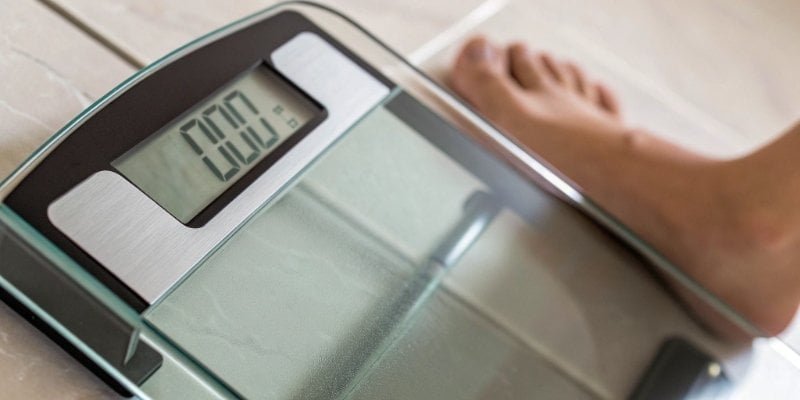
From my experience building industrial weighing systems, I can tell you that every scale's accuracy depends on its internal components. Your bathroom scale uses small sensors called load cells1 to measure weight. Over time, these components can degrade slightly. This is what we call "sensor drift." In the consumer world, this is an accepted reality. From our perspective as an industrial manufacturer, there's a clear reason for this. Bathroom scales are mass-produced on a huge scale to keep costs low for everyone. They are designed for general home use, not for the high-precision, repetitive tasks we build our scales for. An industrial scale is often built for a specific client's needs, using more robust materials to ensure it works perfectly for a decade or more under heavy use.
Consumer vs. Industrial Scale Drift
| Feature | Consumer Bathroom Scale | Weigherps Industrial Scale |
|---|---|---|
| Primary Goal | Low cost and mass appeal | High precision and durability |
| Materials | Plastic, standard electronics | Stainless steel, specialized sensors |
| Environment | Controlled home environment | Harsh industrial conditions |
| Accuracy Drift | Expected over 2-5 years | Minimized for 10+ years |
This difference in design philosophy is why your home scale needs a little more care to stay accurate.
What is the lifespan of a bathroom scale?
Wondering if it's time to replace your scale? It's been with you for years, but is it still working correctly? Knowing a scale's typical lifespan helps you decide when to invest in a new one.
A typical digital bathroom scale can last about 5 to 10 years. However, this lifespan depends heavily on its build quality, how often it's used, and the environment it's kept in, especially humidity.
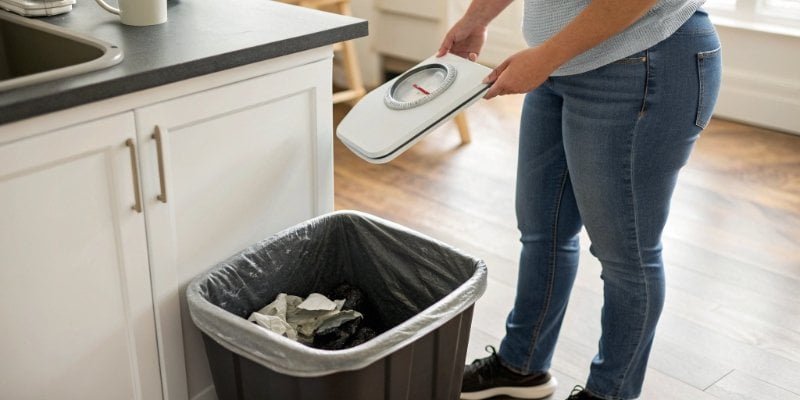
Several key factors determine how long your scale will last. Quality is the most obvious one. A cheaper, poorly made scale might only last a few years, while a well-built one can last a decade. How you use it also matters. Constantly dropping things on it or storing it on its side can damage the delicate sensors. The environment is also a huge factor. A bathroom is a humid place, and moisture can slowly damage the electronics inside your scale over time. In our business, we build sealed, waterproof scales specifically for wet environments, but your home scale isn't designed for that. Think of it this way: we build our weighing systems to survive, while home scales are built to serve.
Factors That Influence a Scale's Lifespan
- Build Quality: Scales made with better materials and more robust sensors will naturally last longer. Look for brands with good reviews on durability.
- Usage Frequency: A scale used multiple times a day will wear out faster than one used once a week. Avoid dropping it or stepping on it harshly.
- Storage and Environment: Always store your scale flat. Keeping it in a very humid bathroom without ventilation can shorten its life. Try to keep it in a dry spot if possible.
By managing these factors, you can get the most out of your scale's expected lifespan.
How to make a scale accurate again?
Is your scale giving you crazy numbers? You feel like you can't trust it for anything. But don't throw it out just yet; in most cases, you can fix its accuracy yourself at home.
To make a scale accurate again, you need to recalibrate it. Start by placing it on a hard, flat floor. Turn it on and let it zero out. Then, test it with a known weight. If it's wrong, use the calibration function, as described in its manual.
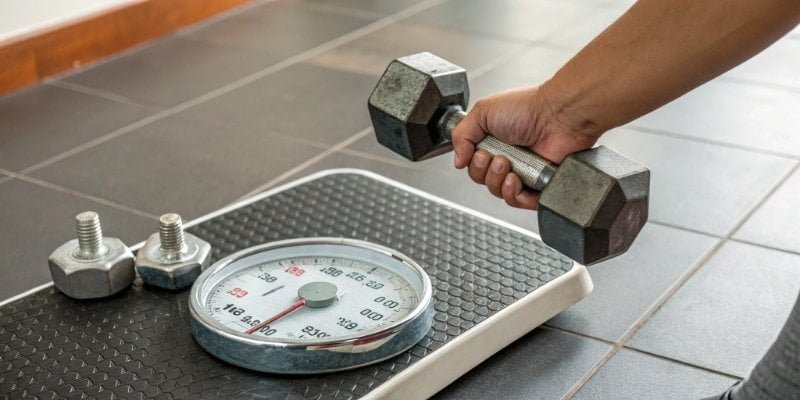
Calibration might sound technical, but for a home scale, it’s usually simple. It’s a routine task for us in the industrial world; we calibrate scales constantly to meet quality standards. You can do the same to restore your scale's trust. You just need a "known weight." This can be a dumbbell, a weight plate from a gym set, or even an unopened bag of flour or sugar from the kitchen. The package will have the exact weight printed on it. These items are produced with tight weight control2s, making them surprisingly good for this task.
A Simple Calibration Guide
- Prepare the Scale: Place fresh batteries in your scale and put it on a completely flat, hard surface. Tile or hardwood is perfect. Carpet will give you wrong readings every time.
- Zero It Out: Tap the scale to turn it on and wait for it to display "0.0". Do not touch it while it zeros itself.
- Test with a Known Weight: Gently place your known weight (e.g., a 10 lb dumbbell) in the center of the scale. If the scale reads 10.0 lbs, it’s accurate! If it's off, proceed to the next step.
- Recalibrate: Most digital scales have a calibration3 mode. You might need to press a button on the back or bottom, or hold a button down. Your user manual will have the exact steps. Follow them to recalibrate the scale using your known weight.
Can scales be wrong if the battery is low?
Your scale is acting strange, but the battery icon isn't flashing yet. Could a slightly low battery be the cause? It's a surprisingly common and overlooked problem that causes a lot of confusion.
Yes, a low battery can absolutely make a scale give wrong or inconsistent readings. The internal electronics and sensors need a stable, specific voltage to work correctly. A dying battery provides fluctuating power, leading to errors.
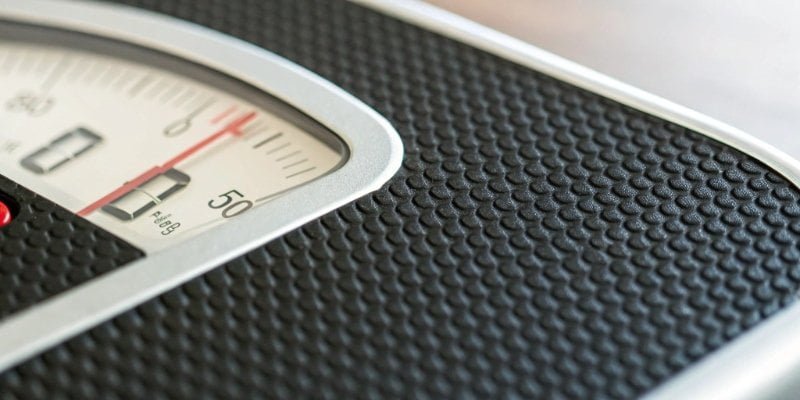
This is a simple principle that applies to all electronic measuring devices, from your bathroom scale to the complex IoT weighing systems we design. Think of electricity as the fuel for calculation. If the fuel supply is unsteady, the engine sputters. For a scale, the load cells send a tiny electrical signal to a processor, which converts that signal into a weight. If the battery is low, that initial signal might be weak or unstable. The processor itself might not have enough power to perform the calculation correctly. This is why you might step on the scale three times and get three different readings when the battery is dying.
How Low Power Affects Your Measurement
- Weak Sensor Signals: The load cells can't send a strong, clear signal to the processor.
- Processor Errors: The microchip may misinterpret the weak signal or make a mathematical error.
- Display Flickering: The screen might flicker or fail to lock onto a final number.
For our industrial clients, stable power is non-negotiable, as a tiny error can ruin an entire product batch. While the stakes are lower at home, the logic is the same: the first step in troubleshooting an inaccurate scale should always be to install a fresh set of high-quality batteries.
Conclusion
Taking care of your scale with regular cleaning, proper placement, and fresh batteries is key. Calibrating it periodically ensures you can trust the numbers you see for years to come.

Comments (0)