
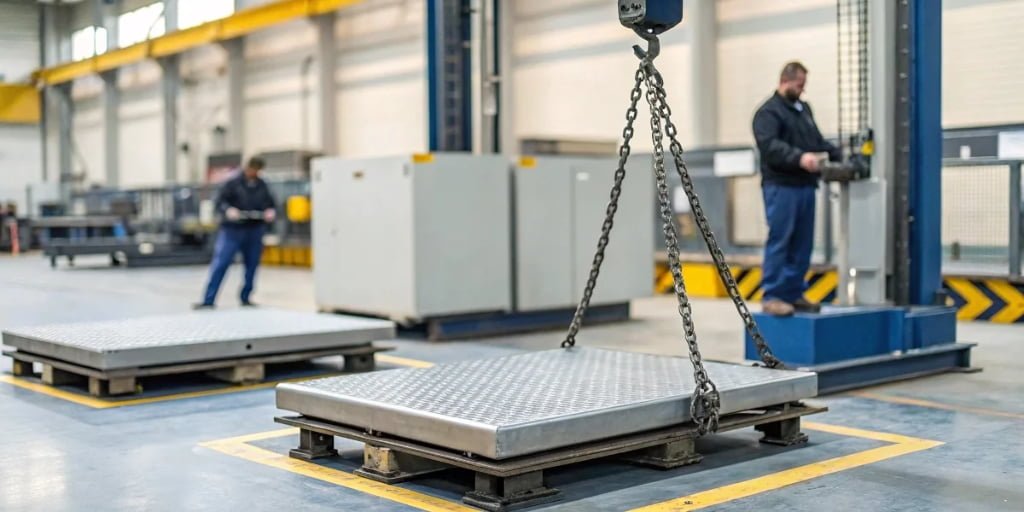
Are production delays and inaccurate data hurting your bottom line? These issues can cripple efficiency and profits. Let's find the right industrial weighing solution for your specific needs.
To find the right industrial weighing solution, you must first analyze your specific needs. Consider the environment, the weight capacity required, accuracy levels, and any necessary software integration. Matching the scale's features to your operational demands is key for efficiency and quality.
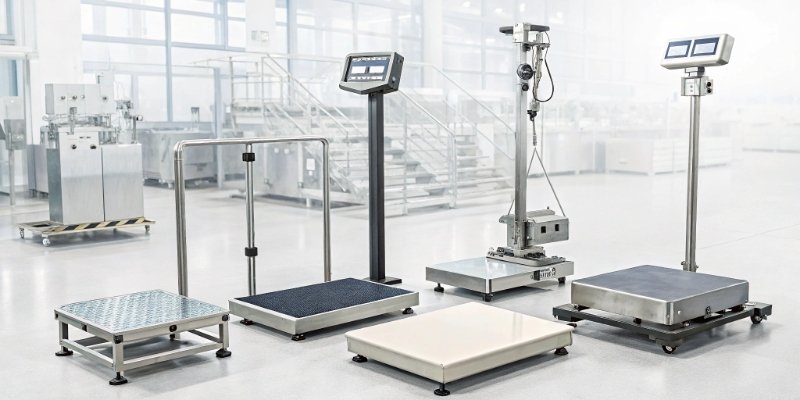
Getting the right scale is more than just picking one from a catalog. It's about understanding the nuances of your industry and how technology can transform your processes. As a manufacturer with 18 years of experience, I've seen firsthand how a tailored solution can make all the difference. In this guide, we'll break down the critical factors to help you make an informed decision. Let's start with the basics of choosing a scale for your business.
How do you choose the right industrial scale for your business?
Feeling overwhelmed by countless scale options and fear making a costly error? A wrong choice wastes money and creates operational chaos. Let's simplify this by focusing on key criteria.
To choose the right industrial scale, evaluate four main areas: capacity and readability, material and design, environment, and connectivity needs for data integration. This ensures the scale is durable, accurate, and fits perfectly into your existing or planned software-driven workflows.
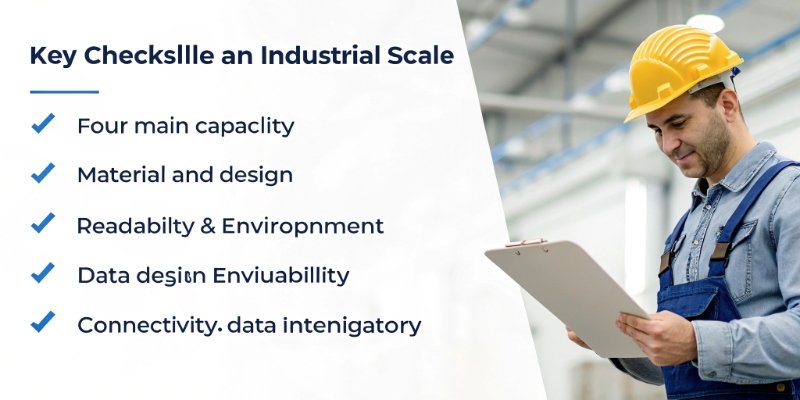
Selecting the right scale is a strategic decision, not just a purchase. As a partner to many software providers, we know that the hardware must seamlessly support your software's capabilities. Let's break down the essential factors.
Key Selection Criteria
You need to think about more than just weight. Consider how the scale will live in your customer's environment and talk to your systems.
Evaluating Technical Specifications
The spec sheet tells a story. Look for high-quality load cells1 for accuracy and durability2. For your needs as a software vendor, communication protocols3 are critical. Does the scale support Modbus4, Ethernet/IP5, or offer a simple serial output? A flexible API6 can be a game-changer for your development team.
Here's a quick reference table to guide your evaluation:
| Criteria | What to Look For | Why It Matters for Software Integration |
|---|---|---|
| Capacity & Accuracy | Meets max load; readability matches process tolerance. | Ensures the data your software receives is precise and meaningful, preventing errors. |
| Connectivity | RS-232, USB, Ethernet, Wi-Fi, Bluetooth. Open API. | Allows easy integration with your management software, enabling real-time data capture and control. |
| Durability & IP Rating | Stainless steel construction; IP67/IP68 for wet areas. | Reduces hardware failure, ensuring uptime for your integrated software solution. |
| Certifications | CE, OIML, NTEP. | Guarantees the scale meets international standards, simplifying market access for your combined product. |
This detailed approach ensures you select a scale that not only performs its basic function but also enhances the value of your software solution.
What weighing solutions are essential for the manufacturing and logistics sectors?
Are weighing bottlenecks slowing down your entire supply chain? These delays lead to inaccurate inventory and frustrated customers. Implementing the right weighing solutions can completely transform your workflow.
For manufacturing and logistics, floor scales, pallet truck scales, and checkweighers are essential. Floor scales handle heavy loads, pallet truck scales offer mobility for efficient warehouse movement, and automated checkweighers ensure package consistency and quality control without slowing down the production line.
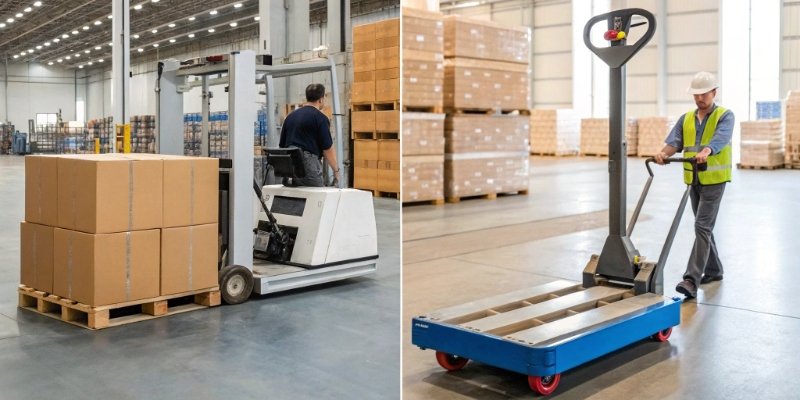
In my 18 years of manufacturing these systems, I've seen logistics and manufacturing operations transform with the right tools. It's not just about weight; it's about data flow. Your software can turn a simple scale into a smart hub for inventory management, quality control7, and shipping verification.
Key Scales for Modern Operations
Let's look at the workhorses of these sectors:
- Floor Scales: These are the foundation. Think receiving heavy raw materials or shipping out full pallets. Modern floor scales8 aren't standalone units. They connect directly to your network. This allows your software to automatically log incoming goods into an ERP or WMS, eliminating manual data entry and errors.
- Pallet Truck Scales: This is where efficiency gets a major boost. By combining moving and weighing, you cut out a whole step. Imagine your software tracking a pallet's weight and location in real-time as it moves through the warehouse. This provides invaluable data for optimizing layouts and workflows.
- IoT-Enabled Checkweighers: For production lines, an automated checkweigher connected to the cloud is essential. It does more than just approve or reject items. It feeds data to your system to track trends, predict maintenance needs, and ensure 100% quality compliance. This is where your software adds immense value, turning raw data into actionable business intelligence.
What is the difference between a commercial and an industrial weighing system?
Are you using a commercial scale for an industrial job? This common mistake leads to constant breakdowns and inaccurate data. Understanding their key differences ensures you get a reliable system.
The main difference is durability and environment. Industrial scales are built for harsh conditions, heavy use, and exposure to dust, water, and vibrations. Commercial scales are designed for cleaner, retail environments with lighter use. Industrial systems also prioritize connectivity for process automation.
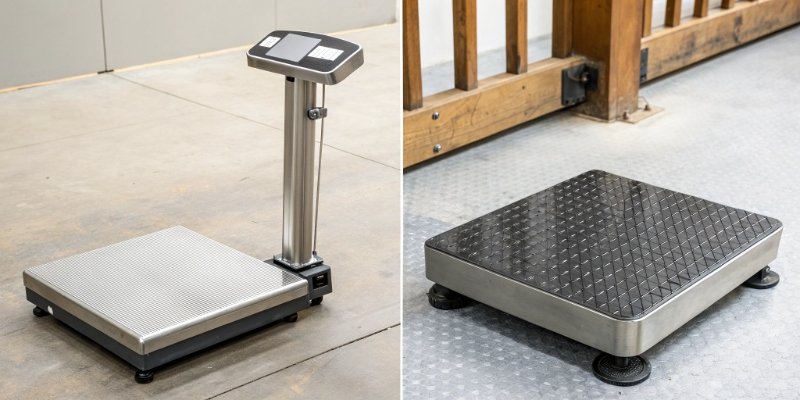
It's tempting to look at a scale's price and think "a scale is a scale." But in our experience, this is a costly assumption. An industrial environment will destroy a commercial scale in weeks. For you as a software provider, this distinction is crucial. Your software's reliability is tied to the hardware's uptime. You want your solution paired with a device that is built to last.
Commercial vs. Industrial: A Breakdown
Let's compare them directly so you know what you're investing in. Think of an industrial scale as a rugged server, while a commercial scale is more like a consumer laptop. Both compute, but one is designed for a much tougher job.
| Feature | Commercial Scale | Industrial Scale |
|---|---|---|
| Environment | Clean, climate-controlled (retail, office). | Harsh, wet, dusty, extreme temperatures, vibrations. |
| Construction | Plastic, light-duty metal. | Heavy-gauge steel or stainless steel9 (e.g., SS304). |
| Load Capacity | Low (grams to a few kilograms). | High (kilograms to many tons). |
| Protection | Little to no protection against dust/water. | High IP ratings (e.g., IP67, IP68) for washdown. |
| Connectivity | Basic, often just for a simple printer. | Advanced (Ethernet, Wi-Fi, Fieldbus) for system integration. |
Choosing an industrial scale ensures that your integrated software solution is built on a foundation of reliability. This reduces customer support issues and protects your brand reputation. We focus exclusively on industrial-grade systems because we know they are essential for serious business operations.
How do you select a scale for a heavy-duty or harsh environment?
Do your harsh work environments destroy standard scales? This causes constant replacements, production downtime, and even safety risks. Prioritizing specific features for durability is the only solution.
For heavy-duty or harsh environments, select a scale made from stainless steel (like grade 304 or 316) with a high Ingress Protection (IP) rating, like IP67 or IP68. Also, ensure the load cells are hermetically sealed and that the electronics are protected against shock and vibration.

When we design a custom weighing system, the first question we always ask is "What is the environment?" For heavy-duty applications, the answer dictates everything. A scale in a dusty warehouse faces different challenges than one in a wash-down food processing facility. As a software partner, you need to ensure the hardware can withstand the environment it's sold into.
Must-Have Features for Durability
Here are the non-negotiables we build into our rugged scales:
- Material Science: We typically use SS304 stainless steel for its excellent corrosion resistance and durability. For environments with harsh chemicals or saltwater, we upgrade to SS316. This prevents degradation and ensures a long service life for the hardware housing your integrated electronics.
- Ingress Protection (IP) Ratings: This is critical. An IP67-rated scale can be submerged in water up to 1 meter. An IP68 rating means it's sealed for continuous submersion. For food or pharma, where daily high-pressure washdowns are standard, this is essential. A failed seal means a fried circuit board and a dead node on your network.
- Component Protection: It’s not just the housing. We use hermetically sealed10 load cells and protect internal electronics from shock and vibration. This ensures consistent, accurate data transmission to your software, even when the scale is being banged around on a busy production floor.
Conclusion
Choosing the right industrial scale boosts efficiency and quality. By focusing on your specific environment, connectivity needs, and required durability, you ensure a reliable and intelligent weighing solution.
- Discover the role of load cells in ensuring accurate measurements in industrial scales. ↩
- Learn why selecting durable scales is crucial for maintaining operational efficiency in harsh environments. ↩
- Explore the necessary communication protocols that enhance connectivity and data flow in weighing systems. ↩
- Find out how Modbus can facilitate communication in industrial weighing applications. ↩
- Learn about the benefits of Ethernet/IP in enhancing data transmission for industrial scales. ↩
- Explore how a flexible API can transform your weighing system into a smart data hub. ↩
- Learn how accurate weighing systems can enhance quality control and reduce errors in production. ↩
- Discover how floor scales can optimize operations and improve efficiency in manufacturing. ↩
- Discover the benefits of using stainless steel in industrial scales for durability and corrosion resistance. ↩
- Learn about the importance of hermetically sealed load cells in maintaining accuracy and reliability. ↩



[…] Modbus9 TCP/IP […]