

Struggling with inconsistent lab results? Inaccurate scales can ruin data and compliance records. A solid system for ensuring accuracy is your only solution to maintain integrity and trust.
Guaranteeing scale accuracy requires a multi-faceted approach. It involves frequent calibration with traceable weights, strict environmental controls, and a robust standard operating procedure (SOP) for verification, maintenance, and detailed data management to ensure reliable and compliant results.

Keeping your scales accurate is not just a single action; it is about building a comprehensive system. Dive in with me as we break down the essential components, step-by-step, to build that bulletproof system. You will learn how to create processes that protect your data integrity1 and keep your operations running smoothly.
How can managers establish an effective scale calibration and verification SOP?
Are your calibration procedures inconsistent? This can easily lead to compliance issues and unreliable data. An effective Standard Operating Procedure (SOP) brings order and guarantees accuracy for every measurement.
An effective SOP starts with a clear schedule for calibration and verification. It must specify the use of certified, traceable weights, detail step-by-step procedures, and establish strict documentation rules for every action.

I remember a client whose team had different ideas on 'when' to calibrate their instruments. It caused a lot of confusion and inconsistent results. A clear SOP solved it almost overnight. Building an effective SOP is about creating a clear, repeatable process that anyone on your team can follow. It removes guesswork and builds a foundation of reliability.
The Core Components of a Strong SOP
Your SOP should be a simple guide. It needs to cover three main areas: the schedule, the method, and the records. The schedule defines how often you check the scale. The method explains exactly how to do it. The records prove that you did it correctly. This structure ensures nothing is missed and provides a clear trail for audits.
Procedure vs. Documentation
A good procedure is useless without good documentation. Every calibration, verification, or adjustment must be recorded. Your log should include the date, the person who did the work, the weights used, and the results before and after any adjustments. This creates an unbroken chain of evidence that proves your scales are accurate and your processes are under control.
| Action | Purpose | Frequency |
|---|---|---|
| Calibration | Adjusts the scale to meet standards | As per manufacturer/SOP |
| Verification | Confirms the scale is accurate between cals | Daily or before use |
| Documentation | Provides a legal record of all actions | Always |
What are the most common environmental factors that compromise lab scale accuracy?
Getting strange readings you cannot explain? Hidden environmental factors are often the culprit. They can silently sabotage your measurements and waste valuable time and resources if left unchecked.
The most common environmental saboteurs are temperature fluctuations, air drafts, and vibrations. Humidity levels and static electricity can also significantly compromise the accuracy of sensitive scales, leading to untrustworthy data.

We once had a client whose new lab scale was giving erratic readings. Everything seemed fine. After a site visit, we found the scale was placed directly under an HVAC vent that turned on intermittently. The subtle airflow was the problem. Moving the scale just a few feet solved the issue completely. It's often the small, unseen things that cause the biggest problems.
The Invisible Forces: Air and Temperature
Your scale is incredibly sensitive. A simple draft from a door opening or an air conditioning unit can push on the weighing pan and alter your reading. Likewise, temperature changes cause materials to expand or contract, which can affect the internal mechanics of the scale. A stable environment is crucial. Aim for a dedicated, draft-free room with a stable temperature between 18-25°C.
The Shaky Ground: Vibrations
Vibrations are another enemy of accuracy. They can come from nearby heavy machinery, a centrifuge, or even footsteps on an unstable floor. The best solution is a dedicated anti-vibration table for your scale. This isolates the instrument from its surroundings and provides a stable surface for the most precise measurements.
| Factor | Effect on Scale | Solution |
|---|---|---|
| Air Drafts | Creates unstable, fluctuating readings | Use a draft shield, close doors/windows |
| Temperature | Causes drift and inconsistent results | Maintain stable room temp (18-25°C) |
| Vibrations | Makes it hard for the reading to settle | Use an anti-vibration table, isolate scale |
| Humidity/Static | Can cause readings to drift up or down | Maintain humidity (40-60%), use ionizer |
How do regulatory standards like ISO or USP impact weighing accuracy requirements?
Worried about audit failures? Misunderstanding regulatory standards like ISO or USP can put your lab's certification and reputation at serious risk. These rules are not suggestions; they are requirements.
Regulatory standards like ISO/IEC 17025 and USP set mandatory requirements for scale accuracy, calibration frequency, and traceability. They define acceptable tolerances and demand documented proof of performance to ensure data integrity.
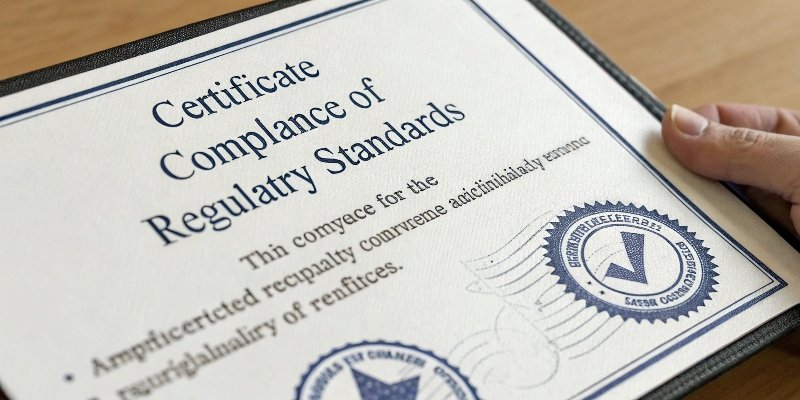
A pharmaceutical client of ours was preparing for a USP audit. We worked with them to align their weighing SOPs directly with the USP chapters, ensuring every 'i' was dotted and every process was documented. They passed with flying colors because they didn't just meet the standards; they could prove it. Compliance isn't just about being accurate—it's about demonstrating it on paper.
Traceability: Your Proof of Accuracy
Traceability is a core concept in both ISO and USP standards2. It means you must be able to trace your calibration back to a recognized national or international standard. In practice, this means using certified calibration weights and having certificates for those weights. This unbroken chain of documentation proves that your measurements are based on a reliable, globally accepted reference.
Defining Your Minimum Weight
USP specifically requires you to determine the minimum weight3 that a scale can accurately measure. Weighing samples below this minimum weight3 is a violation because the uncertainty of the measurement becomes too high. Your SOP must define this minimum weight for each scale and ensure operators never measure below it.
| Standard | Key Weighing Requirement | Main Focus |
|---|---|---|
| ISO/IEC 170254 | Requires calibration traceability5, uncertainty calculations, and documented procedures. | Competence of testing & calibration labs. |
| USP <41> | Mandates specific tests for accuracy and repeatability; defines minimum weight. | Pharmaceutical quality and product safety. |
| USP <1251> | Provides guidance on balance selection, installation, and routine performance tests. | Practical guidance for pharmaceutical weighing. |
What are the key procedures for troubleshooting an inaccurate laboratory scale?
Is your scale giving you errors? A malfunctioning scale can stop production and compromise quality. Knowing how to quickly troubleshoot the problem can save you a lot of time and money.
Start troubleshooting by checking the basics: Is the scale level and clean? Are there any air drafts? Then, perform a verification with a certified weight. If it fails, check calibration settings before assuming a hardware issue.

I always tell my team to start with the simplest explanation first. Over 90% of the time, an "inaccurate" scale just needs to be re-leveled or moved away from a draft. Before you pick up the phone to call for service, run through a basic checklist. This systematic approach will solve most problems and identify the ones that truly need expert attention. Don't overcomplicate it.
Your First Response Checklist
Before you do anything else, perform these basic checks. They are simple, fast, and often solve the problem immediately. First, look at the leveling bubble. If it is not centered, adjust the feet of the scale until it is. Second, make sure the weighing pan and the area around it are perfectly clean. Even a small particle of dust can affect results. Finally, check for any environmental changes, like a new piece of equipment nearby or an open window.
Know When to Stop
If you have run through the basic checks and performed a recalibration with no success, it may be time to stop. Further adjustments could make the problem worse or even void your warranty. If the scale displays a specific error code, consult the user manual. If the problem persists, it is best to place an "Out of Service" sign on the unit and call a certified service technician.
| Symptom | Possible Cause | Solution |
|---|---|---|
| Unstable Reading | Vibration or air draft | Move scale, use draft shield, check for vibrations |
| Fails Verification | Needs calibration or is not level | Check level bubble, then re-calibrate the scale |
| Drifting Reading | Static electricity or temperature | Check humidity, use anti-static device, stabilize temp |
| Error Code on Display | Internal hardware or software fault | Consult manual, then call for professional service |
Conclusion
Managing scale accuracy is a continuous process. It relies on regular calibration, strict environmental control, and following standards. A solid system ensures your data is always reliable and compliant.
-
Explore strategies to protect data integrity, crucial for compliance and reliable results. ↩
-
Understanding USP standards is crucial for compliance; this link provides comprehensive insights. ↩
-
Learn how to define minimum weight for scales, a critical aspect of ensuring measurement accuracy. ↩ ↩
-
This resource details ISO/IEC 17025 requirements, essential for maintaining compliance in lab operations. ↩
-
Explore the concept of calibration traceability to ensure your measurements are reliable and compliant. ↩



Comments (0)