

You rely on digital scales daily, but what's happening inside that black box? Trusting a device without understanding its core function can feel like a gamble for your operations.
A digital scale converts the physical force of weight into an electrical signal using a sensor, most commonly a load cell. A microchip then processes this signal, calibrates it, and displays it as a precise weight measurement on a screen.
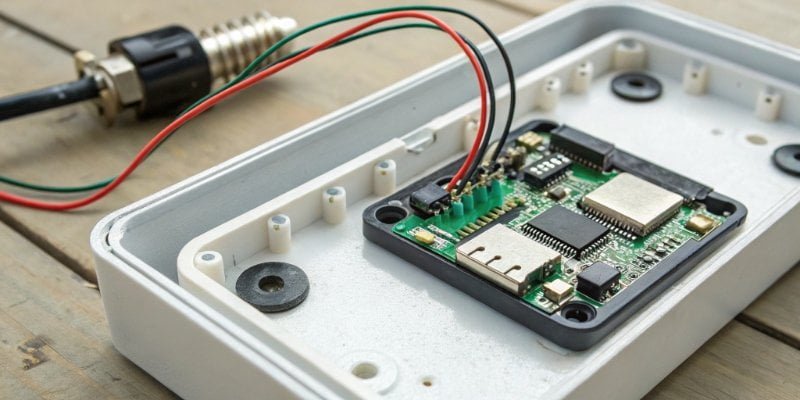
That's the simple answer, but the technology that makes it happen is where the real value lies. As a manufacturer with 18 years of experience, I've seen how choosing the right core technology can make or break a company's efficiency. The difference between a reliable workhorse and a source of constant errors often comes down to the sensor inside. To make the best choice for your business, we need to dive deeper into how these incredible devices actually function.
How Does a Digital Scale Convert Weight Into a Number?
It seems like magic when a number instantly appears on the screen. It is easy to take this complex process for granted without a second thought. But not knowing the process makes it hard to choose the right scale for your specific environment. Let's walk through the electromechanical process that makes modern weighing a reality.
A digital scale converts physical force into a number using a load cell. When you place an object on the scale, it slightly deforms the load cell. This deformation changes the electrical resistance of attached strain gauges, creating a weak analog signal that an ADC converts to digital data.
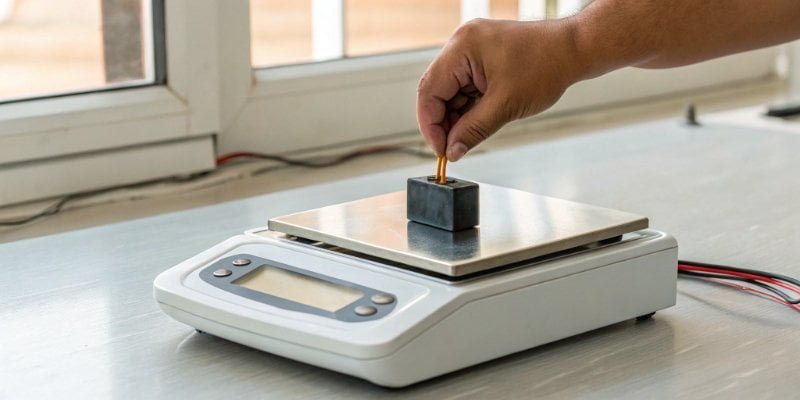
The entire process, from placing an item on the platform to seeing the final number, happens in a fraction of a second. It's a journey from the physical world to the digital world. I like to think of it as a chain of command where each component has a specific job to do. If one link in that chain is weak, the final result will be inaccurate. At our facility, we test each component—the load cell1, the ADC2, the software—to ensure every link is strong before a scale ever leaves the factory. Here is a breakdown of the key players and their roles:
The Core Conversion Process
| Component | Function |
|---|---|
| Platform | The surface where the object is placed, transferring the force downwards. |
| Load Cell | A metal transducer that deforms proportionally to the weight applied. |
| Strain Gauge | A sensor bonded to the load cell that stretches or compresses, changing its electrical resistance. |
| ADC (Analog-to-Digital Converter) | Measures the change in electrical resistance and converts the analog signal3 into a digital value. |
| Microprocessor | Processes the digital value, applies calibration factors4, and sends the final weight to the display. |
What Sensors Do Digital Scales Use?
You know scales use sensors, but "sensor" is a broad term. Not every sensor is created equal for every single application you might have. Choosing a scale with the wrong sensor type can lead to poor performance or even complete failure in your operating environment. Let's explore the main types so you can match the technology to your needs.
Digital scales primarily use strain gauge load cells for most industrial applications due to their reliability. For higher precision needs, Electromagnetic Force Restoration (EMFR) sensors are used. Newer technologies like Surface Acoustic Wave (SAW) sensors are also emerging, offering unique benefits for specific environments.

The technology inside a scale directly impacts its performance, durability, and cost. As my client's insight pointed out, the industry is moving from measuring simple metal deformation to more advanced sensing methods. This evolution is driven by the need for higher precision and less error over time. For example, while a strain gauge5 is perfect for a 3000 kg floor scale, it's not the right tool for a laboratory measuring milligrams. My years in this business have taught me that the first question a buyer should ask is not "how much weight can it handle?" but "what technology is it using?".
Comparing Weighing Sensor Technologies
| Sensor Type | Operating Principle | Best For |
|---|---|---|
| Strain Gauge | Measures the change in electrical resistance as a metal element deforms under load. | General industrial, retail, and logistics. High durability and cost-effective. |
| EMFR | Uses an electromagnet to generate an opposing force to balance the weight, measuring the required current. | Laboratory, pharmaceutical, and scientific applications requiring high precision. |
| SAW | Measures a shift in the frequency of an acoustic wave as the sensor's substrate deforms. | Specialized applications where long-term stability and resistance to drift are critical. |
Are Strain Gauges Still the Go-To Technology for Scales?
With so many new technologies emerging, you might wonder if the classic strain gauge is outdated or somehow old-fashioned. Relying on older tech can feel risky, but dismissing a proven solution could mean overspending on features you don't actually need. Let's look at why strain gauges remain a dominant force in the industry.
Yes, strain gauges are absolutely the go-to technology in the vast majority of digital scales today. Their unmatched combination of reliability, versatility, and cost-effectiveness makes them the ideal choice for thousands of industrial and commercial applications, from heavy-duty platform scales to conveyor systems.
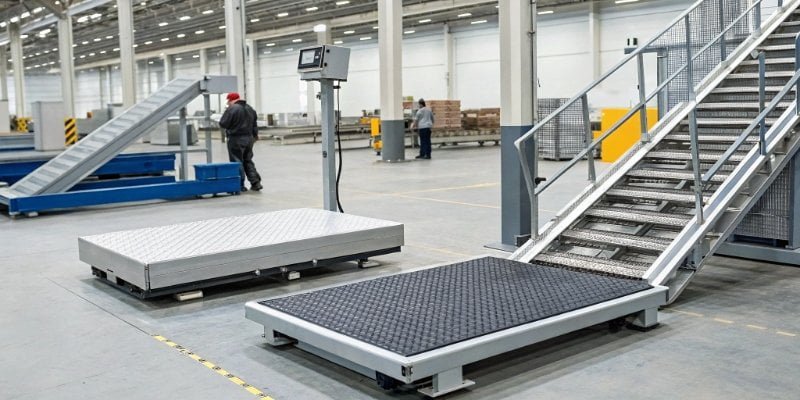
Strain gauges are the bedrock of the modern weighing industry. Think of them as the tried-and-true engine of a work truck—they are not always the fanciest, but they are incredibly dependable and get the job done day in and day out. In our 18 years of manufacturing, over 90% of the industrial scales we’ve produced for global brands have been built around strain gauge load cells. Why? Because they simply work. They can be sealed to withstand dust and water (IP67/IP68) and are robust enough to handle the shock and vibration of a busy warehouse. While newer technologies are exciting, they often solve problems that don't exist in most mainstream industrial settings. The strain gauge provides the perfect balance of performance and price for most businesses.
Why Strain Gauges Endure
- Proven Reliability: The technology has been refined for decades and is extremely well-understood. Its failure points are known and have been engineered out over time.
- Cost-Effectiveness: They offer excellent accuracy for the price, allowing businesses to deploy weighing solutions across multiple points in their operation without breaking the budget.
- Incredible Versatility: Strain gauges can be integrated into load cells of all shapes and sizes—beam, single-point, S-type, canister—to fit virtually any weighing application imaginable.
How Do High-Precision Scales Achieve Such Incredible Accuracy?
You need to measure tiny amounts with absolute certainty, but a standard industrial scale just isn't sensitive or accurate enough. A small error at the microscopic level can ruin an entire batch, fail a quality check, or waste thousands of dollars in expensive materials. So, let's look inside the technology that powers these ultra-precise instruments.
High-precision scales achieve their accuracy by using a technology called Electromagnetic Force Restoration (EMFR). Instead of measuring how much a component bends, EMFR uses an electromagnet to generate an opposing force that perfectly balances the weight, providing extremely fine, stable, and repeatable measurements.

The EMFR principle is a game-changer for precision. Unlike a strain gauge, which measures a reaction to a force, an EMFR system creates an equal and opposite force. Think of it like a perfectly balanced seesaw. When you add weight to one side, an electromagnet on the other side pushes up with the exact force needed to keep it level. The scale isn't measuring the weight itself; it's measuring the tiny amount of electrical current needed to create that balancing force. Since we can control and measure electricity with incredible precision, the weight reading is also incredibly precise. We recommend this technology to all our clients in the pharmaceutical, chemical, and research sectors. For them, accuracy isn't just a feature—it's the foundation of their entire business.
Strain Gauge vs. EMFR: The Key Difference
| Feature | Strain Gauge | Electromagnetic Force Restoration (EMFR) |
|---|---|---|
| Principle | Measures mechanical deformation. | Measures the current needed to create a balancing force. |
| Precision | Good to Very Good (e.g., 1g) | Exceptional (e.g., 0.001g or better) |
| Response Time | Slower | Faster |
| Cost | Lower | Higher |
| Ideal Use | Industrial, Commercial, Logistics | Laboratory, Pharmaceutical, Quality Control |
Conclusion
Understanding these core technologies—from robust strain gauges to precise EMFR sensors—empowers you to choose the right scale, ensuring accuracy and efficiency for your specific industrial needs.
-
Learn about load cells, the key component in digital scales, and their role in weight measurement. ↩
-
Learn about the role of Analog-to-Digital Converters in transforming weight measurements. ↩
-
Gain insights into how analog signals are converted to digital data in weighing systems. ↩
-
Understand the importance of calibration in ensuring accurate weight readings. ↩
-
Discover how strain gauges work and why they are essential for accurate weight measurements. ↩



Comments (0)