

Struggling with messy inventory and lost profits? Grocery stores face this daily. They use smart systems to turn chaos into cash, a lesson for any business.
Grocery stores track inventory using a mix of technology and strategy. They use Warehouse Management Systems (WMS), barcode scanners, and data analytics. This helps them monitor stock in real-time, predict demand, and reduce waste, ensuring shelves are always stocked with what customers want.
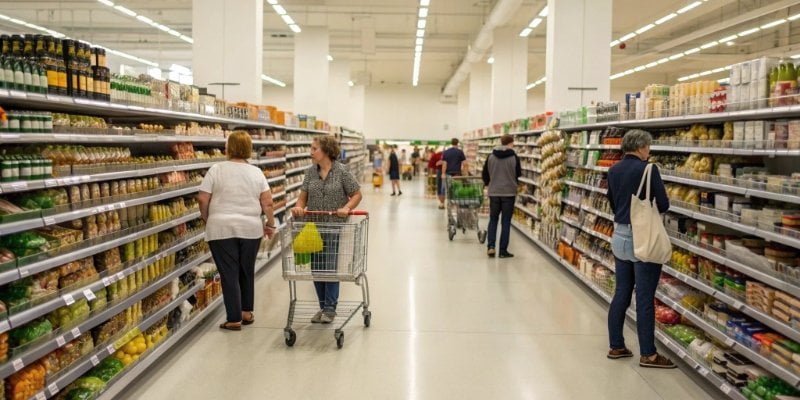
That's the short answer. But the real magic is in the details. As a manufacturer of industrial scales1 for 19 years, I've seen how crucial precision is in this process. My team and I have helped many businesses get their data right from the start. Let’s break down exactly how grocery stores do it and what we can learn from their methods. It's a system of process, technology, and people working together, and it's fascinating to see in action.
How do grocery stores really keep track of all that inventory?
Ever wonder why your favorite cereal is never out of stock? It's not luck. It’s a precise system that prevents empty shelves and customer disappointment, a challenge many businesses face.
Stores use a strict process from the moment goods arrive. They use barcode or RFID scanners for quick check-ins, follow a 'first-in, first-out' (FIFO) rule for freshness, and conduct regular physical counts. This systematic approach ensures the data in their system matches the stock on their shelves.

To really understand this, we have to look at the entire journey of a product. From my experience building weighing systems that integrate into these processes, I know that success depends on getting every step right. It’s not just one thing; it’s a chain of coordinated actions.
The Process from Dock to Shelf
It all begins at the receiving dock. When a truck arrives, items aren't just unloaded. They are checked and scanned into the Warehouse Management System (WMS). For produce or bulk goods, they're often weighed on industrial scales to verify the shipment's accuracy against the invoice. We build scales specifically for this—they have to be tough and precise. Once inside, products are stored using the "First-In, First-Out" (FIFO) principle. This ensures older stock is sold first, which is critical for preventing spoilage and waste.
The Technology Behind the Scenes
Technology connects every part of the process. A central WMS acts as the brain, giving managers a real-time view2 of every item. This is where partners like software vendors are indispensable. They build the interface that makes all this data usable. The system tracks products from receiving to the point of sale, automatically updating inventory levels when an item is scanned at checkout. This seamless integration is the key to modern inventory control3.
| Method | Description | Primary Goal |
|---|---|---|
| Barcode/RFID | Scans items at entry, sale, and transfer points. | Real-time data accuracy and speed. |
| FIFO | Manages stock rotation4 based on arrival date. | Reduce spoilage and manage costs. |
| Physical Counts | Manually counting stock to verify system data. | Correct discrepancies and prevent loss. |
| WMS | Software that centralizes all inventory data5. | Full visibility and control. |
What is the 5 4 3 2 1 grocery rule?
You’ve heard about grocery rules, but do they help the store? The 5-4-3-2-1 rule is a popular one. It highlights how different store sections need unique management strategies.
The 5-4-3-2-1 rule is actually for shoppers, not inventory managers. It guides them to buy items from different store sections like produce, pantry, and frozen foods. For stores, this highlights the challenge of managing diverse inventory types, each with its own shelf life and storage needs.
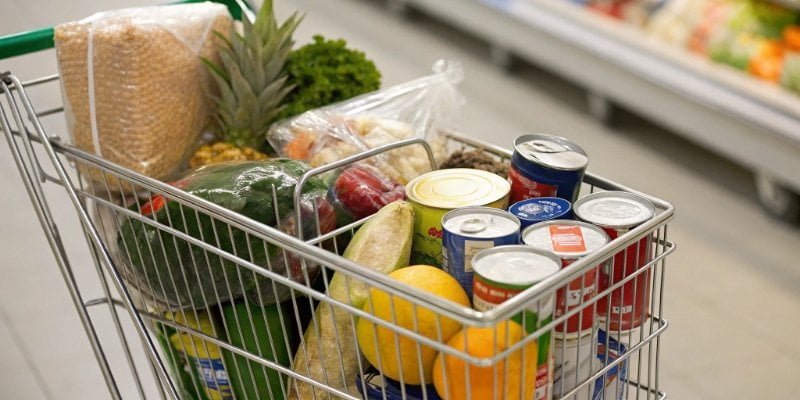
While this rule is aimed at consumers, it gives us in the industry a great framework for thinking about the complexity of a store's inventory. I once worked with a client who was struggling to manage their fresh produce section. They saw that even small errors in weight at receiving were causing big losses. This rule reminds us that not all inventory is the same.
What the Rule Means for Shoppers
For a shopper, the rule is a simple memory trick. For example, it might mean buying: 5 vegetables or fruits, 4 pantry staples, 3 proteins, 2 sauces or spreads, and 1 treat. It helps people build a balanced shopping list and ensures they don't forget anything. It's a great tool for meal planning and sticking to a budget.
What It Means for Inventory Managers
For a store, this rule illustrates the different categories they must manage. Each one has unique challenges.
- Produce (The "5"): Highly perishable, sold by weight, requires constant rotation. Accurate scales at receiving and checkout are non-negotiable here.
- Pantry/Dry Goods (The "4"): Longer shelf life6, but subject to high-volume sales and demand spikes. Barcode tracking is essential.
- Frozen/Deli (The "3" and "2"): Requires strict temperature control7 and expiration date tracking. Failures here can be costly and dangerous.
Understanding these categories helps managers apply the right technology and processes to each one, minimizing waste and maximizing availability. It’s about tailoring the solution to the product.
What is the 3 3 3 rule for groceries?
Heard of the 3-3-3 rule? It’s another popular shopper's trick. But for a store manager, it’s a direct signal about customer buying habits that you can’t ignore.
Like the 5-4-3-2-1 rule, the 3-3-3 rule is also for consumers, often for meal planning (e.g., 3 meals for 3 days). For stores, this pattern is valuable data. It helps them predict demand for specific combinations of items and manage inventory for meal-kit trends.

Seeing these patterns emerge is what makes data so powerful. We provide the tools to capture accurate primary data, like weight. But it's our software partners who transform that data into brilliant insights about customer behavior8, which is where the real value is unlocked.
A Rule for Meal Preppers
The 3-3-3 rule9 is a favorite among people who plan their meals. A common version is planning to eat 3 meals and 3 snacks for 3 days. This creates predictable shopping lists. A customer using this rule will consistently buy a certain combination of proteins, vegetables, and grains. They might buy three chicken breasts, a bag of rice, and a few heads of broccoli every few days. This isn't random; it's a pattern.
Using Buying Patterns for Forecasting
For an inventory manager, these patterns are solid gold. When you can see that customers regularly buy certain items together, you can optimize your stock levels and even your store layout. This is where data analytics comes in. By tracking sales data10 over time, a store's WMS can start to predict that a sale on chicken breasts will also lead to an increase in broccoli sales. This is called demand forecasting11. It allows the store to automatically adjust reorder points, ensuring that related items are in stock together. This turns simple sales data into a powerful, predictive tool that prevents stockouts and boosts sales.
What is the 80/20 rule for inventory?
Is all your inventory equally important? The 80/20 rule says no. Focusing your effort on the vital few items is the secret to unlocking massive efficiency gains.
The 80/20 rule, or Pareto Principle, means that 80% of your sales often come from just 20% of your products. In inventory, this is called ABC analysis. You give the most attention to the "A" items—the 20% that drive the most value—to maximize profit and avoid stockouts.

This principle is one of the first things we discuss with new clients, especially those in software. If their system is going to help a business, it must help them focus on what matters most. We build scales that provide the unerring accuracy needed for these high-value "A" items.
Identifying Your Most Valuable Players
The first step is to analyze your sales data to identify your "A," "B," and "C" category items.
- "A" items are your stars. They are the top 20% of items that generate 80% of your revenue.
- "B" items are in the middle. They are important but don't have the same impact as "A" items.
- "C" items are the rest. They make up the bulk of your inventory items but contribute very little to a a your revenue.
Applying ABC Analysis in Practice
Once you've categorized your items, you can manage them differently. Your "A" items need the most attention. You should count them more frequently, maintain a safety stock to prevent stockouts, and use the most precise tracking methods. An error in an "A" item's count is far more costly than an error in a "C" item. For these products, using high-precision, certified scales for weighing is not just a good practice; it's essential for protecting your bottom line. By focusing your resources where they have the most impact, you can improve profitability without working harder.
| Category | % of Items | % of Value | Management Focus |
|---|---|---|---|
| A | ~20% | ~80% | Tight control, frequent review, accurate counts. |
| B | ~30% | ~15% | Moderate control, regular review. |
| C | ~50% | ~5% | Simple control, less frequent review. |
Conclusion
Grocery stores master inventory with technology, smart processes, and data analysis. Applying these principles, like the 80/20 rule, can help any business improve efficiency and profitability.
-
Learn how industrial scales ensure accuracy and efficiency in inventory management. ↩
-
Find out how real-time inventory visibility can enhance decision-making and customer satisfaction. ↩
-
Discover essential strategies for optimizing inventory control in retail environments. ↩
-
Learn about stock rotation practices and their role in minimizing waste. ↩
-
Discover how effective use of inventory data can drive business success. ↩
-
Explore the factors influencing shelf life and how they impact inventory management. ↩
-
Understand the importance of temperature control in preserving perishable goods. ↩
-
Learn how understanding customer behavior can enhance inventory management and sales. ↩
-
Explore how the 3-3-3 rule can simplify meal planning and grocery shopping. ↩
-
Explore how analyzing sales data can optimize inventory levels and reduce stockouts. ↩
-
Learn about demand forecasting and its impact on inventory management and sales. ↩



Comments (0)