

Struggling with complex scale certification rules? You need a valid certificate to operate legally and for trade, but the process can be very confusing. I will guide you.
To get a Certificate of Conformity for your scale, you must first identify the specific type you need, such as a legal verification for trade or a CE certificate for export. Then, you submit your scale and required documents to the correct authority for testing and approval.

Navigating the world of certification can feel like a maze. As a manufacturer with 18 years of experience, I've walked this path many times with clients from all over the world. The key is understanding that "Certificate of Conformity1" isn't a single document; it's a category. The right certificate depends entirely on how and where you plan to use your scale. Getting it wrong can lead to serious headaches, from seized shipments to legal penalties. But don't worry, I'm here to break down the process into clear, manageable steps to ensure your equipment is compliant, accurate, and ready for business. Let’s dive in and make sense of it all.
How to get your scale certified?
Need to certify your scale but don't know where to begin? The paperwork and technical steps can feel overwhelming, stopping you before you even start. Let me break it down.
To certify your scale, first determine its use. For commercial trade, contact a government metrology institute for a mandatory verification. For internal quality control, use a third-party lab for calibration. For export to the EU, you must secure a CE certificate from a Notified Body.

The certification path you take depends on your goal. Let's look at the two most common scenarios: mandatory legal verification and technical calibration for quality assurance. In my experience, clients often confuse these two. Legal verification is about ensuring fairness in trade and is enforced by law. Technical calibration is about ensuring the scale meets specific performance standards for your internal processes.
For a legal verification, you typically start by contacting your local or national measurement authority. You will need to prepare your scale and some basic paperwork.
Key Steps for Legal Verification
- Prepare Your Documents: You'll usually need the original product certificate that came with the scale and your business license if the scale is used for commercial purposes. If you are re-certifying, you'll also need the previous certificate.
- Schedule the Test: Contact the local metrology institute to book an appointment. You will then bring the scale and documents to their facility.
- Undergo Testing: The technicians will test the scale according to official standards, like the JJG 539-2016 regulations we use in China. This procedure checks critical factors like accuracy, repeatability, and performance across its capacity range.
- Receive the Certificate: If the scale passes all tests, you will receive a verification certificate, which is typically valid for one year. This certificate proves your scale is legal for trade.
How to obtain a CoC certificate?
Have you heard the term "CoC" but aren't sure what it means for your scale? Different certificates enable different business activities, and choosing the wrong one wastes time and money.
A "CoC," or Certificate of Conformity, can be a legal verification for trade, a technical calibration certificate, or an export certificate like the CE mark. You obtain it from the body that governs its use: a government agency, an accredited lab, or an EU Notified Body.
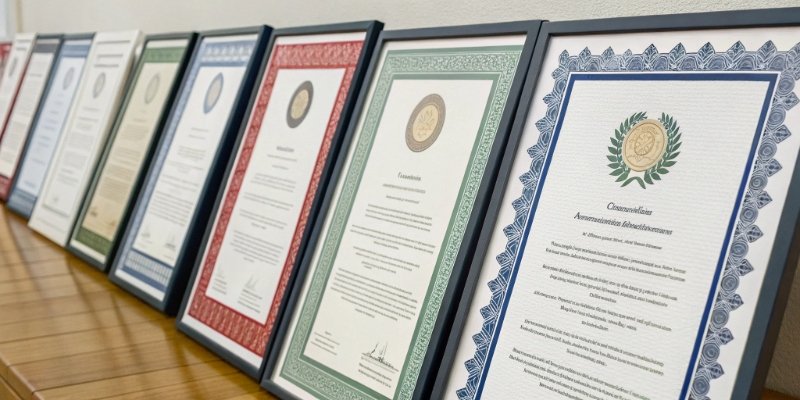
Understanding the different types of Certificates of Conformity is the first step toward compliance. Each one serves a distinct purpose and is issued by a different authority. Picking the right one from the start saves you a huge amount of effort. Over my 18 years in this industry, I have helped clients secure all types of certifications for markets across the globe. Let’s clarify the three main types you'll encounter.
The type of certificate you need is directly tied to your business activity. For example, a scale used to sell products by weight in a local market needs a different certificate than one used to ensure quality in a factory that exports to Europe. Here is a breakdown to help you distinguish between them:
| Certificate Type | Primary Purpose | Who Issues It? | Legal Power | Common Use Case |
|---|---|---|---|---|
| Verification Certificate | Ensures fair trade and meets legal weight & measure laws. | Government Metrology Institute | Legally Binding for Trade | Selling goods by weight (e.g., food, materials). |
| Calibration Certificate | Verifies technical accuracy against a known standard. | Accredited Lab (e.g., CNAS) or Manufacturer | Not for Legal Trade | Internal quality control, process manufacturing, labs. |
| CE Certificate | Declares conformity with EU health, safety, and environmental standards. | EU Notified Body | Required for EU Market Access | Exporting any electronic scale to the European Union. |
Who will issue a certificate of conformity?
Are you confused about who has the official authority to certify a scale? Submitting your product to the wrong agency will cost you valuable time and resources. I can clarify this.
Certificates are issued by specific bodies based on the certificate’s purpose. Government metrology institutes issue legal-for-trade certificates. Accredited third-party labs issue calibration certificates. For EU market access (CE mark), designated EU "Notified Bodies" are the only ones who can issue the certificate.
Knowing who to turn to is critical. The credibility of your certificate depends entirely on the authority of the institution that issues it. As a manufacturer, we work closely with these different organizations to ensure our products meet global standards. It's essential that you, as a buyer or user, also understand their distinct roles.
The Issuing Authorities Explained
-
Government Metrology Institutes: These are state-run or state-appointed bodies, like the local Market Supervision Bureau's metrology department. Their primary role is to uphold the law in trade. They perform mandatory verification2s to protect consumers and businesses. Their certificate is a legal document. In many countries, like here in China, the fee for this mandatory testing for trade use is covered by the government.
-
Accredited Third-Party Laboratories: These are private companies that have been officially recognized for their technical competence by an accreditation body, such as CMA (China Metrology Accreditation) or CNAS (China National Accreditation Service for Conformity Assessment). They perform calibrations, not legal verifications. Their certificates are used to prove a scale's accuracy for quality management systems (like ISO 90013) or internal process control.
-
EU Notified Bodies: These are independent organizations designated by an EU country to assess whether a product meets the essential requirements of EU directives, such as EMC (Electromagnetic Compatibility) and LVD (Low Voltage Directive) for electronic scales. Only a Notified Body can issue a CE certificate4 that allows you to legally place your product on the European market.
What if I don't have a certificate of conformity?
Are you thinking about skipping certification to save some time or money? The risks associated with this decision are huge, ranging from legal fines to blocked shipments and lost customers.
Without the correct Certificate of Conformity, your scale may be illegal for trade, leading to fines and legal action. For exports, products will be stopped at customs. You also risk losing business from any client who requires certified equipment for their own quality and compliance standards.
In my experience, trying to bypass certification is one of the costliest mistakes a business can make. It might seem like a shortcut, but the potential consequences create much bigger problems down the line. We build our scales to pass certification from day one because we know it’s not just a piece of paper; it’s a non-negotiable requirement for doing business professionally and legally. The risks are simply too high to ignore.
Let's break down exactly what you stand to lose by not having the proper certification. The impact goes far beyond a simple fine; it can affect your operations, finances, and brand reputation.
| Risk Area | Specific Consequence of No Certificate | How It Hurts Your Business |
|---|---|---|
| Legal & Compliance | Using an unverified scale for trade is illegal. | Authorities can impose heavy fines, invalidate transactions, and even shut down your operation. |
| Market Access | Products without a required CE mark are rejected by EU customs. | Your shipment will be blocked, leading to costly delays, return shipping fees, and failed orders. |
| Financial | Using an inaccurate, uncalibrated scale in production. | Leads to product inconsistency, material waste, incorrect shipping weights, and direct profit loss. |
| Reputation | Failing to provide certified equipment to B2B clients. | You will be seen as unreliable and unprofessional, leading to lost contracts and damaged customer trust. |
Conclusion
Getting the right certificate for your scale isn't just about rules. It ensures accuracy, legal operation, and market access, protecting your business and building trust with your customers.
-
Understanding the significance of a CoC can help ensure compliance and avoid legal issues. ↩
-
Learn about the necessity of mandatory verification for legal trade compliance. ↩
-
Discover how ISO 9001 standards influence calibration processes for quality assurance. ↩
-
Discover the steps to secure a CE certificate for exporting to the EU market. ↩
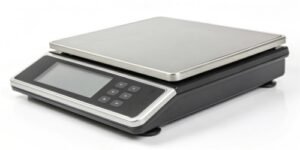

[…] the device, making it unusable. More importantly, many industrial scales must have metrology certifications7 to be used for legal trade. Any unapproved change to the core weighing software can void this […]