
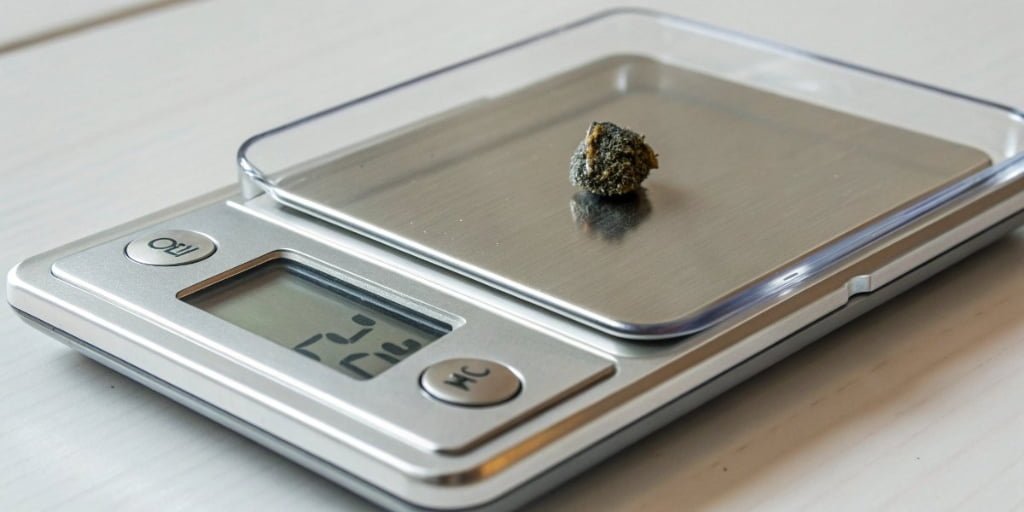
Struggling to measure a tiny amount on your scale? It is frustrating when the display won't budge. The key is ensuring your scale has the necessary precision for the task.
To weigh a tenth of a gram, you must use a digital scale with readability of 0.1g or better. A standard 1g scale cannot do this. Place a container, tare it, and slowly add material until the display reads '0.1 g'. The key is the scale's precision.
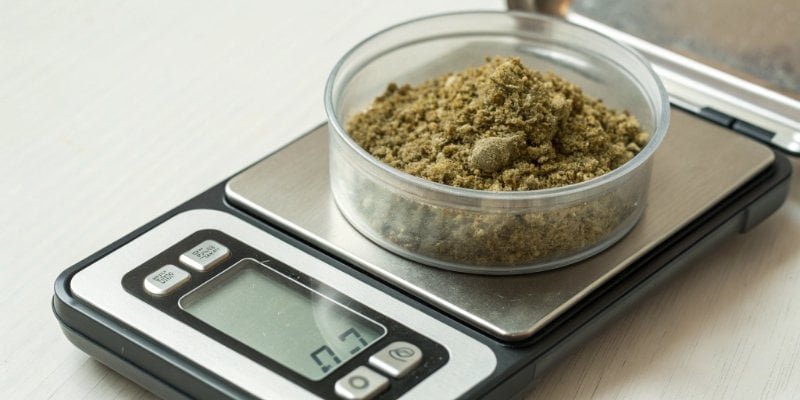
You see, getting an accurate small measurement isn't about a secret technique. It's about understanding the tools you are using. Let's break down what these small weights mean and why your scale might be struggling. This knowledge will help you choose the right equipment every time.
What weight is a tenth in grams?
Have you ever wondered what a tenth of a gram actually is? It seems impossibly small. Understanding this tiny unit is the first step toward accurately measuring it every time.
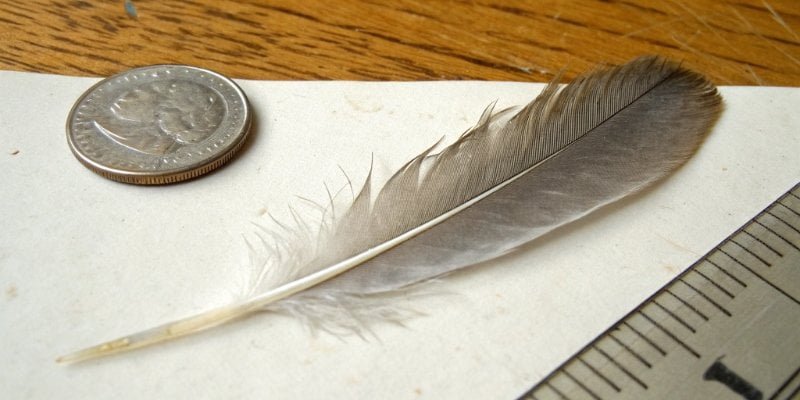
A tenth of a gram is written numerically as 0.1 grams. It is a very small mass. For context, a small paperclip weighs about one gram, so a tenth of a gram is a fraction of that. This level of precision is critical in many industries.
At my company, Weigherps, we often get questions about this. A client once called, frustrated that their new system wasn't working. Their software was designed to add ingredients in 0.1g increments, but their scale, a standard gram scale, wouldn't register the additions. The problem wasn't the software or the scale being broken. The issue was a mismatch in capability. A scale with 1-gram readability can only display weight in full gram increments (1, 2, 3...). It simply cannot "see" 0.1 grams1.
Understanding Minimum Weight
Most scales also have a minimum weight capacity2. Below this weight, the reading is not guaranteed to be accurate, or it may not show a reading at all. For a scale designed to weigh up to 5000g with 1g readability, the minimum weight might be 5g or 10g. Trying to measure 0.1g on such a device is like trying to measure a single grain of sand with a bathroom scale. It's just the wrong tool for the job.
What is 0.1 of a gram called?
Do you hear different names for small weights and feel confused? Using the wrong term can cause costly mistakes. Let's quickly clarify the correct name for 0.1 grams.
A tenth of a gram (0.1 g) is officially called a decigram. While you won't hear this term in the kitchen, it is common in scientific and technical fields. Knowing the correct terminology is vital when reviewing specifications or integrating weighing equipment with software systems.
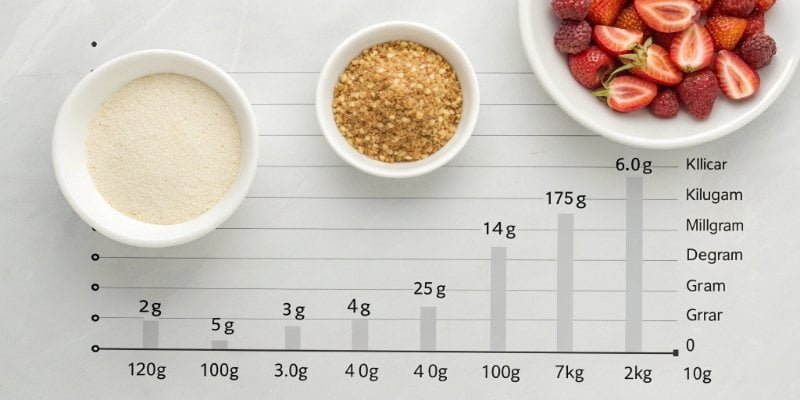
In practice, most people just say "zero point one grams." But for technical and software integration, precision in language is as important as precision in measurement. As a technical director or purchasing manager, you need to be sure the hardware you buy matches the units your software uses. A bug in a system could easily be caused by a misunderstanding between a gram, a decigram3, and a milligram. We build our weighing systems with clear data outputs to avoid this confusion, ensuring seamless integration4. This simple knowledge prevents complex problems down the line.
Common Metric Weight Prefixes
| Prefix | Symbol | Value (in grams) | Common Name |
|---|---|---|---|
| kilo- | kg | 1000 g | Kilogram |
| (none) | g | 1 g | Gram |
| deci- | dg | 0.1 g | Decigram |
| centi- | cg | 0.01 g | Centigram |
| milli- | mg | 0.001 g | Milligram |
What does a tenth look like on a scale?
You carefully add a small amount, but the number on your scale doesn't change. Is it broken? No, the display is actually giving you a clue about its own limits.
On the wrong scale, one with 1-gram readability, a tenth of a gram looks like nothing. The display will continue to read "0 g". On the right scale, with 0.1-gram readability, it will clearly show as "0.1 g". The appearance depends entirely on the scale's resolution.
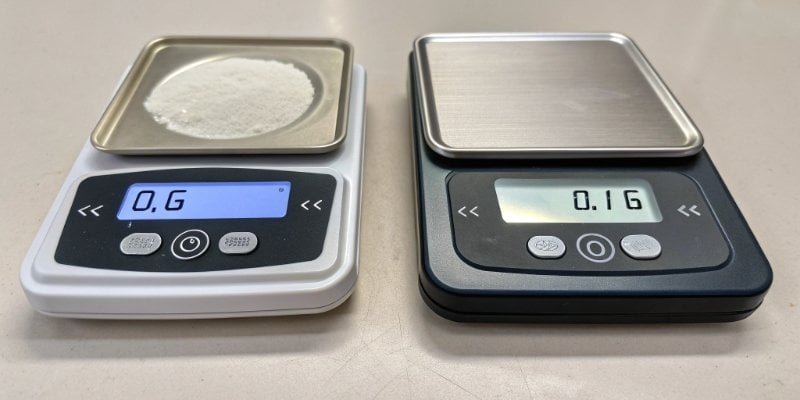
Let's break down exactly what you would see. We test this constantly in our quality control5 department. You need to verify that a scale responds correctly at its advertised precision.
Scale Behavior Breakdown
- On a 1g Readability Scale: You start adding your material. You add 0.1g, 0.2g, even 0.5g. The display reads "0 g" the entire time. It might flicker between "0 g" and "1 g" as you get close to one gram, but it will never show "0.1 g". The scale is not sensitive enough to register the small change.
- On a 0.1g Readability Scale: You tare the scale so it shows "0.0 g". As you slowly add the material, the display will change to "0.1 g" once you have added at least that amount. This is the correct behavior and what you need for this task.
This visual feedback is critical. For many of our clients in automation, their systems rely on the scale sending this precise digital signal. Without it, their entire process would fail.
What is a 0.1 g scale?
Searching for a precision scale but confused by the technical terms? Choosing the wrong one is a waste of money. Let's define the one key feature you need to look for.
A "0.1 g scale" is a digital scale that has a readability (also called resolution or division) of one-tenth of a gram. This simply means the smallest increment of weight it can show on its display is 0.1 grams. These are often categorized as precision scales.
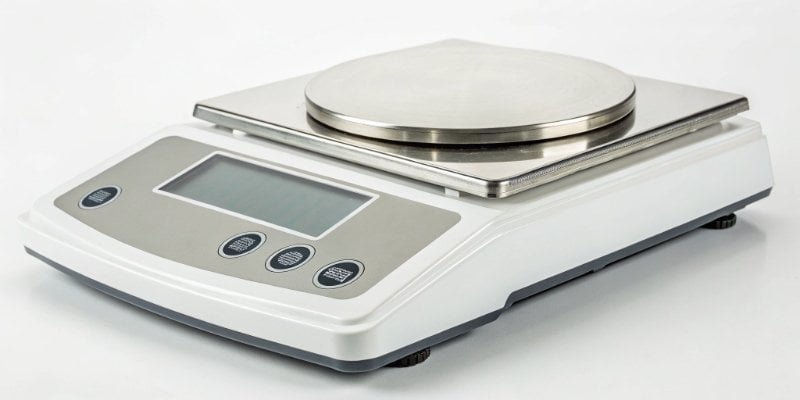
However, readability is only part of the story, especially for professional applications. As a manufacturer for global brands, we know that technical buyers6 look beyond just one number. You also need to consider accuracy and capacity7. Think of it like a car's speedometer. A speedometer that shows tenths of a mile per hour has high readability. But if it's always 5 mph off, it has low accuracy. Both are important. Our job is to provide industrial scales8 that are not only readable but also consistently accurate, allowing your operations and software to rely on the data they produce.
Key Scale Specifications
| Specification | What It Means | Why It Matters for You |
|---|---|---|
| Readability | The smallest increment the scale can display (e.g., 0.1g). | Determines if you can even see the weight you need to measure. |
| Accuracy | How close the displayed weight is to the true weight. | Ensures your formulas and processes are correct, not just precise. |
| Capacity | The maximum weight the scale can measure. | You need a scale that can handle your heaviest loads while retaining precision. |
| Repeatability | The scale's ability to show the same result when weighing the same object multiple times. | Crucial for automated systems and quality control where consistency is key. |
Conclusion
To weigh a tenth of a gram, you need a scale with 0.1g readability or better. Choosing the right tool is not a detail; it's essential for accuracy and success.
-
Explore methods for accurately measuring small weights like 0.1 grams. ↩
-
Discover how minimum weight capacity affects measurement accuracy and scale performance. ↩
-
Find out more about decigrams and their significance in scientific measurements. ↩
-
Explore the concept of seamless integration and its importance in weighing technology. ↩
-
Learn how quality control processes rely on accurate weighing for consistency. ↩
-
Understand the criteria technical buyers consider when selecting scales for precision. ↩
-
Understand the relationship between accuracy, capacity, and effective weighing. ↩
-
Discover the various applications of industrial scales in different industries. ↩


Comments (0)