

Are you confused about how a simple scale can tell you your weight? It's not magic, but it involves a clever bit of science that turns force into a number.
Modern digital scales calculate weight using a load cell containing a strain gauge. When an object is placed on the scale, gravity deforms the strain gauge, changing its electrical resistance. An internal processor converts this electrical signal into a final weight reading displayed in kilograms or pounds.
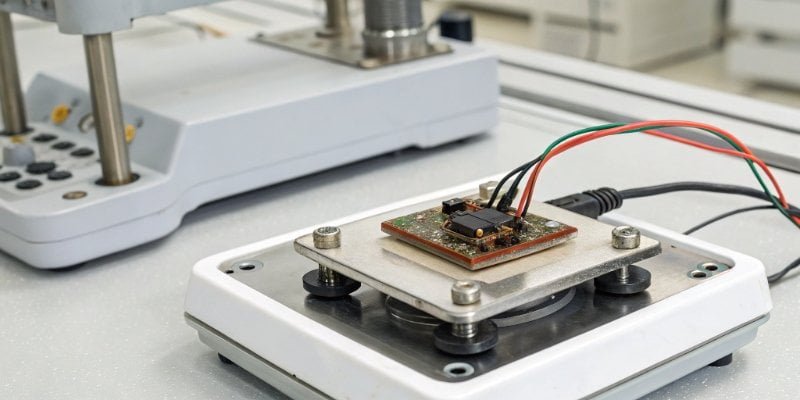
I've been in the scale manufacturing business for almost 20 years, and one thing I've learned is that the principles behind even the most complex industrial scales1 are rooted in simple physics. People often get tied up in the technical details, but the core idea is straightforward. This technology is what separates modern digital scales2 from the old balance beams of the past. But understanding this process often brings up another, more fundamental question I hear all the time. It’s a question about what we are actually measuring. Let's explore that, because getting it right is the foundation of all accurate weighing.
Is 70 kg my mass or weight?
You step on the bathroom scale and it reads "70 kg." You tell your friend you weigh 70 kilograms. But is that technically correct? Let's quickly clear up this common confusion.
When a scale reads 70 kg, it is displaying your mass. The scale measures the force of gravity on your body (your weight) but is calibrated to show the corresponding mass in kilograms (kg). So, while we say "weigh," the unit itself refers to mass.
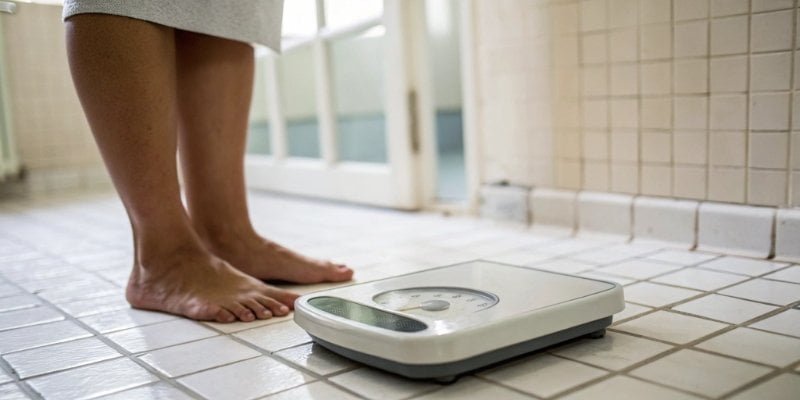
Let's dive a little deeper into this. In physics, mass and weight3 are two different things. Mass is the amount of "stuff" or matter in an object, and it's constant no matter where you are. Weight is the force of gravity4 acting on that mass. The formula is simple: Weight = Mass × Gravitational Acceleration (g).
On Earth, a person with a 70 kg mass exerts a downward force of about 686 Newton5s (70 kg * 9.8 m/s²). Your scale measures this force in Newtons. However, showing "686 N" on a bathroom scale would be incredibly confusing for most people. So, the scale's internal processor does a quick calculation. It divides the force it measures by the local gravitational acceleration6 to give you the result in kilograms—the unit of mass we all understand.
Mass vs. Weight: A Quick Comparison
| Feature | Mass | Weight |
|---|---|---|
| Definition | The amount of matter in an object. | The force of gravity acting on an object's mass. |
| Unit | Kilogram (kg) | Newton (N) |
| Changes? | No, it's constant everywhere. | Yes, it changes depending on gravity (e.g., on the moon). |
| Measures | How much "stuff" you are made of. | The gravitational pull on that "stuff". |
In our factory, this distinction is critical. We have to calibrate our industrial scales for the specific regions they will be used in because gravity isn't exactly the same everywhere on Earth. A scale calibrated in Shanghai might give a slightly different reading in London if not adjusted. This is why we focus on making sure the conversion from force (weight) to the displayed unit (mass) is perfect.
Is 60 kg my mass or weight?
You see "60 kg" on a display and call it your weight. Everyone knows what you mean, but is it the right term? This simple number actually hides a common physics misunderstanding.
The reading "60 kg" represents your mass. Although a scale works by measuring the force of your weight, it is designed to display the result in kilograms, which is the standard unit for mass. In everyday language, we use "weight" and "mass" interchangeably.
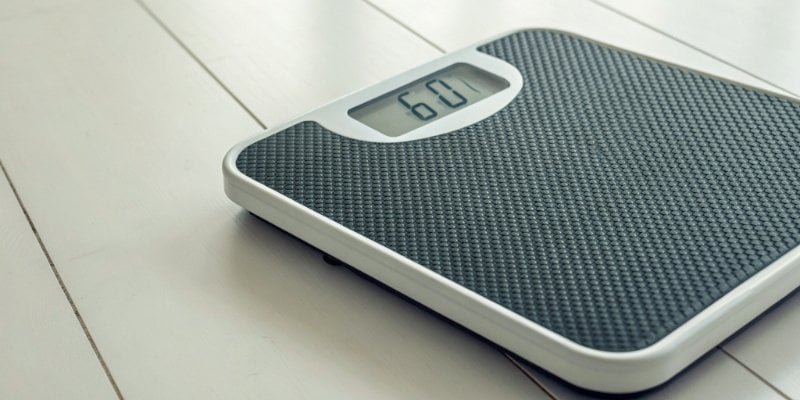
So, what is your actual weight if your mass is 60 kg? As we covered, your weight is a force, measured in Newtons. A person with a 60 kg mass has a weight of approximately 588 Newtons (60 kg multiplied by Earth’s gravity, ~9.8 m/s²). Now you can see why scales don't show Newtons. It's not a practical unit for daily life.
The amazing thing about modern scales is that they handle all this physics for you. The core component, the load cell7, is a force sensor8. When you stand on the scale, you compress it. A tiny component inside called a strain gauge9 gets deformed, which changes the electrical current passing through it. The scale's microchip measures this change with extreme precision and instantly converts it to kilograms.
As a manufacturer, we sometimes get requests for scales that do display force in Newtons. These are typically for scientific labs or specialized engineering applications where measuring pure force is necessary. For 99% of our clients, from retail stores to industrial warehouses, showing a clean, simple mass in kilograms is exactly what they need to run their business effectively.
What is my mass if I weigh 100kg?
This sounds like a trick question, but it gets to the heart of how we talk about weight. You step on a scale, it reads 100 kg, and you say, "I weigh 100 kg." So what is your mass?
If a scale says you weigh 100 kg, your mass is 100 kg. The key is that in everyday language, we use the verb "to weigh" to mean "to have a mass of." The scale measures force but is calibrated to display mass.

The confusion comes from our language. A physicist would say, "This object has a mass of 100 kg," which results in a weight of about 980 Newtons on Earth. But that's a mouthful. So, we just say it "weighs" 100 kg.
This is a huge difference from how weighing used to be done. My insight from the industry is that ancient scales, like a balance with two pans, were true mass-measuring devices. They worked by directly comparing an unknown mass (your object) with a known mass (a set of weights). When the pans balanced, you knew the masses were equal, regardless of gravity.
Modern electronic scales are completely different. They don't compare masses. They measure force. Here is the process broken down:
- You place the 100 kg mass on the scale.
- Gravity pulls it down with a force of about 980 Newtons.
- This force squeezes a component called a load cell.
- Inside, a strain gauge's electrical resistance changes.
- A microprocessor10 reads this electrical change and, using the formula
Mass = Force / Gravity, calculates and displays "100.00 kg."
It’s an indirect measurement, but it’s incredibly fast, precise, and practical for everything from weighing vegetables to giant industrial trucks.
Is 50 kg my mass or weight?
The scale shows "50 kg." Is that your mass or your weight? The answer is simple, but it is very important for understanding how modern measurement technology works.
A scale reading of 50 kg is your mass. The kilogram (kg) is a unit of mass, which measures the amount of matter in an object. Weight is the force of gravity on that mass, which is technically measured in Newtons. Your scale shows mass for simplicity.

Why does this technical difference matter, especially to a professional like a purchasing manager or a software developer at a tech company? It’s all about data integrity11 and system integration.
Imagine your company is developing software for a global logistics network. A package with a 50 kg mass will always have a 50 kg mass, whether it’s in Denver or at sea level in Amsterdam. However, its weight (the force it exerts) will be slightly different in those two locations due to differences in altitude and gravity. If your system relies on ultra-precise force measurements for automation, robotics, or scientific modeling, you must know whether the data from the scale is a true mass value or a force value12.
This is where we, as manufacturers, play a crucial role. When we provide our APIs and SDKs at Weigherps, our documentation is crystal clear. Our scales output a calculated mass value by default. But for advanced clients in aerospace, pharmaceuticals, or material science, we can configure the scale's firmware to output the raw force data in Newtons. This flexibility ensures our clients' systems operate with the exact data type they need, preventing critical errors. It's also why our quality control department is so rigorous. We test every single unit to guarantee that its conversion from force to mass is repeatable and accurate to the gram.
Conclusion
Modern scales measure the force of weight but are calibrated to display mass in kilograms. Understanding this difference is key to accurate and meaningful measurement in any industry or application.
-
Discover the various applications of industrial scales in different sectors and their importance in accurate measurement. ↩
-
Learn about the technology behind digital scales to understand their advantages over traditional weighing methods. ↩
-
Clarifying the distinction between mass and weight is essential for accurate scientific understanding and everyday applications. ↩
-
Understanding the force of gravity is fundamental to grasping how weight is determined on Earth. ↩
-
Understanding the unit of force, Newton, is vital for comprehending weight measurements and physics principles. ↩
-
Discover how gravitational acceleration influences weight measurements and why it varies in different locations. ↩
-
Understanding load cells is crucial for grasping how modern scales function and ensure accurate weight measurements. ↩
-
Explore the technology behind force sensors to understand their applications in weighing and measurement. ↩
-
Explore the role of strain gauges in various technologies, including scales, to appreciate their importance in measurement. ↩
-
Learn how microprocessors enhance the functionality and accuracy of digital scales in everyday use. ↩
-
Learn about the significance of data integrity in measurement systems to ensure accurate and reliable results. ↩
-
Understanding force values is essential for accurate data interpretation in various scientific and industrial applications. ↩



Comments (0)