
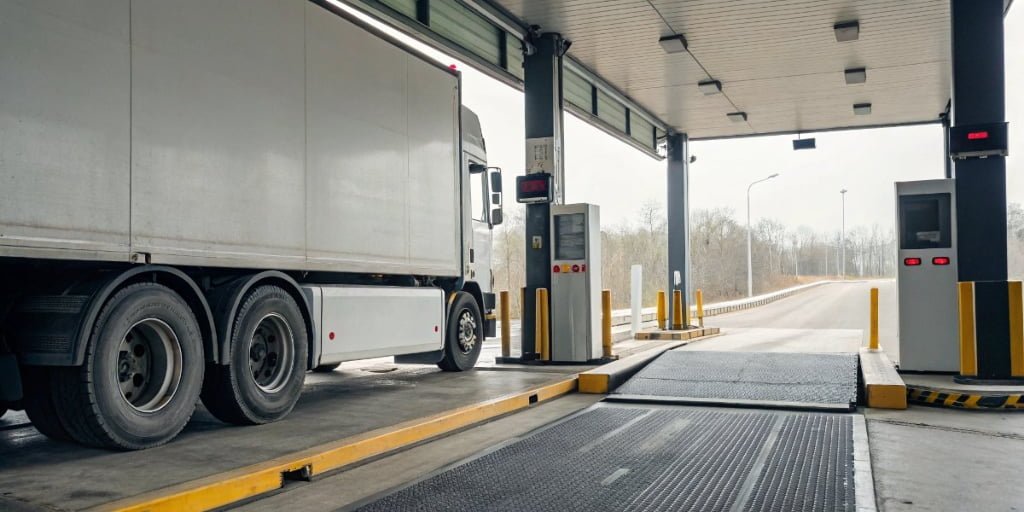
Seeing that line of trucks ahead can be frustrating. You wonder how this whole system works and why it takes so long. But the technology behind it is quite smart.
A truck weigh station scale uses a system of load cell sensors embedded in a large platform, called a weighbridge. As a truck passes over, these sensors measure the pressure from each axle and the total gross weight, converting it into instant digital data for compliance checks.

Weigh stations are a critical part of road safety and infrastructure maintenance. They might seem like simple checkpoints, but they operate like a massive, automated quality control system1 for our highways. I've spent nearly two decades in the industrial weighing industry, and I see the same core principles we use in factory scales applied on a grand scale here. These stations ensure that trucks are not overloaded, which can damage roads and bridges and make the vehicle unsafe to operate. Let's break down exactly how this technology functions and what it means for drivers and fleet managers. It all starts with the truck scale itself.
How do truck scales work?
You see a huge steel or concrete plate in the road, but how can it possibly weigh a 40-ton truck? The inner workings seem complex. We'll show you it's based on a simple, robust principle.
A truck scale, or weighbridge, works using multiple sensors called load cells. When a truck drives onto the scale platform, its weight compresses these load cells. They convert this physical force into an electrical signal, which an indicator then translates into a precise weight reading.
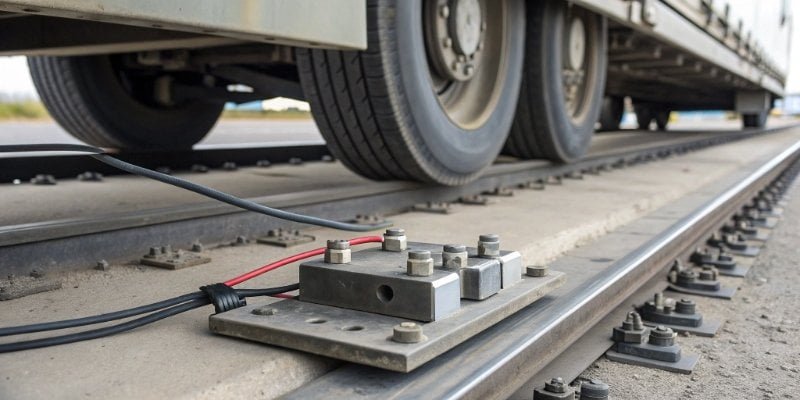
As a manufacturer, we build these systems from the ground up, so I can tell you it's all about the components working together perfectly. Modern truck scales are sophisticated pieces of engineering. The real magic happens with the load cells hidden underneath the main platform. Think of them as the heart of the scale. When a massive force is applied, they send a tiny electrical signal2. An electronic device called an indicator, or terminal, takes these small signals from all the load cells, adds them up, and runs them through an analog-to-digital converter3. The final result is the weight you see on the screen. It is crucial that these components are high quality and perfectly calibrated.
Key Components of a Truck Scale
| Component | Function | Why It's Important |
|---|---|---|
| Weighbridge | The large platform that vehicles drive onto. | Must be rigid and durable enough to support immense weight without flexing, which would cause inaccurate readings. |
| Load Cells | The sensors that measure the weight. | The accuracy of the entire system depends on the quality and placement of the load cells. Digital load cells offer better accuracy. |
| Indicator | The electronic "brain" that processes signals and displays weight. | It powers the load cells, converts their signals into a reading, and can connect to other systems like printers or software. |
| Junction Box | A sealed box that connects the load cell cables to the indicator. | It protects sensitive wiring from damage and environmental factors, ensuring a stable signal and long-term reliability. |
What happens if you're overweight at a weigh station?
The red light flashes, and you're waved to the side. An overweight violation means fines, delays, and a major headache. Knowing the process helps you understand how to prevent it.
If a weigh-in-motion system detects an overweight truck, it alerts the station operator. The system may automatically photograph the truck's license plate. The driver is then usually directed to a static scale for a precise re-weigh and faces fines or must adjust the load.
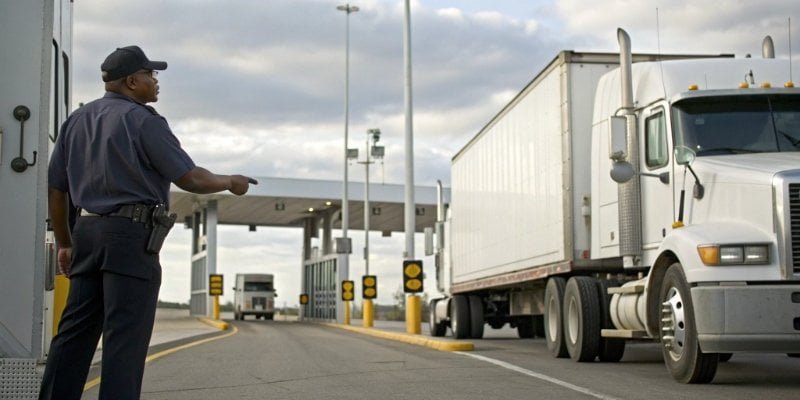
You can think of a weigh station as a giant checkweigher system. In our factories, we design checkweighers that automatically weigh products on a conveyor belt. If a box is too heavy or too light, the system rejects it. A weigh station does the same thing, just with much bigger "products." The first screening is often done with a "weigh-in-motion" (WIM) system that lets trucks pass at a low speed. It's designed for speed, not perfect accuracy. If the WIM system flags a truck as potentially overweight, it acts like a filter.
The Overweight Detection Process
This is how the system typically escalates an overweight situation.
- Initial Screening (Weigh-in-Motion): The truck passes over WIM sensors. The system checks the gross vehicle weight and axle weights against legal limits. If it's within limits, the truck gets a green light to proceed.
- The Trigger: If the WIM reading exceeds the legal limit (plus a small tolerance), an alarm is triggered in the control booth. The system signals the driver to pull over for a second, more accurate measurement.
- Static Weighing: The driver is directed to a static truck scale. Here, the truck stops completely on the weighbridge4 for a highly accurate reading. This measurement is the one used for legal enforcement.
- Enforcement: If the static scale5 confirms the truck is overweight, the officer will issue a citation. The penalties vary widely by location and how overweight the truck is. They can range from a warning to thousands of dollars in fines. In severe cases, the truck may be put out of service until the load is lightened.
How does a weighing scale work?
We use scales all the time, from the bathroom to the grocery store. But how does it turn the simple act of placing something on it into a number? The science seems hidden away.
At its core, a modern electronic scale uses a sensor called a load cell. When you put an object on the scale, the force of its weight deforms the load cell. This deformation is converted into a weak electrical signal, which is then amplified and displayed digitally as weight.

This fundamental principle is the same whether we are building a lab balance that measures milligrams or a truck scale that weighs tons. It all comes down to translating physical force into a measurable electrical signal. The key component is the load cell, which is a type of transducer. Inside the load cell is a precision-machined metal structure with small sensors called strain gauges6 bonded to it. When weight is applied, the metal structure bends ever so slightly. This tiny movement stretches or compresses the strain gauges, changing their electrical resistance.
From Force to Digital Reading
The journey from physical weight to a digital number on a screen involves a few critical steps.
- Strain Gauges Change Resistance: As the load cell flexes under weight, the electrical resistance of the strain gauges attached to it changes. This change is very small but directly proportional to the amount of force applied.
- Creating a Voltage Signal: The scale's electronics pass a small, stable voltage through the strain gauges. The change in resistance results in a change in the output voltage signal. This signal is still very weak, often measured in millivolts.
- Analog-to-Digital Conversion (ADC): This tiny analog voltage signal is not something a digital display can understand. It must be converted into a digital value. This is the job of the Analog-to-Digital Converter (ADC), a crucial microchip in the scale's indicator. A better ADC means a more precise and stable weight reading. The accuracy of all our scales, from the smallest to the largest, relies heavily on the quality of this conversion process.
How does a forklift scale work?
Weighing every pallet on a static floor scale is a slow, multi-step process. It interrupts your workflow, wastes fuel, and costs labor. There has to be a more efficient way.
A forklift scale integrates load cells directly into the forklift itself, usually on the fork carriage. When the operator lifts a pallet, the scale instantly weighs the load. The weight is displayed on an indicator inside the cab, eliminating the need for a separate floor scale.
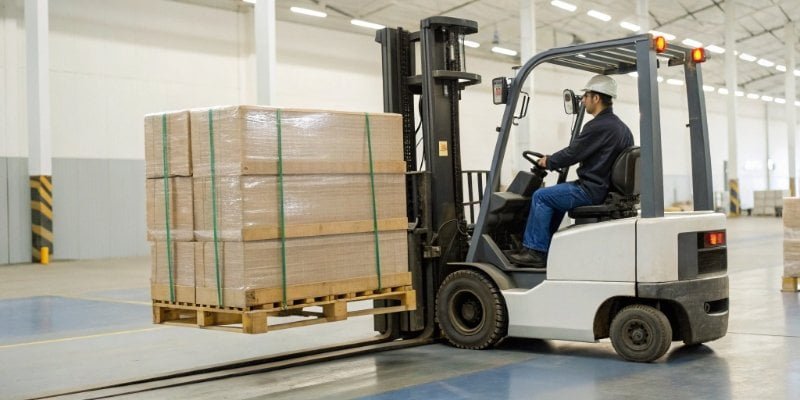
This is one of my favorite applications of weighing technology because it provides such a clear return on investment. It turns a standard piece of material handling equipment into a smart, mobile weighing station. For a software provider, this is an area rich with opportunity. The real power isn't just in getting the weight; it's what you do with that data. Our role as a manufacturer is to provide the rugged, reliable hardware that captures an accurate weight every single time, even in a tough warehouse environment. Then, we make it easy to get that data out.
Integrating Weighing into Your Workflow
Forklift scales can be connected wirelessly via Bluetooth or Wi-Fi to a Warehouse Management System7 (WMS) or Enterprise Resource Planning8 (ERP) system. This is where your software solutions come in. When a pallet is lifted and weighed, that data—along with a timestamp, product ID, and location—can be sent directly into the central system. It completely removes manual data entry, which is a huge source of errors in inventory management.
| Traditional Weighing Process | Process with Forklift Scale |
|---|---|
| 1. Pick up pallet from rack. | 1. Pick up pallet and instantly see weight. |
| 2. Drive to floor scale. | 2. Drive directly to loading dock or next location. |
| 3. Put pallet down. | |
| 4. Record weight manually. | |
| 5. Pick pallet up again. | |
| 6. Drive to loading dock. |
This simple change eliminates multiple steps, saving time and fuel on every single pallet moved. It empowers businesses to transform their logistics from a manual process into a real-time, data-driven operation9.
Conclusion
From highway weigh stations to warehouse forklifts, modern weighing technology works by converting physical force into valuable digital data, making operations safer, more efficient, and smarter.
- Discover the role of weigh stations in maintaining road safety and infrastructure. ↩
- Explore the science behind how weight is converted into digital data. ↩
- Learn about the technology that ensures accurate weight readings in modern scales. ↩
- Learn about the importance of weighbridges in ensuring safe and compliant transportation. ↩
- Gain insights into the precise measurement process used for overweight trucks. ↩
- Learn about the critical components that enable precise weight measurements. ↩
- Understanding this integration can enhance your logistics and inventory management. ↩
- Explore how ERP systems can optimize operations through accurate data collection. ↩
- Learn how data-driven approaches can enhance efficiency in various industries. ↩



Comments (0)