
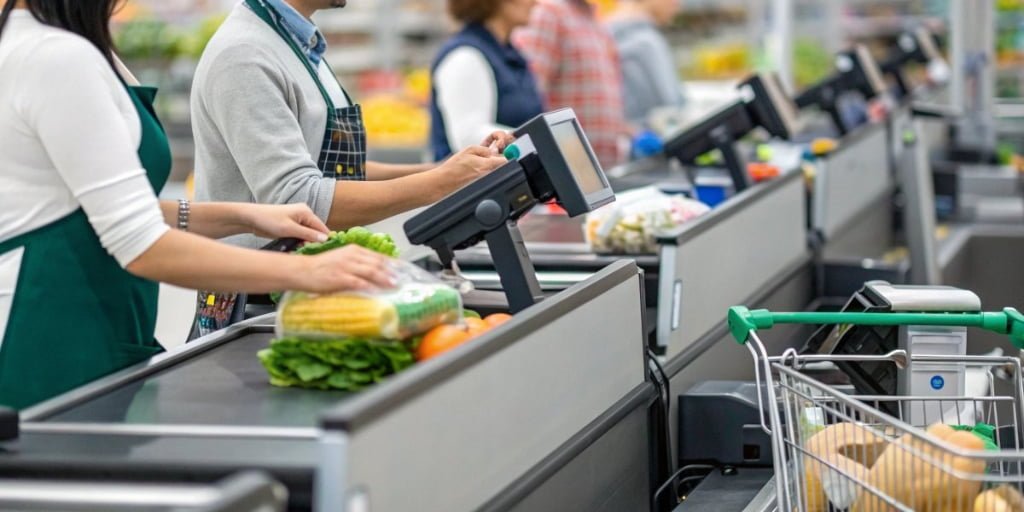
Are you tired of waiting in long checkout lines? The speed difference between cashiers can be huge. The secret isn't just training; it's the advanced technology they use.
The incredible speed at grocery checkouts comes from a combination of high-speed, multi-directional barcode scanners and highly efficient, integrated weighing scales. In modern stores, AI-powered scales can even automatically identify produce, completely removing the need for manual lookups and making the entire process faster.
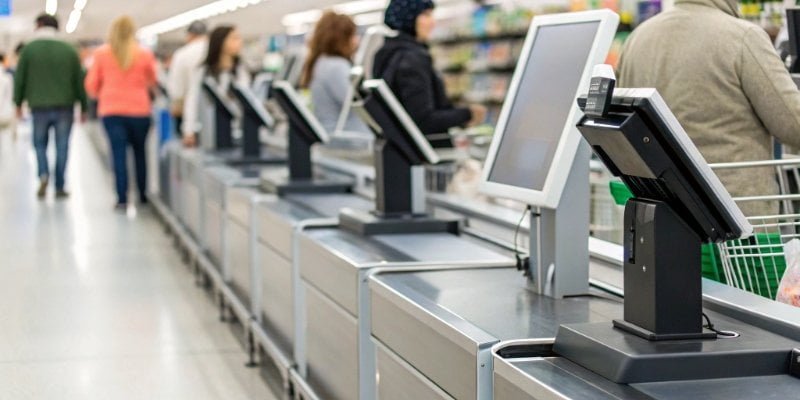
You've probably marveled at how a skilled cashier can process a full cart in just a couple of minutes. It looks like magic, but it is a perfectly designed system where human skill meets powerful technology. This system has been refined over decades to get you out of the store as quickly as possible. Want to understand the secrets behind the speed, from special product packaging to the scales that prevent theft? Let's dive into the details that make it all work.
What is the 5 4 3 2 1 rule for groceries?
Do you ever feel like there's a secret code to using the checkout line? A way to make everything smoother. It can be frustrating to just pile things on the belt randomly.
The "5 4 3 2 1 rule" is a customer method for organizing groceries on the conveyor belt to speed up the process. It's a simple memory aid for grouping similar items, which helps the cashier maintain a steady rhythm and makes bagging much easier for you.
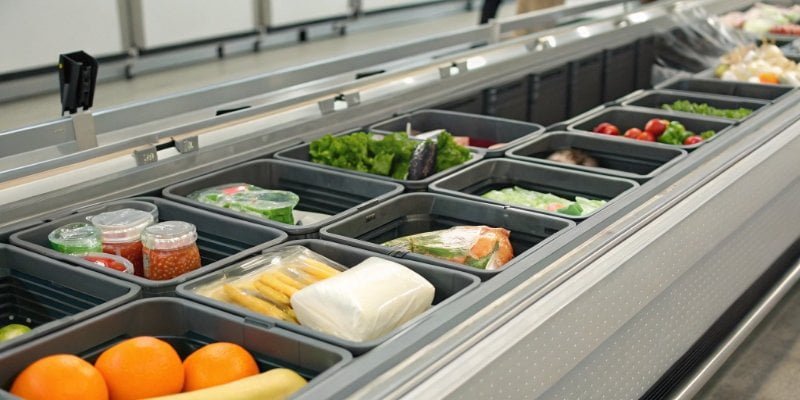
This rule is more of a helpful guideline for shoppers than a strict procedure for cashiers. The main idea is to put similar items together so the cashier can get into a flow. It also makes your job of bagging much simpler. While this organization helps, I’ve seen from my 19 years in the weighing industry that modern technology is what truly dictates the speed. Our advanced checkout scales are designed to process items quickly, no matter how they are placed on the belt. A great system supports the cashier, reducing their dependency on how organized the customer is. The goal is consistent speed for every transaction.
Here is a simple breakdown of the rule:
| Group | Item Type | Examples |
|---|---|---|
| 5 | Boxed/Sturdy Items | Cereal, crackers, pasta boxes |
| 4 | Canned/Jarred Goods | Canned vegetables, soup, sauces |
| 3 | Fresh Produce | Apples, bananas, lettuce |
| 2 | Frozen Items | Frozen pizza, ice cream, vegetables |
| 1 | Fragile Item | Eggs, bread, chips |
How do Aldi cashiers scan so fast?
Have you ever been to an Aldi? Their checkout speed is almost shocking. It makes you wonder why every other store feels so slow in comparison. The answer is a brilliant system.
Aldi cashiers scan so fast because of smart product and process design. Most Aldi products feature multiple, extra-large barcodes, so items scan from any angle. Cashiers also sit and slide items directly into a cart, which eliminates the time spent bagging and minimizes physical effort.
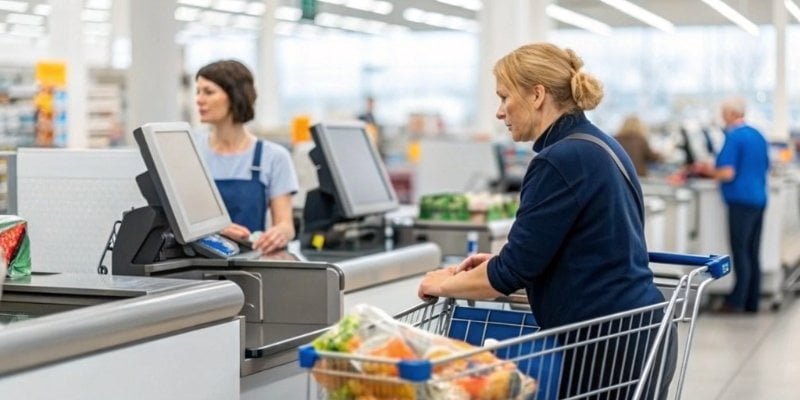
At Weigherps, we admire efficiency, and Aldi is a masterclass in it. Their entire checkout process is optimized to remove wasted seconds. The most important innovation is on the packaging itself. Instead of one small barcode, their products have several large ones. This means the cashier doesn't have to waste time rotating the item to find the code; the scanner will pick it up on the first pass. Their checkout stations are also ergonomically designed. The cashier sits, reducing fatigue, and simply slides items past the scanner from one cart to another. This removes the entire bagging step from their workflow, putting the responsibility on the customer after they pay. This focus on process optimization is something we build into our custom weighing solutions. We identify every bottleneck and design a system to eliminate it.
| Traditional Checkout Step | Aldi Checkout Step | Time Saved |
|---|---|---|
| Pick up item | Slide item | Less movement |
| Rotate to find barcode | Scan from any angle | No searching |
| Place item in bagging area | Slide into next cart | Eliminates bagging |
| Bag the items | Customer bags at a separate counter | Shifts responsibility |
How do grocery scanners work?
That red light at the checkout counter seems like magic. You see the light cross the barcode, you hear a beep, and the item and price appear on the screen. It happens so fast.
A grocery scanner shines a light source, like a laser or LED, onto a barcode. A sensor then reads the pattern of light reflected from the barcode's black and white lines. This pattern is instantly converted into numbers, which the store's computer uses to find the item's details.

The technology behind this everyday task is quite fascinating. The scanner isn't "reading" the numbers you see below the barcode. It's reading the pattern of the bars themselves. In my experience, the biggest evolution has been from single-line laser scanners to bi-optic imagers1. These new scanners sit flat in the counter and use cameras to capture the barcode from multiple angles at once—from the bottom and the side. This is why cashiers can just slide items across them without even aiming.
But what about items without barcodes, like fresh fruits and vegetables? This was always the slowest part of checkout. The cashier had to find the item on a screen or memorize dozens of codes. Today, we are moving beyond that. As a company specializing in IoT and smart weighing, we are at the forefront of the next big step: AI-powered scales2. These systems use a camera and artificial intelligence to visually identify the product. The cashier places apples on the scale, the camera sees them, identifies them as "Granny Smith Apples," and weighs them instantly. This innovation is closing the final gap in checkout speed.
How do they catch shoplifters at self-checkout?
With no one watching you closely, it might seem easy to cheat a self-checkout machine. You may wonder how stores protect themselves from theft in these areas. There's a lot of hidden technology at work.
Self-checkouts use a security system centered around a highly sensitive weight scale in the bagging area. When you scan an item, the system knows its expected weight. If the weight of the item you place in the bag doesn't match, it triggers an alert for an employee to investigate.

This is an area where our expertise in industrial scales is critical. The scale in the bagging area is the silent guardian of the self-checkout. Every single product in the store's database has an associated weight. The system works by constantly comparing the expected weight of scanned items3 to the actual weight change on the scale. If there is a mismatch, the system freezes and calls for help. This is why our rigorous quality control is so important. Every scale we ship is tested for perfect accuracy because even a small error can lead to false alarms and customer frustration, or worse, missed theft. This is combined with video surveillance, sometimes with AI that can detect suspicious movements, like when a customer pretends to scan an item but doesn't.
| Scenario | Expected Weight Change | Actual Weight Change | System Response |
|---|---|---|---|
| Scans expensive coffee, bags cheap noodles | 1 lb (Coffee) | 0.2 lb (Noodles) | ALERT! "Please wait for assistance." |
| Doesn't scan an item, bags it anyway | 0 lb | +0.5 lb (Avocado) | ALERT! "Unexpected item in bagging area." |
| Scans one item, bags two | 0.8 lb (Cereal Box) | +1.6 lb (Two Boxes) | ALERT! "Please remove the last item." |
Conclusion
Ultimately, fast grocery checkouts are not magic. They are a smart combination of efficient store processes and advanced technologies like barcode scanners, and increasingly, AI-powered weighing scales that streamline every step.
-
Learn about the advanced scanning technology that allows for faster and more accurate item scanning. ↩
-
Learn about the technology behind AI-powered scales and their role in speeding up checkout processes. ↩
-
Explore the process that ensures accurate weight measurements for effective theft prevention. ↩


Comments (0)