
Juggling separate scanners, scales, and printers is a recipe for inefficiency and errors. This disjointed process slows down your entire workflow. An all-in-one device is the key to finally integrating these tasks.
An IoT-integrated scale is the ultimate solution. By combining a barcode scanner, a high-precision scale, and a thermal printer into one unit run by an embedded operating system, you create a single point of action. This streamlines the entire process, drastically reducing handling time and eliminating data entry errors.
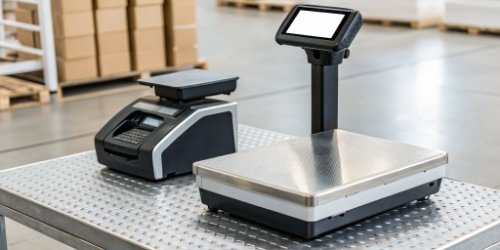
In my 19 years in the industrial weighing industry, I've seen countless warehouses and production lines struggle with the same bottleneck: the packing station. An employee scans a package with a handheld gun, walks to a separate scale, jots down the weight, then moves to a computer to print the label. Each step is a potential point of failure. This experience showed me that simply making a better scale wasn't enough; we needed to reimagine the entire workflow. The goal became clear: to merge these separate actions into one fluid motion on a single device. As software vendors know, hardware that simplifies a process is the best partner for powerful software. Let's explore how this integration is not just possible, but a game-changer for efficiency.
What Technologies Enable Efficient "Scan-Weigh-Print" Integration in a Single Device?
Your software is powerful, but it's limited by clunky hardware setups. This dependence on multiple devices creates integration headaches and support calls. The right underlying technology in a single device can solve this.
The core technologies are an embedded operating system (like Android), integrated high-speed scanners and printers, and robust IoT connectivity modules (Wi-Fi, 4G, Bluetooth). Crucially, a comprehensive Software Development Kit (SDK) allows your software to communicate directly with all hardware components seamlessly.
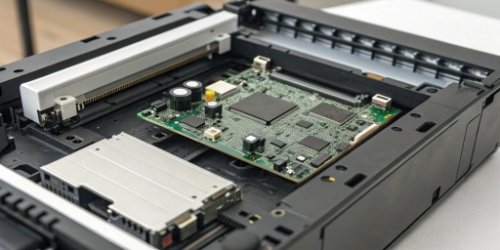
Let's break down how these technologies work together. At the heart of the device is an embedded system, which acts as the brain. We often use Android because of its flexibility and vast developer community. This allows us to run complex applications directly on the scale. The scanner isn't just a USB peripheral; it's an integrated module that the system can trigger instantly. The same goes for the thermal printer1. When a package is scanned, the embedded OS receives the data, your application processes it, queries the integrated weighing sensor for the weight, and then sends the final data directly to the built-in printer for a label. This all happens in a split second. For you as a software provider, our SDK gives you total control. You aren't juggling multiple drivers; you're using one clean API to command every function.
Key Integrated Technologies
| Technology | Function | Benefit for Software Vendors |
|---|---|---|
| Embedded OS (Android) | Runs the core logic and user interface. | Easy to develop and deploy custom applications. |
| Integrated Scanner | Captures barcode data instantly. | No need for separate drivers or hardware management. |
| IoT Connectivity (Wi-Fi/4G) | Transmits data to cloud or local servers. | Ensures real-time data sync2 for your software platform. |
| SDK/API | Provides a programming interface. | Allows deep, reliable integration with your software. |
How Can You Optimize Workflow with an All-In-One "Scan-Weigh-Print" System?
Manual data transfer between devices is a huge time sink. An operator weighs an item, writes it down, then types it into a computer, inviting costly errors. This inefficiency directly impacts your client's bottom line.
An all-in-one system optimizes workflow by consolidating all tasks at a single station. It eliminates physical movement between devices and automates data capture. This reduces a multi-step process to a single action, cutting processing time per package by over 50% and virtually eliminating transcription errors.
I once audited a medium-sized e-commerce fulfillment center. We timed their packing process. The average time to weigh, record, and label a single package was 25 seconds. After implementing our integrated IoT scales, that time dropped to just 11 seconds. The reason is simple: you remove all the "in-between" steps. The operator places the box on the scale, the device scans the order barcode, and the label prints automatically. There is no writing, no typing, no moving. The system does it all. This consolidation is a massive value-add for your software. Instead of just managing data, your software, paired with our hardware, actively drives physical workflow efficiency. It transforms a logistical bottleneck3 into a high-speed checkpoint, directly impacting your customer's productivity and profitability.
Workflow Comparison: Before vs. After
| Traditional Workflow (Multiple Devices) | Integrated Workflow (Single Device) |
|---|---|
| 1. Pick up package. | 1. Place package on the scale. |
| 2. Walk to the scale. | 2. Device automatically scans barcode and weighs. |
| 3. Place package, wait for reading, write it down. | 3. System sends data to server and receives label info. |
| 4. Walk to the PC. | 4. Label prints automatically. |
| 5. Manually type in weight and dimensions. | |
| 6. Click "Print". | |
| 7. Get the label from the printer. |
This simplification is the core of operational excellence.
What Are the Key Features of a Device That Combines Scanning, Weighing, and Printing Processes?
Your clients demand hardware that is robust, user-friendly, and powerful. A device that feels flimsy or has a clumsy interface will reflect poorly on your software, no matter how good it is. The hardware must be an asset.
Key features include a high-precision, OIML-certified weighing sensor, an industrial-grade 1D/2D barcode scanner, a high-speed thermal printer, and a responsive touchscreen. For software integration, essential features are robust connectivity (Wi-Fi, Ethernet, Bluetooth) and comprehensive SDK support for full hardware control.
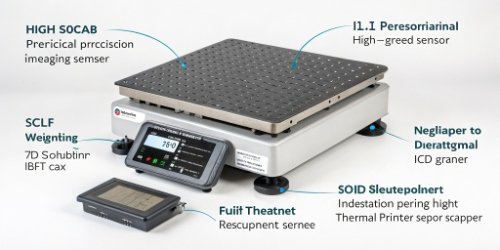
When designing these devices, we focus on industrial realities. The weighing platform uses durable stainless steel and a load cell that passes rigorous testing for accuracy and longevity. The scanner isn't a cheap consumer part; it's a fast-reading engine designed for thousands of scans a day, even on poorly printed barcodes. The printer mechanism is chosen for reliability and speed, to keep up with a fast-paced environment. Critically, we build them with an intuitive touchscreen interface running on an open OS. This "hardware-as-a-platform" approach is what our software partners value most. Your application becomes the star of the show, running on a purpose-built, reliable machine. Our quality control department tests every single unit—weight, battery, software, and all—before it ships, ensuring the hardware is a dependable foundation for your software solution.
How Does a Single Device Implement Seamless "Scan-Weigh-Print" Functionality?
From a technical standpoint, making three different hardware pieces "talk" to each other can be a nightmare of conflicting drivers and protocols. You need a system where the integration is already solved at the core level.
A single device implements this by using a central processor running an operating system that natively controls all components. The process is event-driven: the barcode scan triggers a data lookup, the system automatically captures the stable weight, and your software logic finalizes the data before printing the label.
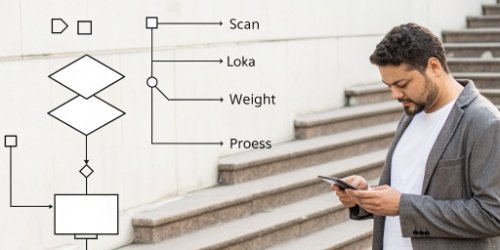
Think of it as a single, unified data loop. Here's exactly how it works on one of our IoT scales: An operator places a package on the platform. The built-in scanner reads the barcode. This scan event is instantly passed to your application running on the scale's OS. Your app uses that barcode data to query your server for order details. Simultaneously, the OS polls the weighing sensor. Once the weight is stable, it locks the value and passes it to your app. Now, your application has all the necessary data: order details from the server and precise weight from the sensor. It performs its calculations (e.g., shipping cost) and then uses our SDK to format and send the final data to the integrated thermal printer. A label emerges. The entire sequence is automated and takes only a few seconds, all within one device.
Conclusion
An IoT all-in-one scale is the definitive answer for an integrated "Scan-Weigh-Print" workflow. It streamlines operations, eliminates errors, and provides a powerful, reliable hardware platform for your software.


Comments (0)