

Struggling with costly manual weighing errors? These inaccuracies hurt your profits and reputation. Calculating the true ROI shows how smart scales can quickly pay for themselves.
To calculate the true ROI, you must look beyond the initial purchase price. Factor in direct labor savings, reduced material waste from errors, and increased throughput. Also, consider long-term gains like improved data accuracy, better compliance, and an enhanced brand image.

The initial cost on a quote is just one number. The real story of your investment is told in the daily operations that follow. I’ve spent nearly two decades in this industry, and I’ve seen countless companies transform their profitability by looking at the bigger picture. The numbers on a spreadsheet don’t always capture the full story of efficiency, safety, and brand reputation. But to really get a grip on the numbers, you need a clear process. Let’s walk through the exact steps to assess this powerful upgrade for your factory.
What Steps Are Involved in Assessing the ROI of Upgrading to a Smart Weighing System?
Feeling overwhelmed trying to justify a system upgrade? An unclear proposal can get shot down, keeping your team stuck with inefficient and outdated processes that cost you money every day.
First, benchmark your current costs, including labor and errors. Next, get a quote for the new system’s total cost of ownership. Then, project the savings and efficiency gains. Finally, use the ROI formula: (Net Profit / Total Investment) x 100.

I always advise clients to start with a simple, honest look at their current state. You can’t know where you’re going if you don’t know where you are. Breaking down the assessment into manageable steps removes the guesswork and builds a solid business case that even the most skeptical CFO can’t ignore. It’s about turning abstract benefits into concrete figures.
Benchmarking Current Operations
Before you can see the benefit of something new, you have to measure the true cost of what you’re doing now. Start by tracking the exact time your team spends on manual weighing tasks each day. Then, conduct a small audit to find your error rate. How often do shipments go out with the wrong weight? Calculate the cost of that wasted material or the cost of handling a customer complaint. These are your baseline costs—the money you are already spending.
Calculating Total Investment
The next step is to understand the full investment. This isn’t just the price on the sales quote. As a manufacturer, we believe in full transparency. Your total investment includes the hardware, but also installation fees, training for your team, and any necessary software integration with your existing systems like an ERP. Getting a complete picture prevents surprise costs later and gives you the true "Total Investment" number for your ROI calculation.
Projecting Future Gains
This is where it gets exciting. Based on your benchmarks, project the savings. If you can reduce weighing time by 50%, what does that equal in labor costs? If you eliminate errors, what is the value of the material saved? Add in the value of increased throughput1—how many more units can you ship per day with a faster system? Sum these up to get your "Net Profit" or total gain.
How Can You Measure the Financial Benefits of Investing in Advanced Weighing Technology?
Having trouble proving the financial worth of a smart scale? If you can’t show the real numbers, decision-makers will just see a big expense, not a strategic investment for growth.
Measure financial benefits by tracking reductions in labor costs per weighing task and calculating the money saved by eliminating product giveaway. Also, quantify the revenue increase from higher production throughput. These are hard numbers that demonstrate clear financial gains.
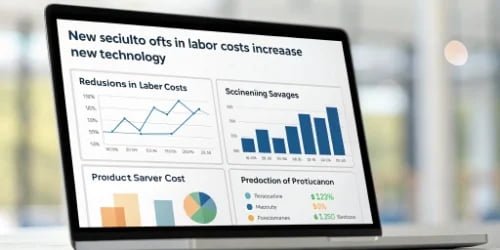
Putting a dollar value on "efficiency" or "accuracy" can feel abstract. But in my experience, it’s very straightforward if you know where to look. I worked with a client in the food processing industry who was hesitant about the upgrade cost. We sat down and focused on just two key metrics: product giveaway and labor. The numbers were so compelling that the system paid for itself in under nine months. Let’s look at how to find these numbers in your own operation.
Quantifying Labor Savings
This is the easiest benefit to calculate. Use this simple formula: (Time saved per weighing task in hours) x (Number of tasks per day) x (Average hourly labor rate) x (Number of workdays per year). For example, saving just 30 seconds per weigh-in over 500 weigh-ins a day with a labor rate of $20/hour adds up to over $20,000 in savings a year. That alone can make a huge impact. This is a direct, tangible saving that is easy to present and defend.
Calculating Error Reduction Value
Human error is a hidden but significant cost. "Product giveaway," where you send out slightly more product than required in each package, can add up to thousands of dollars in losses. An intelligent system can be set to precise tolerances, eliminating this waste. To calculate this, determine your average overage per package and multiply it by the number of packages you ship. This value, the "Cost of Inaccuracy," drops directly to your bottom line as pure profit once it’s eliminated. It also prevents under-fills, which lead to customer complaints and costly returns.
Monetizing Increased Throughput
Faster weighing means more product moves through your facility. This is a direct path to increased revenue2. If your current manual process is a bottleneck, a smart system can unlock your true production capacity. Calculate how many more units you can process and ship each day with the new system. Then, multiply that number by your profit margin per unit. This shows how the investment doesn’t just save money—it actively generates new revenue for the business.
What Factors Influence the Return on Investment for Intelligent Weighing System Upgrades?
Is your calculated ROI lower than you had hoped? You might be overlooking crucial factors that can dramatically change the outcome and reveal the true, much higher, value of the upgrade.
Key factors include your production volume—higher volume means faster ROI. The cost of errors in your industry is also crucial. Finally, the system’s integration capability with your existing ERP or WMS software can unlock massive, otherwise hidden, efficiency gains.
ROI isn’t a one-size-fits-all number. A system that delivers a 12-month ROI for a high-volume chemical plant might have a 24-month ROI for a smaller food producer. That’s perfectly fine. The important thing is to understand the variables that affect your specific situation. As an OEM/ODM provider, we build solutions tailored to our clients’ markets because we know these factors matter. Beyond the obvious numbers, there are several "soft" factors that have a very hard and positive impact on your return.
Production Scale and Complexity
This is a major driver. A factory that weighs thousands of items a day will see savings accumulate much faster than one that weighs a hundred. The more you use the system, the faster it pays for itself. Similarly, if your weighing process is complex, involving multiple ingredients or data points, the time savings and error reduction from an automated system are magnified, leading to a much higher and faster ROI.
The "Soft" but Powerful Factors
These are the benefits that are harder to quantify but are often the most impactful in the long run. I’ve seen these factors transform businesses. They build a stronger, more resilient, and more profitable company over time. Here’s how they contribute to your ROI:
| Factor | How It Boosts ROI |
|---|---|
| Factory Image | A modern, efficient factory attracts higher-value clients and top talent. |
| Standardization | Ensures consistent product quality, which builds brand trust and reduces costly defects. |
| Data & Compliance | Automated data logging simplifies audits and helps avoid huge fines for non-compliance3. |
| Worker Safety | Ergonomic systems reduce physical strain and accidents, lowering insurance and liability costs. |
These factors contribute to your company’s long-term health and profitability. A better factory image can support premium pricing, while strong compliance protects you from catastrophic financial risk.
How Do You Evaluate the Cost Savings of Implementing a Modern Weighing Solution?
Worried about the high initial cost of a modern weighing solution? Focusing only on the price tag can obscure the massive, ongoing savings that the right system delivers every single day.
Evaluate direct savings by calculating reduced labor hours and eliminated material overages. Then, evaluate indirect savings by estimating the cost avoidance from fewer billing disputes, lower staff turnover, and reduced administrative work. These combined savings reveal the true value.
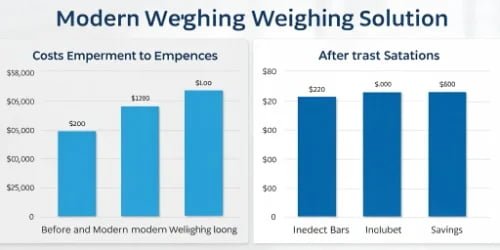
I often tell purchasing managers to think of it like this: you’re not just buying a piece of equipment; you’re cutting existing expenses out of your budget forever. The initial investment is a one-time event, but the savings appear on your profit and loss statement month after month, year after year. The key is to look at all the areas where costs will go down, not just the obvious ones. Our quality inspection department tests every single unit for this very reason—to ensure it delivers reliable savings from day one.
Tallying the Direct Savings
These are the most straightforward savings to calculate. Start with labor. We’ve already discussed the formula, but it’s worth repeating its power. Reducing labor tied up in manual, repetitive tasks frees your team for higher-value work. Next is material savings. Eliminating even a small 1% product giveaway in a high-volume operation can translate into tens of thousands of dollars saved annually. These two figures alone often provide a compelling case for the investment. They are your immediate, measurable returns that start the day the system is turned on.
Uncovering the Indirect Savings
Here is where the true, transformative value lies. These savings are often overlooked but are critical for understanding the full financial impact. A smart system that integrates with your other business software creates a ripple effect of efficiency across the entire company.
| Indirect Saving Area | How a Smart System Helps |
|---|---|
| Reduced Admin Work | Data is sent automatically to your billing or inventory system, cutting hours of manual data entry and spreadsheet management. |
| Improved Customer Retention | Accurate orders mean happy customers. This reduces the time and money spent on handling complaints, processing returns, and re-shipping orders. |
| Lower Training Costs | Modern, intuitive interfaces are faster for new employees to learn than complex, unwritten manual processes, reducing onboarding time. |
| Data-Driven Decisions | With accurate, real-time data, your managers can make smarter purchasing and production decisions, preventing overstocking and shortages. |
When you add these indirect savings4 to the direct ones, the financial case becomes undeniable. It shifts the discussion from "Can we afford this?" to "How quickly can we implement this and start saving?".
Conclusion
Calculating true ROI goes beyond initial cost. It’s about seeing the full value in saved labor, eliminated errors, and smarter, long-term growth for your entire operation.
-
Increased throughput can lead to higher revenue and operational efficiency. ↩
-
Increased revenue is a key indicator of business success and sustainability. ↩
-
Understanding compliance can help avoid costly fines and improve operational integrity. ↩
-
Indirect savings can significantly enhance the financial case for technology upgrades. ↩


Comments (0)