

Inaccurate weighing can cost your business money and customer trust. You might worry about tampering. Understanding how it happens is the first step to stopping it.
Cheating on a digital scale involves physical manipulation, environmental interference, or software tampering. Methods range from improper object placement to altering calibration or using malicious code. For businesses, preventing this is vital for fairness, legal compliance, and profitability.

Understanding these vulnerabilities is not about learning how to cheat. It's about protecting your business. As a manufacturer with nearly two decades of experience, I’ve seen how crucial it is to secure weighing processes. Tampering can happen, but it can also be prevented. The key is to know what you’re up against. In this article, we’ll explore the techniques used to fool scales and, more importantly, how you can defend your operations and ensure every measurement is accurate and trustworthy. Let’s dive in.
What Techniques Are Used to Manipulate Digital Weight Scale Readings?
Hidden manipulations can silently drain your profits. Unscrupulous individuals might be using simple tricks you don't even know exist. Let's expose these common cheating techniques.
Common methods include incorrect placement of items, exploiting environmental factors like air drafts, and using software overrides. Advanced cheating involves unauthorized recalibration or installing manipulated firmware to systematically misreport weight. Knowing these helps you build strong defenses.
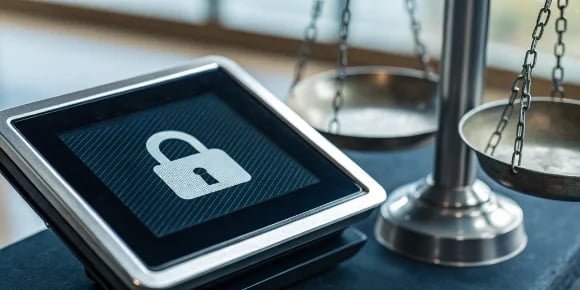
In my years in the industry, I've seen that manipulation techniques fall into two main categories. It’s crucial for any purchasing manager or technical director to understand them.
Physical and Environmental Manipulation
This is the most common and low-tech form of cheating. It doesn't require any special tools, just a bit of cleverness. For example, leaning on the scale or placing an object so it’s partially supported by something else are classic tricks. We also see issues with environmental factors. A strong air draft from a vent or an open door can affect the readings on a sensitive scale. Vibrations from nearby machinery can also cause the numbers to fluctuate, which can be exploited to record a lower or higher weight. As manufacturers, we design our scales with robust load cells and shielding to minimize these effects, but awareness is the first line of defense.
Software and Electronic Tampering
This is a more sophisticated method that our clients, especially software vendors, should be very concerned about. It involves altering the scale's internal settings. A dishonest operator with access to the calibration1 menu could intentionally recalibrate the scale with an incorrect weight, making all future measurements inaccurate. A more sinister approach is manipulating the firmware. We have heard of cases where malicious code2 is installed on a scale's circuit board. This code can be programmed to under-report weight by a specific percentage, making it very difficult to detect without a full system audit. This is why we build our scales with secure, often sealed, electronics and offer software with audit trails3 to track any changes to settings.
| Manipulation Type | Method | How to Prevent It |
|---|---|---|
| Physical | Off-center loading, leaning on the scale. | Proper training for all operators. |
| Environmental | Using air drafts or vibrations4. | Place scales in a stable, controlled environment. |
| Calibration Fraud | Entering incorrect reference weights. | Restrict access to calibration menus with passwords. |
| Firmware Hacking | Installing malicious software. | Partner with a trusted manufacturer with secure software. |
How Can You Spot Tampering or Cheating on Digital Scales?
You suspect inaccurate readings but have no way to prove it. This uncertainty damages trust in your data and your team. Let's look at the clear signs of a compromised scale.
Look for inconsistent readings, physical evidence like broken tamper-proof seals or loose wires, and strange entries in audit logs. The most reliable method is regularly checking the scale with certified test weights to spot any deviations immediately.
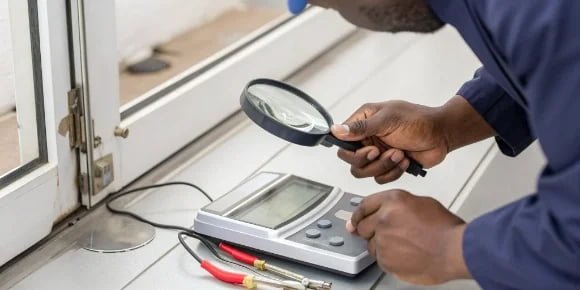
From my experience, catching tampering5 early comes down to having a routine and knowing what to look for. You don't need to be a technical expert to spot the most common red flags. It's about diligence and process.
Conduct Regular Physical Inspections
Start with a simple visual check. We equip many of our industrial scales with tamper-proof seals6 over key access points, like the calibration switch or a data port. If that seal is broken or looks different, it’s a major warning sign. Check the cables and connections. Are there any unusual splices or wires that look out of place? Look at the overall condition of the scale. Has the cover been pried open? These physical clues are often the first indication that someone has tried to interfere with the hardware. A quick daily or weekly walk-around to inspect your scales can save you a lot of trouble down the road.
Perform Performance-Based Checks
A scale’s performance is its most honest feature. The simplest check is a zero test. With nothing on the platform, does the scale read zero? If not, there could be a problem. The most crucial check, however, is using a known, certified test weight. If you place a 10kg test weight on a scale and it reads 9.8kg or 10.2kg, you know something is wrong. This could be a simple calibration issue, or it could be deliberate tampering. Performing this test at the start of every shift is a best practice we recommend to all our clients. It creates a reliable baseline and makes it nearly impossible for long-term cheating to go unnoticed.
Audit Your Data and Access Logs
For our clients who integrate weighing data into their software systems, the data itself can reveal cheating. Sudden, unexplainable shifts in average weights or material usage can be a sign of a problem. Modern IoT scales, like the ones we develop, often have detailed audit logs. These logs record every calibration, setting change, and user access. If your software vendor can help you review these logs, you can easily spot unauthorized activity. For example, if a calibration was performed at 2 AM by an unauthorized user, that’s a clear signal that something is wrong. This is where a strong partnership between the hardware manufacturer and the software provider becomes essential for security.
What Are the Risks and Consequences of Altering Digital Scale Measurements?
A "small" inaccuracy might seem harmless at first glance. But it can quickly spiral into huge financial losses, legal trouble, and a completely ruined business reputation.
The risks are immense, ranging from direct financial losses to severe legal penalties from weights and measures authorities. It also destroys customer trust and your brand's reputation, damage that is often permanent and impossible to recover from.

We don't just build scales; we build tools of trust for commerce. When that trust is broken, the consequences are severe. I always tell our partners that the cost of a good, accurate scale is nothing compared to the cost of a bad one.
Financial and Legal Repercussions
The most immediate impact is financial loss. If you are buying raw materials and your scale is cheated to over-report weight, you are paying for something you never received. Over time, this adds up to a significant amount. Conversely, if you are selling goods and the scale under-reports, you are giving away products for free. Beyond your own losses, you face serious legal problems. In our home market and globally, there are weights and measures associations that enforce accuracy standards. I remember a case where a local business was found to be using deliberately miscalibrated scales. The fines imposed by the regulatory body were so heavy that they almost put the company out of business. These organizations have a lot of power, and they exist to ensure fair trade for everyone.
Reputational Damage and Loss of Trust
This, in my opinion, is the biggest risk of all. Your reputation is your most valuable asset. If a customer or supplier discovers you are using an inaccurate scale, the trust is gone. It doesn't matter if it was intentional or not. That news will spread quickly through the industry. Getting new business will become incredibly difficult, and keeping existing clients will be a struggle. For a software vendor whose reputation is built on providing reliable data solutions, being associated with a hardware partner who enables or ignores such issues is catastrophic. Once you are known as a company that can't be trusted, it's almost impossible to recover. This is why we are so strict about our own quality control; our reputation depends on it, and so does yours.
Why Is It Important to Ensure Accuracy in Digital Weight Scale Readings?
You might look at scale accuracy as just a technical detail. But in reality, it is the absolute foundation of your business integrity, operational efficiency, and profitability.
Accuracy ensures fair trade, builds customer trust, and guarantees you meet legal regulations. For any business, it is fundamental to profit calculation, inventory management, and maintaining a professional reputation. It is not just a number; it is your credibility.
We believe our vision is to be your most reliable weighing expert. This isn't just a marketing slogan. It's a core belief that accuracy is not a feature but the entire purpose of our existence as a company. It's the starting point for business success.
Accuracy as a Foundation for Fair Commerce
At its most basic level, weighing is about fairness. Whether you're selling grain by the ton or components by the gram, both the buyer and the seller need to trust the number on the display. This trust is the basis of all commerce. Without it, transactions become disputes. As a manufacturer selling to global brands, wholesalers, and retailers, we know that our clients' businesses depend on this principle. An accurate scale ensures that everyone in the supply chain gets what they paid for. It prevents conflicts, builds strong relationships, and allows businesses to trade with confidence. It is the silent, trusted referee in every transaction.
Optimizing Operations and Profitability
For the modern business, especially one that relies on sophisticated software, weight data is much more than just a number for a single transaction. It is critical data that feeds into your entire operation. Accurate weight readings are essential for precise inventory management7. They help you know exactly how much raw material you have and how many finished products are ready to ship. This data allows our clients' software to optimize production schedules, reduce waste, and manage logistics efficiently. When you can trust your weight data, you can make smarter business decisions that directly impact your bottom line. We empower our customers to use this technology to grow step-by-step, turning reliable data into real profit. Every product we ship has been fully tested by our quality inspection department because we know that operational excellence begins with an accurate measurement.
Conclusion
Cheating on scales carries severe financial and legal risks that can destroy a business. Ensuring accuracy is non-negotiable for maintaining trust, fairness, and profitability in all your operations.
The best defense is partnering with a reliable, compliant manufacturer who prioritizes integrity as much as you do.
- Discover the significance of calibration in maintaining accurate and reliable scale readings. ↩
- Learn about the dangers of malicious code and how it can compromise scale integrity. ↩
- Audit trails are crucial for tracking changes; learn how they enhance security. ↩
- Learn how vibrations can compromise scale accuracy and how to mitigate them. ↩
- Learn about tampering methods to better protect your business from potential threats. ↩
- Explore the importance of tamper-proof seals in protecting your scales. ↩
- Accurate weighing is key to effective inventory management and operational efficiency. ↩



Comments (0)