

Inconsistent product taste or a food safety recall is a nightmare. This often starts with inaccurate weighing. How can you ensure every batch is perfectly and safely made?
The best scales for food manufacturing offer high precision, hygienic design like stainless steel, and features like checkweighing. These tools ensure consistency, compliance with regulations, and protect consumers and your brand. They are the foundation of quality control.

Choosing the right scale is more than just picking one that shows a number. I've seen it many times in my 18 years in this business. A scale is a critical investment that secures your entire production line and protects your company's reputation. Let's explore what this really means for your quality control1 process and how to make the right choice.
What are the methods of quality control in the food industry?
Maintaining quality across your entire production can feel overwhelming with so many variables. One small slip can ruin an entire batch. So, what's the best way to keep everything in check?
Quality control in the food industry involves several key methods. These include raw material inspection, process control checks like portioning, and final product evaluation. Accurate weighing scales are a critical tool at every single stage of this process.
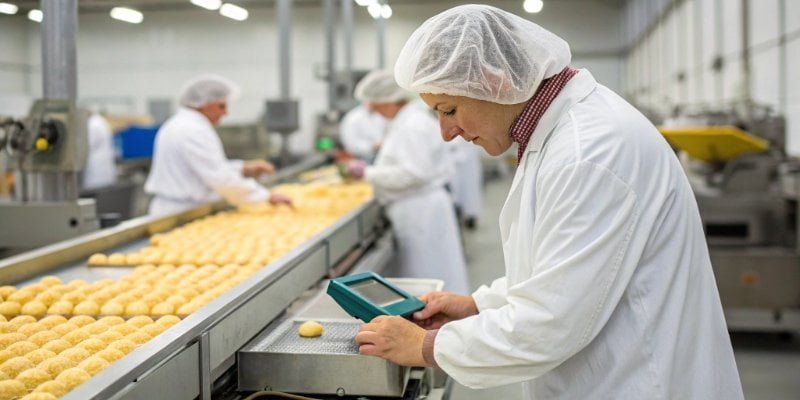
In food manufacturing, quality control isn't just a final step; it's a continuous process woven into every part of your operation. From the moment raw ingredients arrive at your facility to the moment the finished product is boxed for shipping, you are making critical checks. My experience has shown that companies who integrate weighing into each step see the best results. They protect their customers and their profits.
From Raw Materials to Final Product
The goal is to catch any potential problems early. A reliable weighing system is your first line of defense. It provides objective data that you can trust. For example, if a supplier sends you less flour than you paid for, your receiving scale will catch it. If an employee adds too much salt to a batch, an in-process scale will flag it. These checks prevent small errors from becoming major issues.
Key Quality Control Checkpoints
We can break down the main quality control points where a scale is essential. Each one plays a unique role in safeguarding your product.
| QC Method | Purpose | Role of Weighing Scale |
|---|---|---|
| Raw Material Checks | Verify supplier shipment weights and quality. | Bulk platform scales, high-precision bench scales. |
| Recipe Formulation | Ensure taste, texture, and consistency. | Precise bench scales for accurate ingredient measurement. |
| Portion Control | Standardize product size and control costs. | High-speed checkweighers on the production line. |
| Final Package Weight | Comply with net weight regulations2. | End-of-line checkweighers to reject incorrect packs. |
How do I choose a good scale?
Buying a new industrial scale can feel like a big investment. You worry about choosing the wrong one, wasting money on features you don't need, or getting a tool that constantly breaks down.
To choose a good scale, you must first define your needs. Consider the maximum weight (capacity) and the smallest increment you need to measure (readability). Then, look at the environment where you will use it and any special features you need.
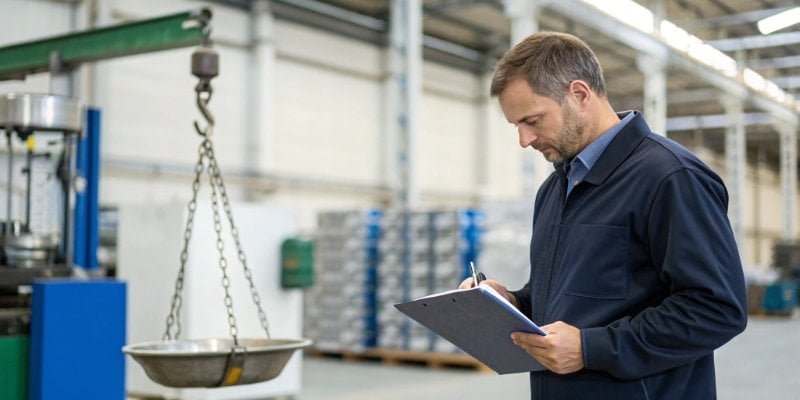
I remember a client who bought an expensive, high-capacity3 floor scale for their new spice mixing line. The scale was excellent, but it was designed to weigh pallets, not tiny amounts of saffron. It was a complete mismatch. They couldn't get the precision they needed, and their recipes were inconsistent. This simple story shows why understanding your specific application is the most important first step. You need a tool that is perfectly suited for the job you need it to do.
Define Your Basic Weighing Needs
Before you even look at a single model, you must answer two basic questions. Your answers will narrow down your options significantly and prevent you from buying the wrong tool.
- Capacity: What is the heaviest item you will ever need to weigh? Always choose a capacity slightly higher than your heaviest expected load to avoid damaging the scale's load cell.
- Readability: What is the smallest weight increment you need to see? This is about precision. For expensive ingredients or strict recipes, you need high readability4.
Match the Scale to Your Factory
Once you know your capacity and readability, think about the physical environment. A scale in a dry bakery has very different needs than one in a meat processing plant that is washed down daily.
| Factor | What to Ask Yourself | Why It Matters |
|---|---|---|
| Capacity | What is the heaviest item I will weigh? | Exceeding capacity damages the scale. |
| Readability | What is the smallest weight difference I need to detect? | Crucial for recipe precision and cost control. |
| Environment | Will the scale be washed down? Is the area dusty? | This determines the required IP rating5 and durability. |
| Application | Do I need to count items or check weights? | This ensures the scale has the software to do the job. |
What should I look for in a food scale?
You know a food scale needs to be accurate. But what else? Overlooking key features can lead to contamination risks or constant cleaning headaches. Are you missing something important for safety and compliance?
For a food scale, prioritize a hygienic design, such as all stainless steel construction and a high IP rating for easy washdowns. Also, look for NSF or other food-safe certifications to ensure it meets industry standards for safety.
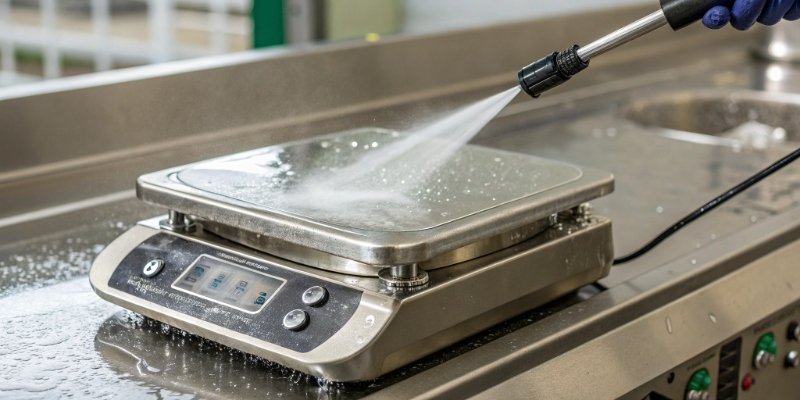
In the food industry, a scale isn't just a measurement tool; it's a piece of food processing equipment. It has to be as clean and safe as any other surface that comes near your product. I once visited a plant where they were using a standard shipping scale for weighing raw chicken. The scale had corners and crevices that were impossible to clean properly, creating a serious risk of cross-contamination. They switched to a sealed, stainless steel washdown scale, which immediately improved their sanitation process and reduced their risk.
Hygienic Design is Non-Negotiable
A scale designed for food production should have specific physical features that make it easy to clean and sanitize.
- Materials: Look for 304 or 316-grade stainless steel. It is durable and resists corrosion from harsh cleaning chemicals.
- Smooth Surfaces: The design should avoid sharp corners, exposed threads, and gaps where food particles and bacteria can get trapped.
- Easy Disassembly: A removable platform makes it simple to clean the area underneath, ensuring no hidden contamination.
Understanding Key Standards
Certifications and ratings are your guarantee that a scale is truly fit for a food environment.
| Feature | Importance in Food Manufacturing | Example |
|---|---|---|
| Stainless Steel Construction | Resists corrosion and prevents bacterial growth. | A platform and indicator made of 304-grade steel. |
| High IP Rating (e.g., IP68) | Allows for thorough cleaning with high-pressure water. | A scale that can be fully submerged for cleaning. |
| NSF Certification | Guarantees the scale is designed for safe food contact. | Look for the official NSF mark on the product label. |
| "Legal for Trade" Status | Required by law when you sell products based on weight. | NTEP (in the US) or OIML (International) approval. |
What is a weighing scale in the food industry?
Thinking a scale just shows a weight is a costly mistake. If you see it as just a simple tool, you might be missing out on valuable functions that can boost efficiency and cut waste.
In the food industry, a weighing scale is a critical quality control system. It is a powerful tool that ensures product consistency, guarantees food safety, and directly drives your profitability by controlling costs and reducing waste.

A modern industrial scale is much more than a box that shows numbers. It's a data-gathering device6 at the heart of your operation. We worked with a large bakery that was struggling with inconsistent loaf sizes. Their customers were starting to complain. By implementing a series of our checkweighers on their production line, they not only standardized their product but also identified where they were losing money from giving away too much dough. The data from the scales transformed their bottom line.
Beyond Basic Measurement
A weighing scale is your guardian of quality and your driver of profit. It does this in three key ways that impact your entire business.
- Guardian of Consistency: Scales ensure that every product you make has the exact same ingredients. This means the taste, texture, and quality are identical every time, which is what builds brand loyalty.
- Enforcer of Compliance: For packaged goods, weight is a legal requirement. End-of-line checkweighers automatically reject underweight or overweight packages, protecting you from fines and ensuring your customers get what they pay for.
- Driver of Profitability: The slightest overfilling on millions of packages adds up to a huge loss. Precise scales minimize this ingredient giveaway. Furthermore, modern IoT scales can send data to your central system, helping you track efficiency and optimize your entire process.
Conclusion
Choosing the right scale protects your product, your brand, and your profit. It is the foundation of quality control, ensuring safety and consistency from start to finish.
-
Find out effective quality control methods that can enhance your food production process. ↩
-
Understand the legal requirements for net weight in food packaging to avoid penalties. ↩
-
Find out how to choose the right scale capacity for your specific food production needs. ↩
-
Learn about the significance of readability for precision in food ingredient measurement. ↩
-
Discover how IP ratings affect the durability and cleanliness of food scales. ↩
-
Discover how modern scales can enhance efficiency through data collection. ↩



Comments (0)