
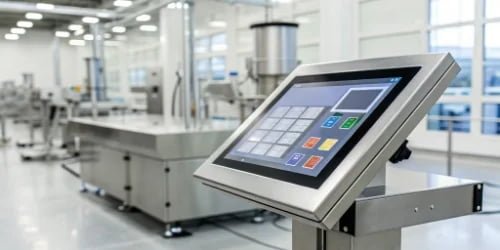
Tired of your scales becoming outdated? Constant replacements hurt your budget and efficiency. A software-centric scale keeps your operations current and competitive, saving you money and hassle.
To future-proof your weighing operations, choose a software-centric scale. These scales integrate with new technologies and software updates. This ensures they adapt to evolving business needs, providing long-term value and preventing obsolescence. It's about investing in flexibility.

I’ve been in the weighing industry for nearly two decades. One thing I’ve seen time and time again is businesses getting stuck with outdated hardware. It’s like buying a new phone that can't get software updates—it quickly becomes a useless brick. But what if your scale could update like your phone? That's the power of shifting focus from hardware to software. This shift isn't just a small change; it's a complete revolution in how we think about industrial weighing. It makes your operations resilient and ready for whatever comes next. Let's explore how you can make your systems ready for the future.
What Steps Can You Take to Ensure Your Weighing Systems Are Future-Ready with Software Integration?
Worried about integrating new software with your current scales? Incompatible systems create roadblocks and data silos. The right steps will ensure a smooth, future-ready integration from the start.
Ensure future-readiness by choosing scales with open APIs and strong documentation. Prioritize hardware that supports over-the-air (OTA) updates. This allows seamless integration with your existing ERP or new software and ensures the system can evolve without needing physical replacement.
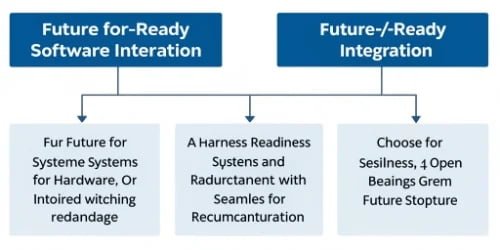
At Weigherps, we believe planning is key. When we work with clients, especially software vendors like you, we emphasize a clear roadmap. The first step is always to assess your current ecosystem. What software do you use? What are your data goals? This helps us understand the integration points1.
Key Integration Steps
The next step is to select hardware that is built for software. This means checking for its connectivity options and software development kit (SDK)2 or API availability. A scale isn't just a scale anymore; it's a data collection point. Here’s a simple breakdown of the steps we recommend:
| Step | Action | Why It's Important |
|---|---|---|
| 1. Assess | Analyze your current software stack (ERP, WMS, etc.). | Ensures the new scale communicates effectively with existing systems. |
| 2. Prioritize APIs | Choose scales with well-documented, open APIs3. | Makes it easy for your developers to integrate and create custom applications4. |
| 3. Verify Update Capability | Confirm the scale supports over-the-air (OTA) software updates. | Allows for new features and security patches without manual intervention. |
Following these steps ensures that you're not just buying a piece of hardware, but an adaptable component of your technology infrastructure5.
How Does a Software-Driven Scale Enhance Longevity and Adaptability of Weighing Operations?
Is your hardware failing to keep up with business growth? Rigid systems limit your potential and create inefficiencies. A software-driven scale adapts as your business evolves, ensuring longevity.
A software-driven scale separates hardware limitations from operational capabilities. You can add new features, improve workflows, and connect to new platforms through simple software updates. This adaptability extends the scale's useful life far beyond that of a traditional, hardware-locked device.
Think of a traditional scale like a basic calculator. It does one job well, but it will never do more. A software-driven scale, however, is like a smartphone. The hardware provides a platform, but the software defines its capabilities. This is the core principle that gives it a long life.
Extending Usefulness Through Software
When your business needs change—for example, you need to track a new data point or integrate with a new shipping carrier's software—you don't need to buy a new scale. Instead, we or your team can develop and deploy a software update. This makes your initial investment last much longer. A key part of this is adaptability.
- Workflow Customization: Process steps can be programmed directly into the scale's interface, guiding operators and reducing errors. As processes are optimized, the software can be updated instantly.
- Data Integration: As you adopt new analytics platforms or cloud services, a software update can create the necessary data pipeline.
This separation of hardware and software is what we build into our IoT scales. It ensures the device adapts to your operational needs, not the other way around. It’s a paradigm shift from disposable hardware to a sustainable, evolving asset.
What Features Should a Scale Have to Maintain Relevance in Evolving Technological Landscapes?
Afraid of your new tech becoming obsolete? Rapid technological change can make today’s best tool useless tomorrow. You need a scale with features designed for the future.
To stay relevant, a scale must have robust connectivity options (Wi-Fi, Ethernet, Bluetooth), powerful processing for edge computing, and support for open APIs. Over-the-air (OTA) update capability is also crucial for deploying security patches and new features without physical intervention.

In my 19 years in this business, I've seen technology trends come and go. The key to survival isn't guessing the future perfectly, but building the capacity to adapt. For a scale, this means having a solid foundation of core features that enable future development.
The Must-Have Feature Set
We focus on building scales with an eye towards what's next. A scale is no longer just for weighing; it’s a node in your IoT network. Here are the features we consider non-negotiable for a modern, future-proof scale:
| Feature | Description | Benefit for a Software Vendor |
|---|---|---|
| Connectivity | Multiple options like Wi-Fi, Ethernet, 4G, and Bluetooth. | Ensures the scale can connect to any network environment6 your customers have. |
| Open API/SDK | A well-documented, accessible API or Software Development Kit. | Allows your team to build custom applications and integrations easily. |
| OTA Updates | Ability to receive software updates remotely over the air. | Enables seamless deployment of updates, new features, and security fixes. |
| Edge Computing | Onboard processing power to run applications on the device itself. | Reduces latency and network load by processing data locally. |
These features create a platform, not just a product. It's a platform you can build on, integrate with, and sell to your customers as part of a larger, smarter solution.
How Can Software-Centric Scales Enhance the Scalability and Flexibility of Weighing Processes?
Is your business growth limited by rigid weighing processes? Scaling up operations can be a nightmare with inflexible hardware. Software-centric scales provide the scalability and flexibility you need.
Software-centric scales enhance scalability by allowing you to deploy the same workflow across hundreds of devices instantly. Flexibility comes from the ability to customize processes for different locations or tasks through software configurations, without needing different hardware models for every specific need.

One of the biggest challenges for growing businesses is maintaining consistency as they scale. When I talk with purchasing managers, a common pain point is deploying and managing equipment across multiple sites. A software-centric approach solves this beautifully.
Scaling with Software
Imagine you have one weighing station with a perfectly optimized workflow. Now, you need to open ten more. With traditional scales, you'd manually configure each one. With a software-driven scale, you can push the same configuration file to all ten new devices from a central dashboard. That’s scalability7. Flexibility is the other side of the coin. What if one location needs a slightly different workflow?
- Centralized Management: You can manage all your scales from one place. Create different profiles or configurations for different tasks, locations, or user roles.
- Dynamic Workflows: Change a weighing process on the fly to accommodate a new product or regulation. The change is deployed via software, and your operations don't miss a beat.
This turns your network of scales into a flexible, manageable system. Our IoT weighing solutions are designed with this in mind, empowering clients like you to grow without being held back by hardware limitations8.
Conclusion
Ultimately, a software-centric scale is an investment in adaptability. It ensures your weighing operations stay relevant, efficient, and ready for whatever technological advancements come next.
-
Learn about the critical integration points that ensure smooth operations in weighing systems. ↩
-
Learn how SDKs enable custom applications and integrations for your weighing systems. ↩
-
Discover the significance of open APIs in facilitating seamless software integration. ↩
-
Explore the potential of custom applications to meet specific operational needs. ↩
-
Explore how a robust technology infrastructure can support your weighing operations. ↩
-
Understand how to choose scales that fit various network environments for optimal performance. ↩
-
Discover how these scales can simplify scaling operations across multiple locations. ↩
-
Explore the drawbacks of relying solely on hardware in modern weighing operations. ↩


Comments (0)