
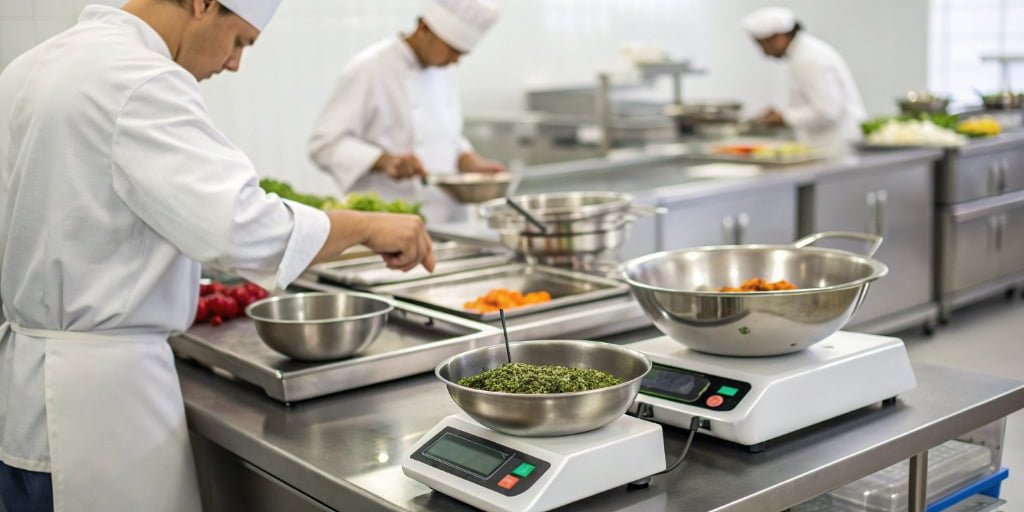
Your kitchen scales are failing, causing inaccurate portions and food safety risks. This costs money, hurts your reputation, and adds stress to your busy kitchen staff.
To master digital scale care, you must clean them daily, calibrate them regularly, protect them from heat and moisture, and use them correctly by avoiding overloads. These simple steps ensure accuracy, food safety, and a long lifespan for your equipment, saving you money.
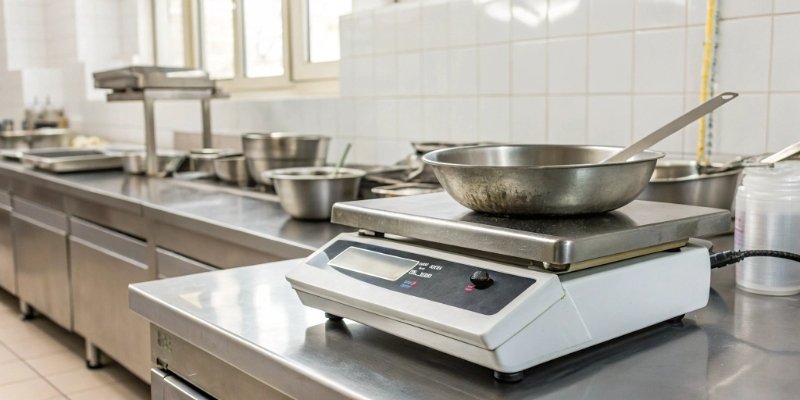
A busy kitchen is a tough place for any equipment. From spills and steam to constant use, your digital scales take a beating. With 18 years of manufacturing experience, I've seen which habits make scales last and which send them to an early grave. It's not complicated, but it does require consistency. Let's break down the essential steps to protect your investment and keep your kitchen running smoothly.
How should you clean and sanitize a digital scale for food safety compliance?
Worried about food safety compliance? Dirty scales are a major red flag for health inspectors and can cause cross-contamination. A simple daily cleaning routine is your best defense.
For food safety, wipe scales daily with a soft, dry cloth. For stubborn grime, use a mild, food-safe detergent, but never harsh chemicals. Always disconnect power before cleaning and prevent liquid from entering the scale. Use a soft brush for tight spaces.
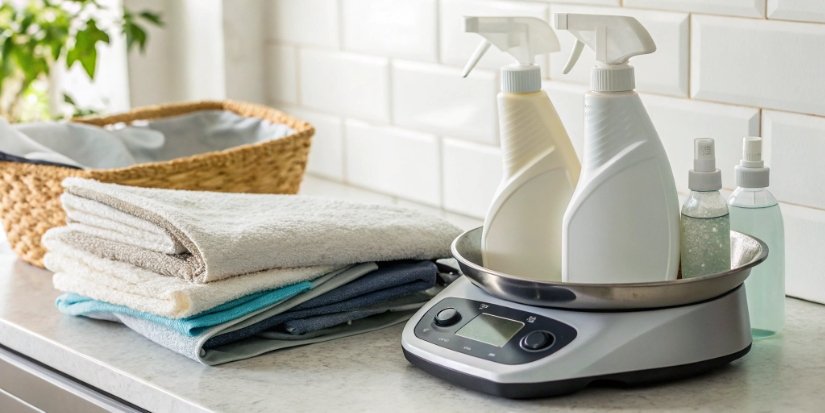
In a commercial kitchen1, cleaning isn't just about appearances; it's a critical part of your food safety plan. Based on my experience helping clients maintain their equipment, a consistent cleaning protocol is non-negotiable. It prevents the buildup of bacteria and stops the cross-contamination2 of allergens between different foods.
Daily Cleaning Routine
At the end of each day, you must wipe down the scale's weighing pan and housing. This removes loose food particles, oils, and residues before they harden. Use a soft, dry cloth for this. For any tight crevices around the display or pan, a soft-bristled brush works wonders to gently remove debris without scratching the surface or damaging sensitive components like the load cell sensor3. Make this a closing duty for your staff.
Deep Cleaning Protocol
For more stubborn stains, a deeper clean is needed. First, always unplug the scale or remove its batteries. Next, lightly dampen a cloth with a diluted neutral, food-safe detergent. Never use abrasive cleaners, alcohol, or corrosive solvents, as they can damage the plastic housing and cloud the display. Gently wipe down the surfaces, then use a separate cloth dampened with only water to remove any soap residue. Finally, dry the scale completely before plugging it back in.
| Do | Don't |
|---|---|
| Disconnect power before cleaning. | Submerge the scale in water. |
| Use a soft, damp cloth. | Use harsh chemicals or solvents. |
| Use mild, food-safe detergent. | Spray liquid directly onto the display. |
| Dry thoroughly before use. | Use abrasive scouring pads. |
How often do commercial kitchen scales need to be calibrated to ensure accuracy?
Are your recipes inconsistent? Inaccurate scales waste ingredients and cost you money. Regular calibration is the key to getting precise, repeatable measurements every single time you weigh something.
We recommend calibrating commercial kitchen scales weekly or at least monthly, depending on use. For high-volume kitchens, a weekly check is best. Always use certified standard weights in a stable environment to perform zero and span calibrations for true accuracy.
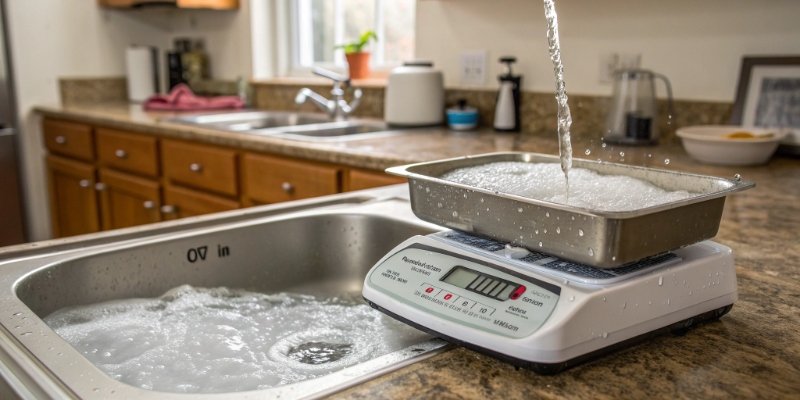
Calibration is the process of comparing your scale's reading to a known standard, a certified weight, and adjusting it to be accurate. In our 18 years of manufacturing, we've seen that skipping calibration is the fastest way to lose control over portioning and cost. A scale that is off by even a few grams can lead to thousands of dollars in food waste over a year.
Why Calibration Drifts
A scale's accuracy can drift for many reasons, especially in a dynamic kitchen environment. Changes in temperature and humidity, frequent movement, and even small bumps or vibrations can affect the sensitive internal mechanics. Because kitchen conditions change constantly, the scale's "zero" point and its measurement accuracy can become unreliable. This is why regular checks are so important.
The Calibration Process
Calibration should be done in a controlled space, away from drafts or vibrations. The ideal environment we recommend is around 20°C with humidity below 70%. The process is straightforward: place the scale on a perfectly level surface, access its calibration mode (check the manual), and follow the on-screen prompts. This usually involves zeroing the scale and then placing one or more certified calibration weights on the pan. The scale then adjusts itself to match the known weight. After calibration, weigh the standard weight a few times to confirm the reading is stable and correct.
| High-Use Environment | Recommended Action |
|---|---|
| Frequent, heavy loads | Calibrate weekly. |
| Big temperature swings | Calibrate more often. |
| Scale is moved often | Calibrate after each move. |
| After a physical shock (e.g., dropped) | Calibrate immediately. |
What are the best ways to protect a digital scale from heat and moisture damage?
Is your kitchen's heat and humidity killing your digital scales? Constantly replacing equipment is expensive and frustrating. You can easily prevent damage with smart placement and the right features.
To protect your scale, choose one with a high IP (Ingress Protection) rating for water and dust resistance. Keep it far away from heat sources like ovens and fryers. Also, avoid placing it near sinks or dishwashers where steam and splashes are common.
A commercial kitchen1 is an enemy to electronics. Heat, steam, grease, and dust are everywhere. As a manufacturer, we design scales to withstand these conditions, but you can significantly extend their life by choosing the right model and placing it thoughtfully. The first line of defense is selecting a scale built for the job.
Understanding IP Ratings
When you look at our scales, you'll see an "IP" rating, like IP67 or IP68. This stands for Ingress Protection. The first number rates its protection against solids (like flour dust), and the second number rates its protection against liquids. A rating of IP67 means the scale is completely dust-tight and can be submerged in water up to 1 meter deep for 30 minutes. For a wet, messy kitchen, a scale with at least an IP65 rating (protected against water jets) is a wise investment.
Strategic Placement in the Kitchen
Where you put your scale matters just as much as its IP rating4. Never place a scale directly next to a deep fryer, grill, or oven. The constant high heat can damage the electronic components and load cell. Likewise, keep it away from the "splash zone" of sinks and dishwashers. The ideal spot is a dedicated, stable workstation in a cooler prep area. This simple step alone can prevent countless failures. Also, periodically check the rubber seals and gaskets on your scale to ensure they haven't become cracked or brittle, as this can compromise its water resistance.
| Hazard | Location to Avoid | Protective Measure |
|---|---|---|
| Extreme Heat | Next to ovens, grills, fryers | Place in a cooler prep area. |
| Moisture & Steam | Near sinks, dishwashers, steam kettles | Choose a high IP-rated scale (IP65+). |
| Dust (flour, spices) | Near mixers, baking prep stations | Choose a dust-tight (IP6X) scale. |
| Vibration | Next to heavy mixers or blenders | Place on a separate, sturdy counter. |
What common usage errors cause professional kitchen scales to fail prematurely?
Do your kitchen scales fail unexpectedly? It's frustrating and costly when equipment doesn't last as long as it should. You can double your scale's lifespan by training your staff to avoid a few simple user errors.
The most common errors are overloading the scale past its maximum capacity and shock loading by dropping items onto the weighing pan. Both actions can permanently damage the sensitive internal load cell. Using the wrong power adapter can also cause electrical failure.

From our perspective as manufacturers, most premature scale failures are not due to defects but to improper use. The load cell—the heart of the scale that measures weight—is a precise and sensitive instrument. While we build them to be robust, they have limits. Teaching your team to respect these limits is the most effective way to protect your investment.
The Dangers of Overloading and Shock Loading
Every scale has a maximum capacity. A 5kg capacity scale should never be used to weigh a 10kg bag of flour. This is called "overloading," and it can bend or break the load cell, leading to permanent inaccuracy or total failure. Just as damaging is "shock loading5." This happens when an item is dropped onto the weighing pan instead of being placed gently. The sudden force is much greater than the item's actual weight and can deliver a fatal blow to the load cell. Always place items gently in the center of the pan.
Power Supply and Storage Best Practices
Another common but easily avoidable error is using the wrong power adapter. An adapter with the incorrect voltage can instantly fry the scale's circuit board. We always recommend using the original adapter that came with the scale. To avoid mix-ups in a busy kitchen, label the adapter and plug. Finally, if a scale won't be used for a long time, clean it, remove the batteries to prevent corrosion, and store it in a clean, dry location at room temperature.
| User Error | Consequence | How to Avoid |
|---|---|---|
| Overloading | Permanent load cell damage, inaccurate readings | Always know your scale's maximum capacity. |
| Shock Loading (dropping) | Inaccurate readings, sensor damage | Place items gently on the center of the pan. |
| Using wrong power supply | Fried electronics, permanent failure | Label and use only the original adapter. |
| Improper storage6 | Battery corrosion, component damage | Clean and store in a dry, safe place. |
Conclusion
By cleaning, calibrating, protecting, and properly using your digital scales, you ensure accuracy, extend their lifespan, and support your kitchen's efficiency and long-term success.
-
Gain insights into the unique challenges faced in commercial kitchen maintenance. ↩ ↩
-
This resource explains cross-contamination and offers tips to avoid it in food preparation. ↩
-
Understand the function of load cell sensors in scales and their importance for accuracy. ↩
-
Understand the importance of IP ratings in selecting kitchen equipment that withstands harsh conditions. ↩
-
Learn about shock loading and its impact on the longevity of your kitchen scales. ↩
-
Explore proper storage techniques to extend the life of your kitchen scales. ↩


Comments (0)