
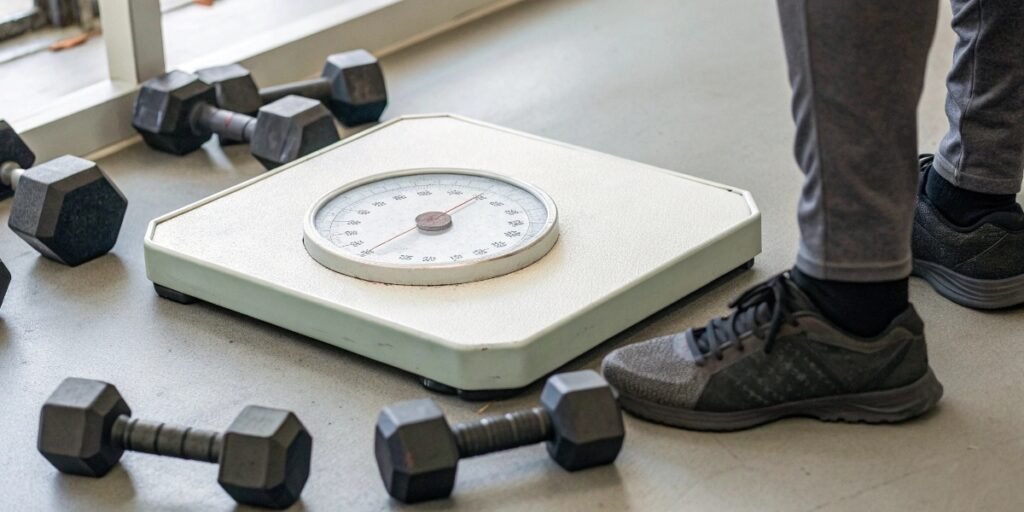
Your business relies on precise measurements. Inaccurate scales can lead to costly errors and loss of trust. I will show you how to easily verify your scale's accuracy.
The best way to test a scale's accuracy is by using certified calibration weights. For a less precise but quick check at home, you can use an object with a known weight, like an unopened bag of flour or a coin, and see if the scale's reading matches.
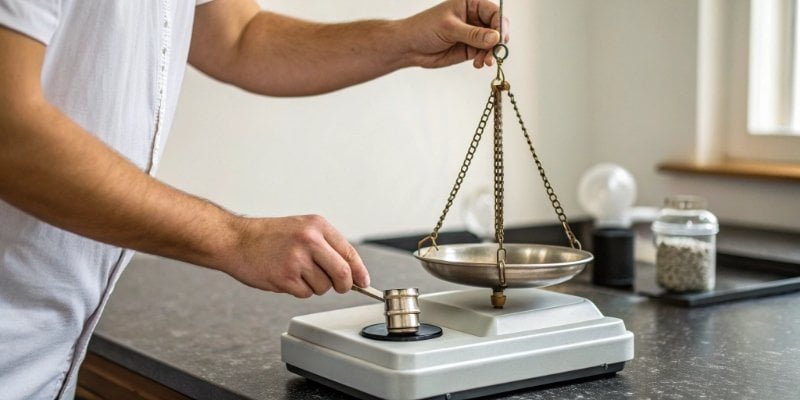
I have been in the scale manufacturing business for many years. I have seen how a small error can cause big problems for our clients. A reliable scale is the foundation of quality control and fair trade. But how can you be sure your scale is telling the truth? This is a question I get a lot. The good news is that you don't need a high-tech lab to get an answer. You can perform simple tests that will give you peace of mind. Let's explore the methods you can use to confirm that your measurements are correct and trustworthy.
How to test the accuracy of a scale?
You need a precise reading for your work. But you might feel unsure if your scale is still reliable. A simple, step-by-step test can give you confidence in your measurements.
Use certified calibration weights for the most accurate test. Place a weight on the scale and check if the reading matches exactly. For a quick, informal check, use common items with a known weight, like a U.S. nickel (5 grams) or a full one-liter bottle of water (1 kilogram).
Testing a scale seems straightforward, but the method you choose depends on the accuracy you need. At Weigherps, we perform comprehensive tests on every single scale before it leaves our factory. We use two main approaches, which you can also adapt for your own needs.
The Professional Method: Calibration Weights
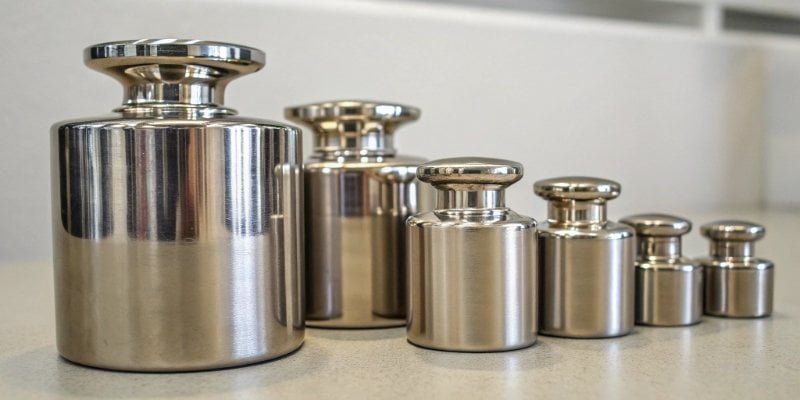
This is the gold standard for accuracy testing. Calibration weights are manufactured to very precise mass standards and are certified to be accurate. They come in different classes, defined by organizations like OIML1. For industrial and commercial use, using these weights is the only way to truly verify and calibrate a scale. When we test our scales, we use a full set of these weights to check accuracy at different points across the scale's capacity. This ensures the scale is accurate whether it's weighing a light item or a heavy one. This process, called a linearity test2, is critical for our professional clients.
The Practical Method: Everyday Objects
If you don't have calibration weights, you can use common household or office items for a rough check. The key is to use something with a weight that is government-regulated and printed on the label, like an unopened bag of sugar or a can of soup. A coin can also work; for example, a new U.S. nickel3 weighs exactly 5.0 grams. This method isn't perfect because the actual weight of the item can vary slightly, but it’s a great way to spot a major problem with your scale.
Here is a quick comparison:
| Feature | Calibration Weights | Everyday Objects |
|---|---|---|
| Accuracy | Very High | Variable |
| Cost | Higher | Low / Free |
| Purpose | Professional, Industrial | Home, Quick Checks |
| Reliability | Certified | Uncertified |
Is 70 kg my mass or weight?
You step on a scale and it reads "kg". But you might be confused if that number is your mass or your weight. Understanding this difference is simple and helps clarify what you're measuring.
Technically, kilograms (kg) measure mass, which is the amount of matter in an object. Weight is the force of gravity pulling on that mass.Scales actually measure this force but are calibrated to display the result in units of mass (like kg). So, 70 kg represents your mass.

This question is more than just a science trivia point; it's fundamental to understanding measurement. I often explain this to clients, especially those in technical fields who need to be precise with their terminology. The distinction matters a lot in science and engineering.
What is Mass?
Mass is a measure of how much "stuff" is in an object. It's an intrinsic property. Your mass is the same whether you are on Earth, on the Moon, or floating in space. It does not change with location. The standard unit for mass is the kilogram (kg). In business and industry, when you buy or sell goods by "weight," you are almost always dealing with mass. Recipes, chemical formulas, and material costs are all based on mass.
What is Weight?
Weight is the force exerted on an object by gravity. It is calculated by multiplying an object's mass by the acceleration of gravity (Weight = Mass × Gravity). The standard unit for force is the Newton (N). Your weight would be much less on the Moon because the Moon's gravity is weaker. Since scales are almost always used on Earth, they are cleverly designed to measure the force of gravity and then do the math for you, displaying the result in the more practical unit of mass.
Here is a simple breakdown:
| Concept | Definition | Unit | Constant? |
|---|---|---|---|
| Mass | Amount of matter | Kilogram (kg) | Yes |
| Weight | Force of gravity on mass | Newton (N) | No |
How to ensure a weighing scale is accurate?
Daily use, temperature changes, and movement can affect a scale's accuracy. This drift can lead to costly production errors. Regular checks and proper maintenance are the keys to consistent precision.
To ensure long-term accuracy, always place your scale on a solid, level surface. Calibrate it regularly with certified weights, following the user manual. Keep the scale clean from dust and spills, and never overload it, as this can permanently damage the sensitive load cells.
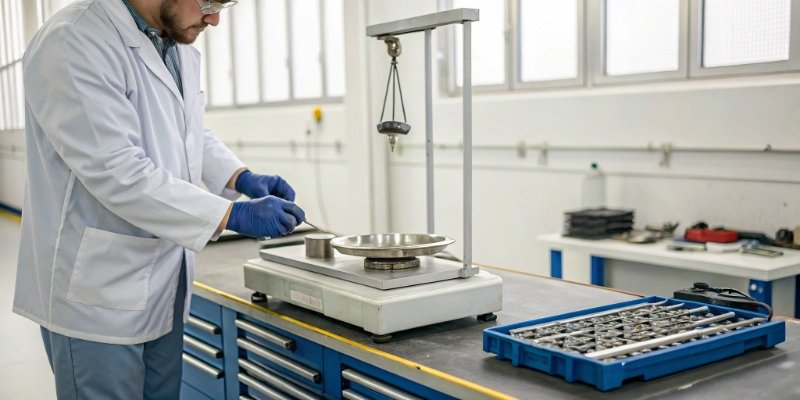
As a manufacturer, I know that a scale’s long-term performance depends heavily on how it's treated. We build our scales to be durable, but even the toughest machine needs proper care. Think of it like a car; it needs regular tune-ups to run smoothly. Here are the three pillars of maintaining scale accuracy that we always emphasize to our customers.
Proper Placement and Environment
Where you put your scale matters immensely. It must be on a flat, stable, and level surface. A wobbly table will give you inconsistent readings. We recommend using a small bubble level to check. Also, environmental factors like air drafts from vents, vibrations from heavy machinery, or extreme temperature changes can affect the sensitive electronics inside modern scales. For our industrial clients, we often provide advice on creating a stable weighing station to guarantee the best performance.
Regular Calibration
Calibration is the process of adjusting a scale so that it gives the correct reading. All scales can drift over time. How often you should calibrate depends on how much you use the scale and how important accuracy is for your work. For a high-use industrial scale4 in a factory, a daily or weekly check might be necessary. For a home scale, maybe once or twice a year is fine. Many of our professional scales have an internal calibration feature that makes this process easy, but checking with external, certified weights is always the most reliable method.
Proper Usage and Care
This one is simple: treat your scale with respect. Don't drop heavy objects onto the weighing pan. Don't load it with more weight than its maximum rated capacity5. And keep it clean. Dust, debris, or moisture getting inside the housing can interfere with the weighing mechanism and cause damage. A clean scale is a happy and accurate scale.
How much can a scale be off?
No measurement device is perfectly accurate all the time. But you wonder how much error is acceptable for your work. Understanding tolerance levels helps you choose and maintain the right scale.
The acceptable margin of error, or tolerance, depends on the scale's class and its intended use. A kitchen scale might be off by a gram or two, but a scientific or legal-for-trade industrial scale must be accurate within a fraction of a percent of its capacity.
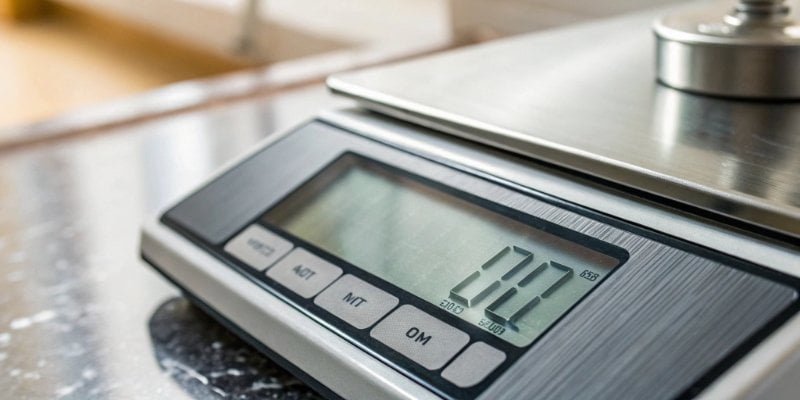
The concept of "how much it can be off" is known as tolerance in the weighing industry. This is a critical specification that we discuss with every client. Choosing a scale with the wrong tolerance can either be a waste of money (if it's too precise for the job) or a source of major errors (if it's not precise enough).
Understanding Scale Tolerance
Tolerance is the maximum allowable positive or negative error for a scale's reading. It is not a single number. The tolerance often changes depending on the amount of weight on the scale. For example, the tolerance might be ±5 grams for a heavy load but only ±1 gram for a very light load on the same scale. This is defined by standards bodies to ensure fairness and consistency, especially in commercial transactions where products are sold by weight.
Scale Accuracy Classes
To make things easier, organizations like the OIML have created accuracy classes for scales. These classes group scales by their precision and intended use. This system helps customers quickly identify a scale that is suitable for their application. For example, you wouldn't use a Class IV scale (for weighing highway trucks) to measure precious gems, which requires a Class II scale. At Weigherps, we produce scales in various classes and our team helps customers select the correct one.
Here’s a simple guide to these classes:
| OIML Class | Typical Use | Example Application |
|---|---|---|
| Class I | High-Precision Laboratory | Scientific research, analytical testing |
| Class II | Precision Weighing | Jewelry, pharmaceuticals, lab work |
| Class III | General Commercial Use | Retail stores, food industry, platform scales |
| Class IV | Rough Weighing | Airports (baggage), truck scales, livestock |
For our software vendor clients, understanding these classes is vital. When their software pulls data from one of our scales, the tolerance level of that data is defined by the scale's class. It ensures data integrity for inventory management, batching, or any automated process.
Conclusion
Testing your scale with known weights, understanding mass vs. weight, and performing regular maintenance are essential. These simple steps ensure your measurements are always accurate and your operations are reliable.
-
Discover the role of OIML in defining accuracy standards for scales. ↩
-
Understand the significance of linearity tests in ensuring scale accuracy across its capacity. ↩
-
Learn how a U.S. nickel can serve as a reliable reference weight for testing scales. ↩
-
Explore the essential features of industrial scales for accurate and reliable measurements. ↩
-
Learn about the importance of not exceeding a scale's maximum rated capacity for accuracy. ↩


Comments (0)