

Are you confused by complex scale specifications? Choosing the wrong equipment can compromise your entire operation. Let's make these technical terms simple so you can choose with total confidence.
Repeatability is the scale's consistency under the same conditions. Linearity is its accuracy across the full weight range. Reproducibility is its consistency under different conditions (e.g., different operators or locations). Understanding them is crucial for selecting the right scale for your specific application.
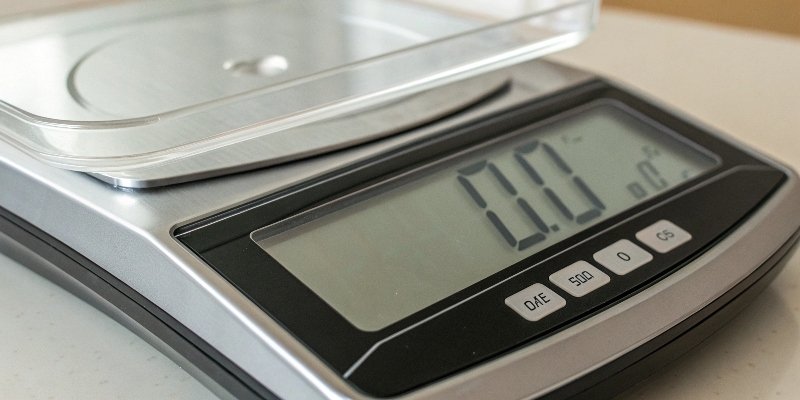
These terms might seem intimidating, but they are just ways to describe how a scale performs. As a manufacturer with 18 years of experience, we've helped countless partners navigate these specs. Getting them right is the first step toward reliable and efficient weighing. Let's break down each concept to see what it really means for your business and how it impacts the data your software relies on.
What's the Difference Between Accuracy, Repeatability, and Linearity?
Do you find it hard to tell these key performance terms apart? This confusion can lead to expensive mistakes in your measurements and damage your quality control process. Here’s a simple guide.
Accuracy is how close a reading is to the true value. Repeatability is how consistent multiple readings are under identical conditions. Linearity measures how consistent the accuracy is across the scale's entire weighing range. They are related but distinct performance indicators.
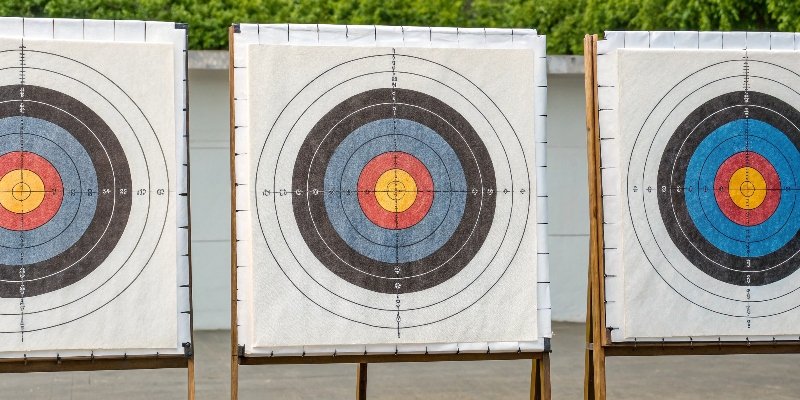
In my experience, thinking of these terms as a team is helpful. Accuracy is the team captain, but it can't win the game alone. It needs the support of repeatability and linearity.
Defining Key Terms
Let's look at them one by one. Accuracy1 is the big picture—it's the fundamental ability of the scale to show the correct weight. If you place a certified 10 kg weight on the scale, an accurate scale will read 10 kg. Repeatability2 is about consistency. If you weigh that same 10 kg item five times, do you get the exact same reading each time? High repeatability means the results are tightly grouped. Linearity3 checks if the scale's accuracy is consistent from its lightest to its heaviest capacity. It ensures a 1 kg error at 100 kg doesn't become a 20 kg error at 1000 kg.
How They Work Together
A scale can have good repeatability but poor accuracy. For example, it might read 10.1 kg every single time you weigh a 10 kg item. The measurement is repeatable, but it's not accurate. This often points to a calibration issue. Conversely, a scale could be accurate on average but have poor repeatability, with readings jumping between 9.9 kg and 10.1 kg. This points to instability from factors like sensor noise or a shaky platform, issues we work very hard to engineer out of our products.
| Metric | What It Measures | Why It Matters |
|---|---|---|
| Accuracy | Closeness to the true weight. | Ensures your data is correct and trustworthy. |
| Repeatability | Consistency of multiple measurements. | Critical for process control and quality assurance. |
| Linearity | Consistent accuracy across capacity. | Guarantees reliable performance for all loads. |
Is There a Difference Between a Scale's Accuracy and its Repeatability?
Do you sometimes use the terms accuracy and repeatability to mean the same thing? This is a very common mix-up that can hide serious problems in your quality control. Let's clarify this vital difference.
Yes, there is a huge difference. Accuracy is getting the right answer (e.g., 10kg). Repeatability is getting the same answer over and over (e.g., 10.1kg, 10.1kg, 10.1kg). A scale can be extremely repeatable but consistently wrong, making it both unreliable and inaccurate.

I once worked with a client in the food processing industry whose products were failing weight checks. Their scale on the packaging line showed consistent numbers, so they assumed it was working perfectly. The problem wasn't repeatability; it was accuracy.
A Real-World Example
The scale was consistently underreporting the weight by 2%. It was highly repeatable, giving them the same wrong measurement every time. This meant every package was lighter than the label claimed, leading to regulatory fines. An archer who hits the same spot on the edge of the target every time is repeatable, but not accurate. To be accurate, the arrows must hit the bullseye. For industrial scales, the "bullseye" is the true, certified weight. This is why you need both. Accuracy without repeatability means your measurements are random. Repeatability without accuracy means you are consistently making the same error.
Why Repeatability Matters
For software providers, repeatability is especially important. Your systems often take multiple readings or rely on the stability of the measurement to trigger actions. If the readings are unstable (poor repeatability), your software might not function correctly. Good repeatability is a sign of a well-built scale with a stable sensor, low electrical noise, and a solid mechanical structure. At Weigherps, our design and quality control departments focus intensely on these factors to ensure our scales provide the stable data your software needs to perform flawlessly.
How Can You Determine the True Accuracy of a Scale?
Are you unsure how to check if your scale is genuinely accurate? Simply trusting the spec sheet without any verification is a big risk for any business. Here are the practical steps to test your scale's accuracy.
You determine a scale's accuracy by testing it with certified calibration weights. By placing a known weight on the scale and comparing the reading to the certified value, you can verify its performance. This process is called calibration and is essential for reliable measurements.

In our 18 years of manufacturing, I've seen that a scale is only as good as its last calibration. Hardware can drift over time due to wear, temperature changes, or accidental damage. You cannot just "set it and forget it."
The Role of Calibration
Calibration4 is the most direct way to determine accuracy. It involves using weights that have been certified by an authorized body to be a precise, known mass. You should test the scale at several points across its measurement range, for example, at 25%, 50%, 75%, and 100% of its capacity. This checks not only for accuracy but also for linearity. If there are any deviations, the scale needs to be adjusted until it reads correctly. We always provide our clients with clear instructions and support for this process, as it's the foundation of trustworthy data.
Environmental and Operator Factors
You also need to think about where and how the scale is used. A scale that is perfectly accurate in a controlled lab might perform differently on a factory floor with heavy vibrations, drafts, or temperature shifts. As part of our service, we help clients identify the best weighing solutions for their specific environment. Furthermore, operator training is critical. An untrained user can easily cause errors by not leveling the scale correctly or by misinterpreting readings. That’s why we believe providing thorough documentation and training is a key part of our responsibility.
What Does '0.5% Full Scale Accuracy' Actually Mean?
Do you see specs like "0.5% Full Scale Accuracy" and feel uncertain? Misreading this common specification can lead you to buy a scale that is not precise enough. Let's break down this term.
A specification of "0.5% Full Scale Accuracy" means the scale's maximum potential error is equal to 0.5% of its total capacity. For example, on a 100 kg scale, the reading could be off by up to 0.5 kg at any point.

Understanding this is vital for anyone integrating weighing data into a software system. The potential error is constant across the entire range, which means it has a bigger impact when you are weighing smaller items.
A Practical Calculation
This specification is actually a measure of linearity. It describes the maximum deviation, or error, the scale is allowed to have. Let's make this concrete. If a scale has a capacity of 1000 kg and an accuracy of 0.5% Full Scale (FS), the maximum error at any measurement is 1000 kg * 0.005 = 5 kg. This means a 200 kg load could read anywhere between 195 kg and 205 kg. A 900 kg load could read between 895 kg and 905 kg. The potential error is always ±5 kg.
When It Matters Most
The table below shows how this fixed error becomes more significant for lighter loads.
| Scale Capacity | 0.5% Full Scale Error | Impact on a 10kg Measurement |
|---|---|---|
| 100 kg | ± 0.5 kg | The reading could be off by 5%. |
| 500 kg | ± 2.5 kg | The reading could be off by 25%. |
| 1000 kg | ± 5 kg | The reading could be off by 50%. |
As you can see, using a high-capacity scale for a very light object can result in a large relative error. That's why we always work with our clients to understand their specific needs. We help them choose a scale with the right capacity and accuracy for their application, ensuring the data their software receives is not just accurate, but also precise enough for their process.
Conclusion
Understanding repeatability, linearity, and accuracy is essential. It empowers you to choose the right scale and guarantees that your measurement data is consistently reliable for your business needs.
-
Find out why accuracy is crucial for trustworthy measurements in your operations. ↩
-
Explore this resource to understand how repeatability affects measurement consistency and reliability. ↩
-
Learn about linearity's role in ensuring accurate measurements across a scale's range. ↩
-
Get practical steps for calibrating scales to ensure accurate and reliable readings. ↩



Comments (0)