
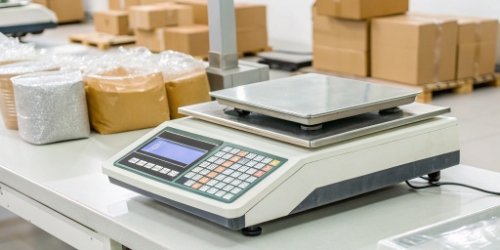
Are manual counting errors slowing your packaging line and costing you money? These small mistakes add up, creating inventory chaos and frustrating your team. It's time for a smarter solution.
A label printing scale boosts accuracy by automating the counting process with high-precision sensors. It then instantly prints a label with the exact count and weight, completely removing manual data entry and the human errors that come with it in your packaging workflow.
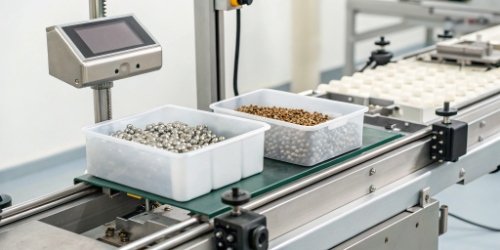
I’ve spent nearly two decades in the industrial scale business, and I've seen the same problems plague countless warehouses and production floors. The bottleneck almost always comes down to simple, repetitive tasks like counting and labeling. You might think it's a small issue, but the ripple effects are huge. That's why integrating these tasks is so powerful. Let's explore exactly how this technology can transform your operations, making them faster, more efficient, and, most importantly, more accurate.
What Are the Benefits of Using a Label Printing Scale for Accurate Piece Counting?
Struggling with inventory discrepancies from manual counts? These slow, error-prone methods lead to stock issues. Automating with a label printing scale ensures every single count is perfect.
The main benefits are a massive reduction in human error, faster processing times, and improved inventory tracking. This scale ensures consistency, eliminates guesswork, and provides a clear audit trail for every item.
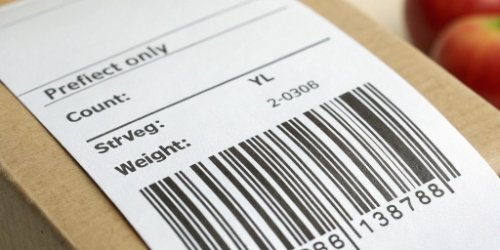
The real magic behind these scales is how they simplify a complex task. I remember visiting a client's facility where they packaged small electronic components. They had one person counting parts into a bag, another double-checking the count, and a third person labeling the package. The process was slow and still resulted in errors.
We introduced them to our integrated label printing scale1. Here’s how it works:
From Three Steps to One
The old way was inefficient. The new way is simple.
| Feature | Manual Counting | Scale-Based Counting |
|---|---|---|
| Speed | Slow, tedious | Extremely fast |
| Accuracy | High risk of error | Nearly 100% accurate |
| Labor | Requires multiple staff | One person per station |
| Data Trail | Paper-based, easy to lose | Digital, auditable |
The operator places a small sample of items on the scale to establish the Average Piece Weight (APW)2. From that point on, the scale calculates the exact quantity instantly. By combining this with a printer, one person can now handle the entire station. They count, verify, and label in a single, fluid motion. This doesn't just improve accuracy; it revolutionizes the workflow.
How Do Label Printing Scales Enhance Precision in Packaging Processes?
Are mislabeled packages causing shipping nightmares and unhappy customers? These mistakes damage your reputation. A label printing scale ensures the right label goes on the right package, every time.
They enhance precision by directly linking the physical weighing and counting to label creation. The scale confirms the contents, then instantly generates a label with the correct weight, count, and product ID.
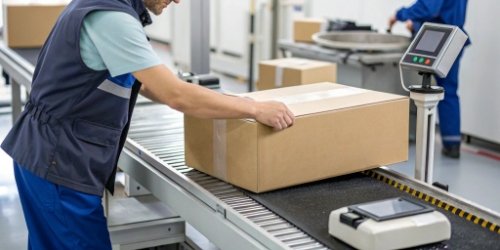
The biggest source of error in any process is the handover of information. In a traditional packaging workflow3, an operator counts items, writes the number on a piece of paper, walks over to a computer, types in the data, prints a label, and then walks back to stick it on the correct box. There are at least four points in that chain where a mistake can happen.
Our insight has always been that a one-person-per-station model is the most efficient and accurate. An integrated label printing scale is the key to achieving this. The workflow becomes seamless:
- The operator places the product on the scale.
- The scale confirms the count and weight.
- A label is printed automatically right at the station.
- The operator applies the label to the package in front of them.
There is no data transfer, no walking around, and no chance of mixing up labels or packages. For companies like yours that provide software services, this physical-to-digital link is critical. The scale can send this verified data directly to your WMS or ERP system in real-time, ensuring that your digital inventory records perfectly match the physical reality on the production floor.
How Does Integrating Label Printing Improve Counting Accuracy and Efficiency?
Is your team wasting time double-checking counts and manually creating labels? This redundant work slows down your entire line. Integrating these two tasks into one device removes those wasted steps.
Integration creates a closed-loop system where the count is verified by weight and immediately documented on a label. This removes intermediate steps like handwritten notes, which are major sources of error, boosting both speed and accuracy.
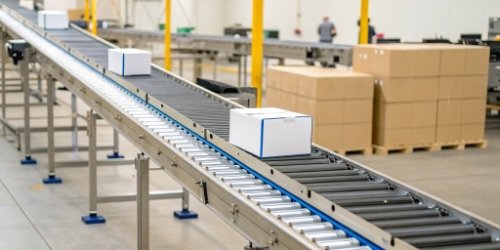
When I talk about integration, I'm not just talking about placing a printer next to a scale. I’m talking about a single, unified system where the software and hardware work together. This creates what we call a "single point of truth4." The data generated by the scale's high-precision load cell is the truth, and that truth is printed directly onto the label and sent to your management system without any human interference.
The Power of a Unified Workflow
This unified approach delivers incredible efficiency gains. I've personally seen our clients cut their packaging cycle times in half. The time saved from eliminating double-checking and manual data entry is enormous. More importantly, it empowers a single operator to manage their entire station with confidence. They know that every package they handle is counted and labeled with 100% accuracy. For a technical director or purchasing manager, this means higher throughput, lower labor costs, and a drastic reduction in costly shipping errors. It all comes from creating one seamless flow from the physical product to the digital record.
What Features Make Label Printing Scales Suitable for Accurate Packaging Tasks?
Are you worried a new scale won't handle your specific parts or complex labeling requirements? Generic equipment often fails. You need a scale with features specifically designed for precision packaging tasks.
Key features include high-resolution load cells, a user-friendly interface for storing product data (PLUs), customizable label templates, and robust connectivity options (like Ethernet and APIs) to integrate with your existing software.
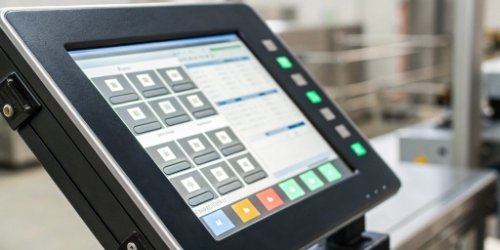
Not all scales are created equal. When your goal is flawless accuracy in a fast-paced environment, you need a machine built for the job. Over my 19 years of manufacturing these devices, we've learned which features truly matter for our clients, especially those in the software and smart device space. It's about more than just weighing; it's about intelligent data management.
Core Components for Precision
Here are the features you should look for:
- High-Precision Load Cell: This is the heart of the scale. It needs to be sensitive enough to detect the tiny weight of a single small component, which is the foundation of an accurate count.
- Product Look-Up (PLU) Memory: Your operators shouldn't have to set up the scale for every new batch. A large PLU memory allows them to store data for hundreds of products and recall them with a single button press, eliminating setup errors.
- Customizable Label Designer: Every business has different labeling needs. The scale's software should allow you to easily design labels that include barcodes, QR codes, logos, batch numbers, dates, and any other data required for traceability and compliance.
- Connectivity and APIs: This is the most crucial feature for a software vendor. The scale must be able to communicate seamlessly with your systems. Look for Ethernet, Wi-Fi, and serial ports, along with a well-documented API that allows your software to control the scale, pull data, and push label designs. This transforms the scale from a simple tool into an integrated node in your smart factory ecosystem5.
Conclusion
A label printing scale integrates counting and labeling to eliminate human error, boost efficiency, and guarantee perfect packaging accuracy. It's a simple change that delivers powerful results for your production line.
-
Explore how label printing scales can revolutionize your packaging process with automation and accuracy. ↩
-
Understand the concept of Average Piece Weight and its significance in packaging. ↩
-
Explore best practices for creating an efficient packaging workflow that boosts productivity. ↩
-
Understand the importance of a single point of truth in data accuracy and integrity. ↩
-
Discover the advantages of a smart factory ecosystem in modern manufacturing. ↩



Comments (0)