
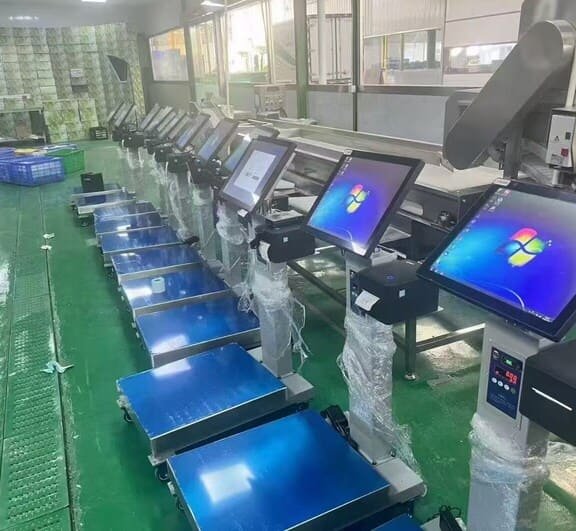
Are fixed label formats slowing you down? This rigidity hurts your efficiency. A programmable scale puts you in control, offering unmatched flexibility for your specific business needs.
Programmable label printing scales offer ultimate flexibility by allowing you to fully customize label layouts, data fields, and barcodes. They can also integrate with other devices and software systems, creating a truly adaptable and future-proof solution that grows with your business needs.
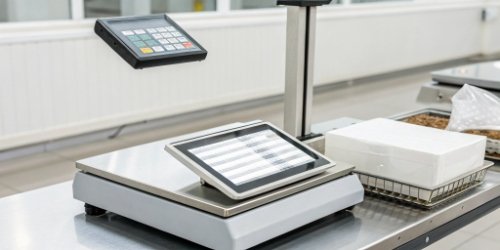
You have seen the promise of flexibility. But what does that really mean in practice? The key is in the word "programmable." It is about moving beyond the standard, pre-set functions. It means the scale works for your business, not the other way around. Let's examine how this programmability unlocks a new level of efficiency and customization for your operations. We will explore what makes them so flexible and how they can transform your workflow.
What Makes Programmable Label Printing Scales Highly Flexible?
Feel trapped by one-size-fits-all hardware? This limits your ability to innovate and serve clients. True flexibility comes from technology that you can shape to your needs.
Their flexibility comes from open software architecture. This allows you to define custom workflows, design unique label templates, and integrate the scale directly into your existing software and hardware ecosystem. It is built to adapt to your specific operational demands.

Let's break this down further. The core idea is moving away from a closed system. In our 19 years of manufacturing industrial scales, we have seen a big shift. Old scales had fixed functions. You bought it, and you used it as is. A programmable scale is different. It is more like a specialized computer with a weighing platform. This shift changes everything for businesses.
The Two Pillars of Flexibility
At its heart, this flexibility rests on two main pillars: software customization and hardware connectivity1. You are no longer limited by the manufacturer's pre-installed settings. This freedom is what modern businesses need to thrive.
| Feature | Standard Scale | Programmable Scale |
|---|---|---|
| Label Design | Limited pre-set templates | Fully customizable layouts |
| Data Fields | Fixed (e.g., Weight, Price) | Custom fields (e.g., Batch No, Operator ID) |
| Integration | None or very limited | Connects to ERP, WMS, scanners, etc. |
| Workflows | Single, fixed process | Custom, multi-step processes |
This programmability means you, or a software partner like yourself, can use a software development kit (SDK)2 to make the scale perform tasks specific to your industry or even your company.
How Do Programmable Features Enhance the Versatility of Label Printing Scales?
Is your current scale just a weighing device? That single-purpose thinking creates data silos and inefficiencies. Imagine a scale that is a central part of your data workflow.
Programmable features transform a simple scale into a versatile data hub. You can implement conditional logic, connect to databases for real-time price lookups, and create custom user interfaces. This versatility serves diverse industries, from food production to logistics, with one powerful device.

Versatility comes from the specific software features you can implement. It is not just about changing the font on a label. It is about creating intelligent workflows that guide users and prevent errors. Think about the possibilities. You can program the scale to guide an operator step-by-step through a complex packing process, ensuring consistency and quality.
Custom Workflows in Action
Imagine you are in food processing. You could program the scale to:
- Prompt the operator to select the product from a list.
- Pull the "use by" date from a central database automatically.
- Weigh the item.
- Check if the weight is within the acceptable tolerance range.
- Automatically print a label with weight, price, "use by" date, and a QR code with batch information.
For software vendors, this is key. You can offer your clients a solution that is perfectly tailored to their needs. You are not just selling a scale; you are selling a streamlined, error-reducing process. This is how we help our partners empower their own customers.
In What Ways Can Programmability Increase Customization in Label Printing?
Are your labels missing crucial information? Generic labels can lead to compliance issues or customer confusion. Customization is not a luxury; it is a necessity for clear communication.
Programmability offers almost limitless label customization. You can add dynamic data like dates and batch codes, include company logos, and generate various barcodes like QR codes. This ensures your labels are not just informative but also compliant with industry regulations.

When we talk about customization, we are getting into the fine details of the label itself. A programmable scale gives you complete control over every millimeter of that piece of paper. This is crucial for branding, compliance, and traceability. I often tell clients to think of the label as a mini-dashboard for their product. It communicates vital information at a glance.
Key Customization Options
- Dynamic Data: You can automatically print information that changes. This includes packing dates, expiration dates, sequential lot numbers, or operator IDs. This eliminates manual entry and human error.
- Barcodes & QR Codes: You can go beyond simple price barcodes. You can encode batch numbers, website URLs, or detailed product information into a QR code. This is essential for modern traceability and customer engagement.
- Logos and Branding: You can reinforce your brand identity by adding your company logo directly onto every label.
- Compliance Information: You can easily add required information like allergen warnings, country of origin, or nutritional facts. You can also change them quickly as regulations evolve.
This level of detail ensures your product is ready for any market and meets all requirements.
How Do Programmable Scales Adapt to Changing Label Printing Needs?
Worried your new equipment will be obsolete next year? Technology changes fast, and inflexible hardware gets left behind. You need a solution that is built for the future.
Programmable scales adapt by separating hardware from software logic. You can update the scale's functionality through software updates without replacing the device. Their ability to connect with other systems like ERPs and scanners makes them a future-proof hub for your operational needs.

This is perhaps the most important benefit for a forward-thinking business. Adaptability is survival. Your business will change. Your processes will evolve. Regulations will be updated. Your equipment must be able to keep up. A programmable scale is designed to do just that.
Built for Growth and Integration
Because the core logic is in the software, you can adapt to new needs without buying a new machine.
- Software Updates: Just like your phone gets updates, we or our software partners can push new features, security patches, or compliance templates to the scale. This keeps it current and secure.
- Hardware Integration: This is a huge point. The scale becomes a central piece of your IoT strategy3. You can connect it to a barcode scanner for quick product identification. You can link it to a conveyor belt to weigh items in motion. Most importantly, you can feed the weighing data directly into your enterprise software4 like an ERP or WMS. This breaks down data silos and gives you a real-time view of your production.
This adaptability ensures your investment is protected for the long term and continues to deliver value.
Conclusion
Programmable scales offer ultimate flexibility. They allow deep label customization and smart integration with other systems, future-proofing your operations and boosting efficiency and growth.


Comments (0)