
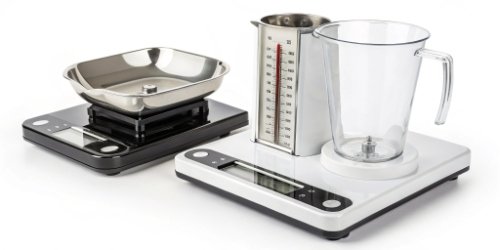
Your workspace is cluttered with separate scales, printers, and computers. This disjointed setup slows down operations and invites errors. An all-in-one intelligent scale integrates these functions, decluttering and boosting efficiency.
An all-in-one intelligent scale outperforms traditional setups by combining hardware like printers and computers into one unit. This integration saves physical space, cuts down on data transfer errors, and streamlines workflows by connecting directly to your existing software systems for seamless data management.
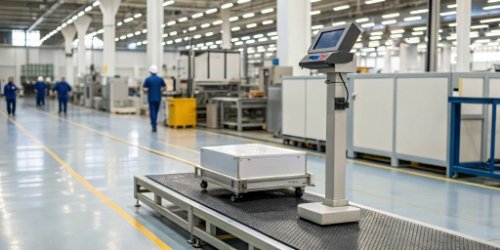
The benefits go far beyond just saving space. If you’re wondering how this consolidation translates into tangible gains like better efficiency and fewer headaches, you’re in the right place. Let’s break down the specific advantages that make these integrated systems a game-changer for modern industries.
What Advantages Does an All-in-One Intelligent Scale Offer Compared to Traditional Setups?
Are mismatched devices causing compatibility headaches and data silos? These issues lead to wasted time and costly operational mistakes. An all-in-one intelligent scale provides a single, unified system.
Key advantages include a smaller footprint, lower hardware costs, and simpler maintenance from one vendor. It eliminates manual data entry errors and boosts accuracy by automating the information flow from weighing to printing, creating a more reliable process.
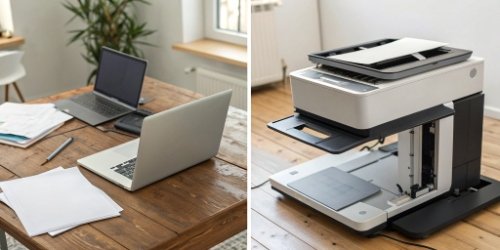
When we designed our all-in-one scales, we focused on solving the core problems of traditional multi-device setups. The goal was not just to combine hardware but to create a truly cohesive system. A traditional setup often means dealing with multiple vendors for support, which can be a nightmare when something goes wrong. Who do you call? The scale technician, the printer supplier, or the IT department? With an integrated solution from us, you have one point of contact. This simplifies troubleshooting and accountability. Furthermore, the seamless data transfer between components within a single machine drastically reduces the potential for human error. No more mistyping a weight from a scale display into a separate computer. This direct communication ensures data integrity1 from the moment an item is weighed to the second it is logged in your ERP.
| Feature | Traditional Multi-Device Setup | All-in-One Intelligent Scale |
|---|---|---|
| Footprint | Large, requires multiple power outlets | Compact, single power source |
| Maintenance | Multiple vendors, complex troubleshooting | Single vendor, simplified support |
| Dataflow | Manual entry, high error risk | Automated, high data integrity |
| Total Cost | High initial & upkeep costs | Lower TCO, consolidated investment |
How Does an Integrated Scale System Improve Efficiency Over Multiple Devices?
Switching between a scale, computer, and printer for one task slows your team down. Every extra step in the process drains productivity and adds delays. An integrated system combines these steps.
An integrated system improves efficiency by turning weighing, data recording, and label printing into one quick action. This reduces operator movement and eliminates wasted time. Automation through direct ERP connection means data is logged instantly, freeing up your team.
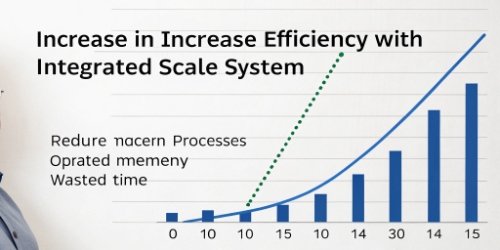
Let’s look at a typical workflow: weighing a package for shipment. With a traditional setup, the operator places the box on the scale, reads the weight, walks to a computer, and types the weight manually. Then, they might input other details before sending a command to a separate printer. Each step is a potential point of failure or delay.
The Old Way: A Step-by-Step Breakdown
With a conventional setup, an operator needs to physically move between the scale, the computer terminal, and the printer. This process is not only slow but also prone to simple human errors like typos, which can lead to costly shipping mistakes or inaccurate inventory records.
The New Way: A Unified Workflow
Now, consider the same task with our all-in-one scale. The operator places the box on the scale. An integrated camera2 can scan a barcode to identify the product automatically. The weight is captured instantly. A label is printed on the built-in printer, and all data is sent to the ERP system in a single action. The operator never has to move or manually type a number.
What Are the Key Features That Make Intelligent Scales More Effective Than Conventional Systems?
Conventional scales just give you a number. They cannot connect to your systems, process data, or adapt to your unique workflow. Intelligent scales have software smarts for powerful, custom functions.
Key features include built-in computers and software for custom tasks. They offer direct connectivity to your ERP or WMS and can include peripherals like scanners and printers. This transforms the scale from a measuring tool into a smart data hub.
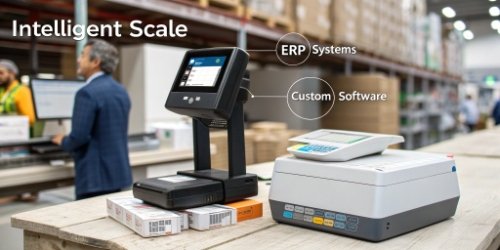
The real difference is not just the hardware; it is the intelligence inside. A conventional scale is a passive tool. An intelligent scale is an active participant in your workflow. At Weigherps, we offer both general-purpose software and fully customized solutions. This means the scale’s software can be tailored to your exact needs. For example, it can enforce quality control checks3 by flagging underweight or overweight items automatically. It can establish two-way communication with your ERP, not just sending data but also receiving instructions or product information. This opens up possibilities for dynamic weighing processes that adapt in real time. The ability to integrate custom logic directly onto the weighing terminal is what truly sets it apart from a simple scale connected to a PC. This is where our 19 years of experience in custom weighing systems really benefit our clients.
| Feature | Conventional Scale | Intelligent Scale |
|---|---|---|
| Functionality | Measures weight | Measures, processes, communicates |
| Connectivity | Limited or none | ERP/WMS/IoT integration |
| Customization | Not possible | Fully customizable software |
| Role in Workflow | A simple tool | A central control point |
How Can All-in-One Scales Enhance Workflow and Reduce Equipment Complexity?
Managing and training staff on multiple devices is a burden. It means more maintenance contracts, more cables, and more potential points of failure. A single, multi-functional device simplifies everything.
All-in-one scales centralize tasks at one station, so operators do not need to move between devices. This simplifies training and maintenance with only one machine to learn and manage. It creates a cleaner, more organized, and intuitive workspace for your team.

I once visited a client’s packing station that looked like a bird’s nest of cables. They had a scale, a separate display, a desktop PC under the bench, a monitor, a keyboard, a barcode scanner, and a label printer. An operator had to perform a complicated dance just to weigh and label one box.
Before: The Cluttered Station
Training a new employee on that setup was a week-long process. The chances of something becoming unplugged or failing were high, and troubleshooting was a constant headache. It was a clear bottleneck in their entire operation.
After: The Streamlined Hub
By replacing that entire mess with one of our all-in-one intelligent scale4s, we reduced the equipment clutter by over 80%. Training time was cut to a single afternoon because the new workflow was so intuitive. The entire process—scan, weigh, print—happened on one screen and one device. This reduction in complexity is not just about looks; it directly leads to fewer mistakes, faster operations, and happier, less-stressed employees.
Conclusion
In short, all-in-one intelligent scales save space, boost efficiency, and cut errors. They simplify your workflow by combining hardware and software into one powerful, cost-effective solution.
-
Understand the critical role of data integrity in maintaining operational efficiency. ↩
-
Discover how integrated cameras can improve accuracy and efficiency in weighing. ↩
-
Explore the importance of quality control checks in ensuring product standards. ↩
-
Discover how an all-in-one intelligent scale can streamline your operations and enhance efficiency. ↩


Comments (0)