
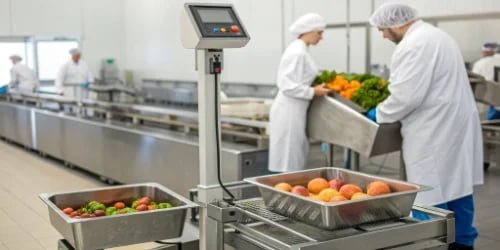
Losing track of your product's journey is a huge risk. A single contamination event can damage your brand and cost millions. An intelligent scale provides the simple, reliable data you need.
An intelligent scale improves traceability by capturing precise weight data, printing unique barcodes for each item or batch, and sending this information to a central system. This creates a digital record at every critical point in the supply chain.
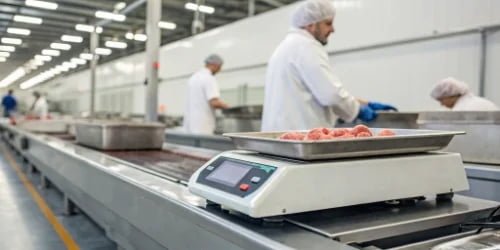
As a manufacturer of industrial scales for nearly 20 years, I've seen firsthand how companies struggle with traceability. It often seems like a complex puzzle with too many moving parts. But the solution is often simpler than you think. It starts with capturing accurate data at the very beginning of the process. Once you have good data, everything else becomes easier. We're going to break down how this works step-by-step, showing you how a single piece of equipment can become the foundation of your entire traceability system1. Let's dive in.
Why is traceability important in the food industry?
You can't prove your product's origin. This is a big problem for customers and regulators. A single bad batch could destroy your business overnight. You need a system for complete transparency.
Traceability is vital for food safety, allowing for quick and precise recalls of contaminated products. It also ensures compliance with government regulations and builds consumer trust by providing transparency about a product's journey from farm to table.
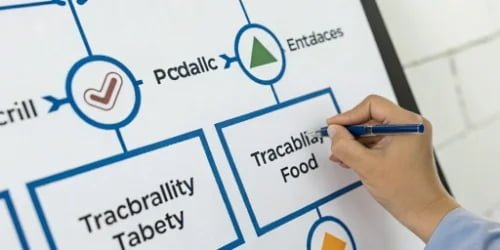
For many software providers, the data itself is the product. But where does that data come from? In the food industry, it has to come from the physical world. Let's look at why this data is so critical.
Ensuring Food Safety
The main reason for traceability is safety. If a batch of food is contaminated, you need to find it fast. I remember a client who faced a massive recall before they upgraded their system. They had to pull all their products from the shelves because they couldn't tell which batch was affected. It was a financial disaster. With a proper traceability system, they could have identified the exact batch in minutes. This limits public health risks and saves the company from huge losses. It turns a potential crisis into a manageable problem.
Meeting Regulatory Demands
Governments around the world have strict rules for food traceability. In the U.S., the Food Safety Modernization Act (FSMA) has specific requirements. Companies that fail to comply face large fines or can even be shut down. A traceability system isn't just a good idea; it's often the law. It proves that you are following the rules and taking safety seriously. This is very important for your clients who need to build compliant software solutions.
Building Consumer Confidence
Today, customers want to know where their food comes from. They want proof that it's safe and ethically sourced. A QR code2 on a package that shows the product's entire journey builds incredible trust. This transparency can become a major selling point and create strong brand loyalty.
| Without Traceability | With Traceability |
|---|---|
| Slow, massive recalls | Fast, targeted recalls |
| High risk of fines | Easy regulatory compliance3 |
| Low consumer trust | High consumer trust and loyalty |
| Brand reputation at risk | Brand reputation protected |
How to do traceability in the food industry?
The process of tracking every item seems complex. Manual logs are slow and full of human error. What if you could automate the process at every critical point in your supply chain?
Traceability is achieved by assigning a unique identifier, like a barcode or QR code, to each food item or batch. This code is scanned and its data is updated at every stage, from receiving raw materials to shipping the final product.
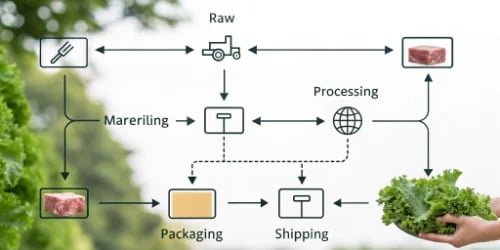
Implementing a traceability system might sound difficult, but we can break it down into simple, manageable steps. The goal is to create a digital chain of information that follows the physical product. As a hardware provider, we focus on the first, most crucial step: capturing good data from the start.
Step 1: Data Capture at the Source
Everything starts when raw materials arrive at your facility. This is where the intelligent scale4 comes in. When a box of tomatoes arrives, it's placed on the scale. The scale records the exact weight, the supplier's name, the date, and the time. It then prints a label with a unique barcode5. This barcode now contains all that key information. From this moment on, that box of tomatoes has a digital identity. This is the foundation of the entire system.
Step 2: Linking Data Through the Supply Chain
As the tomatoes move through production, the barcode is scanned at each step.
- Moving to storage: Scan.
- Taken for processing: Scan.
- Cooked into sauce: Scan.
The new batch of sauce gets its own unique barcode, which is digitally linked to the barcodes of all the ingredients used. This creates a clear and unbroken chain of information.
Step 3: Centralized Data Management
All this data from the scans goes into a central software system, like an ERP or a specialized traceability platform6. This is where your software expertise comes in. Your system can manage, analyze, and display this data. Anyone with the right permissions can look up a product's barcode and see its entire history instantly.
| Stage | Action | Data Captured |
|---|---|---|
| Receiving | Weigh and label raw materials | Supplier, weight, date, time |
| Processing | Scan materials into a batch | Ingredient lots, quantities |
| Packaging | Label the final product | Production date, batch number, expiry date |
| Shipping | Scan products onto a truck | Destination, shipping date |
Which tool is commonly used for food traceability?
You're trying to connect different systems. The software is ready for data, but the hardware often can't communicate well. We created a tool that bridges this gap and speaks the language of data.
The most common tools are an integrated system of hardware and software. IoT-enabled intelligent scales and barcode scanners capture the data, while ERP systems or dedicated traceability software manage and store the information in a central database.
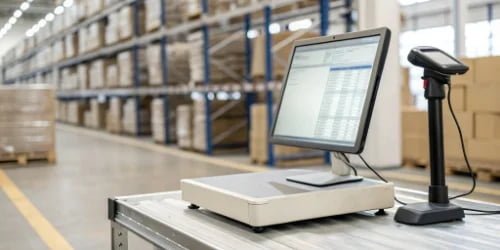
Many people think software is the only tool for traceability. But software is only as good as the data it receives. In our experience, the most effective traceability comes from a tight integration between smart hardware and powerful software. Let's look at the key components.
The Core Hardware: Intelligent Scales
The intelligent scale is the starting point. It's more than just a weighing machine. Our scales are IoT devices. They have a built-in computer and connectivity.
- It weighs accurately: This is basic but essential for inventory and batch control.
- It prints labels: It automatically generates barcodes or QR codes with all the necessary information.
- It communicates: It sends the data directly to your software system via Wi-Fi or Ethernet.
This device turns a physical item into a digital data point right at the factory door.
The Software Brain: Traceability Systems
This is the central hub where all the data lives. It can be a standalone traceability platform or a module within a larger Enterprise Resource Planning (ERP) system. Your clients, the software vendors, build and maintain these systems. The software is responsible for organizing the data, making it searchable, and providing analytics. When our scales connect seamlessly to these platforms, it creates a powerful, end-to-end solution.
The Glue: Barcodes and QR Codes
These simple labels are the link between the physical product and its digital record7. They are cheap, reliable, and universally understood. A quick scan with a handheld device or a fixed scanner is all it takes to update the product's status in the system. They ensure that the data is entered quickly and without human error. Together, these three tools form a complete traceability ecosystem.
How is AI used in the food and beverage industry?
Are you worried about predicting problems before they happen? Manually analyzing data is too slow and inefficient. AI can spot patterns you can't see, helping to prevent waste and ensure safety.
AI is used to analyze traceability data to predict potential safety risks and identify contamination sources faster. It also optimizes the supply chain by forecasting demand, while machine vision systems powered by AI automate quality control checks.
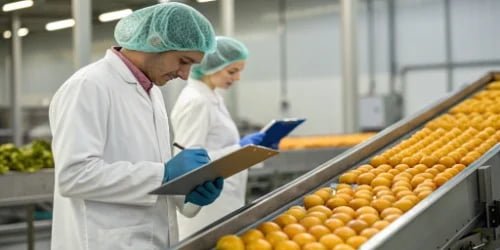
Artificial Intelligence (AI) is transforming the food industry, and it all starts with data. The rich datasets collected by intelligent scales and traceability systems are the perfect fuel for AI engines. For a software company, integrating AI is a huge value-add for your customers. Here are a few practical ways we see AI being used.
Predictive Quality Control
An intelligent scale doesn't just measure weight. Some models can be paired with cameras. AI-powered machine vision8 can analyze images of products as they are weighed. It can spot defects, like bruised fruit or improperly sealed packages, that a human might miss. This automates the quality control process, making it faster and more accurate. It ensures that only high-quality products move down the supply chain9.
Supply Chain Optimization
AI can analyze historical weight data from shipments to forecast future demand more accurately. It can also optimize logistics. For example, by analyzing patterns in shipping weights and destinations, AI can suggest more efficient truck routes and loading patterns. This reduces fuel costs, minimizes waste from spoilage, and ensures products get to market faster.
Proactive Risk Management
This is perhaps the most powerful use of AI in traceability. An AI algorithm can constantly monitor the flow of data from all the scanning points in the supply chain. It can learn what a "normal" pattern looks like. If it detects an anomaly—for example, a batch of ingredients that sat too long in a warehouse—it can flag it for human review. This helps companies spot potential safety issues before they become real problems.
| AI Application | How It Works | Benefit |
|---|---|---|
| Machine Vision | Analyzes images of products for defects | Improved product quality, less waste |
| Demand Forecasting | Analyzes past sales and shipment data | Reduced overstocking and stockouts |
| Risk Detection | Finds unusual patterns in traceability data | Prevents safety issues before they happen |
Conclusion
Intelligent scales are the foundation of modern food traceability. They provide the accurate, real-time data needed to ensure safety, meet regulations, and earn the trust of your customers.
-
Learn about the essential elements that make up an effective traceability system for food safety. ↩
-
Discover how QR codes enhance transparency and provide consumers with product information. ↩
-
Discover the legal obligations companies must meet to ensure food traceability and avoid penalties. ↩
-
Explore how intelligent scales enhance traceability and ensure food safety in the supply chain. ↩
-
Learn how barcodes facilitate tracking and managing food products throughout the supply chain. ↩
-
Explore the features and benefits of using a dedicated traceability platform. ↩
-
Learn about the significance of maintaining digital records for tracking food products. ↩
-
Discover how machine vision technology improves quality control in food processing. ↩
-
Learn about the critical elements of a supply chain that impact food traceability. ↩


Comments (0)