
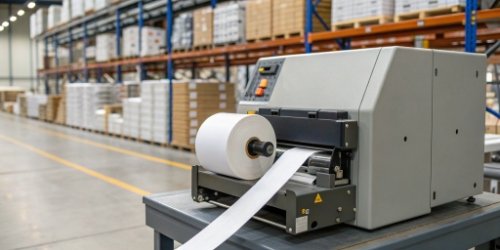
Are you tired of pre-printed labels becoming obsolete and wasting money? Your warehouse is full of label rolls, but you still can't find the right one for the job.
An on-demand label printing scale eliminates waste by printing the exact label you need, right when you need it. This stops you from throwing away outdated labels and frees up storage space. It directly cuts down on both inventory costs and material waste.
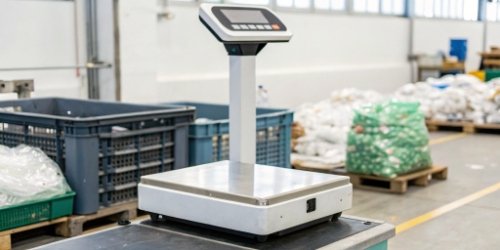
As a manufacturer, we've seen countless businesses struggle with label management1. I remember visiting a client's facility where an entire pallet of expensive, pre-printed labels had to be thrown out because of a small change in a compliance code2. It was a painful and expensive lesson for them. This is the exact problem that modern weighing technology is designed to solve. An integrated printing scale isn't just a piece of hardware; it’s a strategic tool. It transforms your labeling process from a source of waste into a model of efficiency. Let me show you how this technology can directly impact your bottom line and streamline your operations.
What Are the Benefits of On-Demand Label Printing for Reducing Waste?
Pre-printing labels often leads to costly mistakes and waste. A simple design change or a new regulation can make entire batches of labels completely useless.
The main benefit is printing only what's necessary, which eliminates over-ordering and waste from obsolete labels. It also reduces errors by pulling real-time data for each print. This ensures every label is accurate and usable, minimizing reprints and discarded materials.

The most significant benefit is the shift from a "just-in-case" mindset to a "just-in-time3" reality. When we developed our first on-demand printing scales, we wanted to tackle the core sources of waste head-on. It's not just about using less paper; it's about making your entire process smarter.
I worked closely with a client in Ethiopia who faced a unique challenge. Their country doesn't have the capacity to produce specialized label paper locally. Every roll of pre-printed labels had to be imported, which was slow and expensive. If they ordered the wrong design or quantity, the mistake was magnified tenfold. For them, moving to on-demand printing wasn't just about reducing waste; it was a business-critical decision. They started stocking only blank labels, which were cheaper and easier to source. This change eliminated obsolescence waste4 and solved a major supply chain headache5.
Key Areas of Waste Reduction
| Waste Type | Pre-Printed Labels | On-Demand Label Printing |
|---|---|---|
| Obsolescence | High risk. A change in product info, branding, or regulations makes stock useless. | Eliminated. Templates are updated digitally, so every print is current. |
| Print Errors | Moderate risk. Manual data entry or wrong label selection leads to reprints. | Minimized. Data is pulled automatically from your system for each label. |
| Overproduction | Common. Companies often order more than needed to get bulk discounts. | Eliminated. You print one label or one hundred, exactly as needed. |
By targeting these specific areas, an on-demand scale does more than save a few labels. It prevents the financial losses and operational drag that come with outdated printing methods.
How Can On-Demand Printing Scales Minimize Label Inventory Costs?
Storing rolls of pre-printed labels for every product variation takes up valuable warehouse space and ties up your capital. It's a hidden cost that quietly eats into your profits.
These scales turn your physical label inventory into a digital one. Instead of buying and storing thousands of labels for every product SKU, you only need to stock blank label rolls. This drastically cuts down on storage costs, obsolescence, and purchase expenses.
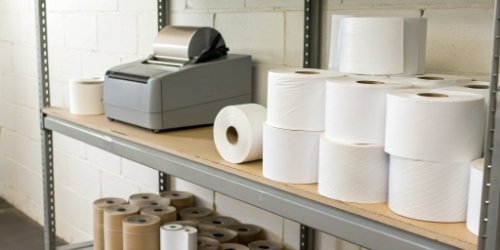
When you look at the total cost of labeling, the price of the labels themselves is just one part of the equation. As a business, we are always trying to find hidden costs for our clients. Label inventory is a big one. You have to pay for the physical space they occupy, the labor to manage them, and the capital that's frozen in that stock. On-demand printing dissolves these hidden costs.
We help our clients calculate this return on investment all the time. One company we worked with was a food processor with over 200 different products. They had to keep separate pre-printed label stock for each one. After switching to our on-demand printing scales, they replaced dozens of shelves of labels with a single pallet of blank thermal rolls.
Breakdown of Cost Savings
- Direct Purchase Costs:
You no longer need to meet minimum order quantities for hundreds of different label designs. Buying blank labels in bulk is far more economical. This simplifies purchasing and gives you more negotiating power with suppliers. - Storage and Handling Costs:
Think about the square footage currently dedicated to label storage. This space can be reclaimed for more valuable activities, like storing actual products. You also reduce the labor needed to track, organize, and retrieve different label types. - Capital Costs:
Money tied up in label inventory6 is money that isn't working for you. By adopting a just-in-time approach, you free up that capital to invest in other areas of your business, like R&D or marketing.
This shift doesn't just save you a little money. It fundamentally changes your cost structure7 and makes your operation more lean and agile.
What Strategies Do On-Demand Label Printing Scales Use to Cut Down on Waste?
You want to be efficient, but your current system forces you to waste materials. You print a large batch of labels, only to find a mistake after hundreds are already printed.
They use strategies like dynamic data integration and flexible template management. The scale pulls live information from your ERP or database for each print. This ensures accuracy and allows for instant updates without you needing to discard old label stock.
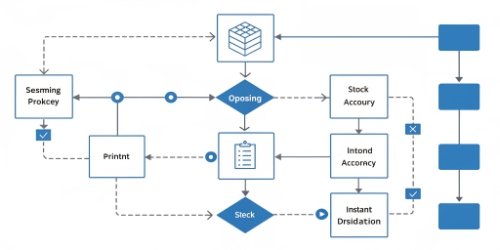
The "magic" of an on-demand printing scale is in its software and connectivity. It's not just a printer attached to a scale; it's an intelligent data terminal. The two primary strategies it employs are what make it so effective at eliminating waste before it even happens.
I have to admit, I'm a bit obsessive about order and consistency. When I see a stack of products with slightly different, misaligned, or poorly printed labels, it bothers me. For me, a messy label implies a messy process. This is where template management8 becomes so important. It ensures every single label is perfect.
Strategy 1: Real-Time Data Integration
An on-demand scale connects directly to your central business systems, such as an ERP or WMS. When an item is placed on the scale, the system can:
- Identify the product.
- Pull the correct price, weight, ingredients, or part number.
- Generate a unique barcode or QR code.
- Add the current date, time, and batch number.
This automated process removes the risk of human error from manual data entry. Every piece of information is pulled from a single source of truth, ensuring the label is correct on the first print.
Strategy 2: Flexible Template Management
Instead of having a fixed, pre-printed label for each product, you use digital templates. You can design a standard layout, and the scale's software will populate it with the dynamic data for each specific item. If a regulation changes or you update your branding, you don't throw anything away. You simply log in, update the digital template once, and every subsequent label will be printed with the new design. This makes your operation incredibly agile.
How Does Real-Time Label Printing Help Manage Inventory and Reduce Excess?
Are you constantly struggling with inventory accuracy? Mismatched labels and manual tracking can lead to costly overstocking of some items and unexpected stockouts of others. It's a constant headache.
Real-time printing creates a direct link between your physical goods and your digital inventory system. Each time a label is printed for a weighed item, the data is captured instantly. This improves tracking accuracy and gives you a live, accurate view of your stock levels.

For our clients who are software providers, this is the most exciting part. A printing scale becomes a critical data-capture point for your entire system. The label it prints is the physical proof of a transaction, and the data it sends back to your software is the digital record. When these two things happen at the same time, you create a powerful, error-proof system. This real-time link is the foundation for advanced inventory management and operational efficiency.
This moves the scale from a simple measurement tool to an active participant in your business intelligence9. The data it provides is clean, immediate, and accurate, which is the perfect input for any sophisticated inventory or production management software.
Enhancing Data Accuracy
When an operator weighs a box of parts and prints a label, the scale can simultaneously send a data packet to your central database. This packet can include the part number, exact weight, operator ID, and a timestamp. This eliminates the need for manual data entry at a later stage, which is often a major source of inventory discrepancies. Accurate data is the foundation of good business decisions, and this process ensures your data is as accurate as possible.
Supporting Lean and JIT Operations
Real-time labeling is a cornerstone of Lean and Just-in-Time (JIT) manufacturing principles. Instead of producing large batches of goods based on forecasts, you can produce and label items as they are needed. This reduces the amount of work-in-progress (WIP) and finished goods inventory you need to hold. This, in turn, lowers storage costs, reduces the risk of product obsolescence, and makes your entire production cycle more responsive to actual customer demand.
Conclusion
On-demand printing scales cut waste and lower inventory costs. They boost accuracy and make your operations more efficient, saving you money and greatly improving your overall workflow.
-
Find out effective strategies for managing labels to enhance operational efficiency. ↩
-
Understand the significance of compliance codes in labeling and how they affect your business. ↩
-
Understand the principles of JIT manufacturing and how it can enhance your operations. ↩
-
Learn about obsolescence waste and strategies to minimize it in your labeling operations. ↩
-
Identify common supply chain challenges and how to overcome them in labeling. ↩
-
Find effective strategies for managing label inventory to reduce costs and waste. ↩
-
Explore how on-demand printing can fundamentally alter your business's cost structure. ↩
-
Discover how effective template management can improve your labeling efficiency. ↩
-
Learn how business intelligence can improve your inventory management and decision-making. ↩


Comments (0)