
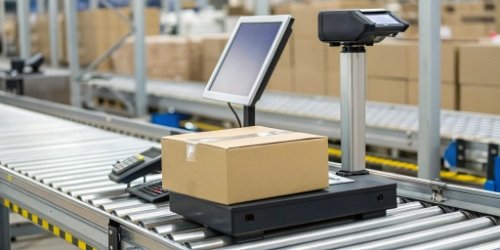
Manual data entry is slow and invites costly mistakes. These errors disrupt your inventory and shipping, hurting your bottom line. An integrated system automates the process, creating a foolproof closed-loop.
Integrating a scanner with a label printing scale creates a closed-loop system by automating the data workflow. The scanner instantly identifies a product via its barcode, the scale captures its exact weight, and the printer generates a new, accurate label. This cycle eliminates manual entry and ensures data integrity.
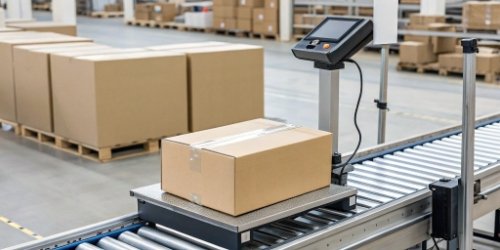
This direct connection between scanning, weighing, and printing forms a powerful, self-contained loop. In my 19 years in the industrial weighing industry, I've seen this simple integration deliver incredible results. But it is important to see it as more than just two devices working together. This is the first practical step toward building a larger, smarter operational network. The real power comes when this closed loop connects to your central business systems, which is the foundation of the modern IoT-driven production1 environment. Let's explore what that journey looks like and the benefits you can expect along the way.
What are the Benefits of a Closed-Loop System with Integrated Scanner and Label Printing Scale?
Are operational blind spots and inaccuracies hurting your bottom line? Every mistake erodes profits and can damage trust with your customers. A closed-loop system delivers complete visibility and error-proof control.
The main benefits are the total elimination of manual data entry errors, a significant increase in throughput speed, and a reliable digital audit trail for every item processed. This leads to better inventory accuracy, lower labor costs, and enhanced operational control, directly boosting your profitability.
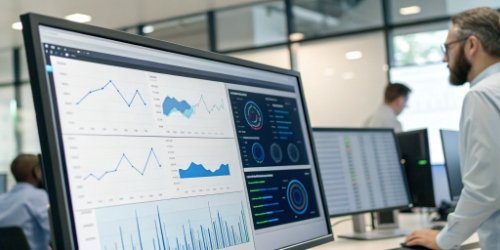
Let's dive a little deeper into these benefits. This isn't just about making one workstation faster; it's about making your entire operation more robust and reliable. At Weigherps, we focus on delivering tangible results, and this is one of the most effective solutions we offer. We've seen clients transform their processes by embracing this technology. The benefits typically fall into three key areas that any purchasing manager or technical director should care about.
Enhanced Accuracy and Data Integrity
Human error is the single biggest source of problems in logistics and production. A tired worker might type "10.5 kg" instead of "1.05 kg." With an integrated system2, this can't happen. The scanner reads the product ID, and the scale sends the exact weight to the printer. The data is perfect every time. This means your inventory records, shipping manifests, and invoices are always correct.
Increased Speed and Throughput
Think about the manual process. An operator picks up an item, finds the product code, types it in, weighs the item, writes it down, then prints a label. An integrated system reduces this to two simple actions: scan and weigh. The label prints automatically. We have seen this reduce the time per package from over 30 seconds down to less than 5. This dramatically increases how many items one person can process in an hour.
Improved Traceability
Because every scan and weigh action is captured digitally, you have a complete, time-stamped record of everything that passed through the station. If a customer has a quality complaint or a shipment is questioned, you can instantly pull up the record. This is essential for industries with strict compliance requirements and gives you complete control over your quality assurance process.
How Does Scanner Integration Enhance the Functionality of Label Printing Scales?
Is your scale just a device that shows a number? If so, you're missing out on a huge amount of data and automation potential. A standalone scale is a missed opportunity.
Scanner integration enhances a scale by giving it "eyes." It can automatically identify what is being weighed. Instead of just capturing a weight, the scale can now associate that weight with a specific product ID, customer order, or batch number, transforming it from a simple tool into an intelligent data capture hub.
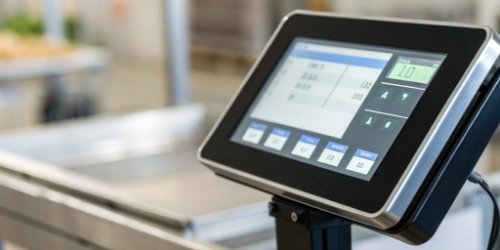
During my time helping companies optimize their weighing processes, the biggest leap in value always comes when we make the scale "smarter." A scale that can identify what it's weighing is fundamentally different. It stops being a passive measurement device and becomes an active participant in your workflow. This opens up entirely new possibilities for automation and quality control3 that a simple scale could never achieve on its own. It's the difference between having a simple calculator and a computer.
From Measurement to Identification
A standard scale knows "how much," but an integrated scale knows "how much of what." This is a critical distinction. When the scanner provides the product identity, the scale can pull information from a database. For example, it can check if the weight is within the acceptable tolerance for that specific product. If it isn't, the scale can trigger an alarm or prevent a label from being printed. This proactive quality control is impossible without integration.
Unlocking Advanced Workflows
Once the scale is a smart hub, you can build complex logic directly into the weighing station. Here's a simple table to show the difference:
| Feature | Standard Scale | Integrated Scale with Scanner |
|---|---|---|
| Product Selection | Manual lookup or typing | Automatic barcode scan |
| Data Entry | Manual weight recording | Automatic weight capture |
| Quality Control | Visual check by operator | Automatic tolerance check vs. database |
| Labeling | Manual label request | Automatic label printing on good weigh |
| System Update | Manual inventory update | Automatic, real-time update to WMS/ERP |
This shows how the integration moves your operation from a series of manual, error-prone tasks to a streamlined, automated workflow.
What is the Process for Creating a Closed-Loop System with Scale and Scanner Integration?
Does the idea of integrating new hardware seem complex and disruptive? Many managers worry about technical challenges, compatibility issues, and operational downtime. The good news is the process is very straightforward when planned correctly.
The process involves three key stages. First, a hardware connection is made between the scanner and the scale, usually via a USB or RS-232 port. Second, the scale's firmware is configured to recognize and parse the data from the scanner. Finally, the workflow logic is programmed to define the automated actions.
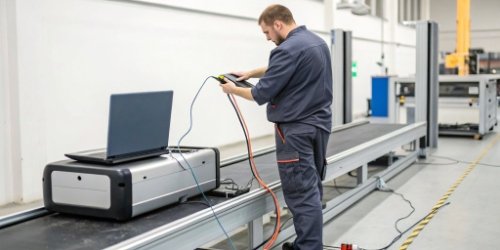
As a manufacturer, we at Weigherps don't just sell boxes. We provide weighing solutions. That means we guide our clients through this setup process to ensure it's seamless. The goal is to get you up and running with minimal disruption so you can start seeing the benefits immediately. It really boils down to ensuring the hardware and software are speaking the same language. Here’s a closer look at what that involves for a software vendor or technical director.
Step 1: Hardware Compatibility and Connection
The first step is purely physical. We need to ensure your scale has the correct input port to connect to the scanner you want to use. The most common are USB and serial ports (RS-232). We also confirm that the scanner's output protocol is compatible with what the scale's indicator can accept. This is a simple check that avoids major headaches later. An experienced provider will handle this for you.
Step 2: Software and Firmware Configuration
Once connected, the scale needs to understand the data the scanner is sending. This involves setting up the scale's software. We define the data format, such as telling the scale to expect a 13-digit EAN code. This is where a good partnership with your scale manufacturer is crucial. Our scales, for example, have flexible firmware that can be easily customized to work with virtually any scanner and data type.
Step 3: Workflow Definition and Testing
This is the final and most important step. We work with you to define the logic. For example: "WHEN a barcode is scanned, THEN look up the product in the database. IF the weight is within +/- 5% of the target weight, THEN print Label A. ELSE, display an error message and do not print." We then test this workflow with a few sample products to ensure it runs perfectly before deploying it on the live production floor.
How Does Combining Scanning Technology with Label Printing Improve Operational Efficiency?
Are slow, repetitive tasks strangling your production line's potential? Every wasted second on a manual process is a lost opportunity for growth and profit that you can never get back.
This combination improves operational efficiency by replacing multiple manual steps with a single, automated action. An operator simply scans an item and places it on the scale; the correct label is printed in seconds. This reduces physical movement, eliminates typing, and minimizes errors, which directly speeds up the entire line.
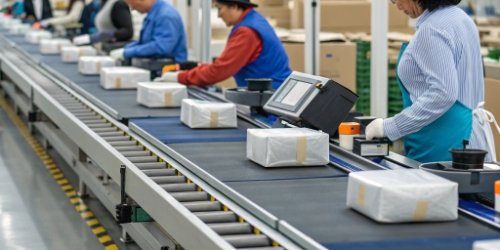
Efficiency is about getting more done with the same resources. In all my years of helping businesses, I've seen that the biggest efficiency gains come from removing bottlenecks. Manual weighing and data entry stations are classic bottlenecks. By automating them with scanner and scale integration, you don't just speed up one task—you unlock the flow of your entire operation. This allows you to scale your business without proportionally scaling your labor costs. This is the foundation of smart manufacturing4.
Reducing Cycle Time Per Task
Let’s be specific. A manual weighing and labeling process can easily take 30-45 seconds per item. An automated scan-weigh-print cycle takes less than 5 seconds. If you process 1,000 packages a day, you are saving over 8 hours of labor. That is an entire full-time employee's worth of time that can be reallocated to more valuable tasks. This is a direct and easily measurable return on investment.
Minimizing Costly Rework and Waste
Operational efficiency isn't just about speed; it's also about accuracy. What is the cost of shipping the wrong product to a customer? You have the return shipping costs, the cost to ship the correct item, and the damage to your brand's reputation. An integrated system gets it right the first time, every time. This eliminates the hidden costs of rework, scrap, and customer service issues that stem from simple human errors.
Empowering Your Workforce and Embracing IoT
When you automate repetitive tasks, you free up your skilled operators to focus on things that require human intelligence, like quality control, process improvement, and problem-solving. This not only makes your operation more efficient but also leads to higher employee satisfaction. Furthermore, this integrated station becomes a key data source for your broader IoT strategy. The data it generates can feed into your ERP or WMS in real-time, giving you a live view of your production floor. This is how you start building a truly smart, connected, and efficient factory.
Conclusion
Integrating a scanner and scale is more than an upgrade. It is the first, essential step toward building a truly automated, data-driven, and highly efficient smart operation for the future.
-
Learn about the benefits of IoT in creating smarter, more connected manufacturing environments. ↩
-
Explore how integrated systems can streamline your workflow and enhance efficiency. ↩
-
Explore effective quality control methods to ensure product consistency and customer satisfaction. ↩
-
Discover the principles of smart manufacturing and how it can transform your operations. ↩


Comments (0)