
Are shipping errors and slow processes hurting your profits? You feel the pressure to improve supply chain efficiency but struggle to find a starting point that delivers real results.
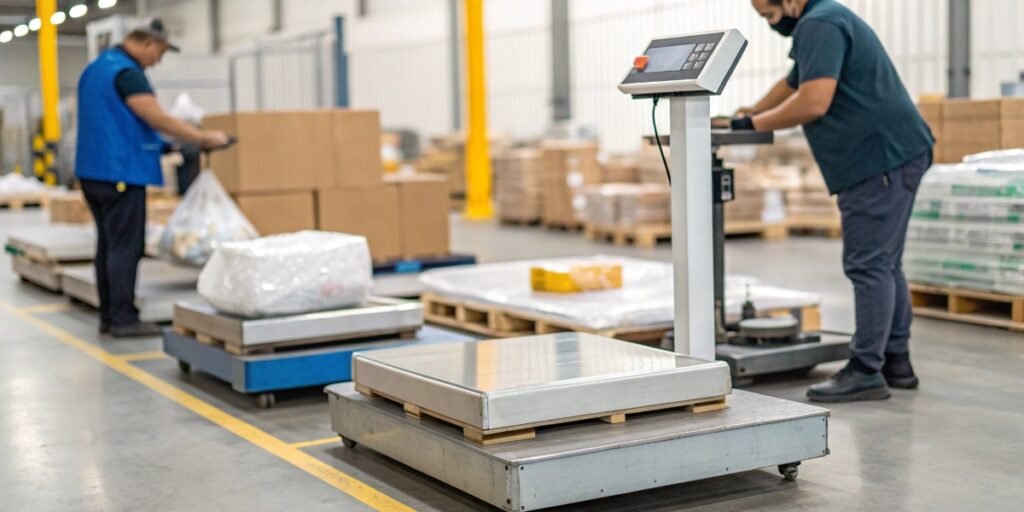
Industrial scales drive efficiency by providing precise data for every stage of your operation. They help optimize inventory, automate logistics, ensure accurate billing, and enable data-driven decisions. This reduces costs and boosts productivity across your entire supply chain.
This sounds simple, but the impact is huge. As an industrial scale manufacturer with over 18 years of experience, we've seen firsthand how the right weighing technology can transform a business. It's not just about measuring weight; it's about generating valuable data that streamlines your entire workflow. Let's break down how this technology can specifically benefit your operations, from controlling costs to making smarter business decisions.
Why is precise measurement from industrial scales crucial for cost control?
Are you losing money from overfilled packages or inaccurate inventory counts? These small errors add up, creating significant and preventable financial losses for your business every single day.
Precise measurement is vital for cost control because it eliminates material waste, prevents shipping overcharges, and ensures accurate invoicing. Every gram counts toward your bottom line, and accurate scales protect your profit margins.

In our business, we always say that "what gets measured gets managed." Nowhere is this truer than in cost control1. Inaccurate weighing directly leads to financial leakage that can be hard to trace without the right tools. Precise industrial scales act as a guard for your resources. They ensure you are not giving away products for free through overfilling or paying extra for shipping due to incorrect weight declarations. Investing in accuracy is investing in profitability. Let's look deeper into how this works.
Reducing Material Waste
For companies dealing with bulk materials, even a tiny error can have massive financial consequences. Imagine you are packaging a product where a 1% overfill is common due to an old, uncalibrated scale. If each package should weigh 1kg, you are giving away 10 grams for free with every unit. This doesn't sound like much. But over 100,000 units, that's 1,000 kg of lost product. An accurate, calibrated industrial scale eliminates this problem by ensuring every package meets the target weight precisely.
Optimizing Shipping Costs
Shipping carriers determine their fees based on package weight and dimensions. If your scales report a higher weight than reality, you are consistently overpaying for shipping. On the other hand, under-reporting weight can lead to penalties and back charges from carriers, which also hurts your budget.
| Weighing Issue | Financial Impact |
|---|---|
| Over-weighing | Paying higher base shipping rates on every package. |
| Under-weighing | Carrier penalties and adjustment fees. |
| Inconsistent Weight | Inability to accurately forecast shipping budgets2. |
Precise scales ensure you pay the exact amount required for shipping, protecting your business from both overpayment and penalties.
How does automated weighing technology streamline logistics and shipping?
Is your shipping department a bottleneck? Manual weighing, data entry, and labeling are slow and prone to human error, which delays your shipments and can frustrate your customers.
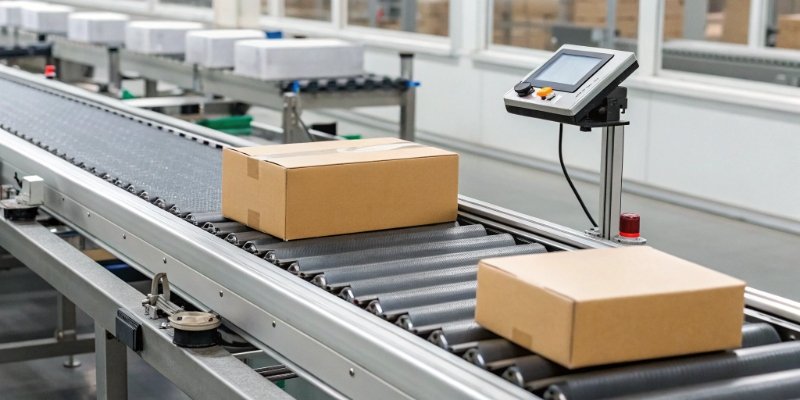
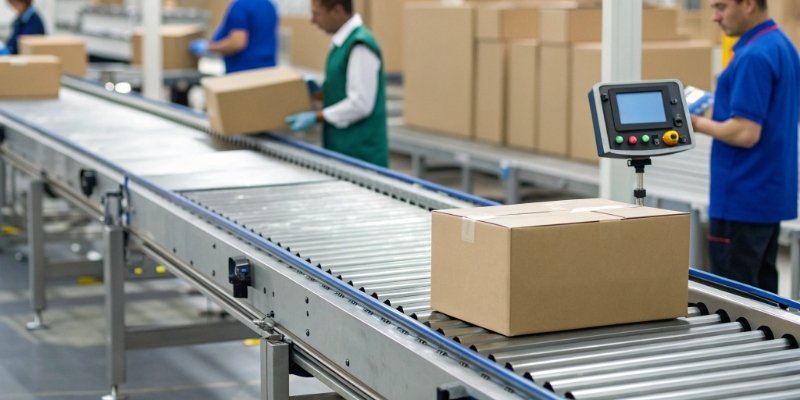
Automated weighing streamlines logistics by integrating scales with conveyors and software. It captures weight, calculates shipping costs, prints labels, and sends data to your system instantly. This eliminates manual steps and accelerates throughput.
The goal of any logistics operation is to move goods quickly and accurately. Manual processes are the natural enemy of this goal. Every time an employee has to stop a package, place it on a scale, write down the weight, and type it into a computer, time is lost and the risk of error increases. We help our clients overcome this by building systems where weighing happens on the move, without any manual intervention. This simple change can completely transform the speed and reliability of a shipping department.
What is Weigh-in-Motion (WIM)?
Weigh-in-motion is a technology that allows packages to be weighed as they travel along a conveyor belt. A scale is integrated directly into a section of the conveyor. As a package passes over it, its weight is captured instantly without stopping the flow of the line. This data is then immediately sent to an integrated computer system. This technology is the key to high-speed sorting and shipping operations found in modern logistics centers. It allows a facility to process hundreds or even thousands of packages per hour.
The Automation Workflow
An automated weighing system creates a seamless flow for every package.
- Induction: A package enters the conveyor line.
- Scanning: A barcode scanner identifies the package and pulls order information.
- Weighing: The package passes over a WIM scale, which captures its precise weight.
- Data Processing: The system instantly calculates the shipping cost and assigns a carrier.
- Labeling: A downstream applicator prints and applies the correct shipping label.
- Sorting: The package is automatically routed to the correct shipping lane.
This entire process happens in seconds, without a single human touch. This not only increases speed but also dramatically improves accuracy.
What are the benefits of integrating industrial scales with a Warehouse Management System (WMS)?
Is your inventory data unreliable? Manual data entry between your scales and your WMS creates discrepancies. This can lead to stockouts, overstocking, and a chaotic warehouse environment.
Integrating scales with a WMS provides real-time, error-free inventory data. It automates receiving, cycle counting, and order fulfillment processes, ensuring your system's data always reflects the physical reality of your warehouse.

Your WMS is the brain of your warehouse, but it is only as smart as the data it receives. If the data is bad, the WMS will make bad decisions. The most common source of bad data is manual entry. We see it all the time. Integrating your scales directly with your WMS closes this gap. It creates a closed loop where accurate weight data flows into your system automatically, providing a single source of truth for your entire inventory.
A Real-World Transformation
I once had a client in the seafood business who purchased one of our IP68 waterproof computer scales. He told me his budget was tight, but his problems were bigger. His employees were manually writing down weights, which led to frequent errors. Worse, he suspected some employees were reporting false weights and cheating him. He needed a digital solution. After we installed the system, he called me back. He said the scale and software delivered an incredible return on investment.
The Solution: An Integrated System
We provided a platform scale that was completely waterproof, perfect for the wet environment of his seafood processing facility. The scale was connected directly to his inventory management software. When an employee placed a crate of fish on the scale, the weight was sent to the software with a single button press.
The Unbelievable ROI
This simple change solved his biggest operational headaches.
- Eliminated Errors: No more manual data entry meant no more typos or mistakes.
- Stopped Deception: Employees could no longer fake the numbers. The weight from the scale was the only weight the system would accept.
- Increased Efficiency: The receiving and packing process became much faster.
He told me the investment paid for itself much faster than he ever expected. The money he saved by eliminating errors and employee dishonesty was far greater than the cost of the scale and software. This is the power of a fully integrated weighing solution.
How can accurate weighing data enhance supply chain visibility and decision-making?
Do you feel like you are making business decisions in the dark? Without reliable data, you cannot track performance, identify problems, or plan for the future effectively.
Accurate weighing data creates a transparent supply chain. It provides a single source of truth for tracking inventory, monitoring production yields, and analyzing shipping costs. This empowers you with clear insights for strategic decisions.

In today's competitive market, guessing is not a strategy. The businesses that succeed are the ones that use data to make informed choices. Accurate weight data from industrial scales is one of the most fundamental and powerful data sets you can collect. It touches every physical part of your supply chain, from raw material receiving to final product shipping. By capturing and analyzing this data, you gain visibility into your operations that was previously impossible. This allows you to move from reacting to problems to proactively improving your entire process.
From Raw Data to Business Intelligence
An individual weight measurement is just a number. But when you collect thousands of these measurements and analyze them over time, they become business intelligence3. For example, by tracking the weight of raw materials coming in versus the weight of finished goods going out, you can precisely calculate your production yield and identify waste. By analyzing the weight data of outbound shipments, you can negotiate better rates with carriers. This raw data is the foundation for Key Performance Indicators (KPIs)4 that let you manage your business effectively.
Practical Applications for Decision-Making
Accurate weight data can be used across your business to drive better decisions.
| Department | Data Point | Business Decision |
|---|---|---|
| Production | Raw material input vs. finished good output. | Identify and reduce waste in the production process. |
| Logistics | Actual vs. declared shipping weights. | Renegotiate carrier contracts or correct billing errors. |
| Inventory | Weight-based cycle counts. | Improve inventory accuracy5 and forecast demand better. |
| Quality Control | Weight variations in finished products. | Pinpoint production issues and ensure product consistency. |
By using weight as a reliable metric, you can build a more efficient, predictable, and profitable supply chain. It gives you the clear visibility needed to steer your business toward growth.
Conclusion
Accurate industrial scales are not just tools. They are the foundation of an efficient, transparent, and profitable supply chain that drives your business growth.
-
Discover essential cost control practices that can save your business money. ↩
-
Find strategies for accurately forecasting shipping budgets to avoid surprises. ↩
-
Learn how to turn data into actionable business intelligence for growth. ↩
-
Explore essential KPIs that can help you manage your supply chain effectively. ↩
-
Get tips on improving inventory accuracy to optimize your operations. ↩



Comments (0)