
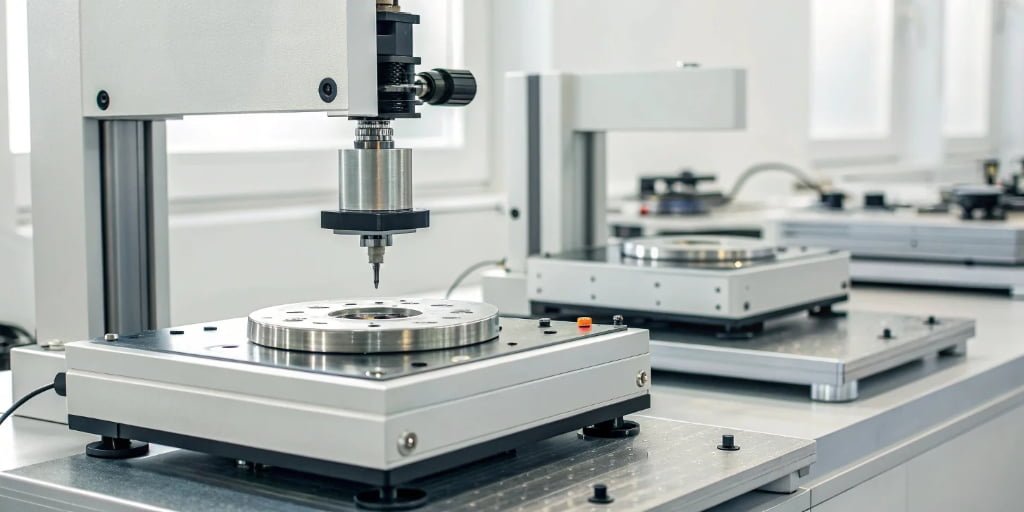
Your old scales aren't precise enough, leading to waste and quality issues. This costs your business money and damages its reputation. SAW technology offers a revolutionary solution for unmatched accuracy.
SAW technology offers accuracy up to 0.005% by digitally measuring a wave's travel time, not an analog signal. This completely removes signal drift and interference. It makes SAW scales 10 to 20 times more precise than traditional strain gauges, transforming high-precision weighing.
The level of precision sounds almost unbelievable, doesn't it? In my 18 years of manufacturing industrial scales at Weigherps, I've seen countless clients struggle with inconsistent measurements. Understanding how SAW technology1 achieves these results is so important. It’s not just a small improvement; it is a totally new way to measure weight. This shift is why so many industries are paying attention. Let's look at the mechanics behind this game-changing tech and see why it is becoming so popular.
How does Surface Acoustic Wave technology actually measure mass?
The inner workings of a weighing scale can feel like a black box. You put an object on it, and you get a number. But not knowing how it works makes it hard to trust the results, especially when precision is so critical for your business. SAW technology, however, uses a simple and direct method that builds that trust.
SAW technology measures mass by sending a tiny wave across a surface. When you apply weight, the surface bends a little. This changes the wave's travel distance and time. This time difference is measured digitally, which directly calculates the mass with extreme precision.
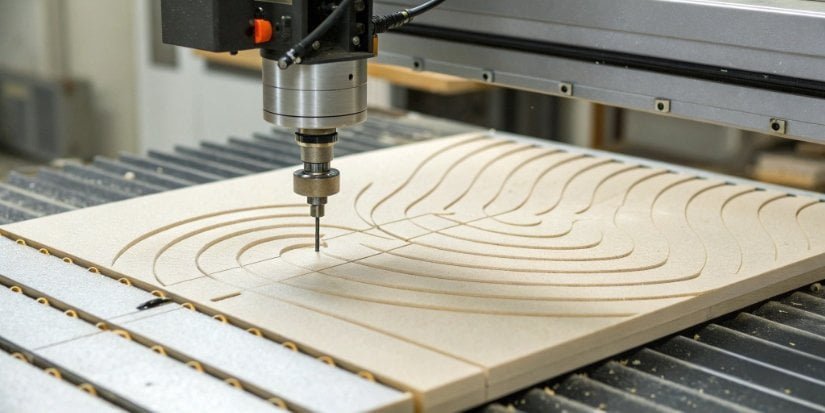
Let's dive deeper into how this works. At the heart of a SAW sensor are two key parts: a transmitter and a receiver. These are called transducers. They are placed at a very specific distance from each other on a spring element. When you place a load on the scale, the spring element bends. This movement, no matter how small, changes the physical distance between the transmitter and the receiver. The transmitter sends out a surface acoustic wave, which travels along the surface to the receiver. The system measures the exact time it takes for this wave to complete its journey.
From Bending to Bits: The Digital Measurement
This direct time measurement is what makes SAW technology so powerful. Unlike traditional strain gauges2 that produce a weak, analog electrical signal, a SAW sensor’s output is a time-based, digital measurement. This completely avoids problems that plague analog systems, like electrical noise, temperature drift, and signal degradation over long cables. As a manufacturer, we've seen how these analog issues cause major headaches for clients. A digital measurement is clean, stable, and incredibly repeatable.
| Feature | SAW Technology | Traditional Strain Gauge |
|---|---|---|
| Measurement Principle | Measures wave travel time (Digital) | Measures change in electrical resistance (Analog) |
| Signal Type | Digital Frequency | Analog Voltage |
| Susceptibility to Noise | Very Low | High |
| Signal Conversion | Not Required | Requires Analog-to-Digital Converter |
What are the main advantages of SAW sensors over traditional strain gauges in weighing systems?
You are probably used to strain gauge scales. They get the job done for basic tasks, but you always have to deal with their limits. Constant recalibration, questionable accuracy under heavy use, and damage from overloads can slow down your entire operation. SAW sensors directly solve these problems, offering a much more robust and reliable choice.
SAW sensors give you far better accuracy, which can be 10-20 times better. They also offer outstanding durability with high overload protection up to 250% and are stable against temperature changes. They don't use fragile analog parts, ensuring consistent performance.
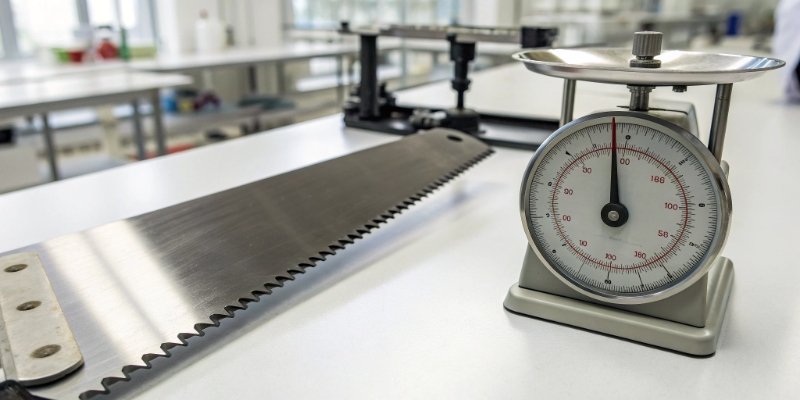
When we talk about advantages, we're talking about real-world performance improvements that impact your bottom line. I remember a client whose forklift accidentally bumped a strain gauge platform scale, and it was never accurate again. This kind of incident is where SAW scales really stand out. They are designed for tough industrial environments.
Unpacking the Key Benefits
The first major advantage is accuracy and resolution. A SAW scale can have an accuracy of 0.005%, while a good strain gauge is closer to 0.1%. For example, a 100 lb capacity SAW scale can reliably detect a weight change of just 0.001 lb. A standard scale with the same capacity might only notice a 0.02 lb change. For a client in the pharmaceutical or chemical mixing industry, that difference is everything.
Another key advantage is ruggedness. SAW scales can handle overloads of up to 250% of their rated capacity without breaking or losing calibration. Strain gauges, which rely on delicate foils that deform, can be permanently damaged by a much smaller overload. This durability means less downtime and lower replacement costs.
Finally, there's environmental stability. Temperature changes, factory vibrations, and humidity can all throw off a strain gauge's readings. SAW sensors are incredibly resistant to these factors, with readings changing less than 3 parts per million per degree Celsius. Your measurements stay accurate no matter what's happening around the scale.
| Feature | SAW Sensor | Strain Gauge Sensor |
|---|---|---|
| Accuracy | 0.005% - 0.01% | 0.1% - 0.2% |
| Overload Protection | Up to 250% | 125% - 150% (risk of damage) |
| Temperature Stability | High | Moderate (requires compensation) |
| Vibration Resistance | High | Low to Moderate |
| Long-Term Drift | Minimal | Prone to drift and creep |
Is SAW technology the future of high-precision industrial and laboratory weighing?
Investing in new technology always feels like a risk. You have to wonder if it's just a passing trend or a true evolution. Choosing the wrong path could mean you are stuck with an expensive system while your competitors gain an advantage. But when we look at the facts, SAW technology makes a very strong case for being the new standard.
Yes, SAW technology is well-positioned to be the future. It perfectly fills the gap between affordable-but-limited strain gauges and precise-but-fragile force restoration scales. Its mix of accuracy, durability, and cost-effectiveness makes it the next logical step for precision weighing.
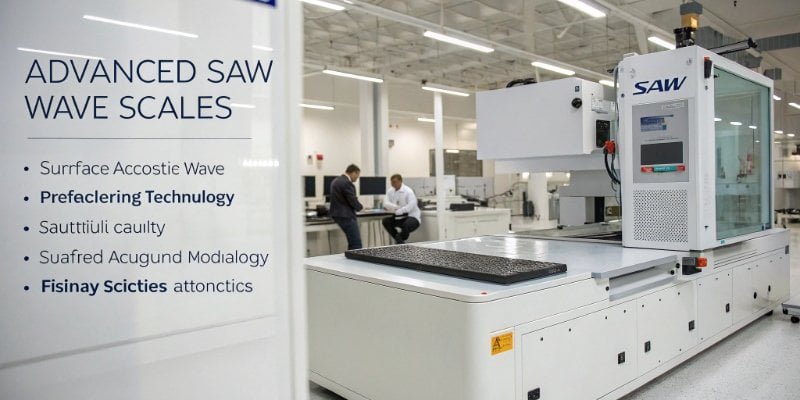
To understand why SAW is the future, it helps to see where it fits in the broader landscape of weighing technology. For years, users had two main choices. You could choose a strain gauge scale, which is affordable and rugged but limited in accuracy. Or, you could invest in a force restoration (or electromagnetic) scale, which offers incredible precision but is very expensive, fragile, and not suitable for heavy industrial use. This left a huge gap in the market.
The Weighing Technology Spectrum
SAW technology bridges this gap. It delivers performance that gets very close to force restoration scales but with the durability and cost structure that is much closer to high-end strain gauges. At Weigherps, our vision is to empower customers with technology that drives growth and profit. SAW aligns perfectly with this. It's not just about selling a better scale; it's about providing a tool that can truly revolutionize a client's production or quality control process. This technology makes high-precision measurement accessible to more industries than ever before. It allows businesses to improve quality and reduce waste without needing the budget or controlled environment of a high-tech lab.
| Technology | Accuracy | Durability | Cost |
|---|---|---|---|
| Strain Gauge | Good | Excellent | Low |
| SAW | Excellent | Excellent | Medium |
| Force Restoration | Exceptional | Poor | High |
In which applications does SAW-based weighing provide the most significant improvements?
A powerful tool is only useful if it's applied in the right way. You need to know where it will truly make a difference. Investing in a high-precision scale for the wrong task is a waste of your budget and won't solve your core operational problems. SAW technology offers amazing benefits in specific, high-stakes environments.
SAW weighing excels in applications where precision cannot be compromised. This includes industries like pharmaceuticals, chemical formulation, industrial paints, and electronics manufacturing. It is also perfect for parts counting or any quality control process where tiny weight variations matter.
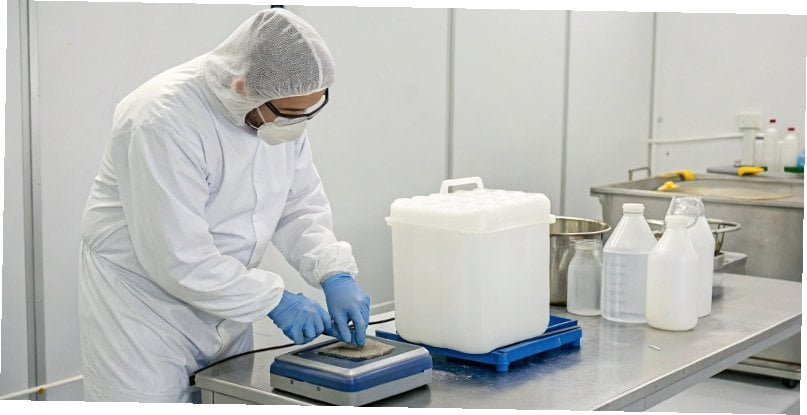
I have worked with clients across many sectors, and I have seen where precision matters most. In pharmaceuticals and chemical formulation, getting the mix exactly right is critical for safety and product effectiveness. A small error can ruin an entire expensive batch. SAW scales provide the accuracy needed to prevent this. Similarly, for industrial paints and adhesives, the precise ratio of ingredients determines the final product's performance and quality. SAW ensures that consistency batch after batch.
Precision in Challenging Environments
In the electronics industry, manufacturers weigh tiny components for assembly or perform quality checks on finished products. The high resolution of SAW scales makes this possible. Another powerful application is parts counting3. Because of their high resolution, SAW scales can accurately count thousands of tiny, lightweight parts just by weighing them in bulk. For our software vendor clients, this is a huge benefit. We help them integrate these scales directly with inventory management or ERP systems4. The clean, accurate data from a SAW scale makes their software and the entire inventory system much more powerful and reliable.
Finally, SAW technology shines in challenging settings. This includes hazardous areas with explosive fumes, where we can provide intrinsically safe versions. It also includes factory floors with heavy vibration or locations with wide temperature swings. In all these cases, SAW delivers stable, trustworthy measurements where other technologies would fail.
-
Explore how SAW technology revolutionizes precision in weighing, offering unmatched accuracy and reliability. ↩
-
Discover why traditional strain gauges may not meet the demands of modern industrial applications. ↩
-
Learn about the efficiency gains in inventory management through accurate parts counting. ↩
-
Discover the benefits of integrating accurate weighing data into your inventory management. ↩



Comments (0)