
Your scale gives you a different weight every time. This frustrating inconsistency can ruin recipes, skew shipping costs, and disrupt your entire operation. It's time to understand your scale's real lifespan.
A quality industrial scale can last 10-15 years or more, while typical kitchen or bathroom scales last about 3-5 years. The lifespan depends heavily on the build quality, usage environment, and maintenance. Industrial models are built with stronger materials for much greater longevity.
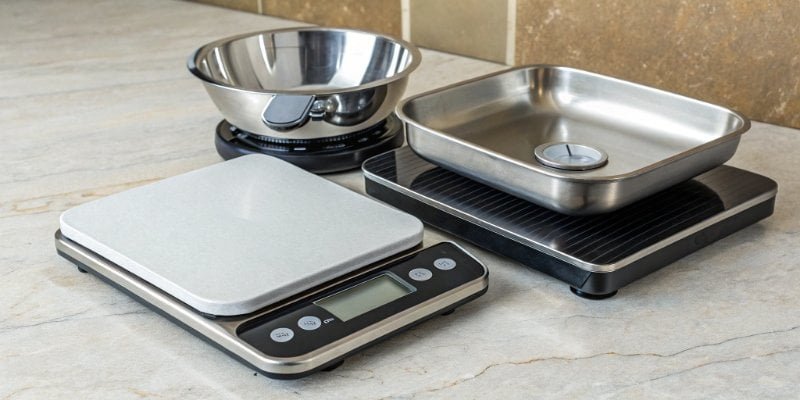
Lifespan is more than just a number on a spec sheet. As someone who has spent 18 years in the industrial scale1 manufacturing business, I've seen firsthand what separates a scale that lasts three years from one that's still working perfectly after fifteen. It’s about the quality of the components, the intelligence of the design, and the care it receives. Understanding these factors is the key to getting the most value from your investment and ensuring your operations run on data you can trust. Let's explore what really determines how long your scale will last.
What is the average lifespan of a kitchen, bathroom, or industrial digital scale?
You expect your new scale to work reliably for years, but they aren't all built the same. Using a consumer-grade scale for an industrial job can lead to early failure.
Consumer scales, like those for kitchens and bathrooms, typically last 3-5 years. In contrast, a well-maintained industrial scale has an average lifespan of 10-15 years, often more. This huge difference comes down to superior build quality and design for harsh environments.
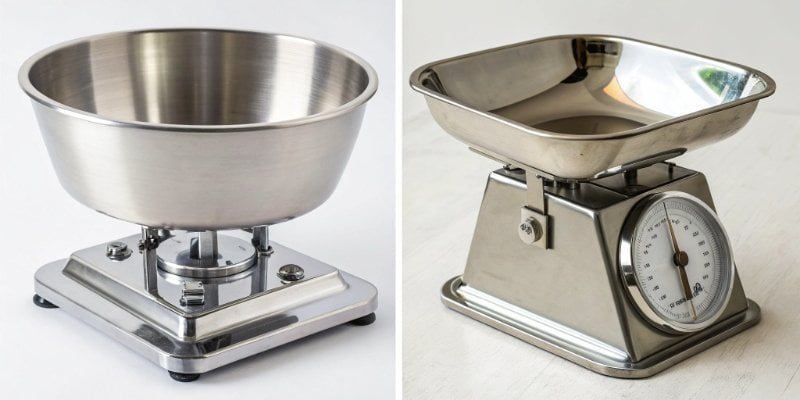
In my experience, we can group kitchen and bathroom scales2 into a "commercial" category. Their operating environment is clean and stable. You might use them a few times a day. Industrial scales, however, are in a different league. They face dust, moisture, vibrations, and constant, heavy use. We design them for this reality. That's why their lifespan is often two to three times longer than commercial scales. I once visited a food processing plant that was still using one of our floor scales from 15 years ago. It worked as well as it did on day one because it was built for that environment. This difference is not an accident; it's intentional design based on materials, component protection, and engineering for durability.
Commercial vs. Industrial: A Deeper Look
| Feature | Commercial Scales (Kitchen/Bathroom) | Industrial Scales |
|---|---|---|
| Usage Environment | Clean, dry, stable indoor spaces | Dusty, wet, high-vibration factories, warehouses |
| Build Materials | Plastic, glass | Stainless steel, heavy-duty aluminum |
| Component Quality | Standard, consumer-grade load cell3s | High-precision, environmentally sealed load cells |
| Expected Lifespan | 3-5 years | 10-15+ years |
| Primary Goal | Low cost and aesthetics | Durability, accuracy, and long-term reliability |
How can you tell if your digital scale needs to be replaced?
Your scale seems to be working, but the numbers just feel off. This doubt can cause major problems in production or inventory management, where small errors add up to big losses.
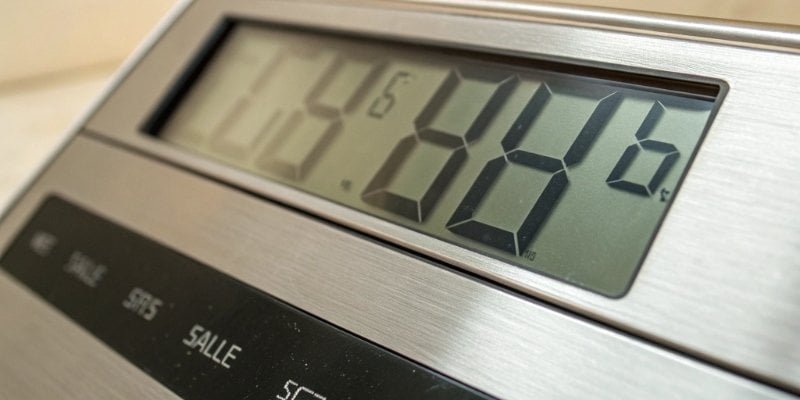
The most common signs are drifting measurements that won't stay at zero, inconsistent readings when weighing the same item repeatedly, a flickering display, or obvious physical damage. If you see these, the scale's internal components are likely failing and it's time for a replacement.
As a manufacturer, we see returned scales for all sorts of reasons, but the issues almost always fall into a few key categories. These are the red flags our quality control department trains our clients to look for. For a software provider like you, whose service relies on accurate data from hardware, teaching your customers to spot these signs is crucial. A faulty scale feeding bad data into your smart system undermines the value of your software. By recognizing these failure indicators early, you protect the integrity of the entire system and build trust with your users. The goal is to catch the problem before it impacts the business.
Key Failure Indicators to Watch For
- Drifting Zero Point: You press the "tare" or "zero" button, but the display never settles at 0.00. It might creep up or down. This suggests the load cell, the heart of the scale, is strained or damaged.
- Poor Repeatability: You place a known weight (like a calibration weight4) on the scale multiple times, but you get a different reading each time. This inconsistency makes the scale unreliable for any serious application.
- Display Malfunctions: The numbers on the screen flicker, segments of the digits are missing, or the display is dim and hard to read. This often points to a problem with the internal electronics or a failing power supply.
- Physical Damage: This is the most obvious sign. Look for cracks in the housing, corrosion in the battery compartment, or a dented weighing platform. Any compromise to the scale's structure can affect its internal mechanics and accuracy.
Do digital scales lose accuracy over time, and can they be recalibrated?
You bought a scale assuming it would be accurate forever. But over time, you notice small errors that, in a business setting, can become big, expensive problems in billing or formulation.
Yes, all digital scales lose some accuracy over time. This is called "drift" and is caused by normal wear and tear on components. The good news is that most professional and industrial scales are designed to be easily recalibrated to restore their original accuracy.
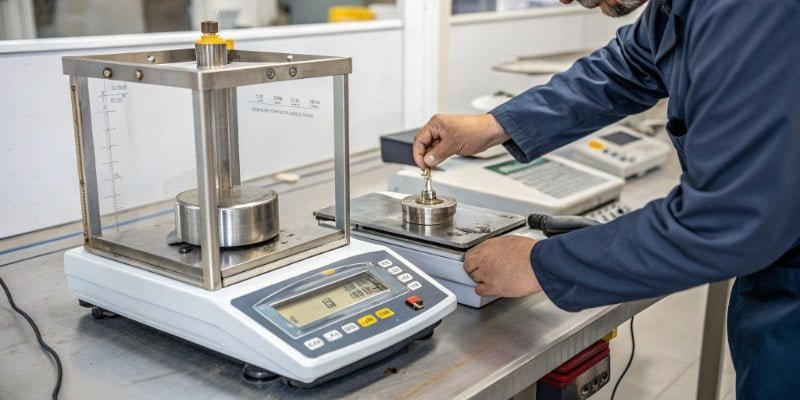
This is one of the biggest differences between a cheap, disposable scale and a professional-grade instrument. Accuracy drift happens for a few reasons. The load cell can experience fatigue from repeated use, and electronic parts can age, especially in fluctuating temperatures. Think of it like a car needing a wheel alignment. It's a normal adjustment to keep it performing at its best. We build our scales with a simple, user-accessible calibration mode for this very reason. A software vendor providing a complete solution should emphasize this. When your clients integrate our scales, their support teams can easily recalibrate them, ensuring the data flowing into your software is always precise. It's a key feature that maintains the value of the whole system.
Understanding Drift and Recalibration
The process is straightforward. You enter the scale’s calibration mode, place a specific, known calibration weight on the platform, and the scale’s software adjusts its internal calculations to match that known weight. This corrects for any electronic or mechanical drift.
- Why it's crucial: For a business, consistent accuracy is not optional. Whether you're mixing ingredients, packaging products, or calculating shipping fees, incorrect weights cost money.
- Our approach: We ensure our scales, which are CE-certified, can be recalibrated to maintain those high standards throughout their long service life. This empowers our clients and their customers to trust their measurements year after year, protecting their profits and reputation.
What maintenance practices can help extend the life of your digital scale?
You paid for a quality scale, but you just set it up and forgot about it. Neglect leads to premature failure, forcing you to spend money on a new one much sooner than you expected.
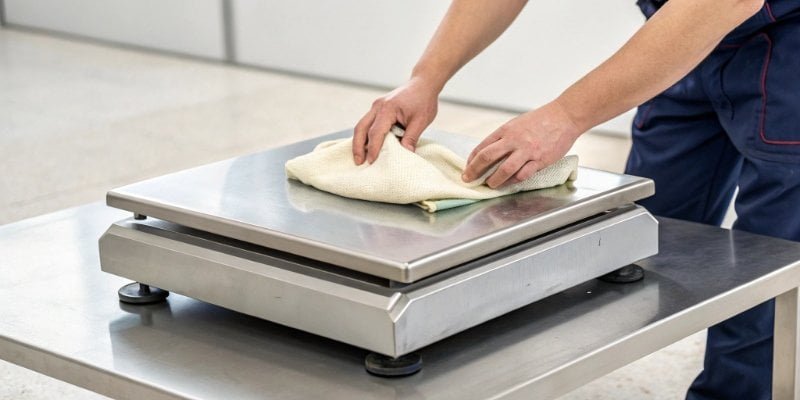
To extend your scale’s life, keep it clean, avoid dropping things on it or exceeding its weight limit, and always use it on a flat, stable surface. For industrial scales, scheduled professional checks and regular calibration are vital for maximizing their lifespan and return on investment.
Over my 18 years in this industry, the longest-lasting scales I’ve seen are not necessarily the most expensive ones, but the best-cared-for ones. Maintenance doesn't have to be complicated. Simple, consistent habits make all the difference. For our partners, such as software companies, advising your end-users on a basic maintenance schedule adds immense value. It positions you as a true expert and ensures the hardware part of your solution performs reliably. This proactive approach prevents support calls and ensures the data integrity your software depends on. Many of our scales come with built-in overload protection5, but good habits are the first line of defense.
Your Essential Maintenance Checklist
Here are the four pillars of scale maintenance that we recommend to all our customers:
- Keep it Clean: Gently wipe the scale with a damp cloth. Avoid harsh chemicals that can damage the display or body. Never spray liquid directly into the scale, as it can harm the electronic components.
- Ensure Proper Placement: Always place your scale on a solid, level surface free from vibrations. An unstable surface is one of the most common causes of inaccurate readings.
- Prevent Overload and Shock: Every scale has a maximum capacity. Exceeding it, even once, can permanently damage the sensitive load cell. Avoid dropping items onto the weighing platform.
- Calibrate Regularly: As we discussed, regular calibration is key to maintaining accuracy. We include this service as part of our 12-month after-sales support and provide easy-to-follow instructions for you to do it yourself.
Conclusion
Ultimately, a scale's lifespan depends on its original quality and your care. While industrial scales are built to last, consistent maintenance and regular calibration are key to maximizing any scale's performance.
-
Explore the lifespan of industrial scales to understand their durability and reliability in various environments. ↩
-
Discover how to choose bathroom scales that last longer and provide accurate readings. ↩
-
Gain insights into load cells and their critical role in ensuring accurate weight measurements. ↩
-
Learn about calibration weights and their role in ensuring the accuracy of your scales. ↩
-
Explore how overload protection features can prevent damage and extend the life of your scales. ↩



Comments (0)