
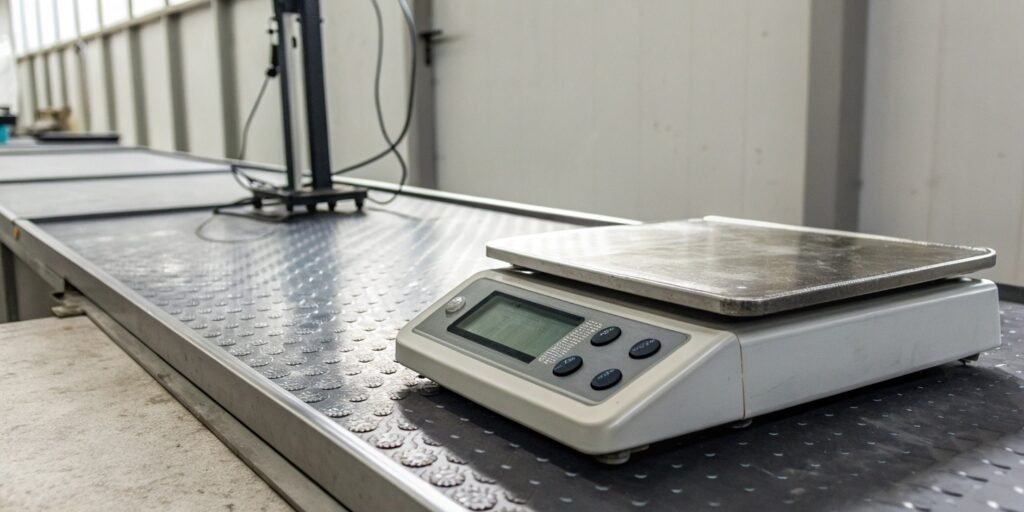
Struggling with inconsistent scale readings? Environmental factors might be silently sabotaging your accuracy, costing you money and compromising quality. Learn to identify and control these issues easily.
Environmental factors like temperature, vibration, and airflow can significantly skew weighing results. You can control them by maintaining a stable temperature between 18-25°C, using anti-vibration surfaces, and employing draft shields for high-precision scales to ensure reliable accuracy and performance.
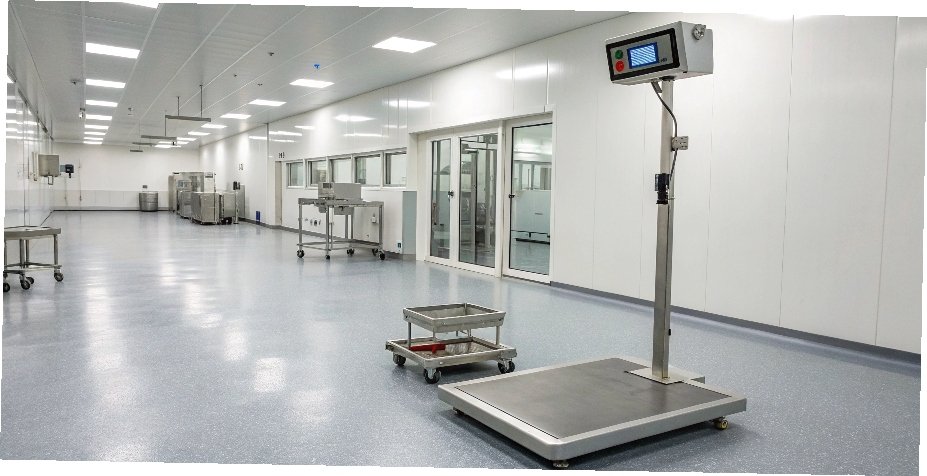
You now have the quick answer, but the real value is in the details. In my 18 years of manufacturing industrial scales, I’ve seen firsthand how ignoring the environment leads to costly errors. Understanding exactly how each factor impacts your equipment is the key to mastering your weighing process. A small change in your setup can be the difference between guesswork and precision. Let's break down these factors one by one so you can protect your operations.
How do environmental factors such as temperature, humidity, and vibration affect the accuracy of weighing scales?
Are you seeing random errors in your process data? Unseen forces like temperature shifts and floor vibrations could be the culprits, directly compromising your quality control and production output.
Temperature changes cause sensor drift, vibrations make readings unstable, and airflow creates pressure on the weighing pan. Each factor directly interferes with the sensitive mechanics and electronics inside a scale, leading to consistently inaccurate measurements that can disrupt your entire workflow.
Based on my experience helping clients troubleshoot their systems, these factors are the most common sources of error. It is essential to understand how each one works to implement the right solution. Simply buying a more expensive scale won't fix a problem caused by a shaky floor or a poorly placed air vent.
Temperature's Toll
The load cells1 inside electronic scales are incredibly sensitive to temperature changes. As temperatures rise, components expand slightly, and as they fall, they contract. This causes what we call "zero-point drift2," where the scale’s baseline reading shifts without any weight being applied. A temperature swing of just a few degrees can cause a noticeable error. I often tell my clients in factories without climate control that a scale reading taken in the cool morning will be different from one taken in the hot afternoon, purely due to temperature.
The Vibration Problem
Mechanical vibrations from nearby machinery, forklifts, or even heavy foot traffic can travel through the floor and into your scale. The load cell cannot distinguish this vibration from actual weight, causing the display to jump around and never settle on a stable number. This is why we almost always recommend placing high-precision scales3 on a dedicated, heavy-duty weighing station or a solid marble tabletop to isolate them from these disruptive forces.
Airflow and Humidity's Hidden Hand
High-precision balances, like those used in labs, are so sensitive that even a gentle breeze from an HVAC vent or a person walking by can create enough pressure on the weighing pan to change the reading. This is why they come with draft shields4. Humidity, on the other hand, is a slower, more sinister problem. Over time, high humidity can lead to condensation inside the scale, causing corrosion on circuit boards and leading to eventual failure. This is especially critical for our clients in tropical climates, where an IP-rated, sealed scale is not just a recommendation but a necessity.
What environmental conditions can affect the calibration of balances?
Did you just calibrate your scale, but the readings are still off? Environmental shifts that happen after calibration can completely invalidate your settings, wasting your time and creating inaccurate batches.
Any significant change in temperature, atmospheric pressure, or physical location can ruin a balance's calibration. Moving the scale, even a few feet, or having a sudden temperature swing in the room requires immediate recalibration with certified standard weights to restore its accuracy.

Calibration isn't a "set it and forget it" task. I view it as an active and ongoing part of a healthy quality control system. A perfectly calibrated scale in a 20°C room will not be accurate if the room heats up to 30°C. The environment and the calibration are directly linked, and you must manage them together.
The Need for Acclimatization
When you move a scale to a new location or even just to a different room, it needs time to adjust to the new environment's temperature and humidity. I always advise my customers to let a scale sit unplugged in its new spot for several hours before even plugging it in. This process, called acclimatization, ensures that the internal components have reached thermal stability. Calibrating a scale before it has acclimated is a guaranteed way to get inaccurate results.
Scheduled vs. Triggered Calibration
It’s important to distinguish between your routine calibration schedule and the calibrations triggered by specific events. A routine schedule keeps the scale in check under stable conditions, but unexpected events demand an immediate response.
Here is a simple table to guide you:
| Event Triggering Recalibration | Why It's Necessary | Recommended Action |
|---|---|---|
| Large Temperature Change (>5°C) | Affects sensor and mechanical part expansion/contraction. | Let scale acclimate for 2-3 hours, then perform a 3-point calibration. |
| Moving the Scale to a New Location | Changes in local gravity and levelness affect accuracy. | Level the scale using the bubble indicator, acclimate, and recalibrate. |
| After a Power Surge or Major Outage | Can cause electronic drift or a loss of saved settings. | Power cycle the scale, verify all settings, and perform a full calibration test. |
| Following a Physical Shock or Jolt | Can physically damage or misalign the sensitive load cell. | Inspect for damage, then perform a full calibration to check for errors. |
What other environmental factors can influence my weighing results?
You've controlled the temperature and placed the scale on a sturdy bench, but you're still seeing strange fluctuations? Less obvious factors like electromagnetic fields and even static electricity could be interfering.
Beyond the common issues, consider electromagnetic interference (EMI) from nearby motors or power converters. Static electricity can also create false forces on the weighing pan, while an unstable power supply can introduce significant "noise" and error into your results.
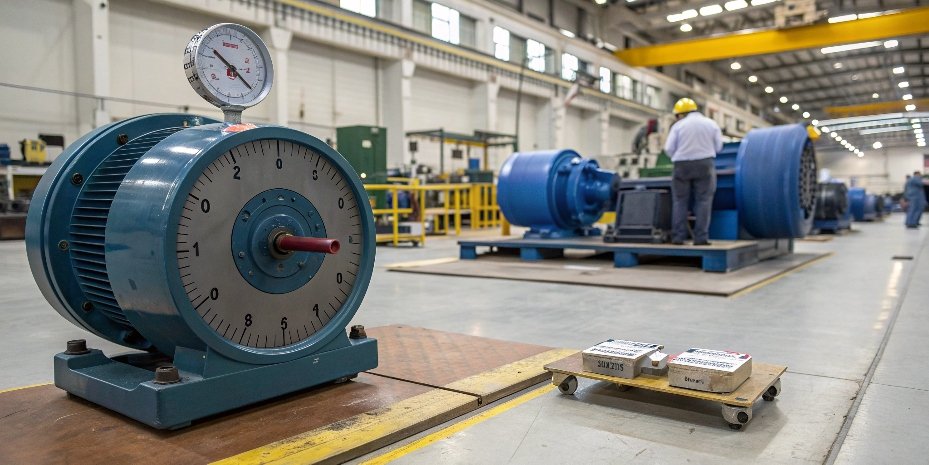
In my experience, these "invisible" factors are often the last things people check, but they can cause some of the most frustrating problems. As a software vendor integrating with smart devices, you understand how sensitive electronics can be. Your weighing scale is no different; it needs a clean and stable electrical environment to function correctly.
Understanding Electromagnetic Interference (EMI)
Large motors, variable frequency drives (VFDs), transformers, and even fluorescent lighting ballasts generate powerful electromagnetic fields. These fields can induce small electrical currents in the scale's internal wiring or load cell cable, which the system interprets as a weight signal. The result is often a drifting or unstable reading. The solution is simple: physical distance. We design our systems with robust shielding, but the best defense is to place your scales as far away from these EMI sources as possible.
Static Electricity's Grip
Static electricity is a major issue, especially in dry environments or when weighing insulating materials like powders or plastic films. The static charge on a plastic weigh boat or a sample container can create an attractive or repulsive force with the scale's body, effectively adding or subtracting weight. This can lead to surprisingly large errors. Using an anti-static weighing dish or, for high-precision applications, an ionizer that neutralizes static charges in the weighing area can solve this problem.
Power and Grounding
A stable, clean power source is non-negotiable for accurate weighing. Power fluctuations or "dirty" power with a lot of electrical noise can cause the scale's digital processor to behave erratically. Similarly, improper grounding can prevent the scale from effectively dissipating stray electrical noise, which then interferes with the measurement. Always plug your scale into a dedicated, properly grounded outlet, and consider using a power conditioner or UPS (Uninterruptible Power Supply) for very sensitive applications.
Does humidity affect my balance?
Are you worried about operating your scales in a humid factory or a damp processing area? High humidity can cause both gradual damage to your equipment and immediate inaccuracies in your weighing results.
Yes, high humidity (typically above 70%) absolutely affects a balance. It causes condensation on internal electronics, leading to corrosion and short-circuits. It also causes hygroscopic (water-absorbing) materials to gain weight, making them appear heavier than they actually are.
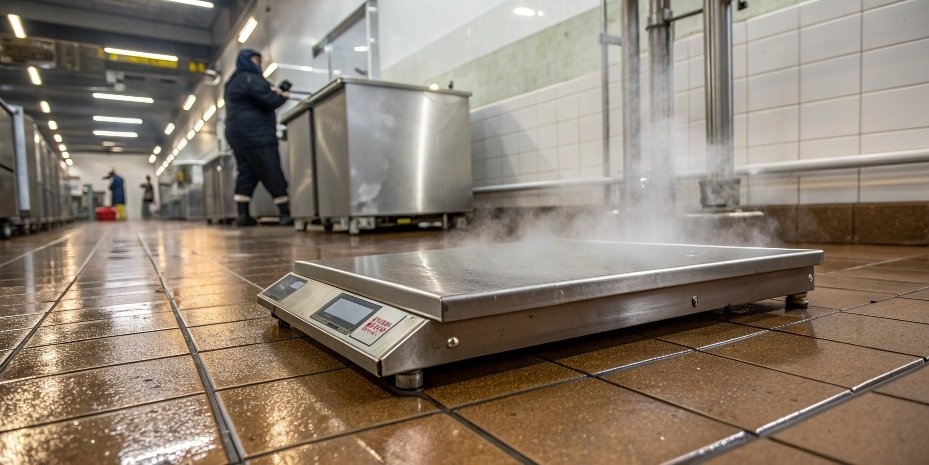
I've seen too many scales fail prematurely because they were not specified for the humid environments they were placed in. Understanding how humidity affects your process is critical for both protecting your investment in the equipment and ensuring the accuracy of your product.
Direct vs. Indirect Effects
Humidity attacks your weighing process in two ways. The direct effect is on the scale itself. When warm, humid air comes into contact with the cooler metal and electronic components inside a scale, condensation can form. This moisture can short-circuit delicate circuit boards and cause corrosion over time, leading to drift, instability, and eventual failure.
The indirect effect is on the material you are weighing. Many materials, such as powders, grains, paper, and textiles, are hygroscopic, meaning they absorb moisture from the air. On a very humid day, your product can absorb water and weigh more. This isn't a scale error, but it is an environmental factor causing an inaccurate process result.
Practical Control Measures
Controlling humidity is crucial for accuracy and longevity. Based on what we provide our clients, here are the most effective strategies:
| Humidity Level | Primary Risk | Mitigation Strategy |
|---|---|---|
| > 70% (High) | Condensation, corrosion, component failure. | Use a room dehumidifier. Most importantly, select a scale with an appropriate IP rating (e.g., IP67 or IP68) that is sealed against moisture. |
| Variable | The sample absorbs or loses moisture. | Allow the sample material to acclimate in the weighing room for a set period before weighing to ensure it is in equilibrium with the environment. |
| < 30% (Dry) | Buildup of static electricity on samples/containers. | Use anti-static weigh boats or an ionizer to neutralize static charge in the weighing chamber or on the sample before measurement. |
Conclusion
Controlling your environment is as crucial as calibrating your scale. By managing temperature, vibration, airflow, and humidity, you ensure consistent, accurate weighing results that protect your entire production process.
-
Understanding load cells is key to grasping how scales measure weight accurately. ↩
-
Explore zero-point drift to understand how temperature changes can affect your scale's baseline readings. ↩
-
Learn about high-precision scales and their importance in achieving accurate measurements. ↩
-
Learn how draft shields protect sensitive scales from airflow, ensuring reliable and accurate readings. ↩
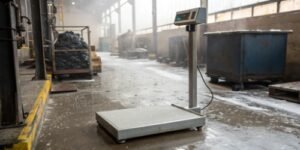
[…] IP rating1 is more than just a feature; it's a promise of performance in a specific environment. When we work […]