
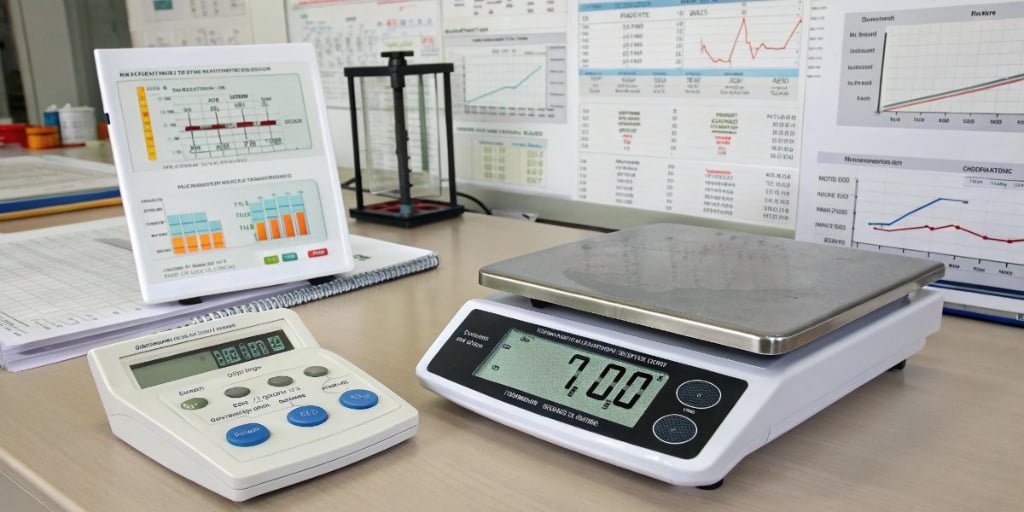
Worried your digital scales might fail too soon? Environmental factors like humidity and temperature can secretly shorten their lifespan, leading to costly and frustrating replacements. Let's explore how to protect your investment.
Humidity and temperature significantly impact a digital scale's lifespan and accuracy. Humidity primarily causes corrosion, shortening the life of the scale body and sensors. Temperature fluctuations mainly affect the load cell's precision. The weight sensor, or load cell, is the component most vulnerable to both factors.

Over my 18 years in this industry, I've seen countless scales come through our service department. A surprising number of these failures could have been completely avoided with better knowledge of the operating environment. The two biggest culprits are often invisible: humidity1 and temperature. They are silent enemies working against your equipment. But understanding how they cause damage is the first step toward preventing it. Let's break down exactly how they affect your scales. The solutions are often simpler than you might think.
Does humidity affect digital scales?
Noticing unexpected rust or malfunctions in your scales? Airborne moisture can corrode delicate internal parts long before you see external damage, leading to inaccurate readings and complete failure.
Yes, humidity is a major threat to digital scales. It causes metal parts, especially the load cell and internal circuit boards, to rust and corrode. This damage not only shortens the scale's lifespan but also introduces significant, and often untraceable, errors in weight measurements.
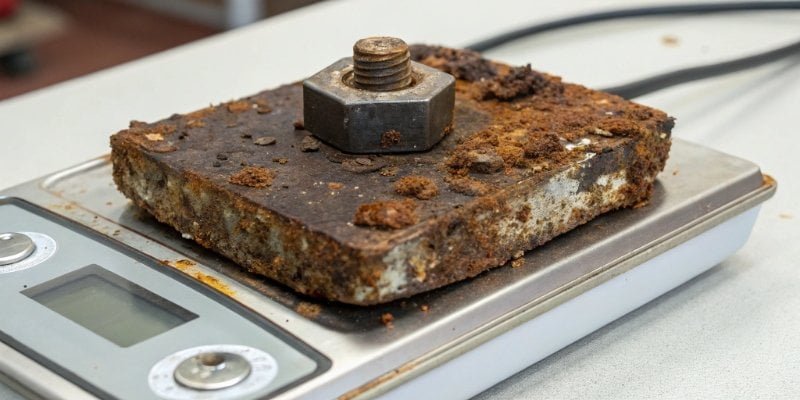
Humidity doesn't just cause a bit of surface rust2; it wages a direct assault on the most critical components of your scale. The primary target is the load cell3, which is the heart of any digital scale. I once worked with a client located in a coastal region whose scales were failing almost annually. The high humidity1, combined with salt in the air, was eating away at the standard steel load cells. Once we switched them to scales with stainless steel bodies and sealed, IP68-rated load cells4, their problems disappeared.
How Moisture Causes Damage
Moisture in the air acts as an electrolyte, accelerating the oxidation process—what we commonly call rust. This corrosion5 attacks not just the scale's frame but also the sensitive electronics6 inside. Circuit boards (PCBs) can develop short circuits as moisture7 creates unintended electrical pathways. Solder joints can degrade, leading to intermittent connections and frustrating, random errors that are difficult to diagnose.
Key Components at Risk
The load cell is the most vulnerable part. Even a tiny amount of moisture getting inside can corrode the delicate strain gauges, causing the scale's readings to drift. Connectors are another weak point. Corrosion on connector pins can block electrical signals, leading to a complete loss of reading. This is why investing in proper protection is not a luxury; it’s a necessity for reliability.
| Component | Impact of High Humidity | Prevention Method |
|---|---|---|
| Load Cell | Corrosion, signal drift8, premature failure | Use stainless steel or hermetically sealed (IP-rated) load cells. |
| Electronics/PCB | Short circuits, trace corrosion | Apply a conformal coating; use environmentally sealed enclosures. |
| Scale Body/Frame | Rust, structural weakness, paint bubbling | Use powder-coated mild steel or, for best results, stainless steel. |
| Connectors | Poor contact, signal loss, intermittent faults | Use waterproof connectors (e.g., M12) and apply dielectric grease. |
What is the lifespan of a digital weighing scale?
Trying to budget for new equipment? Not knowing your scale's expected lifespan makes planning difficult and can lead to unexpected costs when a critical piece of hardware fails suddenly.
The lifespan of a digital scale varies widely, typically from 5 to over 20 years. Key factors include build quality, usage frequency, and the operating environment. A premium industrial scale in a controlled setting can last decades, while a basic model in a harsh environment might fail within a few years.
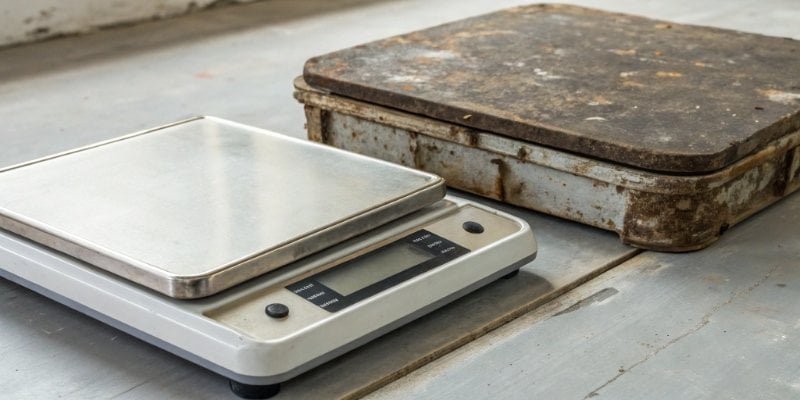
When we design our scales at Weigherps, we think about longevity from day one. It's not just about meeting a specification; it's about building a tool that our customers can rely on for years. The initial purchase price is only part of the story. A scale that you have to replace every three years is far more expensive than one that lasts for ten, even if the initial cost is higher. The true cost of ownership includes downtime, maintenance9, and replacement expenses. Understanding the factors that contribute to a scale's life helps you make a smarter long-term investment.
Factors Influencing Longevity
Several variables determine how long your scale will last. These can be grouped into four main categories: build quality, usage patterns, environment, and maintenance. Ignoring any one of these can drastically shorten the life of your equipment. A scale is a system, and every part of that system needs to be robust.
A Comparison of Scale Tiers
Not all scales are created equal. The materials and construction directly correlate to how well a scale will hold up over time, especially in challenging industrial settings. Choosing the right tier for your application is crucial.
| Quality Tier | Typical Lifespan (Controlled Env.) | Typical Lifespan (Harsh Env.) | Key Features |
|---|---|---|---|
| Basic/Office | 5-7 years | 1-3 years | Plastic housing, basic sensors, unsealed electronics. |
| Commercial | 7-12 years | 4-6 years | Painted steel body, better load cells, some environmental protection. |
| Industrial | 15+ years | 7-10+ years | Stainless steel, IP67/IP68 rating, high-quality compensated load cells. |
Investing in an industrial-grade scale for a tough environment isn't overspending; it's smart planning.
Does temperature affect digital scales?
Are your scale's readings inconsistent throughout the day? Small shifts in temperature can subtly alter your measurements, compromising data accuracy and potentially affecting quality control without you even realizing it.
Yes, temperature directly affects a digital scale's accuracy. The metal in the load cell expands and contracts with temperature changes, causing measurement drift. High-quality scales use temperature-compensated load cells to counteract this effect and maintain accuracy across a range of operating temperatures.
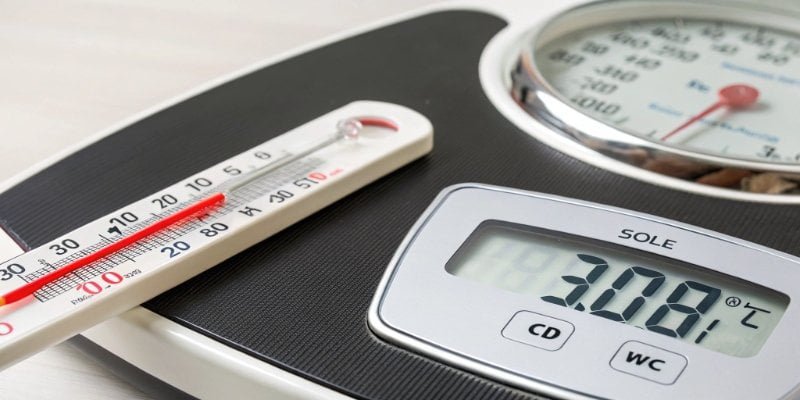
While humidity primarily attacks a scale’s physical structure and lifespan, temperature is the main culprit behind accuracy10 issues. I recall a client in the food processing industry who couldn't figure out why their batch weights were inconsistent. It turned out the scales near their large ovens were "drifting" as the room heated up during the day. Their existing load cells weren't designed for that. We swapped them out for our temperature-compensated models, and the problem vanished overnight. Their batch consistency improved immediately.
The Science Behind Temperature Drift
A load cell works by measuring a tiny change in electrical resistance on a component called a strain gauge. However, the resistance of the strain gauge also changes with temperature. This creates two main problems: "thermal zero drift," where the scale shows a weight even when empty, and "thermal span drift," where the scale's sensitivity changes, making it read high or low. The metal body of the load cell itself also expands and contracts, adding to the effect.
The Solution: Temperature Compensation
Fortunately, this is a well-understood engineering problem. At Weigherps, we integrate temperature compensation directly into our high-quality load cells. This involves adding special resistors to the internal circuit. These resistors have an opposite thermal characteristic to the strain gauges. As the temperature changes, they cancel out the drift, ensuring the output signal is only a result of the applied weight, not the ambient temperature. This is a critical feature for any application where accuracy is paramount, from chemical batching to commercial transactions.
How does humidity impact weighing accuracy?
If you think humidity only causes rust, think again. It can also interfere with your weighing accuracy in subtle ways long before any visible damage appears, slowly corrupting your data.
Humidity impacts accuracy in two main ways. First, condensation can physically add weight to the scale or the item being weighed. Second, and more critically, moisture degrading the load cell’s electronics causes signal drift and non-linearity, leading to consistently inaccurate readings over time.
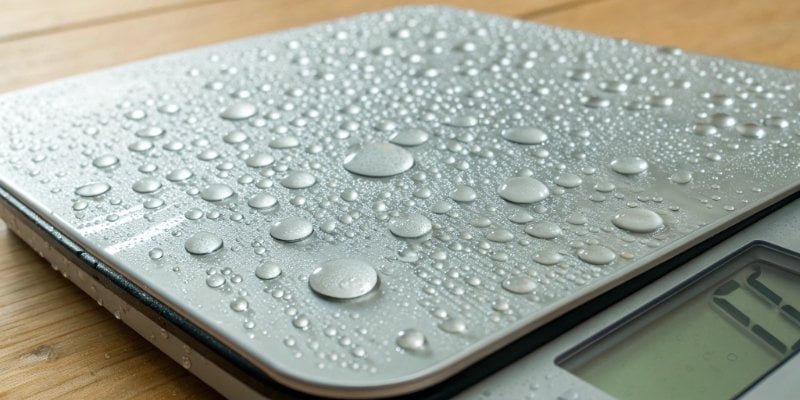
This is a different issue from the corrosion we talked about earlier. Corrosion leads to eventual failure, but this accuracy drift can happen much sooner. It's a stealthy problem. We once consulted for a pharmaceutical company whose precision scales were producing inconsistent results. The active ingredients were expensive, and tiny errors were costing them a fortune. The cause was high ambient humidity interacting with their unsealed scales. Moisture was not only causing electronic drift but also being absorbed by the hygroscopic powders they were weighing. The solution was a combination of an IP68-rated scale and better climate control in the weighing room.
Direct and Indirect Effects on Accuracy
Humidity's effect on accuracy can be both direct and indirect. A direct effect is something like condensation forming on a cold object placed on the scale, immediately adding weight. An indirect effect is the slow, creeping electronic drift caused by moisture penetrating the load cell's housing over weeks or months. This is far more dangerous because it's gradual and may not be caught by daily checks.
Best Practices for Mitigating Humidity Effects
For applications where precision is non-negotiable, controlling for humidity is just as important as regular calibration. The right equipment and the right procedures can eliminate these variables.
| Humidity Effect | Description | Best Practice |
|---|---|---|
| Condensation | Moisture from the air forms on a cool scale/object, adding weight. | Allow the scale and items to acclimate to the room temperature before weighing. |
| Material Absorption | Porous items like grain, powder, or cardboard absorb ambient moisture. | If possible, weigh in a humidity-controlled environment. |
| Electronic Drift | Moisture inside the load cell alters its electrical properties. | Use scales with a high Ingress Protection (IP) rating, like IP67 or IP68. |
Conclusion
Both humidity and temperature are critical enemies of digital scales. Protecting your scale's load cell from moisture and temperature swings is key to ensuring both a long lifespan and accurate measurements.
-
Understanding humidity's impact on electronics can help you protect your equipment effectively. ↩ ↩
-
Learn effective strategies to prevent rust and protect your electronic devices. ↩
-
Discover the importance of load cells in weighing systems and how they function. ↩
-
Explore the benefits of using IP68-rated load cells for enhanced protection. ↩
-
Learn effective methods to prevent corrosion and extend the life of your electronic devices. ↩
-
Find out how to safeguard your sensitive electronics from humidity and temperature. ↩
-
Understanding moisture's impact on electronics can help you mitigate risks effectively. ↩
-
Learn about the causes of signal drift and how to prevent it in your devices. ↩
-
Learn about the best practices for maintaining your digital scales for longevity. ↩
-
This resource outlines key factors that influence the accuracy of digital scales. ↩



Comments (0)