
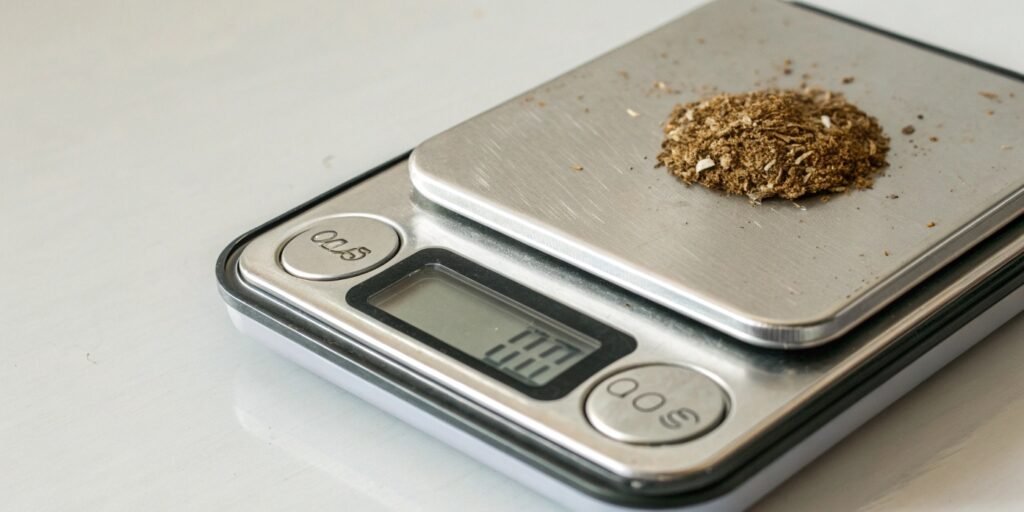
Need to measure a very small amount like 1/4 gram? An inaccurate reading can ruin a process, but understanding how your scale displays this measurement is simple and ensures you get it right.
A 1/4 gram weighs exactly 0.25 grams on a digital scale. The display will read "0.25 g" or "0.250 g," depending on its precision. This is because a quarter is one of four equal parts, and 1 divided by 4 is 0.25. It also equals 250 milligrams (mg).
Getting the number "0.25" is the easy part. But true precision in weighing1 involves more than just a single number. During my 18 years of manufacturing industrial scales, I’ve seen how different units and levels of precision can impact everything. This is especially true for our clients, who are often software vendors needing absolute accuracy for their device integrations. Let's dig into some other common weighing questions that I hear all the time. Understanding these details will help you avoid costly mistakes and improve your operations.
How much does a quarter weigh on a scale?
Someone asked for "a quarter" on the scale, but what does that really mean? Mistaking a quarter gram for a U.S. quarter coin could lead to significant errors in your operations. Let's clarify the difference.
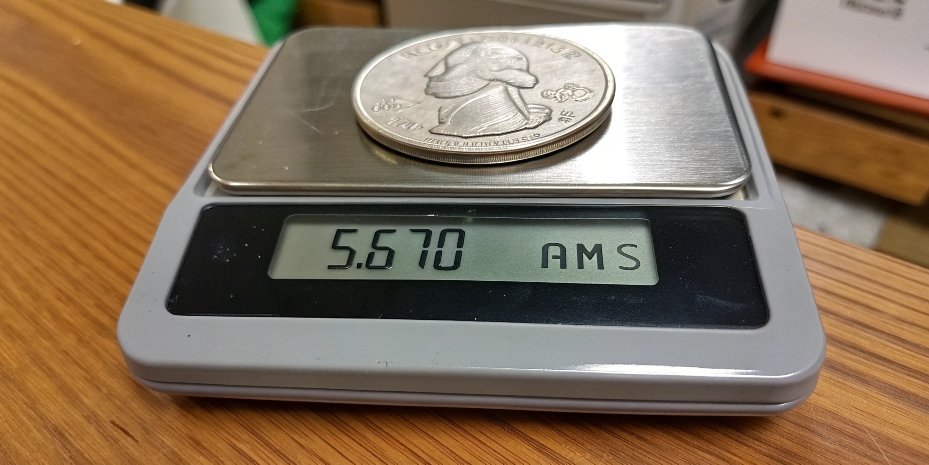
If "a quarter" means 1/4 of a gram, it weighs 0.25 grams. However, if it refers to a modern U.S. quarter coin, it weighs 5.670 grams. You must clarify the unit being discussed to prevent confusion and ensure an accurate measurement.
The difference between these two "quarters" might seem small, but in an industrial or technical setting, it's a huge gap. At Weigherps, we work with many software developers who build systems that rely on our scales. For them, context and data accuracy are everything.
Context is Key
The first step is always to confirm the unit. Is it a fraction of a gram, an ounce, or a common object like a coin? A simple misunderstanding can throw off an entire batch or process. In a professional environment, we should never assume. We always train our teams to specify units clearly in all communications and documentation. This simple habit prevents a lot of problems down the line.
Implications for Automation
For our clients in the software industry, this ambiguity is a critical issue to solve. Their programs use weight data2 to trigger actions, mix ingredients, or manage inventory. If the software expects a value in grams but receives data based on an object, the entire automated process can fail. This is why our custom IoT weighing solutions3 have clear API documentation, allowing developers to define and request data in the exact format they need.
| Item | Weight in Grams | Common Use |
|---|---|---|
| A Quarter (1/4) of a Gram | 0.250 g | Pharmaceuticals, chemical formulas, jewelry |
| A U.S. Quarter Coin | 5.670 g | Currency, a common but non-standard reference |
How much does 1 gram weigh on a scale?
The gram is a basic unit of measurement, but can you visualize what it really represents? Without a solid reference point, it's hard to tell if your scale is working correctly. Let's use everyday objects to see what one gram feels like.
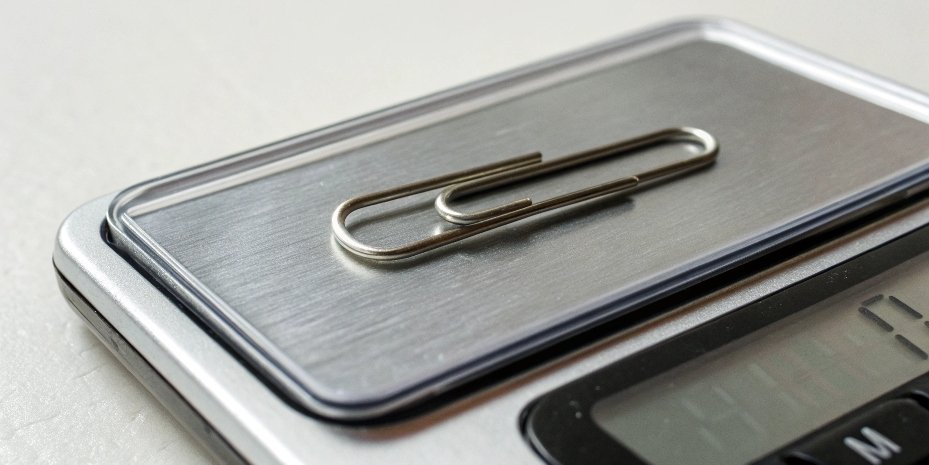
On a properly calibrated scale, 1 gram will display as "1.00 g." To visualize this weight, think of a small paperclip, a single raisin, or a standard sugar packet. It is the fundamental unit of mass in the metric system.
The gram is more than just a number; it's a standard that global industry relies on. Ensuring that "1 gram" on your scale's display is actually one gram in reality is a process we take very seriously.
The Importance of Calibration
A scale is only useful if it's accurate. Calibration is the process of adjusting a scale to match a known weight standard. Without it, your measurements will drift over time. In our factory, every single product goes through comprehensive testing by our quality inspection team. We check its performance with certified weights to guarantee that when it shows 1 gram, it means 1 gram. This is a non-negotiable step before we ship any equipment to our clients.
Grams in a Digital World
For software vendors who integrate our scales, data integrity begins at the source. Our IoT-enabled scales can transmit weight data directly to a cloud server or local network. A stable, calibrated scale ensures that the digital data packet accurately reflects the physical weight. This reliable data stream is essential for our clients to build dependable and efficient automated systems for their own customers. Whether it's grams, kilograms, or milligrams, the accuracy of the source hardware is fundamental.
What does 0.1 g mean on a scale?
Your scale shows measurements with decimals, like 0.1 g. What does this number truly tell you? This value represents your scale's precision, and misunderstanding it might lead you to use the wrong tool for a critical task.
The "0.1 g" on a scale means it can detect and display weight in increments of one-tenth of a gram. This is known as the scale's "readability" or "resolution." It is a common precision level for many kitchen, lab, and light industrial tasks.
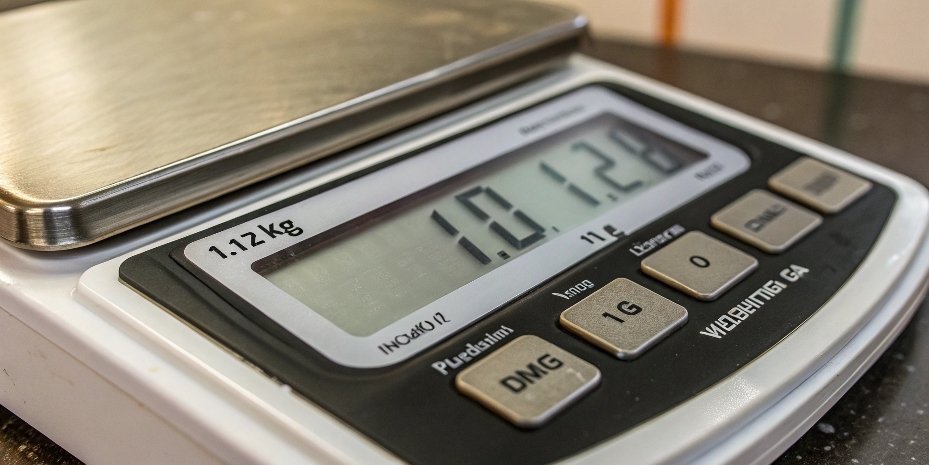
Understanding the smallest increment your scale can show is crucial for choosing the right device for the job. But readability4 is only one part of the story.
Readability vs. Accuracy
It's important not to confuse readability with accuracy. Readability is the smallest increment the scale can display (e.g., 0.1 g). Accuracy is how close that displayed measurement is to the true weight. A scale could display a reading of 10.1 g, but the actual weight might be 10.5 g. This is why we focus on both. Our technical teams build scales with high-quality sensors to ensure our products are not just precise in their display but also highly accurate in their measurements.
Choosing the Right Precision
The right precision depends entirely on the application. For a logistics company weighing packages, a readability of 1 g or 5 g is perfectly fine. However, for a client developing a system to mix pharmaceutical compounds, a precision of 0.001 g is necessary. As part of our service, we help our clients choose the perfect hardware. We provide them with targeted weighing solutions tailored to their specific market needs, ensuring their final product is both effective and cost-efficient. This consultation is key to a successful partnership.
How much does 1/4 weigh?
You are asked to measure "1/4" of something, but what unit is it? Assuming the wrong unit, like an ounce instead of a gram, can cause massive errors that ripple through your entire production line. Let's look at how 1/4 converts across different units.
The weight of "1/4" depends completely on the unit of measurement. For example, 1/4 of a gram is 0.25 grams, but 1/4 of an ounce is much heavier at approximately 7.087 grams. You must always confirm the unit to ensure accuracy.
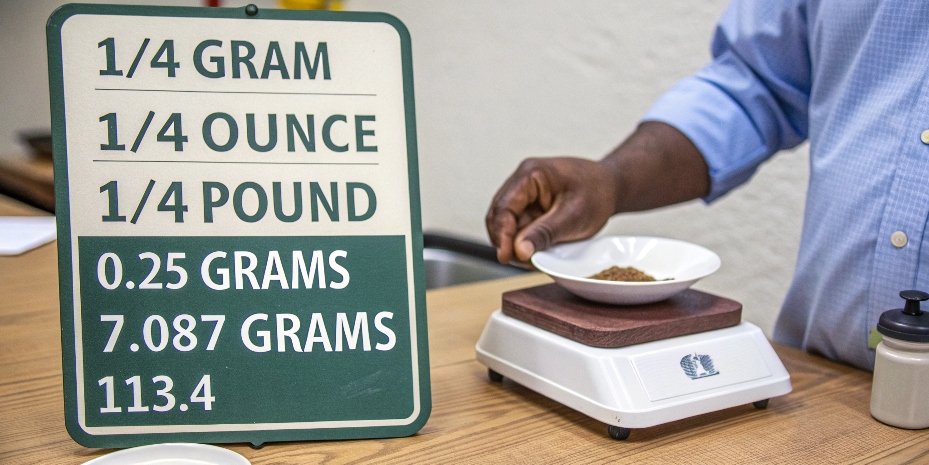
The world uses many different units for weight, and being able to work with all of them is essential for any global business. This is a challenge we help our clients solve every day.
A World of Units
Different industries and regions prefer different units. In science and most of the world, the metric system5 (grams, kilograms) is standard. In the United States, the imperial system6 (ounces, pounds) is still common. To serve a global market, equipment must be flexible. Many of our industrial scales are designed to switch between these units with the simple press of a button. This versatility allows our clients to use a single device for diverse applications and markets.
Software Flexibility for Global Markets
For our software developer clients, this flexibility needs to extend to their code. We provide robust software development kits (SDKs)7 and APIs with our IoT scales. This allows their software to easily request data in the desired unit, whether it's grams, ounces, or pounds. The scale handles the conversion internally, sending clean, ready-to-use data. This simplifies the development process for our clients and helps them build products that are market-ready for customers anywhere in the world.
| Unit | Equivalent in Grams (approx.) |
|---|---|
| 1/4 Gram (g) | 0.25 g |
| 1/4 Ounce (oz) | 7.087 g |
| 1/4 Pound (lb) | 113.4 g |
| 1/4 Kilogram (kg) | 250 g |
Conclusion
Precise weighing requires total clarity. Whether it's 1/4 gram or any other amount, understanding units and scale precision is the key to accuracy and success in any modern application.
-
Discover the significance of precision in various industries and applications. ↩
-
Understanding weight data's role in automation can improve operational efficiency. ↩
-
Explore how IoT technology enhances weighing accuracy and data management. ↩
-
Understanding readability helps you choose the right scale for your specific needs. ↩
-
Learn about the metric system's importance in global measurements. ↩
-
Understanding the imperial system is essential for working in regions that use it. ↩
-
Explore how SDKs facilitate integration of scales into software applications. ↩


[…] integration we’ve been discussing. As part of our service, we provide the necessary drivers, software development kits (SDKs)5, and technical support to ensure you can not only connect the scale but also use its data […]