
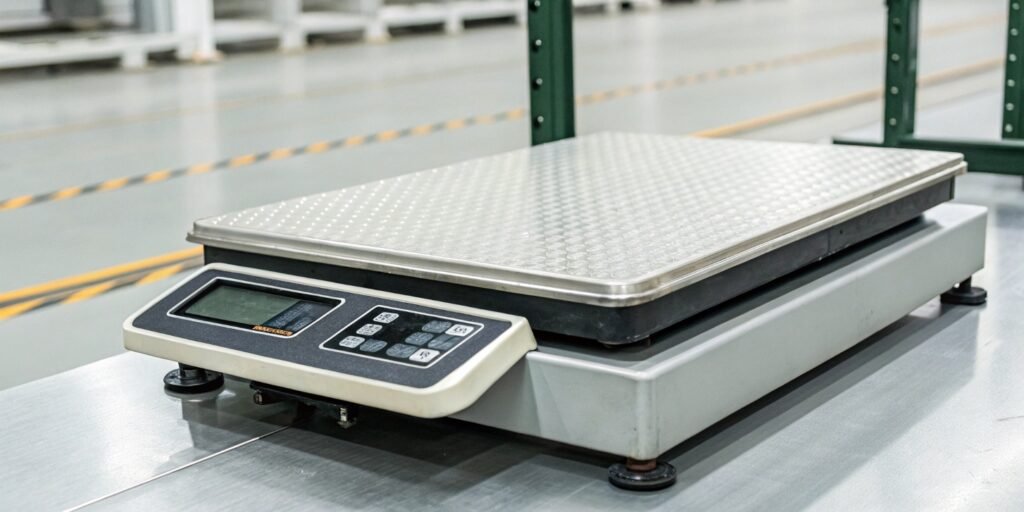
Struggling to budget for an industrial counting scale? The wide price range is confusing. We'll break down the costs so you can find the right scale for your needs and budget.
The cost of an industrial counting scale ranges from $50-$400 for basic models to over $2,000 for high-precision imported brands. Prices depend on accuracy, brand, and features like data connectivity, making it crucial to match the scale to your specific application and budget.
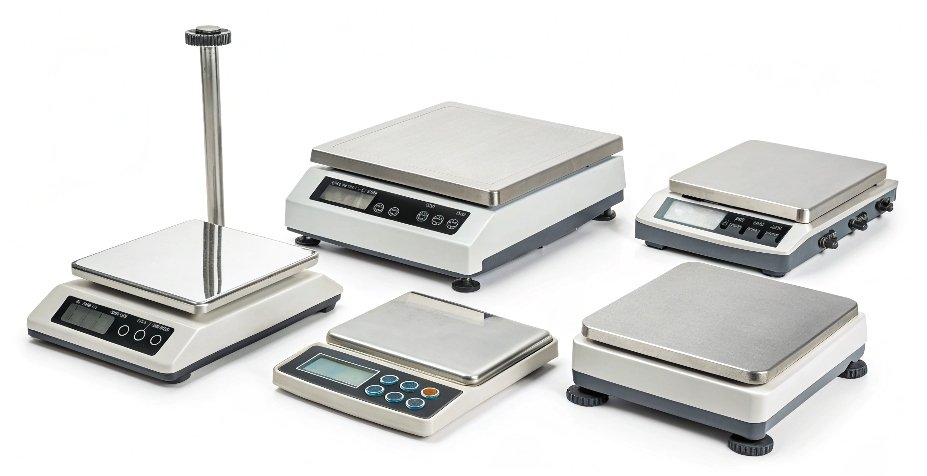
But cost is just one piece of the puzzle. The real value comes from a scale that fits your workflow, integrates with your systems, and delivers reliable accuracy every time. As a manufacturer with 18 years of experience, I've seen how the right scale can transform an operation. Let's explore how to find that perfect balance for your business.
What are some reliable counting scale brands on the market?
Worried about choosing an unreliable brand? A bad scale can cause major inventory errors. Let's look at trusted brands that deliver consistent performance and help you avoid costly mistakes.
Reliable brands like Ohaus, Adam Equipment, and Mettler Toledo are leaders in the market. Ohaus offers great value, Adam Equipment is known for high precision, and Mettler Toledo provides top-tier laboratory-grade accuracy. Your choice depends on your specific accuracy and budget requirements.
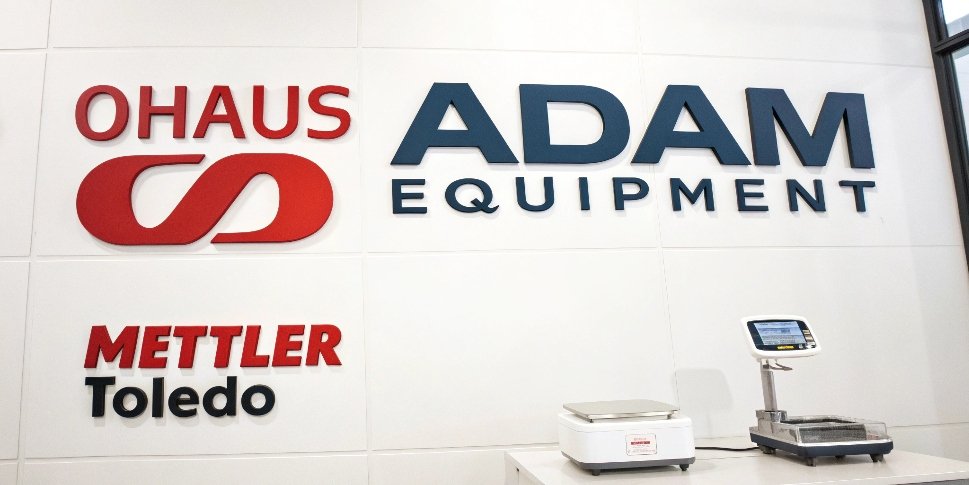
Choosing a brand feels like a big commitment. Over the years, we've helped many clients navigate this choice. You are usually weighing performance against cost. The big names have a strong reputation, but it's important to understand what you're paying for.
Breaking Down the Top Brands
Each major brand has its own strengths tailored to different industrial needs. Understanding these differences is the first step to making an informed decision. For example, a business that needs a solid, all-around performer for general parts counting might choose differently than a lab that requires absolute precision for sensitive components.
| Brand | Key Feature | Typical Model Series | Best For |
|---|---|---|---|
| Ohaus | Great value and functionality | Scout Pro, Ranger | General-purpose inventory and workshop use |
| Adam Equipment | High precision and reliability | CCT Series | Quality control and precise component counting |
| Mettler Toledo | Laboratory-grade accuracy | IND Series | High-value items, pharmaceutical, and lab settings |
Finding the Right Fit for You
While these brands set industry standards, we often find that clients need a more tailored solution. They might need the precision of a Mettler Toledo1 but at a more accessible price point, or the connectivity features of an Ohaus2 model customized for their specific ERP. This is where we come in. We focus on building scales that meet your exact specifications, offering comparable performance and reliability without the premium brand price tag. It's about getting the features you need to do the job right.
Can the data from a counting scale be connected to my ERP or inventory management system?
Tired of manual data entry from your scales? Human error is slow and costly. Imagine if your scale could automatically update your ERP system, saving time and eliminating mistakes.
Yes, most modern industrial counting scales can connect to ERP or inventory systems. They typically come with standard RS232 or USB ports. Optional Bluetooth or Wi-Fi modules are also available for wireless connectivity, allowing seamless data transfer of quantity and weight.
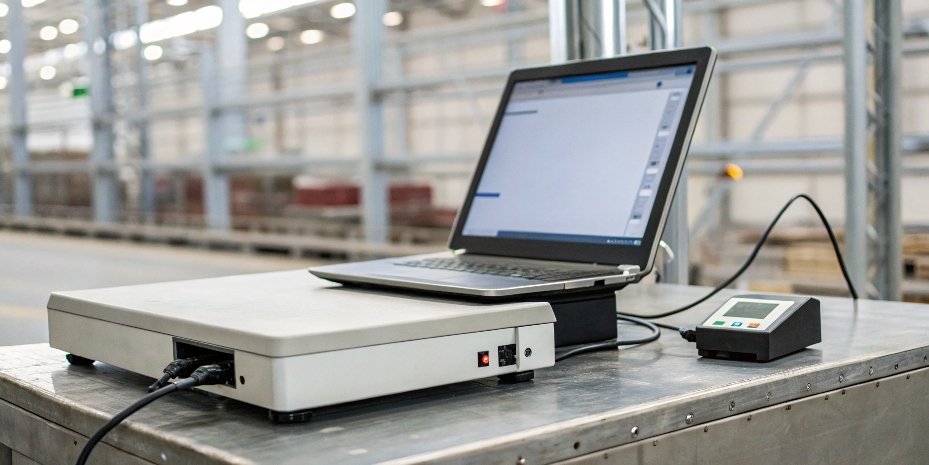
Connecting your scales directly to your management software is a game-changer for efficiency and accuracy. I've personally worked with software vendors who were struggling with inventory discrepancies caused by manual data entry. Once we helped them integrate their weighing data, their error rate dropped significantly. Let's dive into how this integration actually works.
How Data Connectivity Works
Getting your scale to talk to your software requires the right physical connection and software protocol. It's not as complicated as it sounds, but you need to ensure compatibility from the start.
Common Interfaces
The most common and reliable connection is the RS232 serial port3, a standard in industrial equipment for decades. Most scales also offer a USB port for easy connection to modern computers. For more flexibility, we often add Bluetooth or Wi-Fi modules4 for clients who need to reduce cable clutter or weigh items across a large facility. This wireless option is perfect for dynamic workflows where the scale's location might change.
Software Integration
A physical connection is only half the battle. Your ERP system (like SAP, Oracle, or others) needs to understand the data the scale is sending. This is often handled by a small software driver or an API. We provide our clients with the necessary drivers and support to ensure a smooth setup. In some cases, our technical team works directly with a client's IT department to create a custom integration5, ensuring that weight and quantity data flow seamlessly into their inventory records.
What is "APW enhancement"?
Are tiny variations in part weight causing big counting errors? Inaccurate counts lead to stock discrepancies. APW enhancement is a feature that solves this problem by refining accuracy as you count.
APW (Automatic Piece Weight) enhancement is a feature that automatically recalculates and refines the average piece weight as more items are added to the scale. This dynamic adjustment corrects for minor variations between parts, significantly improving counting accuracy, especially for large quantities.
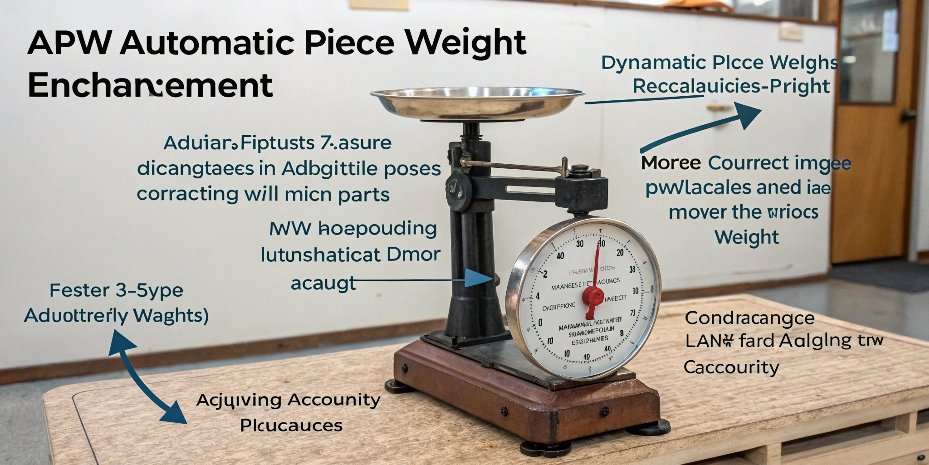
I remember a client who manufactured tiny electronic components. Their inventory counts were always slightly off because each component had an almost immeasurable weight difference. Standard counting scales failed them. The solution was a scale with APW enhancement6, which completely solved their problem. This feature is a must-have for anyone dealing with high-volume, high-precision counting.
How APW Enhancement Works
A standard counting scale calculates the average piece weight (APW) based on a small initial sample—say, 10 pieces. It then uses that fixed average to count thousands of items. If the initial sample wasn't perfectly representative, or if there's natural variation in the parts, errors will multiply. APW enhancement prevents this. As you add more items to the scale, it continuously re-samples and updates the average piece weight. This smart, dynamic calculation drastically improves accuracy.
When Do You Need It?
This feature isn't necessary for counting nuts and bolts, but it is critical in specific scenarios.
- High-Value Components: For industries like electronics or jewelry, even a small counting error can be very costly.
- Pharmaceuticals: Precision is non-negotiable when dealing with pills or medical components.
- Minor Part Variations: When parts have slight weight differences due to the manufacturing process.
By using APW enhancement, you can reduce counting errors7 from a typical 1-3% down to less than 0.5%. We build this functionality into our high-precision models because we know it's essential for clients where accuracy is paramount.
Is there a performance difference between portable (battery-powered) counting scales and plug-in models?
Need to count inventory all over the warehouse but worried about sacrificing accuracy? Choosing between portable and stationary scales can be tough. We'll help you pick the right one for the job.
Yes, there's a performance trade-off. Portable, battery-powered scales offer flexibility for mobile tasks like warehouse inventory checks but often have slightly lower accuracy (e.g., 0.1g). Plug-in models provide higher precision (e.g., 0.01g) and stability, making them ideal for stationary lab or production line work.
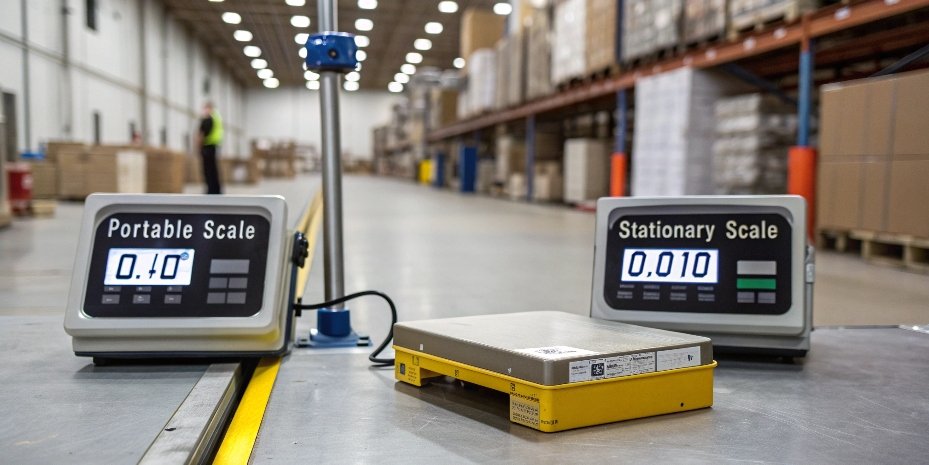
The choice between portability and precision is a classic one. We've equipped massive warehouses with fleets of portable scales for yearly stock-takes and set up high-precision plug-in models8 on production lines for quality control9. The right choice depends entirely on your daily workflow. One is not better than the other; they are simply designed for different jobs.
Key Performance Factors
Let's compare the two types across the features that matter most to your operation. The decision usually comes down to where the work needs to get done. If you bring the work to the scale, a plug-in model is best. If the scale needs to go to the work, you need a portable one.
| Feature | Portable (Battery-Powered) | Plug-in (AC Power) |
|---|---|---|
| Accuracy | Good (e.g., 0.1g resolution) | Excellent (e.g., 0.01g or better) |
| Mobility | High - can be used anywhere | Low - fixed to one location |
| Stability | Good, but can be affected by surfaces | Excellent, designed for stable readings |
| Power | Battery-powered (e.g., 200 hours) | Consistent and reliable AC power |
Choosing Based on Your Workflow
To make the right decision, think about your specific use case. For warehouse inventory10 and cycle counts, a portable model like the Ohaus Ranger is a great choice. It allows your teams to move freely through aisles without being tied to a power outlet. For lab work, quality control stations, or packaging lines, a plug-in model like the Adam Equipment11 CCT series is superior. It offers the high precision and stability needed for repeatable, accurate results in a controlled environment. We help our clients analyze their workflow to select or even design a scale that fits their exact operational needs.
Conclusion
Choosing the right counting scale involves balancing cost, accuracy, and features. Understand your needs for brand, connectivity, and portability to make the best investment for your business.
-
Learn about Mettler Toledo's reputation for accuracy and how it can benefit your operations. ↩
-
Find out why Ohaus is a trusted brand and what features they offer in their counting scales. ↩
-
Discover the importance of RS232 ports in connecting counting scales to systems. ↩
-
Learn how wireless connectivity can streamline your inventory processes. ↩
-
Discover the importance of custom integration for seamless data flow in operations. ↩
-
Understand how APW enhancement can improve counting accuracy for your inventory. ↩
-
Understand the common causes of counting errors and how to mitigate them. ↩
-
Learn why plug-in models are preferred for stationary applications and their advantages. ↩
-
Learn how counting scales are essential for maintaining quality control standards. ↩
-
Explore best practices for efficient and accurate warehouse inventory counting. ↩
-
Explore the reliability and precision features of Adam Equipment scales for your business. ↩



[…] Create Your Sample: Start by placing a small, known number of your items on the scale. For example, you can use 10, 20, or even 100 pieces. A larger sample size generally leads to a more accurate Average Piece Weight (APW)3. […]