
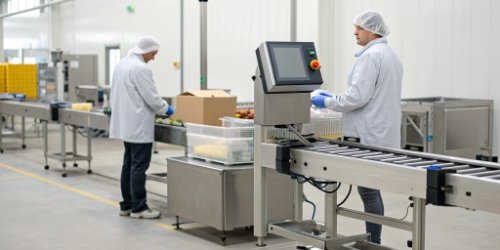
Tired of costly manual weighing errors? These mistakes drain profits and slow you down. A semi-automated process offers a simple, effective solution to boost your bottom line.
You can save thousands, or even tens of thousands, of dollars each year. Savings come from reduced labor costs, eliminating product overages, and avoiding costly fines for underweight items. The exact amount depends on your production volume and current error rate, but the return on investment is significant.
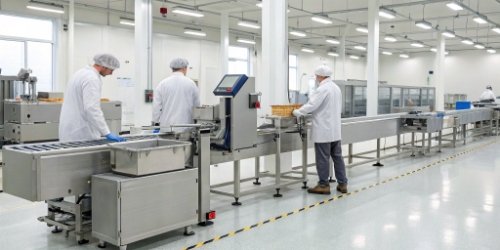
That's a bold claim, I know. It's easy to talk about savings in general terms. But as someone who has been in the industrial weighing business for nearly two decades, I've seen it happen time and time again. For small and mid-sized businesses, especially those that can't justify a fully automated line, this is a game-changer. Let’s break down exactly where these savings come from. We'll look at the specific financial benefits1 and how this technology can transform your operations, step by step. I want you to see for yourself how this isn't just an expense, but a powerful investment in your company's future.
What Are the Financial Benefits of Semi-Automated Weighing and Labeling?
Unseen costs from manual work can damage your budget. Inaccurate weights and slow labeling are not just operational issues; they are financial drains. Semi-automation directly addresses these problems.
The main financial benefits include lower labor costs, zero product giveaway, and much better inventory tracking. You also get reliable data for smarter financial planning. This combination often delivers a return on your investment within the first year, making it a sound financial decision for growing businesses.
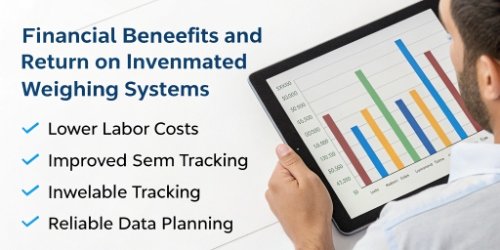
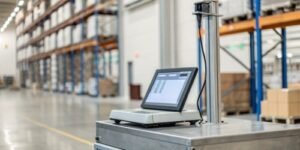
When we talk about financial benefits, we're discussing tangible improvements to your bottom line. At Weigherps, we focus on delivering real-world value, not just equipment. A semi-automated system, like our smart waterproof scale with an integrated printer, is designed to generate savings in several key areas.
Reducing Labor Costs
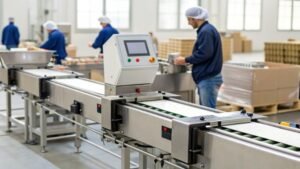
A single operator using a semi-automated station can often perform the work of two or even three people in a manual setup. The process is simplified: place the item, the scale weighs it and prints the label, then the operator applies it. This reduces the need for constant supervision and extensive training. Your staff can be redeployed to other, more value-adding tasks instead of being tied up in a repetitive and error-prone job.
Eliminating Product Waste
This is one of the biggest and most overlooked financial drains. To avoid underweight penalties, manual operators often intentionally overpack products "just to be safe." Those few extra grams add up. A precise scale eliminates this guesswork and waste.
Enhancing Data Accuracy
Every transaction is automatically recorded. This provides you with perfectly accurate data for inventory management, production planning2, and sales analysis. There are no more errors from somebody writing down the wrong number. This clean data is invaluable for forecasting and making strategic business decisions.
| Feature | Manual Process | Semi-Automated Process |
|---|---|---|
| Operator Speed | Slow, varies by person. | Fast, consistent speed. |
| Accuracy | Prone to human error (over/under). | Highly accurate, to the gram. |
| Data Recording | Manual entry, risk of mistakes. | Automatic, instant data capture. |
| Training Time | High, requires skill and focus. | Low, intuitive interface. |
| Overall Cost | High hidden costs (errors, waste). | Low operational cost, quick ROI. |
How Does Semi-Automation in Weighing and Labeling Contribute to Annual Savings?
It's frustrating to pay for the same mistakes over and over. These manual errors in weighing and labeling accumulate into surprisingly large annual losses. Semi-automation stops this waste.
Semi-automation creates annual savings through compounding effects. Shaving seconds off each weighing cycle and saving a few grams per package might seem small. But repeated thousands of times, it leads to massive savings in labor hours and raw materials over the course of a year.
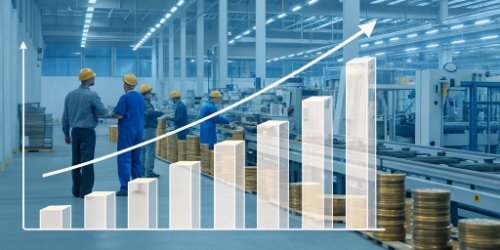
The true power of semi-automation comes from the principle of compounding gains. Small, consistent improvements made every single day add up to huge annual savings. It’s easy to dismiss a few seconds or a few grams, but when you're running a business, that’s where profits are lost or made. I've seen this firsthand with our clients after they install one of our weighing solutions.
The Power of Compounded Time Savings
Let's use a simple example. Imagine your manual process takes 20 seconds per package. A semi-automated system could cut that down to 10 seconds. That's a 10-second saving per item. If you process 1,000 packages a day, you save 10,000 seconds, which is over 2.7 hours of labor. In a year with 250 workdays, that equates to nearly 700 saved labor hours. You can calculate what that means for your payroll. It’s not a small number.
The Accumulation of Material Savings
Now let's look at product giveaway. Suppose you're overpacking an item by an average of just 5 grams to be safe. If that product costs your company $20 per kilogram, you are losing $0.10 on every single package. For 1,000 packages a day, that's $100 lost daily. Over a 250-day work year, that becomes $25,000 in product you simply gave away for free. A semi-automated scale, programmed to the exact target weight, stops this loss immediately. These are not theoretical numbers; they are real savings we help our clients achieve.
What Cost Savings Can Be Achieved with Semi-Automated Weighing Systems?
Your operational costs might be inflated by hidden inefficiencies. Outdated weighing methods create expenses in waste, rework, and compliance risks. Modern semi-automated systems are designed to eliminate them.
You achieve both "hard" and "soft" cost savings. Hard savings are measurable cuts in labor, materials, and shipping fees. Soft savings include higher employee morale, a stronger brand image due to quality consistency, and a lower risk of expensive fines from regulatory bodies for mislabeling.

When making a business case for new equipment, it’s important to look at all the ways it will save you money. As a purchasing manager or technical director, you know that some savings are easy to put on a spreadsheet, while others are less tangible but equally important for long-term health. We design our systems to deliver on both fronts.
Direct "Hard" Savings
These are the numbers that directly impact your profit and loss statement. They are immediate and easy to quantify.
- Reduced Labor: Less overtime pay and the ability to run a lean, efficient team.
- Eliminated Waste: No more product giveaway from over-filling. You sell what you produce.
- Accurate Shipping: Correct weight data means you never overpay for shipping. This is especially critical for e-commerce and logistics operations.
Indirect "Soft" Savings
These savings contribute to a healthier, more resilient business over time.
- Improved Morale: Employees are less stressed when using simple, reliable tools. They can focus on quality instead of worrying about making mistakes. A happier team is a more productive team.
- Enhanced Brand Reputation: Consistency is key to customer trust. When every package is accurately weighed and labeled, your customers receive a reliable product every time.
- Better Compliance: Our systems create an automatic data trail for every item weighed. This traceability is essential for meeting regulatory requirements and can save you from massive fines or recalls.
| Saving Type | Examples | Impact on Your Business |
|---|---|---|
| Hard Savings | Less overtime, zero product giveaway, accurate shipping rates. | Directly improves profitability and is easy to measure. |
| Soft Savings | Fewer customer complaints, higher team productivity, enhanced compliance. | Strengthens long-term business health and reduces operational risk. |
How Can Implementing Semi-Automated Processes Reduce Yearly Expenses?
Are your annual expenses for labor and materials constantly rising? This slow creep of costs quietly eats away at your profit margins each year. Implementing semi-automation stops this trend.
By systemizing your weighing and labeling, you replace inconsistent manual work with a reliable, repeatable, and faster process. This reduces overtime pay, stops product giveaway from over-packing, and prevents expensive rework, directly lowering your annual operating expenses. It's a one-time investment for ongoing savings.

Implementation is about more than just buying a new scale; it's about fundamentally improving a core part of your production process to reduce yearly expenses across the board. The goal is to replace a variable, human-dependent task with a standardized, machine-assisted one. This is how we help businesses become more profitable and scalable.
An Attack on Inefficiency
Think about the typical manual workflow: an operator picks an item, places it on a scale, reads the weight, maybe writes it down, then prints a label and applies it. There are multiple points where errors or delays can happen. Our smart integrated scales streamline this into one fluid motion. An operator places the item on the scale. The weight is instantly captured, and a label with all necessary information (weight, price, barcode, date) is automatically printed. The operator's only job is to place the item and apply the label. This cuts out the mental work and potential for human error, making the process faster and more reliable.
Reducing Compliance and Rework Costs
In many industries, incorrect labeling can lead to huge problems. A wrong weight or missing batch number can result in a rejected shipment or, worse, a full product recall. A semi-automated system logs every transaction and ensures every label is correct. This provides an essential layer of security and traceability, protecting your business from compliance penalties and the high cost of rework.
Optimizing the Whole Workflow
The benefits extend beyond the weighing station. When your weighing and labeling process is consistent and predictable, it stabilizes the entire production line. Downstream activities like case packing and palletizing become smoother because the flow of products is steady. This predictability makes overall operational planning much easier and more effective, reducing bottlenecks and further cutting costs.
Conclusion
In summary, semi-automated weighing and labeling is not a cost. It’s a strategic investment that delivers significant annual savings, boosting efficiency and profitability for your business's growth.

Comments (0)