
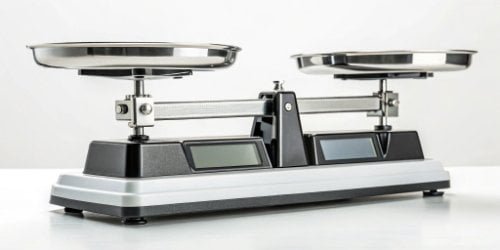
Your production line is slowed by manual weighing and data entry. These errors cost you time and money. A smart scale that "thinks" can automate this process instantly.
A "thinking" or smart scale can achieve significantly more by automating data collection, reducing human error, and integrating directly with your existing software. This unlocks real-time inventory management, improved production efficiency, and provides actionable insights, boosting your overall productivity and profitability from day one.
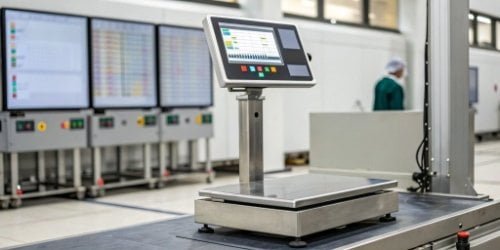
I remember visiting a client's warehouse a few years ago. They had stacks of paper logs next to every single scale. It was a clear sign of inefficiency. They were losing track of materials and making costly mistakes. This experience showed me just how much potential was being wasted. It's not just about weighing; it's about what you do with that weight data. So, let's explore the new capabilities that come with scales that can actually think.
What New Capabilities Arise from Using Smart Scales in Production?
Your current scales only give you a number, leaving you blind to the bigger picture. This data gap can lead to costly inventory errors. Smart scales unlock new capabilities.
Smart scales introduce capabilities like automatic data logging, real-time inventory tracking, and seamless integration with ERP and MES systems. They can trigger alerts for over/under-filling, generate production reports automatically, and ensure full traceability of materials, transforming your operational visibility.

When we started developing our IoT scales, we were not just adding a network port. We were rethinking the role of a scale in a modern factory. A smart scale1 becomes a central data hub, not just a measuring tool. It brings a whole new set of functions to the factory floor. Our goal has always been to solve our clients' problems, and this evolution of the scale was a direct response to their needs for better control.
From Measurement to Management
The biggest shift is moving from simple measurement to active management. Instead of an operator writing down a weight, the scale itself captures and sends that data where it is needed. This opens up possibilities that were impossible before. A technical director can now see material flow in real time. A purchasing manager gets accurate inventory levels automatically.
Key New Functions
| Capability | Traditional Scale | Smart Scale |
|---|---|---|
| Data Capture | Manual Entry, high error rate | Automatic, Real-time, highly accurate |
| System Link | None, creates data silos | Direct API/SDK to ERP/MES |
| Process Control | Operator Dependent, inconsistent | Automated alerts and triggers, consistent |
| Traceability | Paper-based, slow, often lost | Digital, instant, and fully auditable |
These new capabilities transform the scale from a passive tool into an active participant in your production process. It provides a constant stream of reliable data that a software vendor can easily integrate into their solutions.
How Do Intelligent Scales Contribute to Enhanced Operational Efficiency?
Slow, manual weighing processes create bottlenecks and errors in your workflow. This constant inefficiency hurts your bottom line and production targets. Intelligent scales eliminate these manual steps entirely.
Intelligent scales enhance operational efficiency by automating data entry, which eliminates manual logging and associated human errors. This speeds up the weighing process, reduces labor costs, and provides managers with immediate, accurate data for better and faster decision-making, streamlining the entire production workflow.

Efficiency was the number one problem our early clients wanted to solve. One customer, a food packaging company, was losing hours every day just from operators double-checking weights and filling out forms. It was a huge waste of skilled labor. For a software provider like yourself, your clients face the same challenge. Integrating our intelligent scales into your system offers them a direct path to higher efficiency.
Eliminating Time-Wasting Tasks
The core of improved efficiency is automation. An intelligent scale does not need an operator to stand there and write things down.
- Instant Data Transfer: The moment a weight is stable, it is sent to your database or software. No more clipboards, no more typos. The process becomes seamless.
- Reduced Rework: By setting weight tolerances in the software, the scale can immediately flag an incorrect weight with a red light or an alert in your system. This prevents a bad batch from moving down the line and saves immense costs.
- Faster Changeovers: When switching products, recipes, or orders, the new parameters can be sent to the scale from a central system. This reduces manual setup time and gets production running again much faster.
This means your client's team can focus on value-added tasks instead of being data-entry clerks. The scale handles the boring, repetitive work with perfect accuracy every time.
Can Thinking Scales Lead to Improved Accuracy and Productivity on the Factory Floor?
Even small weighing errors can lead to significant material waste and profit loss. These mistakes quietly erode your bottom line every single day. Thinking scales enforce perfect accuracy.
Yes, "thinking" scales directly improve accuracy by eliminating manual data entry errors and enforcing pre-set weight tolerances. This increased accuracy reduces material waste and rework. As a result, productivity rises because processes are faster, more reliable, and require less manual supervision and correction.
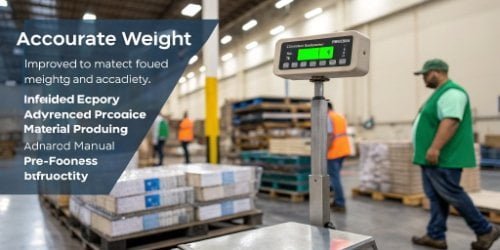
Accuracy and productivity are two sides of the same coin. You cannot truly be productive if your process is full of errors. I have seen companies that thought they were efficient, but their end-of-month inventory counts never matched their production records. The problem was tiny errors in weighing, repeated hundreds of times a day. As a software vendor, offering a solution that guarantees accuracy is a powerful selling point.
The Link Between Accuracy and Productivity
A "thinking" scale ensures the correct amount of material is used every single time. It is not just about getting the weight right; it is about making the right weight the only option.
How Smart Scales Enhance Both
| Factor | Impact on Accuracy | Impact on Productivity |
|---|---|---|
| Automation | Eliminates human typos and reading errors. | Frees up operators for other value-added tasks. |
| Tolerances | Automatically flags out-of-spec weights. | Prevents bad products, drastically reducing rework time. |
| Real-time Data | Provides instant verification of all material usage2. | Allows for faster process adjustments and control. |
| Calibration Alerts | Reminds users to calibrate for peak accuracy. | Ensures consistent performance, reducing bad batches. |
By building accuracy directly into the process, the entire workflow becomes smoother and faster. Your clients spend less time fixing mistakes and more time producing quality goods. This is how they achieve a real leap in productivity, all enabled by the synergy between your software and our hardware.
What Are the Benefits of Implementing AI in Weighing Systems?
Your systems collect data, but can they predict future problems or trends? Reacting to issues after they happen is inefficient and costly. AI transforms this data into predictive insights.
Implementing AI in weighing systems offers benefits like predictive maintenance, where the system alerts you before a scale fails. It also enables advanced analytics for optimizing material usage, identifying production anomalies in real-time, and forecasting inventory needs based on historical data patterns, moving from reactive to proactive management.

Integrating AI is the next frontier for us and our clients. We see it as giving the scale a "brain" that can learn from experience. While a standard smart scale is great at recording what is happening now, an AI-powered scale can start to predict what will happen next. This is a game-changer for any technical director or purchasing manager looking for a long-term competitive edge. Our journey of improving our products is continuous, and AI is the next logical step we are taking with our partners.
Moving Beyond Simple Data Collection
AI unlocks a deeper level of intelligence from the same weight data your clients are already collecting. It turns historical data into future strategy.
Key AI-Driven Advantages
- Predictive Maintenance: An AI model can analyze performance data, such as stabilization time or minor weight drifts. It can then predict when a load cell might need calibration or replacement, preventing unexpected downtime.
- Anomaly Detection: It can learn the normal patterns of a production line. If a series of products are suddenly underweight, it can flag a potential issue with a dispensing machine upstream, not just the final weight.
- Process Optimization: Over time, AI can analyze thousands of data points to suggest more efficient batch sizes, optimal material ordering schedules, or even identify which operator is the most efficient.
This is how we empower our partners to move from simply running their business to truly optimizing it. It is about enabling a quantum leap in business development.
Conclusion
A "thinking" scale is more than a tool. It is a partner in efficiency, accuracy, and growth, turning simple weight data into your most valuable business asset.



Comments (0)