

Your team is constantly moving items from a scale to a separate labeling station. This two-step process is slow and prone to errors, costing you valuable time and money daily.
You could be wasting significant time. Combining weighing and labeling into a single action with an integrated system can cut process time by over 50%. This not only speeds up your workflow but also dramatically reduces the chance of human error, improving overall operational accuracy and efficiency.
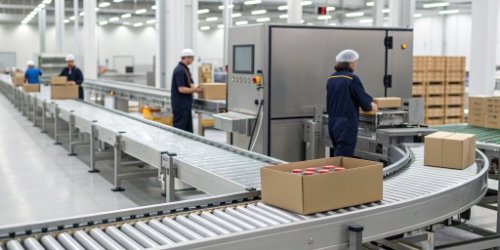
I remember visiting a client's warehouse years ago. I watched a worker weigh a box, jot down the number, walk to another desk, type it into a computer, and print a label. The whole process felt clunky and inefficient. It got me thinking about how many small steps add up to big delays. If this sounds familiar, you're not alone. Let's explore how much combining these tasks can really change your operations.
What Are the Time-Saving Benefits of Integrating Weighing and Labeling Processes?
Your current workflow involves weighing an item, then manually creating and applying a label. This repetitive, multi-step process is a hidden time sink, slowing down your entire operation.
Integrating weighing and labeling delivers immediate time savings. It eliminates the need to transfer items between stations and manually input data. This consolidation can boost throughput significantly, allowing your team to process more products in the same amount of time with fewer staff members.
The time savings go beyond just cutting out a few steps. It is about creating a smoother, more continuous flow. When you integrate, you are not just saving seconds; you are changing the rhythm of your work. As a software vendor1, think about how this hardware efficiency can elevate your software's value proposition. Your smart device software can manage the entire process from a single point.
Breaking Down the Time Gains
Let's look at the specific activities that integration eliminates. For every single package, you are cutting out the time spent on manual data transfer and potential corrections. This small change adds up quickly.
| Traditional Process Step | Integrated Process Step | Time Impact |
|---|---|---|
| 1. Place item on scale. | 1. Place item on scale. | No Change |
| 2. Record weight manually. | N/A (Data captured automatically) | Time Saved |
| 3. Move item to label station. | N/A (Item stays in place) | Time Saved |
| 4. Input weight into PC. | N/A (Data sent to printer) | Time Saved |
| 5. Print label. | 2. Label prints automatically. | Time Saved |
| 6. Apply label. | 3. Apply label. | No Change |
At my company, Weigherps, we have designed our intelligent weigh-labeling scales to achieve this seamless sync2. Your software can directly command our hardware, making the entire operation feel like a single, fluid action. This synergy does not just save time; it creates a more reliable and professional workflow3 for your clients.
How Does Combining Weighing and Labeling Improve Workflow Efficiency?
A single typo when entering a weight can lead to incorrect shipping charges or compliance failures. These manual errors are not just annoying; they create costly rework and damage trust.
Combining these tasks improves efficiency by creating a single source of truth for data. The weight captured by the scale is sent directly to the label printer. This eliminates manual data entry, drastically reduces errors, and ensures that every label is 100% accurate, streamlining your entire workflow.
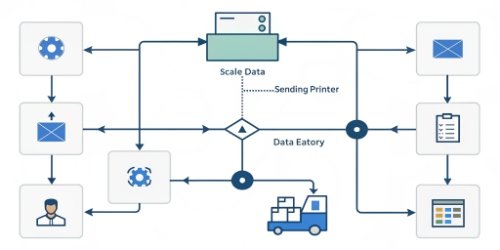
Efficiency is not just about speed; it is about accuracy and resource optimization. When you combine weighing and labeling4, you directly attack the root cause of many logistical headaches: human error5. I have seen clients struggle with this for years. They would implement complex software checks, but the problem was always the manual gap between the scale and the printer. By merging these two functions, you achieve a more robust and fault-tolerant system. Your software gains more control over the physical process, which is a huge selling point for your customers.
Key Efficiency Improvements
This unified approach creates several key improvements that make daily work easier and more productive. It is about making the entire operation more dependable.
Reduced Labor Costs
A single operator can now manage what previously might have required two people or one person constantly moving between stations. This allows you to reallocate labor to more value-added tasks instead of repetitive motions.
Enhanced Data Accuracy
The direct data link between our scales and the label printing module means what you weigh is what you print. This is critical for shipping, inventory management, and regulatory compliance6. For your software, this means you can guarantee data integrity7 to your customers. At Weigherps, our systems are built for high synchronization, ensuring your software's commands are executed instantly and accurately.
How Much Time Could Be Saved by Streamlining Weighing and Labeling?
You suspect the two-step process is inefficient, but it is hard to pinpoint the exact time lost. This uncertainty makes it difficult to justify an upgrade to your management.
A lot. You can save several seconds per package. If a manual process takes 15 seconds and an integrated one takes 7, you save 8 seconds per item. For 1,000 packages a day, that’s over 2.2 hours saved daily—a massive boost to productivity.

Let's make this concrete. I often walk clients through this simple exercise, and the results are always eye-opening. We start by timing their existing process. Then we calculate how much time they could get back. Let's assume a conservative estimate.
A Simple Savings Calculation
- Time for separate weighing and labeling: 15 seconds per package
- Time for integrated weighing and labeling: 7 seconds per package
- Time saved per package: 8 seconds
Now, let's see how that time adds up over a typical workday and work year. The numbers show a clear benefit.
| Packages per Day | Daily Time Saved | Annual Time Saved (250 workdays) |
|---|---|---|
| 500 | 1.1 hours | 275 hours |
| 1,000 | 2.2 hours | 550 hours |
| 2,000 | 4.4 hours | 1,100 hours |
As a software provider, presenting this kind of clear ROI analysis to your customers is incredibly powerful. You are not just selling software; you are selling a quantifiable business improvement. Our Weigherps integrated scales provide the reliable hardware foundation for these savings. We specialize in creating solutions that integrate smoothly with systems like yours, ensuring the data flow is fast and flawless. This makes the upgrade an easy decision for any technical director or purchasing manager.
What Are the Advantages of Unified Weighing and Labeling Systems?
Separate scales, PCs, and printers take up valuable counter space. This cluttered setup looks messy and can even be a safety hazard, impacting your team's overall efficiency.
The biggest advantage is simplification. A unified system reduces hardware footprint, simplifies maintenance with a single point of service, and lowers training time for new operators. It also provides a cleaner, more organized, and professional-looking workstation, boosting employee morale and operational flow.
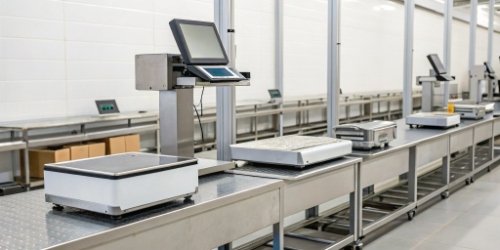
While time and accuracy are huge wins, the benefits of a unified system do not stop there. As a manufacturer for 19 years, I have learned that operational elegance is just as important as raw performance. A cleaner workspace directly translates to a more focused and productive team. Thinking about the total cost of ownership8 is important, and a single, integrated device is easier to manage and maintain over its lifetime.
Beyond Speed: The Holistic Benefits
The advantages go beyond simple metrics and affect the entire work environment.
Simplified Support and Maintenance
Instead of dealing with a scale manufacturer, a printer manufacturer, and your PC vendor, you have one point of contact. At Weigherps, we provide comprehensive support for the entire unit. As a software vendor, this means your clients have a simpler support chain, reducing frustration and downtime.
Customization and Flexibility
Unified systems offer powerful customization9. For example, our intelligent weigh-labeling scales not only integrate weighing and printing but also allow us to work with you to design custom label styles directly on the device. Thanks to the high synchronization, your software can manage the label designs and the printing process seamlessly. This ability to tailor the solution to fit a client's specific branding and data needs makes your software offering even more attractive.
Conclusion
Stop wasting time with separate steps. Integrating weighing and labeling boosts speed, ensures accuracy, and simplifies your workflow, offering a clear and immediate return on your investment.
-
Learn how software vendors can benefit from offering integrated solutions to clients. ↩
-
Explore the concept of seamless sync and its benefits for operational efficiency. ↩
-
Learn how a unified approach can enhance the professionalism of your operations. ↩
-
Learn about the advantages of combining weighing and labeling for better productivity. ↩
-
Find out how to minimize human error and improve accuracy in your workflow. ↩
-
Understand the significance of accurate labeling for meeting regulatory requirements. ↩
-
Learn how integration can guarantee data integrity and accuracy in your processes. ↩
-
Understand the long-term financial benefits of investing in integrated systems. ↩
-
Explore the customization options that can enhance your integrated weighing solutions. ↩



Comments (0)