

Tired of long training sessions for new equipment? Complex scales slow down onboarding and cause costly errors. A user-friendly smart scale can change all that for your business.
A user-friendly smart scale can cut employee training time by over 80%. This significantly reduces onboarding costs, minimizes operational errors, and allows new staff to become productive almost immediately, boosting your company’s overall efficiency.
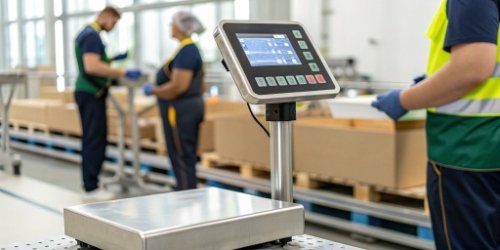
I’ve seen it happen many times over my 19 years in this industry. Companies invest in powerful technology, but they overlook one critical factor: the human element. If your team can’t use the equipment easily, its power is wasted. The real question isn’t just about features; it’s about accessibility. That’s where we need to look closer. We need to think about how intuitive design1 directly translates into time and money saved, starting with the very first day an employee uses the scale.
What Time Savings Can Be Achieved with a User-Friendly Smart Scale?
Proving the ROI of new technology can be tough. You know it should make things better, but long training cycles delay productivity and add hidden costs.
You can achieve massive time savings. For example, supermarkets using AI smart scales have cut cashier and weigher onboarding time by over 80% while reducing weighing errors by more than 50%. These are real, measurable results.
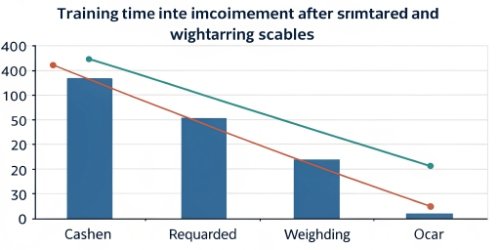
Let’s break this down using a real-world example I’ve seen firsthand. A large retail partner of ours was struggling with staff turnover at their checkout counters. Traditional scales required new employees to memorize dozens, sometimes hundreds, of product codes. Training took a full week, and even then, mistakes were common. After we worked with them to integrate a custom AI-powered smart scale, everything changed. The scale’s camera instantly identified the product, requiring the employee only to confirm it on a touchscreen. Training time for this task dropped from one week to just a few hours. This is not just a retail phenomenon. The same principle applies in a busy warehouse or on a manufacturing floor. When a scale guides the user, the time saved is multiplied with every single transaction.
| Metric | Traditional Scale | User-Friendly Smart Scale |
|---|---|---|
| Onboarding Time | 40 hours (1 week) | < 8 hours |
| Average Weighing Time | 25 seconds | 10 seconds |
| Error Rate | ~5% | < 2% |
| Time to Correct Error | 2-3 minutes | < 30 seconds |
How Does a Smart Scale Minimize Training Requirements for Employees?
New employees often feel overwhelmed by complex machinery. This steep learning curve leads to early mistakes, frustration, and a lack of confidence in their new role.
A smart scale minimizes training through its intuitive design. With user interfaces like a smartphone, guided on-screen workflows, and automated processes, it removes guesswork. This makes operation simple and easy to learn from day one.

The magic isn’t in what the scale does, but in how it helps the user do it. As an OEM/ODM manufacturer with 19 years of experience, we focus heavily on the user experience because we know that’s what makes our partners’ products successful. We design our scales to be nearly "training-proof" in several ways.
Intuitive User Interfaces (UIs)
Think about using a new app on your phone. You don’t need a manual. We apply that same logic. Our scales use large, clear touchscreens with simple icons and logical menus. Instead of memorizing button sequences, an employee just taps what they see. This is fundamental to reducing the initial learning curve.
Guided Workflows
For more complex tasks, the scale can prompt the user step-by-step. A message on the screen might say, "Place container on scale," then "Press TARE," then "Add product." This structured process makes it almost impossible to make a mistake and builds employee confidence2 quickly.
Automated Data Capture
This is huge for our software vendor clients. Instead of training an employee to weigh an item and then manually key that data into a separate system, our IoT-enabled scales do it automatically. The weight is instantly sent to your WMS, ERP, or custom software. This eliminates training on data entry protocols and cuts out a major source of human error.
What Are the Efficiency Benefits of Implementing Intuitive Smart Scales?
Inefficiency is a silent profit killer in any operation. Slow processes, frequent mistakes, and manual data handling bog down your entire workflow from production to shipping.
The benefits go beyond training. Intuitive smart scales deliver faster throughput, drastically fewer errors, and seamless data integration with your existing systems. This boosts overall operational speed and gives you a much more agile business.

A few years ago, we were approached by a company developing software for high-end fitness centers. They wanted to offer a premium, personalized experience. We worked with them to create a smart scale system that did more than just measure weight. When a client stepped on the scale, it automatically identified them via their membership card, recorded their weight, and securely uploaded the data to their personal profile in the gym’s app. The app’s AI would then analyze the data and provide updated advice. This system replaced a manual process where trainers would write down numbers and later input them into a spreadsheet. The efficiency gain was incredible. It freed up trainers to focus on coaching, not data entry. This same principle of integrated efficiency applies everywhere.
| Efficiency Metric | Before Smart Scale | After Smart Scale |
|---|---|---|
| Process Speed | Slow, manual task | Instant, automated task |
| Data Accuracy | Prone to human error | Highly accurate, automated |
| Labor Allocation | Staff needed for data entry | Staff freed for value-add tasks |
| Decision Making | Based on delayed reports | Based on real-time data |
This level of efficiency, driven by seamless hardware and software integration, allows businesses to innovate and offer services they couldn’t before.
How Can a Smart Scale Reduce Onboarding and Training Costs in a Company?
Onboarding new staff is a major line item on your budget. The costs include the trainer’s salary, lost productivity during training, and expensive mistakes made by trainees.
Smart scales directly reduce these costs. They shorten the formal training period, slashing direct trainer costs. More importantly, they cut indirect costs by minimizing new-hire errors and allowing employees to become fully productive much faster.

When we talk to purchasing managers and technical directors, the conversation always comes around to cost. It’s not just about the purchase price of the hardware; it’s about the Total Cost of Ownership (TCO)3. Training is a significant part of TCO, and it’s where a user-friendly scale provides a clear, fast return on investment4.
Direct Cost Savings
This is the easiest to calculate. If your current training takes 40 hours and a smart scale reduces it to 8, you’ve saved 32 hours of a trainer’s time and 32 hours of the new employee’s non-productive time for every single hire. For companies with high turnover, these savings add up very quickly.
Indirect Cost Savings
This is where the impact is even greater. A new employee using a complex system is more likely to make mistakes—incorrectly weighing a product or entering wrong data. These errors cost money in wasted materials, shipping returns, and customer dissatisfaction. An intuitive scale that prevents these errors aaves you money that you might not even be tracking. Furthermore, employees who feel competent and confident in their tools are happier and less likely to quit, reducing your turnover costs. As a partner, our goal is to provide hardware that makes your software solution look brilliant and delivers undeniable ROI to your end customers.
Conclusion
User-friendly smart scales are a strategic tool that saves training time and costs, reduces errors, and boosts your overall operational efficiency, offering a powerful return on investment.
-
Understand why intuitive design is crucial for user adoption and efficiency. ↩
-
Explore the relationship between employee confidence and overall productivity. ↩
-
Understand the concept of TCO and its significance in evaluating technology investments. ↩
-
Learn how to effectively calculate ROI for technology investments to ensure profitability. ↩



Comments (0)