
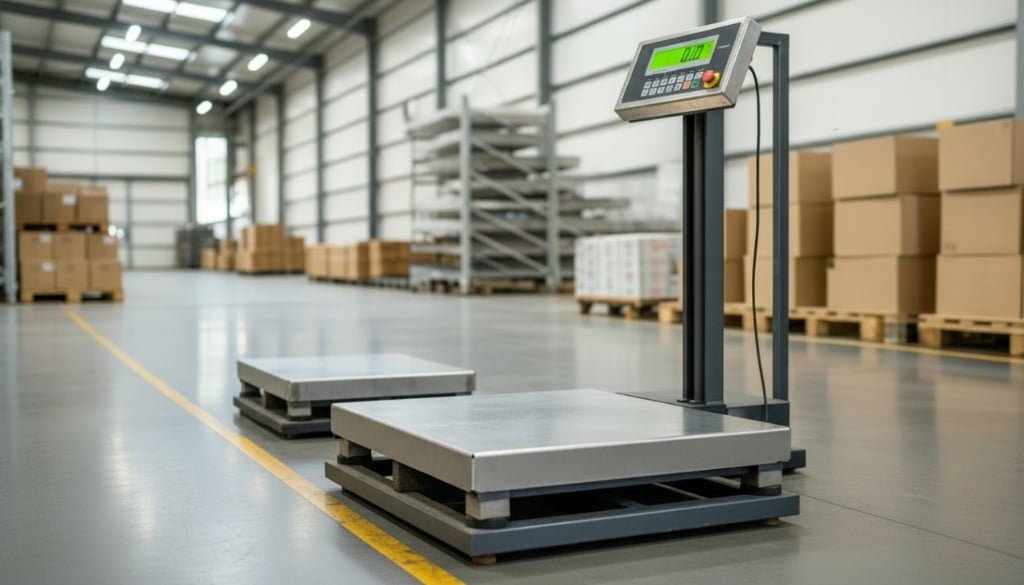
Inaccurate scales lead to costly errors. These errors can cause product loss and compliance fines. Knowing the right calibration frequency is essential to protect your operations and bottom line.
The calibration frequency for an industrial scale isn't one-size-fits-all. It depends on the manufacturer's recommendation, how often you use it, the environment, and industry regulations. It can range from daily checks to an annual service, depending on these critical factors.

As a manufacturer with nearly two decades of experience, we've seen firsthand how a simple calibration schedule1 can make or break an operation. The question isn't just if you should calibrate, but how often and why. Understanding the standards and guidelines behind it is the first step. Let's explore the key standards that guide this process.
What is the ISO guideline for calibration?
Following ISO standards can feel overwhelming. Misinterpreting them puts your business at risk of non-compliance. Let's break down the main ISO guideline for calibration into simple, actionable terms.
The core ISO guideline, primarily from ISO 9001, doesn't set a specific frequency. Instead, it requires you to establish, document, and maintain a calibration process. This plan must ensure your measuring equipment is fit for purpose and provides valid results, with records kept as evidence.

The main point of the ISO 90012 standard is about creating a reliable quality management system3. It doesn't give you a strict calendar, like "calibrate every six months." Instead, it says you are responsible for figuring out the right schedule for your own equipment. This makes sense because every business is different. Clause 7.1.5, "Monitoring and measuring resources," is where you will find this information. It tells you to define your needs and create a process to ensure consistency.
Creating Your Calibration Plan
To follow ISO 9001, you need to consider several factors to create your schedule. This puts the control in your hands, allowing you to build a process that is both effective and cost-efficient. Here are the key factors you should evaluate.
| Factor | Description | Example |
|---|---|---|
| Risk | What is the impact of an inaccurate measurement? | High-risk (pharmaceuticals) requires more frequent calibration than low-risk (internal logistics). |
| Usage | How often is the scale used? | A scale used 24/7 needs more frequent checks than one used twice a week. |
| Environment | Where is the scale located? | A dusty, vibrating factory floor requires more frequent calibration than a clean, stable lab. |
| History | How has the scale performed in the past? | If a scale frequently drifts out of tolerance, you should shorten its calibration interval. |
What is the ISO standard for calibration of weighing scales?
ISO 9001 provides the framework, but what about the technical details for scales? Without a specific standard, you can't be sure your calibration provider is competent. That's where a more specific standard comes in.
The key international standard for the competence of calibration labs is ISO/IEC 17025. It ensures that the laboratory performing your scale's calibration has a valid quality system and is technically competent to produce accurate and traceable results. Look for providers with this accreditation.

It's important to understand the difference between these two standards. ISO 9001 is about your company's overall quality management. ISO/IEC 170254 is specifically for the laboratories that perform testing and calibration. When you are looking for a service provider to calibrate your scales, their ISO/IEC 17025 accreditation is your proof of quality. It shows they have the right equipment, proper procedures, and skilled staff to do the job correctly. As a purchasing manager, asking for this accreditation is a simple way to filter out unqualified providers. It ensures the calibration certificate5 you receive is valid and traceable.
ISO 9001 vs. ISO/IEC 17025 for Calibration
Understanding the roles of these two standards helps you make better decisions for your quality management system. One manages your internal process, while the other validates your external supplier's technical ability.
| Standard | Focus | Who It Applies To | Key Takeaway |
|---|---|---|---|
| ISO 9001 | Quality Management System | Your company (the user of the scale) | You must create and document a calibration schedule. |
| ISO/IEC 17025 | Technical Competence | The calibration service provider6 | Your provider must prove they can produce accurate results. |
How often should I calibrate my digital scale?
Your digital scale is crucial for your daily tasks. But how can you be sure it stays accurate over time? Here is a simple way to determine your own calibration schedule.
For a digital scale, a common practice is annual professional calibration. However, you should perform daily or weekly user checks with test weights. For high-precision scales, like in a lab, daily checks are essential. For general industrial use, weekly checks might be enough.
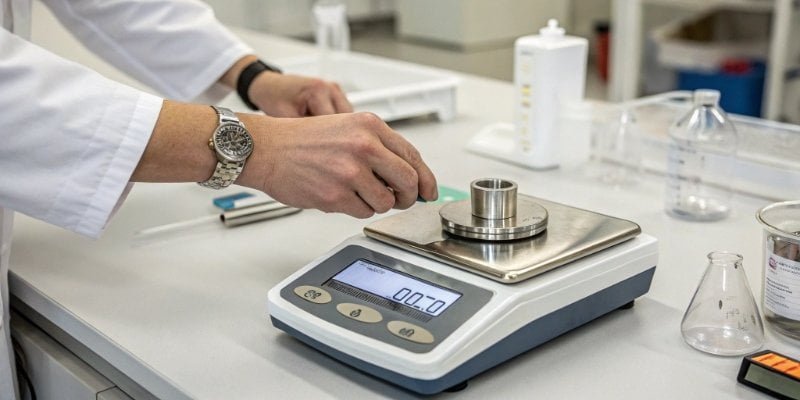
The best approach combines professional service with routine internal checks. A professional technician should perform a full calibration at least once a year, or more often if required by your industry. This service adjusts the scale to ensure it is accurate across its entire weighing range and provides a traceable certificate. In between these professional services, your own team should perform regular checks using certified test weights7. This is a quick test to verify the scale is still weighing correctly. It catches problems early before they become expensive.
Based on our experience, the right frequency depends entirely on the application. For instance, a high-precision lab balance needs a daily check with a maintenance log. On the other hand, a truck scale at a coal mine in a harsh environment might have different practical requirements.
Sample Calibration Schedules
| Scale Type & Environment | Use Case | Recommended User Checks | Recommended Professional Calibration |
|---|---|---|---|
| Laboratory Balance | Critical measurements, clean room | Daily | Semi-Annually |
| Bench/Floor Scale | General warehouse, multi-shift use | Weekly | Annually |
| Truck/Axle Scale | Heavy use, outdoor, harsh conditions | Monthly | Semi-Annually or Annually |
| Counting Scale | Inventory control, light use | Before each major use | Annually |
What is the 4 to 1 rule in calibration?
You may hear technicians mention the "4 to 1 rule." Not knowing what it means can make it hard to judge the quality of your calibration service. Let's explain it simply.
The 4 to 1 rule, also known as the Test Accuracy Ratio (TAR), is a guideline for calibration. It means the calibration standard (e.g., the test weight) should be at least four times more accurate than the tolerance of the scale you are calibrating.
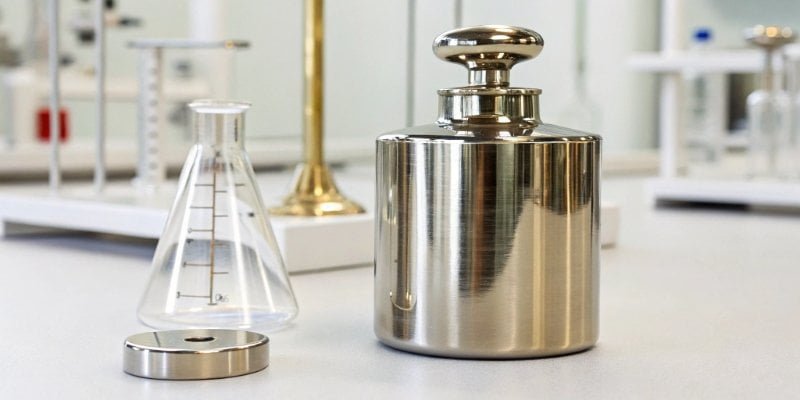
This rule is very important for ensuring a meaningful calibration. It guarantees that the master equipment used for testing is much more accurate than the device being tested. This way, you can be confident that any measurement error comes from your scale, not from the test weights. For example, if your scale has an acceptable tolerance of ±0.4 grams, the test weight used to calibrate it must have a tolerance of ±0.1 grams or better. This is a key detail to ask your service provider about. At Weigherps, our quality control department strictly follows this rule for all products before they ship. It is a fundamental sign of a professional and reliable calibration process.
Understanding the 4:1 Rule in Practice
Here is a simple breakdown of how the 4 to 1 Test Accuracy Ratio (TAR) provides confidence in your calibration results.
| Component | Tolerance | Role in Calibration | 4:1 Rule Status |
|---|---|---|---|
| Your Industrial Scale | ±0.4 g | This is the device under test. Its accuracy8 needs to be verified. | N/A |
| Calibration Test Weight | ±0.1 g | This is the standard. It must be at least 4 times more accurate than the scale. | Pass |
| Calibration Test Weight | ±0.2 g | This standard is only 2 times more accurate. It introduces too much uncertainty. | Fail |
Conclusion
Regular calibration is key to accuracy. Your schedule depends on usage, risk, and standards. By establishing a routine, you ensure reliability and protect your business from costly errors.
-
Creating a tailored calibration schedule is vital for maintaining accuracy and compliance in your operations. ↩
-
Explore ISO 9001 to learn how to establish a reliable quality management system for your calibration processes. ↩
-
Understanding quality management systems helps you maintain compliance and improve operational efficiency. ↩
-
Discover why ISO/IEC 17025 accreditation is essential for ensuring the competence of calibration service providers. ↩
-
Learn what to look for in a calibration certificate to ensure it is valid and traceable. ↩
-
Learn how to select a calibration service provider with the right qualifications and accreditations. ↩
-
Explore the importance of using certified test weights for accurate calibration and verification. ↩
-
Discover best practices to maintain accuracy in your measurements and avoid costly errors. ↩


Comments (0)