

Your scale's inaccuracy could be costing you money and quality. You worry about when to calibrate, risking either overspending on service or allowing costly errors to continue.
The frequency depends on your scale's usage and precision needs. For most industrial environments, calibrating every month is a strong starting point. However, high-precision or high-use applications may require more frequent checks to ensure consistent accuracy and avoid costly mistakes.

But a simple monthly schedule isn't the whole story. To truly protect your process and guarantee accuracy, you need to understand the 'why' behind the schedule. This knowledge helps you create a system that is both cost-effective and reliable. Let's break down the details so you can build a calibration1 plan that works for your specific operation.
How often do scales need calibrating?
You see "calibration" mentioned everywhere, but the timing feels random. This uncertainty can lead to inconsistent product quality, wasted materials, and serious compliance issues for your business.
Generally, industrial scales should be calibrated at least monthly. Laboratory balances need weekly verification and a full quarterly calibration. For less critical home scales, an annual calibration is usually enough. The key is matching the frequency to usage and required precision.
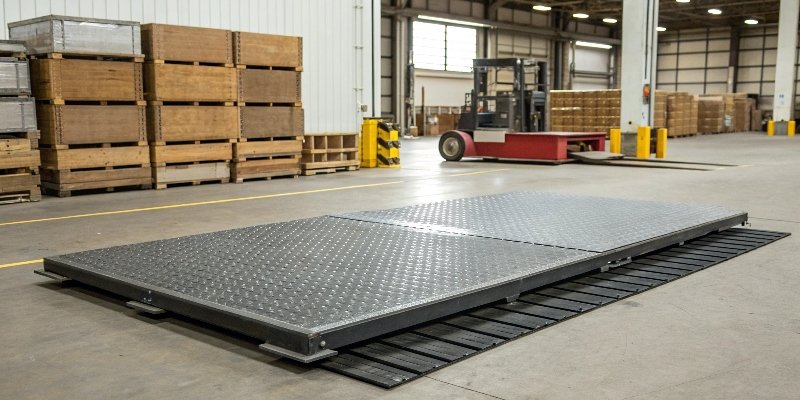
The rule "it depends" is not very helpful without context. At Weigherps, we help our clients determine their ideal frequency by looking at several key factors. Your goal is to find the sweet spot between ensuring accuracy and managing maintenance costs2. Think about it this way: the more your business relies on a measurement, the more often you should confirm it's correct.
Factors Influencing Calibration Frequency
The right schedule is unique to your operation. I remember a client in the food industry who only calibrated their scales annually. They soon discovered a slight drift in accuracy that cost them thousands in over-packed products before they switched to a quarterly schedule. To avoid this, consider these points:
| Factor | High Frequency (e.g., Monthly) | Low Frequency (e.g., Annually) |
|---|---|---|
| Usage | Constant, 24/7 operation | Infrequent, occasional use |
| Environment | Extreme temperatures, humidity, vibration | Stable, clean, climate-controlled |
| Impact of Error | High financial or safety risk | Low impact, non-critical tasks |
| Required Tolerance | Very high precision (e.g., pharma) | General estimates (e.g., shipping) |
By evaluating these factors, you can move from a generic guess to a data-driven calibration interval3 that protects your bottom line.
How often should scales be verified?
You hear both "calibration" and "verification." Are they the same thing? Confusing the two can mean you are only doing half the job needed to guarantee accurate measurements.
Verification, also known as a routine check, should be performed much more often than calibration—sometimes daily or before each shift. It's a quick test with a known weight to confirm the scale is still accurate. Calibration, on the other hand, is a full adjustment.

Think of verification4 as your first line of defense against inaccuracy. As a manufacturer for 18 years, I always advise our clients to make daily verification a habit. It is a 30-second task that can prevent a full day of bad production data. If the verification check fails, you then know the scale needs to be taken out of service and professionally calibrated. This simple process separates a quick check from a more involved technical adjustment.
Calibration vs. Verification: A Quick Comparison
Understanding the difference is key to an effective quality control program. Calibration is an adjustment, while verification is a check. You can't substitute one for the other. We tell our clients to think of it like maintaining a car. Verification is like checking your tire pressure before a long trip, while calibration is like getting a full wheel alignment at the shop. Both are necessary for a safe and efficient journey.
Here’s a simple breakdown:
| Feature | Calibration | Verification (Routine Check) |
|---|---|---|
| Purpose | To adjust a scale to match a known standard. | To confirm a scale is reading within tolerance. |
| Performed By | A trained technician (often an external expert). | The scale user or an internal operator. |
| Frequency | Less often (e.g., monthly, quarterly, annually). | Very often (e.g., daily, weekly, per shift). |
| Outcome | An adjusted scale, often with a certificate. | A simple "pass" or "fail" decision. |
What is the recommended calibration interval?
You need a clear answer for your quality management system. A generic "monthly" suggestion might not be good enough for an auditor or for protecting your specific, high-stakes process.
There is no single universal law, but a common starting point for industrial equipment is a 12-month interval, which is then adjusted based on risk. For critical measurements in demanding environments, like pharmaceuticals or food production, intervals are much shorter, typically 3 to 6 months.
Your scale manufacturer's recommendation is always the best place to start. From there, you should assess the risk. Ask yourself: what is the cost of an incorrect measurement? If a mistake could lead to a product recall, safety issue, or large financial loss, the calibration interval must be shorter. Furthermore, some situations require immediate attention, regardless of the planned schedule.
When to Calibrate Immediately
Certain events can instantly knock a scale out of tolerance. We worked with a logistics client who moved their entire warehouse. They failed to recalibrate their floor scales, and for a week, they shipped pallets that were heavier than recorded. This led to thousands in unexpected freight charges.
Always perform an immediate calibration in these situations:
- Before First Use: A new scale needs a baseline calibration at its installation site.
- After a Shock: If a scale has been dropped, hit, or overloaded, it must be checked.
- After a Move: Moving a scale, even across the room, can affect its accuracy.
- When Readings are Suspect: If your routine verification checks fail or the results just seem wrong, it's time to calibrate.
- After a Repair: Replacing any part can alter the scale’s response, requiring a new calibration.
Do scales need to be calibrated?
Your scale seems to be working just fine. Is calibration really necessary? Skipping it feels like saving time and money, but it is a silent gamble that can lead to major business problems.
Yes, absolutely. All weighing instruments experience drift over time due to normal wear, environmental changes, and mechanical stress. Calibration is the only way to find and correct this drift, ensuring your measurements are accurate, trustworthy, and compliant with quality standards.
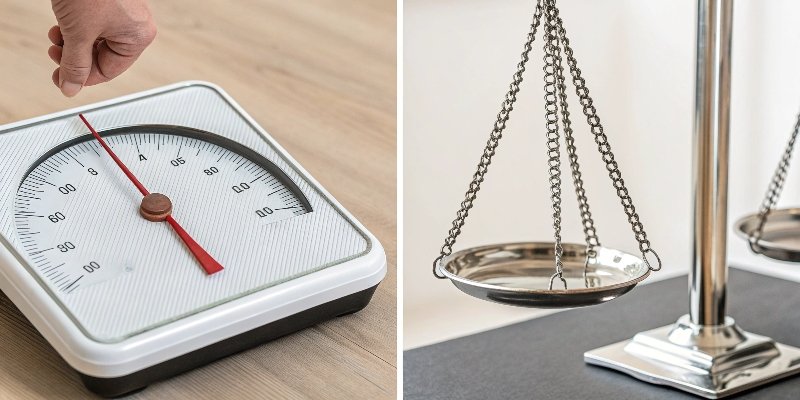
An uncalibrated scale is not just a faulty tool; it is a source of unreliable business data. You cannot build a successful, efficient business on bad data. The most successful clients I have worked with over the last two decades are the ones who treat calibration not as a cost, but as an investment in quality and predictability. The purpose of calibration is to eliminate uncertainty and provide you with data you can trust to make important decisions.
The Core Reasons for Calibration
The benefits of a consistent calibration program go far beyond simply having an "accurate" scale. It is a foundational part of any modern, data-driven operation5. For our clients in regulated industries, it is non-negotiable, as auditors will always ask for calibration records. But even for others, the advantages are clear.
- Cost Savings: Prevents giving away free product through overfilling and avoids customer complaints or legal issues from under-filling.
- Reliable Data: Ensures the weight data you use for inventory, process control, and billing is correct.
- Consistency: Guarantees that a kilogram of product today is the same as a kilogram of product next month, ensuring batch consistency.
- Compliance: Meets the strict requirements for quality systems like ISO 90016 and Good Manufacturing Practice (GMP)7.
Conclusion
Regular calibration is not optional; it is essential for accuracy, compliance, and profit. Your specific usage, environment, and risk level will determine the right frequency for your scales.
-
Understanding calibration is crucial for maintaining accuracy and compliance in industrial operations. ↩
-
Learn how regular calibration can reduce long-term maintenance expenses. ↩
-
Find out the best calibration intervals to maintain accuracy in various applications. ↩
-
Exploring the difference helps ensure effective quality control and accurate measurements. ↩
-
Discover how data-driven approaches enhance accuracy and decision-making. ↩
-
Learn about ISO 9001 requirements to ensure compliance and quality in your processes. ↩
-
Understanding GMP can help you maintain high standards in manufacturing processes. ↩


[…] burden and keeps your operations running smoothly and profitably. We also advise clients on a smart calibration schedule4 that protects their business without unnecessary […]
[…] Weigherps, we always tell our clients that the right calibration frequency2 depends on your specific needs. It's about managing risk. If you are working in a regulated […]