
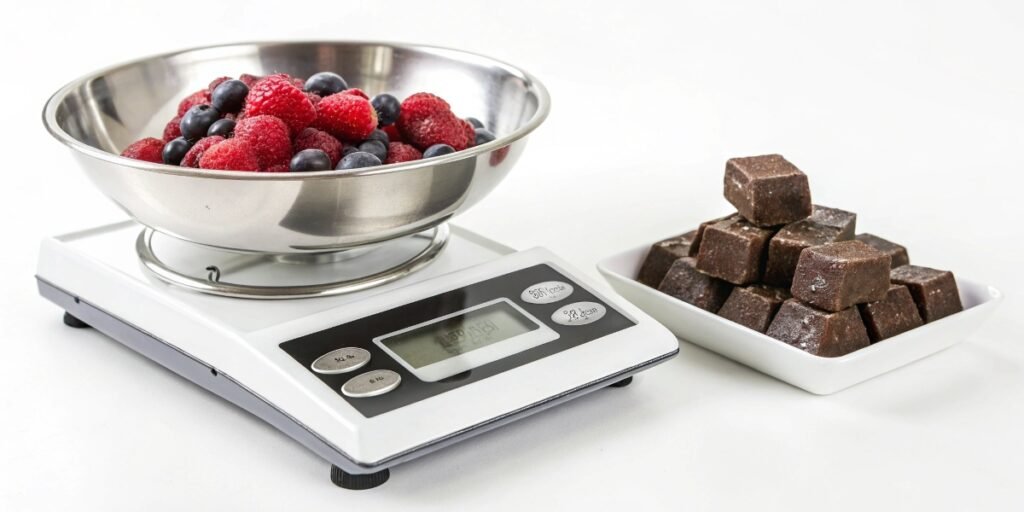
Your digital scale gives inconsistent readings, throwing off your entire process. This inaccuracy leads to costly errors, wasted materials, and compliance issues. We can show you the simple steps to calibrate it perfectly.
To calibrate a digital scale, first ensure it's on a level, stable surface. Then, enter its calibration mode, place a known calibration weight on the pan, and confirm the weight value. This resets the scale’s internal settings, which guarantees you will get accurate measurements.
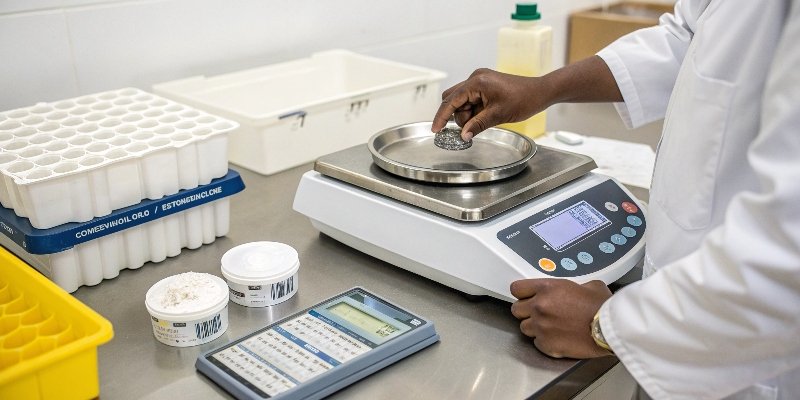
You've got the basic idea, but getting it right every time involves a few more details. The type of calibration, the environment, and even the weights you use can make a huge difference. Let me walk you through the process we've perfected over my 18 years in this industry, so you can avoid common mistakes and keep your scales reliable.
How to calibrate a digital weight scale?
Are you unsure if you're using the right method for your specific digital weight scale? Using the wrong procedure can give you false accuracy or even damage the internal sensor. Let's break down the two main calibration methods.
Calibrating a digital weight scale involves two main methods. Internal calibration uses the scale's built-in function with a standard weight. External calibration is a manual adjustment in the settings menu. Most modern industrial scales recommend using the simpler, more reliable internal calibration process.
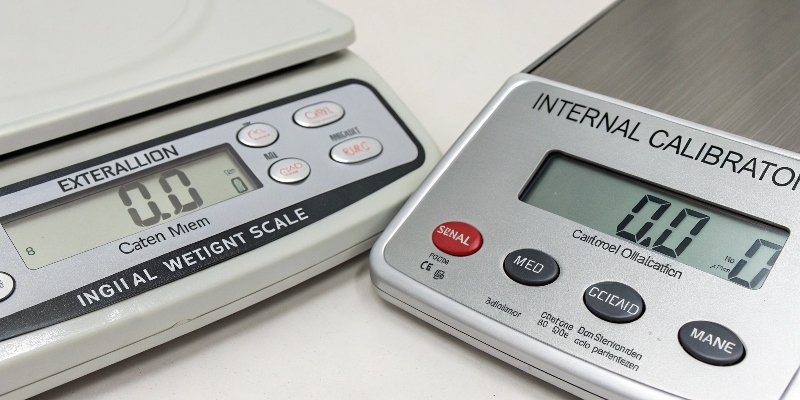
Let's look closer at the two primary methods. Choosing the right one depends entirely on your scale's features. Over the years, I've seen clients get confused by this, so it's worth clarifying.
Internal vs. External Calibration
-
Internal Calibration (Recommended): This is the most common and user-friendly method for modern scales. It's a guided process that is built into the scale's software. You simply press the 'CAL' button, follow the on-screen prompts to place a specific weight on the platform, and the scale does the rest. It’s fast, it reduces human error, and it’s ideal for the regular checks you should be performing. We always recommend this method to our clients for consistency and reliability.
-
External Calibration: This is for more basic models that do not have an automated function. It requires you to manually enter a settings menu. For example, you place a 10kg weight on the scale and see that it reads 10.02kg. You then have to navigate the menu to adjust an internal "coefficient" or "span" value until the display shows a perfect 10.00kg. This method offers more granular control but is also more prone to error if you're not an experienced technician.
How is a weighing scale calibrated?
Preparing for calibration seems simple, but I've seen small environmental issues cause big errors. Vibrations, a sudden draft, or an un-level surface can completely ruin your calibration efforts before you even start. Let's review the crucial preparation steps.
A weighing scale is calibrated by preparing the right environment and using certified weights. First, place the scale on a level, stable surface away from vibrations and drafts. Allow it to warm up for 30 minutes, then use a standard weight to adjust its reading to a known value.
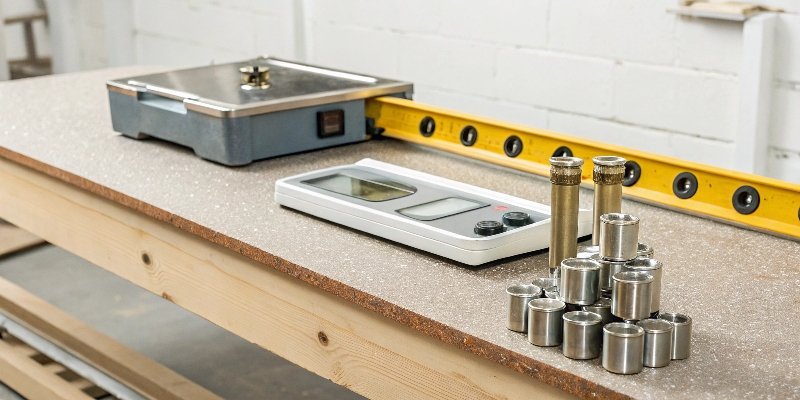
The actual press of a button is easy; the real work is in the setup. Overlooking these details is the most common reason for a failed calibration. I always tell my clients to think of it like a science experiment where controlling the variables is the most important part of the job.
Essential Preparation Steps
Before you start, you need to set the stage for accuracy.
- Find a Stable Environment: The scale must be on a solid, level surface. The first thing you should do is check the bubble level indicator and adjust the scale's feet until the bubble is perfectly centered. Any vibration from nearby machinery or even heavy footsteps can throw off the reading. Also, keep it away from sources of electromagnetic interference, like large motors or microwaves.
- Control the Climate: The ideal environment we use in our facility is stable, around 18-23°C with 45-75% humidity. Sudden temperature changes can cause the scale's electronic components to expand or contract, which will affect precision.
- Choose the Right Weights: Your calibration weights1](https://www.britannica.com/technology/balance-measuring-instrument)[^1]s are your standard of truth, so they must be more accurate than the scale itself. A good rule is to use a weight with an accuracy at least three times better than the scale’s readability. For a scale that reads to 0.1g, you need a weight certified to at least 0.03g.
| Preparation Step | Why It's Important | Our Recommendation |
|---|---|---|
| Level Surface | Ensures weight is distributed evenly on the load cell. | Use the built-in bubble level; adjust feet as needed. |
| Warm-Up Time | Allows electronic components to reach stable temperature. | Plug in and leave on for at least 30 minutes before use. |
| Standard Weights | Provides the known, accurate mass for comparison. | Use certified weights2 covering your typical usage range. |
Do digital scales have to be recalibrated?
You calibrated your scale once, but now its accuracy seems to be drifting again. This drift can happen due to normal use, temperature changes, or simple age, making all of your measurements unreliable. Recalibration is not a one-time fix.
Yes, all digital scales must be recalibrated regularly. Factors like frequent use, environmental changes, physical shocks, and the natural aging of components cause them to lose accuracy over time. Regular calibration ensures your measurements remain reliable and compliant with industry standards.
Thinking of calibration as a one-and-done task is a costly mistake. A digital scale is a precision instrument, and like any instrument, it requires periodic maintenance to perform correctly. The real question is not if you should recalibrate, but how often.
Why and When to Recalibrate
Several factors contribute to a scale's accuracy drift3 over time.
- Wear and Tear: Heavy or frequent use puts stress on the internal load cells4 and electronic components. Over months and years, this causes them to wear down and perform less accurately.
- Environmental Shifts: Did you move the scale to a new room? A new location with a different temperature, humidity, or even a change in altitude can affect its calibration. I've even seen strong air conditioning vents cause issues.
- Accidental Damage: Even a small bump or dropping an item on the scale can knock the sensitive mechanics out of alignment.
The frequency depends entirely on its use. For commercial or industrial applications where accuracy is critical for trade or quality control, we recommend a quarterly schedule. For less critical home or office use, an annual calibration is usually fine. A great habit is to verify accuracy daily with a known weight and perform a full recalibration5 if you notice any deviation.
Can you calibrate your own scales?
You want to calibrate your scales in-house to save time and money, but you're worried about doing it wrong. A failed calibration attempt can make the scale even less accurate or force you to make a professional service call.
Yes, you can and should calibrate your own scales for regular maintenance. As long as you have the correct standard calibration weights and follow the manufacturer's instructions for entering calibration mode, the process is very straightforward. Only certified legal-for-trade calibrations require a professional.
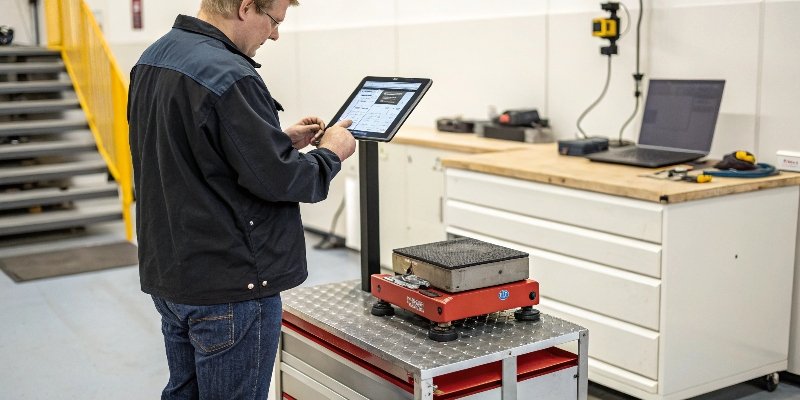
Taking charge of your own calibration is empowering and cost-effective. For routine accuracy checks, it's a skill worth learning, and I've guided countless clients through this process. The key is to be meticulous and treat it like a serious procedure, not just another task to check off a list.
DIY Calibration Best Practices
Here are some tips from my experience to ensure your in-house calibration is successful.
- Use the Right Tools: The most important tool is a set of certified calibration weights. Please do not use a random object you think you know the weight of. For a 30kg capacity scale, having weights that test the scale at different points—say, 5kg, 15kg, and 30kg—is best. This is called a "multi-point" or "linearity" calibration, and it ensures accuracy across the entire weighing range.
- Handle with Care: Always handle calibration weights with gloves. The oils and dirt from your hands can transfer to the weight, ever so slightly altering its mass and throwing off your standard. Store them in their protective case when not in use.
- Verify, Don't Assume: After performing a calibration, always double-check it. Use a different certified weight (one that wasn't used in the calibration process) to see if the reading is accurate. If you calibrated with a 20kg weight, test it with a 10kg weight to confirm the adjustment was successful.
If the calibration fails repeatedly, it could signal a bigger issue, like an aging load cell (they typically last 5-8 years) that needs replacing. At that point, it’s time to call for professional service.
Conclusion
Regular, proper calibration is key to your scale's accuracy and longevity. Following these steps ensures your equipment remains a reliable tool, giving you confidence in every single measurement you take.
-
Explore the different types of calibration weights to ensure you have the right tools. ↩
-
Learn about the importance of using certified weights for accurate scale calibration. ↩
-
This resource explains the factors that lead to accuracy drift and how to prevent it. ↩
-
Understanding load cells is key to grasping how your scale measures weight accurately. ↩
-
This link provides insights on the frequency of recalibration for maintaining accuracy. ↩


[…] first time we designed a custom weighing system for a client. They focused only on maximum capacity accuracy1, but soon found their smaller, partial batches were completely off. This experience taught us that […]
[…] the procedure. Run the scale's internal calibration procedure1. Check for any error messages during the process. A scale that fails to calibrate is a big red […]