

Your scale's readings are off, and you don't have professional weights. This can ruin your projects. But you can use a common nickel for a quick, accurate calibration.
To calibrate your scale with a nickel, first enter its calibration mode. Then, place a clean U.S. nickel, which weighs exactly 5 grams, on the platform's center. Confirm the weight and save the setting. This is a great alternative to standard weights.
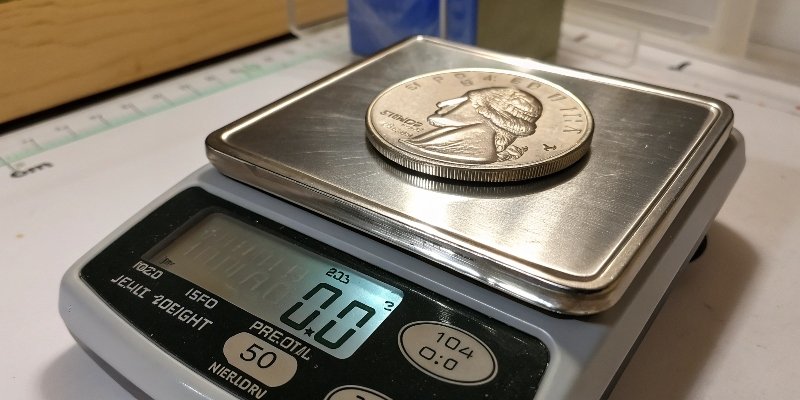
Using a nickel sounds almost too easy, right? But as someone who has been in the weighing industry for 18 years, it's a method I've relied on countless times in a pinch. It works because the U.S. Mint produces nickels with very tight weight tolerances. Still, there's a right way and a wrong way to do it. Let's break down the process step-by-step to make sure you get it right every time.
How to calibrate a scale with a nickel?
You need to calibrate your scale now, but you don't have official weights. This can be frustrating when you're in the middle of a task. Luckily, a single, clean nickel will do the job.
Enter your scale's calibration mode, usually by holding the 'Mode' or 'Cal' button. When prompted, place one clean U.S. nickel (5 grams) on the scale. The scale will register the weight and complete the calibration. Remove the nickel when done.
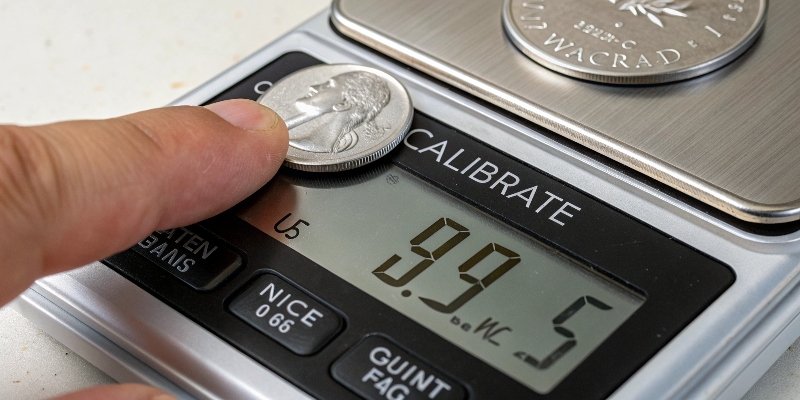
Let's dive deeper into the exact steps. Getting this right ensures the accuracy you depend on, whether it's for a recipe or a small project. I remember the first time I did this for a kitchen scale at a friend's house. They were skeptical, but it worked perfectly.
Getting Started: Preparation is Key
First, you need a clean nickel1. Oils from your fingers and dirt can add tiny amounts of weight, which can throw off the calibration. Wipe the nickel with a soft cloth and a bit of alcohol or white vinegar. Let it air dry for about 20 minutes to be sure no moisture remains. Next, find a good spot for your scale. It must be a flat, stable surface where it won’t wobble or vibrate. Even a slight incline can affect the reading.
The Calibration Process
Turn on your scale and let it show zero. Then, press and hold the “Mode” or “Cal” button for about three seconds. The display should change to show “CAL” or a specific weight value. This means it's ready. Gently place the clean, dry nickel in the very center of the weighing platform. The scale will then automatically register the 5-gram weight. It might show "PASS" or simply return to the normal weighing mode. Your scale is now calibrated.
How to calibrate a digital scale with coins?
Your scale is off, and you have no calibration weights. You look in your wallet and see a bunch of coins. Could they work? You're not sure which ones are accurate enough.
Yes, you can calibrate a digital scale with coins. U.S. coins are minted to specific weights. You can use a new nickel (5g), a post-1982 penny (2.5g), or a quarter (5.67g). Choose one type of coin, make sure it's clean, and follow your scale's calibration instructions.
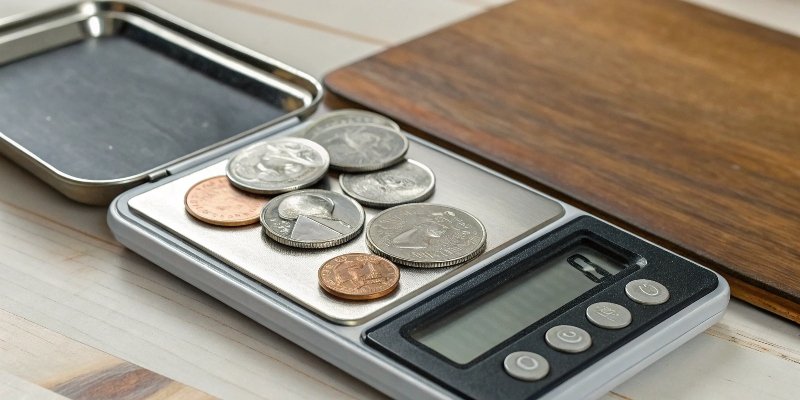
While a nickel is the most popular choice, other coins can also work if you know their standard weight. However, not all coins are created equal. As a manufacturer, we understand that precision starts with a reliable standard. Using a worn-out, dirty coin is like using a bent ruler.
Choosing the Right Coin
The key is to use a coin with a reliable, known weight. U.S. coins are great for this, but coins from other countries might not have the same strict weight controls. Also, try to use newer coins. Over time, coins get worn down from circulation, and they lose a tiny bit of mass. A fresh, shiny coin is always your best bet for accuracy.
Coin Weight Reference Table
Here is a simple table of common U.S. coins and their official weights. This will help you decide which to use.
| Coin | Weight (grams) | Notes |
|---|---|---|
| Nickel | 5.00 g | Most reliable and commonly used for a round number. |
| Penny | 2.50 g | For pennies minted after 1982. Good for small increments. |
| Quarter | 5.67 g | Can be used, but the weight isn't a simple whole number. |
| Dime | 2.268 g | Also an option, but a less common choice for calibration. |
As you can see, the nickel is the easiest choice. Its weight is exactly 5 grams, which many small scales are designed to recognize. If your scale needs to calibrate with a different weight, you could use a penny, but remember that its weight is much lighter.
How many nickels do you need to calibrate a scale?
Your scale asks for a 10g or 20g calibration weight, but you only have 5g nickels. Are you stuck? This mismatch seems like a dead end for a proper calibration.
The number of nickels depends on the weight your scale needs for calibration. If it needs 5g, use one nickel. If it requires 10g, use two nickels. For 20g, use four. Simply stack the required number of clean nickels on the scale.
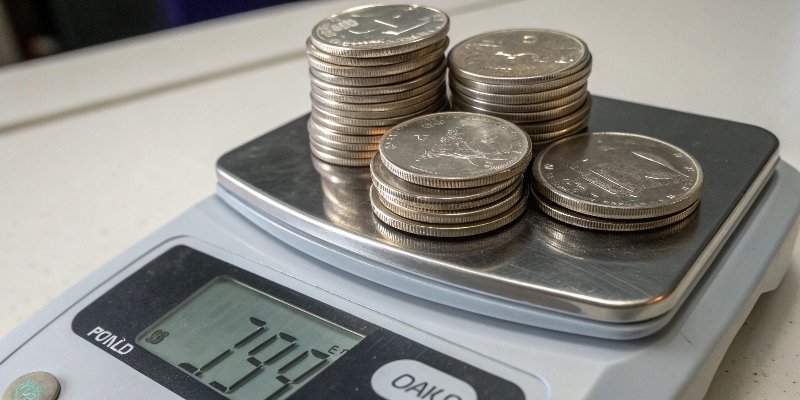
This is a simple but effective way to meet the requirements of different scales. In my line of work with industrial scales, we deal with much larger calibration weight2s, sometimes hundreds of kilograms. But the basic principle of matching a known weight is exactly the same.
Matching the Calibration Weight
Many digital scales, especially those with a higher capacity, need more than 5g to perform an accurate calibration. Your scale’s user manual is your best friend here; it will tell you the exact weight required. For example, if the display flashes "10.00" during calibration mode3, it is asking for a 10-gram weight. At this point, you can use two nickels.
Stacking Nickels Correctly
When you need to use more than one nickel, stacking them is important. After entering calibration mode, wait for the prompt. Then, carefully make a small, neat stack of nickels in the center of the weighing pan. A leaning tower of nickels can lead to an inaccurate reading. I've seen it happen. Make sure the stack is stable and not touching any part of the scale's housing. The math is easy:
Number of Nickels = Required Calibration Weight (g) / 5
So, for a 50g calibration, you would need ten nickels.
How to check scale accuracy with coins?
You just calibrated your scale, but how can you be sure it's really accurate? You don't want to just trust the "PASS" message. This uncertainty can undermine your confidence.
To check your scale's accuracy, just place a U.S. nickel on it. It should read 5.00g. For a more complete check, test with different weights by adding more nickels. One nickel should be 5g, two should be 10g, and so on.
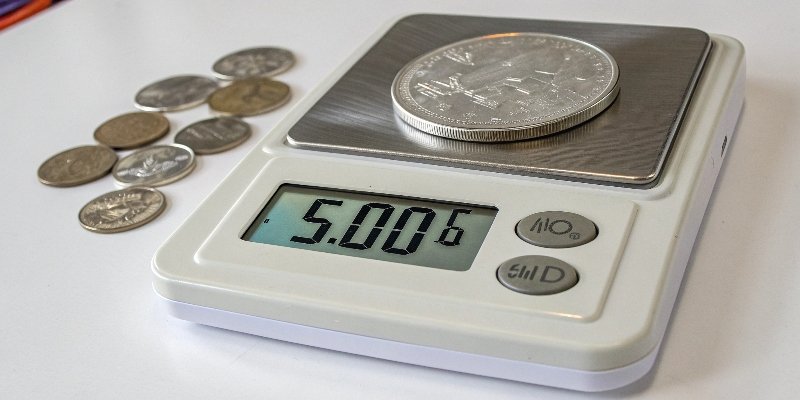
It's important to understand the difference between checking accuracy and performing a calibration. Doing a quick check gives you peace of mind and confirms that your earlier calibration was successful. It's a good habit to get into.
Verification vs. Calibration
Think of it this way: calibration is like tuning a guitar string to the right pitch. Verification is like plucking the string afterward to hear if it sounds right. When you verify, you are just doing a quick test. You do not need to enter the special "CAL" mode. You simply use the scale in its normal weighing mode. In our quality control department, we do this all the time. After a full calibration, we run tests with various certified weights4 to ensure the scale is accurate across its entire range.
Performing a Quick Accuracy Test
Turn on your scale and wait for it to read "0.00". Place one clean nickel in the center and look at the reading. It should be very close to 5.00g. A reading between 4.99g and 5.01g is generally excellent for a consumer scale5. Remove the nickel and let the scale return to zero. Now, test its linearity by placing two nickels on it. The reading should be very close to 10.00g. If the numbers are off by more than 0.1g, it's a good idea to run the calibration process again.
Conclusion
Calibrating your scale with nickels is a simple, reliable trick. With clean coins and these easy steps, you can ensure accurate measurements for your daily needs without professional equipment.
- A clean nickel ensures accurate calibration, free from contaminants that could affect weight. ↩
- Calibration weights are essential for ensuring the accuracy of your scale. ↩
- Understanding calibration mode is crucial for accurate scale adjustments, ensuring your measurements are reliable. ↩
- Certified weights are crucial for verifying the accuracy of your scale after calibration. ↩
- Knowing the characteristics of consumer scales helps you choose the right one for your needs. ↩

Comments (0)