
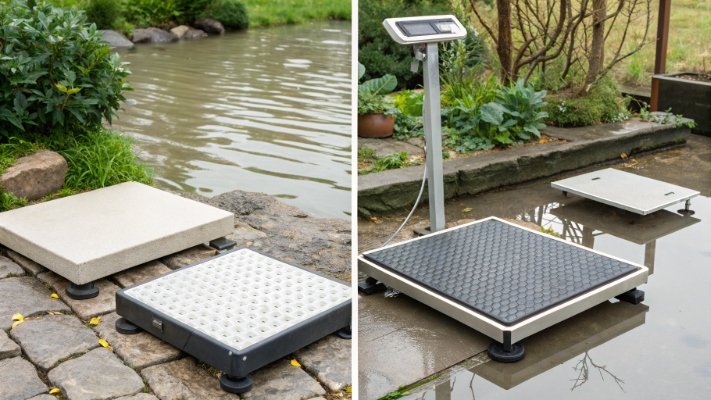
Sick of your scales failing in wet conditions? This leads to inaccurate weights, production delays, and costly replacements. Selecting the right scale for humidity is the key to reliability.
To choose a platform scale for humid environments, focus on its Ingress Protection (IP) rating. A higher IP rating, like IP67 or IP68, ensures better protection against water. Also, consider materials like 304 stainless steel and sealed sensor designs for maximum durability and accuracy.

I've seen it many times. A client buys a standard scale for a tough, wet job. It fails within months. It's a common and expensive mistake. But understanding why it fails is the first step to preventing it. We need to look deeper than just the price tag. Let's break down how the environment attacks your equipment and how you can fight back effectively.
How do environmental factors like humidity affect scale accuracy?
Ever wonder why your scale's readings are perfect one day and off the next? Environmental changes can quietly ruin accuracy, leading to inconsistent products. This is how you can stop it.
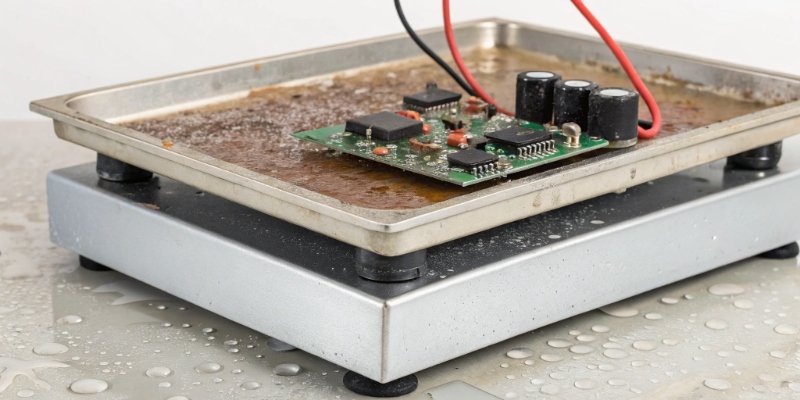
Humidity is the biggest enemy. It causes corrosion on load cells and sensitive electronics, leading to inaccurate readings or complete failure. Temperature fluctuations can also make metal components expand or contract, while vibrations create unstable "noise" that interferes with precise measurements. All these factors directly impact reliability.
Let's break this down further. It's not just one thing; it's a combination of issues. I always tell my clients to think about their environment as an active force working against their equipment.
Humidity and Corrosion
Moisture gets everywhere. It seeps into unsealed load cells and circuit boards. Over time, this creates rust and corrosion. Small amounts of corrosion can create new electrical pathways or increase resistance, which completely throws off the sensitive signals from the load cell. The scale might start to drift or give random, incorrect weights.
Temperature Swings
Most electronic components have an optimal operating temperature. When the factory floor heats up or cools down, the metal and electronics inside the scale expand and contract. This physical change can alter the electrical properties of the load cell, leading to measurement errors. A good scale has temperature compensation features1 built-in.
| Factor | Impact on Scale |
|---|---|
| Humidity | Corrosion, short circuits, signal drift |
| Temperature | Material expansion/contraction, electrical drift |
| Vibration | Unstable readings, "noisy" data |
Vibrations from nearby machinery can be just as bad, creating a constant "shaking" that the scale can't distinguish from a real load. As a software provider, you know that bad data in means bad data out. This is a hardware problem that directly impacts your software's performance and your client's trust.
What are the main types of platform scales?
Confused by all the different platform scales available? Picking the wrong one can be a costly mistake in performance and budget. Let's simplify the main categories for you.
Platform scales generally fall into three groups: general-purpose bench scales for simple tasks, floor scales for heavy pallets and industrial use, and specialized washdown scales. Washdown scales are specifically designed with sealed components and water-resistant materials for humid or hygienic environments. Choosing the correct type is critical.
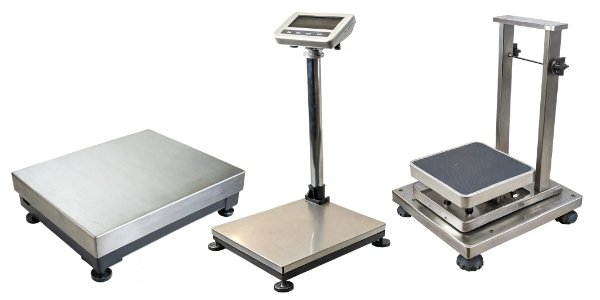
In my 18 years in this business, I've found that nearly every client's need fits into one of these categories. The key is matching the tool to the job. For your software integration, knowing the hardware type helps define the use case and potential environmental challenges.
Bench Scales
These are the smaller, versatile workhorses. You see them in shipping departments, workshops, and labs. They are great for general weighing but usually lack the heavy-duty protection needed for wet areas. They prioritize precision for lighter loads over environmental resistance.
Floor Scales
When you need to weigh pallets, drums, or large crates, you need a floor scale. These are larger, more robust, and built to handle thousands of kilograms. While tougher than bench scales, a standard floor scale is not automatically waterproof. You must specifically look for models with environmental protection if the location is damp.
Washdown Scales
This is the category that directly addresses the humidity problem. Washdown scales are built from the ground up to resist water. They use stainless steel, sealed electronics, and protected load cells. These are the go-to scales for food processing, chemical plants, and any area that requires frequent cleaning or is constantly damp. They cost more, but they last, ensuring reliable data for your systems.
What is the best material and structure for a humid environment scale?
Your scale said "durable," but it rusted out in weeks. This failure makes you lose trust and money. The secret isn't just the label; it’s the material choice.
The best material is Grade 304 stainless steel. It offers excellent corrosion resistance, making it ideal for wet and even some chemical environments. Structurally, look for a fully sealed, welded tubular design. This prevents water and debris from getting inside the scale body, protecting the internal components.
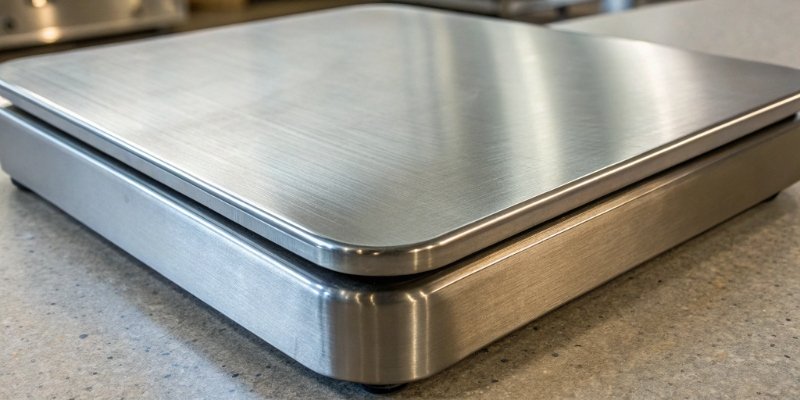
A scale's resilience comes down to two things: what it's made of and how it's built. I always check these details for my clients, especially those whose software depends on our hardware's uptime.
Why 304 Stainless Steel?
Painted carbon steel might look fine at first, but one scratch is all it takes for rust to start. And rust spreads. 304 stainless steel2, however, has chromium mixed in. This forms a passive, invisible layer3 that resists corrosion. It's the standard for food processing and pharmaceutical industries for a reason: it's tough, hygienic, and long-lasting in wet conditions.
Sealed Structure and Sensor Protection
A good material is not enough if water can get inside. We use fully welded tubular frames. There are no gaps or open channels for water to sit and cause damage. Most importantly, the load cell—the heart of the scale—must be protected. We offer sensors that are either coated in a protective silicone or resin, or even better, fully enclosed in their own hermetically sealed stainless steel housing4. This multi-layered defense is what creates a truly reliable washdown scale that provides clean, uninterrupted data.
How do IP ratings help you choose the right scale?
Do codes like IP67 and IP68 seem confusing? Guessing their meaning can lead to buying a scale that fails you. Let's decode this simple system for you.
The IP rating tells you how well a scale is sealed against dust and water. The second digit is for water. IP66 protects against strong water jets. IP67 allows for temporary immersion. IP68 is for continuous immersion. Match the rating to your environment to avoid overspending or failure.
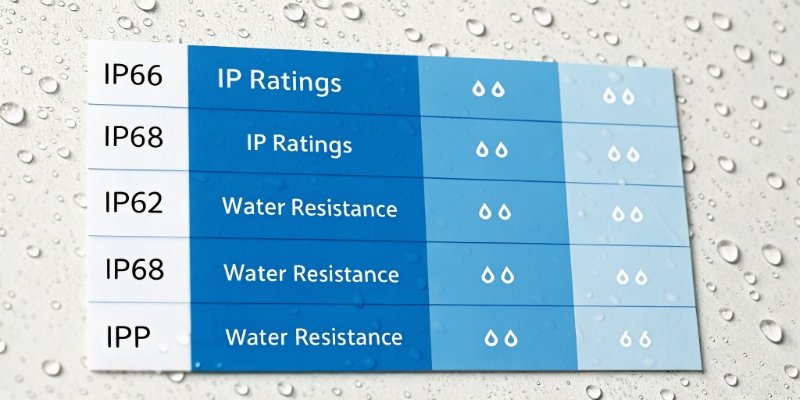
The IP rating is your most powerful tool for choosing the right scale. It takes the guesswork out of it. The system is simple: the first digit is for dust protection (6 is dust-tight), and the second is for water. Let's focus on the water rating. As a manufacturer, we help clients pinpoint the exact level of protection they need. There is no reason to pay for an IP685 scale if an IP666 will do the job perfectly.
Matching the IP Rating to Your Workplace
Here is a simple guide I share with customers to help them decide. It saves them money and ensures the scale will perform as expected. This is crucial for you, as a hardware failure reflects poorly on the entire integrated system.
| IP Rating | Protection Level | Ideal Environment Example |
|---|---|---|
| IP66 | Strong water jets | General warehouse, logistics centers |
| IP67 | Short-term immersion | Seafood markets, food processing |
| IP68 | Continuous immersion | Slaughterhouses, high-pressure washdown areas |
Choosing correctly means you get a reliable scale that meets your needs without paying for protection you don't require. It's about finding the perfect, cost-effective fit that guarantees uptime and data integrity for your software solution.
Conclusion
Choose the right scale by matching the IP rating, stainless steel material, and sealed design to your specific humid environment. This ensures accuracy, durability, and a smart investment.
-
These features help maintain accuracy despite temperature fluctuations, crucial for reliable measurements. ↩
-
304 stainless steel offers superior corrosion resistance, making it ideal for wet conditions. ↩
-
This layer enhances corrosion resistance, making stainless steel ideal for harsh environments. ↩
-
This housing provides maximum protection for load cells, ensuring long-term reliability. ↩
-
An IP68 rating indicates continuous immersion protection, essential for high-pressure washdown areas. ↩
-
An IP66 rating means strong protection against water jets, suitable for many industrial environments. ↩



Comments (0)