

Choosing the wrong scale for chemical manufacturing leads to inaccurate formulas and compliance failures. A single measurement error can ruin an entire batch, costing you thousands and damaging your reputation.
To choose the right high-precision scale, you must evaluate its accuracy, required capacity, and environmental suitability. Prioritize models with essential features like data integrity and safety certifications. A robust build and a clear calibration protocol are vital for consistent, compliant results in demanding chemical environments.
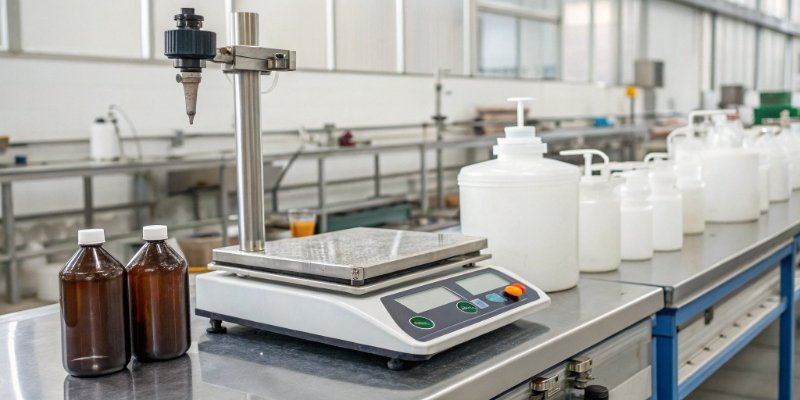
Picking the right scale is about more than just finding the most accurate one on the market. From my 18 years of experience in this industry, I've seen how different factors can affect a scale's performance in a real-world chemical plant. It's a decision that balances precision, safety, and long-term value. We need to look at the specific features your application demands, the environment it will operate in, and the support you'll get after the purchase. Let's break down these key areas to help you make a confident choice that protects your production and your bottom line.
Beyond accuracy, what are the essential features for scales in chemical manufacturing?
Your scale might be accurate, but is it truly equipped for a modern chemical facility? Without robust data management and durable materials, you risk compliance headaches and frequent, costly replacements.
Key features beyond basic accuracy include data management systems compliant with 21 CFR Part 11, anti-corrosion materials like stainless steel, and static eliminators for weighing fine powders. These features ensure data integrity, instrument longevity, and reliable measurements in challenging conditions, protecting your process from start to finish.

When we help clients select a scale, we always ask what they are weighing and how they need to track it. The answers reveal what extra features are not just nice-to-have, but essential. For example, a customer in the pharmaceutical space absolutely needs data traceability for audits. Another customer working with acidic compounds needs a scale that won't degrade after a few months. It's about matching the tool to the task completely.
Data Management & Compliance
In regulated industries like chemical and pharmaceutical manufacturing, how you handle data is as important as the measurement itself. This is why many modern high-precision scale1s come with features designed for compliance. For anyone who deals with audits, a scale that supports regulations like the FDA's 21 CFR Part 112 is a massive advantage. This means the scale software provides electronic signatures, a complete audit trail that logs every action, and secure data export functions. This ensures that every measurement is traceable and cannot be tampered with, which is a key concern for any technical director focused on quality and security.
Adapting to Special Scenarios
The physical environment and the materials you work with also demand special features. Here are some common examples:
| Scenario | Challenge | Essential Feature | Benefit |
|---|---|---|---|
| Weighing Corrosive Substances | Acids or bases can damage the scale's weighing pan and housing. | Stainless Steel Pan/Housing | Resists chemical corrosion, extending the scale's lifespan. |
| Weighing Fine Powders | Static electricity can cause powder to scatter or cling, leading to inaccurate readings. | Integrated Static Eliminator | Neutralizes static charges on the sample and container, ensuring precise results. |
| Drafty Environments | Air currents from ventilation or movement can make a sensitive reading unstable. | Draft Shield | Protects the weighing pan from air disturbances for a stable measurement. |
How do you determine the required readability and capacity for a chemical weighing application?
Picking a scale with the wrong capacity or readability is a simple but costly mistake. Too little capacity stops you from weighing batches, while poor readability can ruin the precision of your formula.
To set capacity, choose a scale that handles 120% of your heaviest typical load. For readability, consult industry standards. Use a 0.1mg readability for general analysis and 0.01mg for micro-samples, ensuring you meet regulations without overpaying for unnecessary precision.
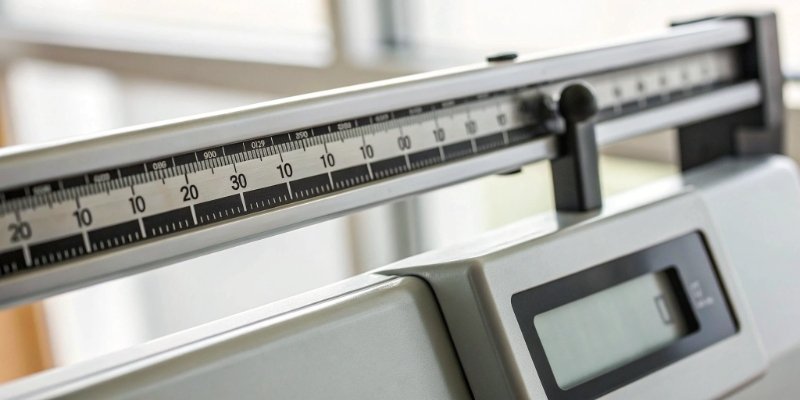
Over the years, I've had many purchasing managers ask me if they should just buy the scale with the highest precision possible. My answer is always no. It's like buying a race car for a city commute. You're paying a premium for performance you will never use, and in some cases, an overly sensitive scale can be harder to manage in a standard production environment. The goal is to find the sweet spot between what you need for compliance and what is practical for your daily workflow. This way, you invest your budget wisely.
Calculating the Right Capacity
A simple rule of thumb for choosing scale capacity is the "120% rule." First, identify the heaviest weight you typically measure in your routine work. Then, multiply that weight by 1.2. The result is your minimum required capacity. For example, if your most common task involves weighing 100g of a substance, you should look for a scale with at least a 120g capacity. This buffer ensures you don't overload the scale's sensitive weighing cell, which can cause damage and shorten its life. For applications like weighing active pharmaceutical ingredients (APIs), where batch sizes might be larger, you might need a capacity in the 100g to 200g range or even higher.
Selecting the Correct Readability
Readability, or precision, determines the smallest increment a scale can display. This choice is usually guided by regulations and the nature of your work.
| Readability (Precision) | Common Name | Typical Application | Example |
|---|---|---|---|
| 0.1mg (0.0001g) | Analytical Balance | Routine chemical analysis, quality control, ingredient formulation. | Weighing reagents for creating a standard solution. |
| 0.01mg (0.00001g) | Microbalance | Weighing micro-samples, catalyst preparation, stent coating. | Measuring a tiny amount of a potent catalyst. |
You should avoid over-specifying readability3. A microbalance with 0.01mg readability can cost three to five times more than an analytical balance with 0.1mg readability. Unless your process genuinely requires that level of precision for micro-dosing, the extra expense is not justified. Always align your choice with your actual production needs and regulatory requirements like those found in the Pharmacopoeia.
When is an intrinsically safe or explosion-proof scale necessary in a chemical plant?
Working with volatile chemicals creates a constant explosion risk in your facility. A standard electronic scale can easily provide the spark needed to ignite fumes, leading to a catastrophic accident.
An intrinsically safe (IS) or explosion-proof scale is non-negotiable whenever you are weighing flammable gases, liquids, or dusts within a classified hazardous area. These scales are engineered to limit energy to below ignition levels, ensuring the safety of your team and facility.
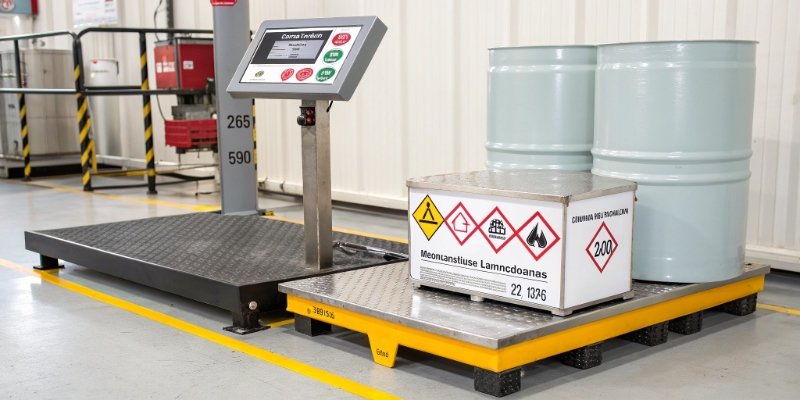
Safety is the one area where there is no room for compromise. I remember working with a client who wanted to place a standard bench scale in an area where they were mixing solvents. We immediately stopped that conversation and shifted to discussing their hazardous area classification. The cost difference for an IS scale is significant, but it's nothing compared to the potential cost of an explosion, both in human and financial terms. As a supplier, it's our responsibility to ensure clients understand these risks and choose equipment that keeps their people safe.
Understanding Hazardous Area Classifications
Facilities that handle flammable materials divide their operational spaces into specific zones or divisions based on the likelihood that an explosive atmosphere is present. These classifications are defined by standards like ATEX in Europe or NEC in North America. Common substances that create these hazards include solvents like acetone, alcohols, and fine organic powders. If your weighing process happens in an area designated as a hazardous location (e.g., Zone 1, Zone 2, Class I Division 1), you are required by law and safety protocols to use certified equipment. A technical director or plant safety manager will have documentation defining these areas within your plant.
How IS and Explosion-Proof Scales Work
Intrinsically Safe (IS) and Explosion-Proof are two different approaches to safety. An IS scale is designed to be incapable of causing an explosion. Its electrical circuits are engineered to operate on such low power (voltage and current) that they cannot generate a spark or heat sufficient to ignite a flammable substance. This is the preferred method for many applications. An explosion-proof scale4, on the other hand, is built with an extremely robust housing designed to contain an internal explosion if one were to occur, preventing it from igniting the surrounding atmosphere. For any manager, choosing the correct type of certified scale is a critical step in mitigating risk, ensuring regulatory compliance, and protecting the company from liability.
What calibration standards and maintenance factors should influence your purchasing decision?
An uncalibrated scale is no better than an educated guess, putting your batches and your budget at risk. Gradual accuracy drift can go unnoticed until a batch fails inspection, causing major financial losses.
Your purchasing decision should be guided by a scale's calibration procedures and maintenance needs. Look for models with easy internal calibration and factor in the availability of certified weights for verification. A clear, simple maintenance routine is key for long-term accuracy and reliability.

A scale is only a precision instrument if you can prove it is accurate. I always tell our clients that buying the scale is just the first step. The real value comes from maintaining its performance over time. This is where the manufacturer's design and after-sales support become very important. A scale that is difficult to calibrate or a brand that offers poor support will become a source of frustration. We design our systems to be user-friendly and back them with a technical team that helps you establish a reliable maintenance plan from day one.
The Calibration and Maintenance Checklist
Consistent accuracy depends on a good routine. Before purchasing, verify that the scale supports a simple but effective maintenance workflow.
- Warm-up: High-precision scales need to acclimate. Ensure it has at least 30 minutes to warm up before its first use or calibration.
- Leveling: The scale must be perfectly level. Look for an easy-to-read level bubble and adjustable feet.
- Verification: Regular checks with certified standard weights are crucial. Does the brand offer these, or can you easily source them?
- Internal vs. External Calibration: Internal calibration is often automated and more convenient, while external calibration gives you manual control. Choose what best fits your quality control procedures.
- Moisture Prevention: For electronics, moisture is the enemy. It's a good practice to keep the scale powered on for at least two hours each month to prevent moisture buildup inside.
Brand and After-Sales Support
The brand you choose can impact your long-term experience, especially regarding support and cost of ownership. Different brands are suited for different needs.
| Brand Type | Advantages | Best For |
|---|---|---|
| Global Brands (e.g., Mettler-Toledo, Sartorius) | Deep technical history, strong brand recognition, very high precision and stability. | Applications demanding the absolute highest accuracy, like weighing premium APIs. |
| Domestic Brands (e.g., Weigherps) | Excellent cost-effectiveness, flexible feature configurations, responsive service. | Routine chemical and raw material weighing where reliability and value are priorities. |
As a manufacturer with 18 years of OEM experience5, we at Weigherps focus on providing that blend of high performance and practical value. Our products are CE certified and come with a 12-month service guarantee. Our goal is to be a reliable partner who provides a customized, cost-effective solution without sacrificing the quality you need.
Conclusion
Choosing the right scale involves balancing accuracy, features, safety, and support. By evaluating your specific needs, you can find a reliable instrument that ensures quality and protects your investment.
-
Explore how high-precision scales can enhance accuracy and compliance in chemical manufacturing. ↩
-
Explore the implications of 21 CFR Part 11 for data management and compliance in chemical manufacturing. ↩
-
Explore how readability affects precision and compliance in chemical weighing applications. ↩
-
Discover how explosion-proof scales protect against ignition risks in chemical manufacturing. ↩
-
Understand how OEM experience contributes to the quality and reliability of scales in the market. ↩



[…] equipped unattended system is often more secure than a manual one. It creates an undeniable audit trail10 for every single transaction. My insight about catching non-compliant vehicles comes directly […]