
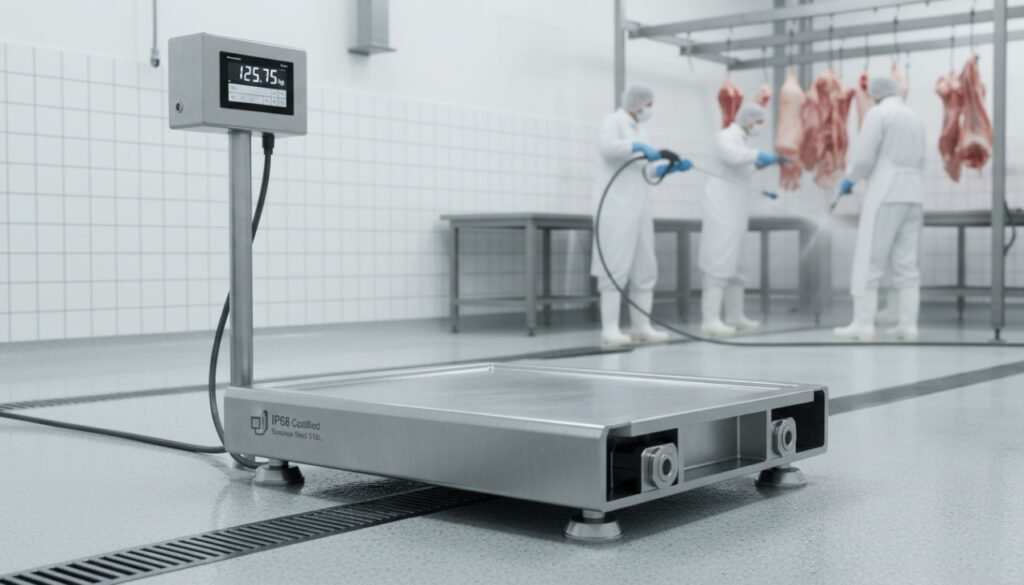
Your standard scales keep failing under tough conditions, leading to costly downtime and mistakes. Choosing a scale built specifically for your harsh environment can solve this problem for good.
To choose the right scale, you must match its features to your environment. Select scales with specific ratings for dust, water, or explosions. Also, consider construction materials like stainless steel and look for certifications like IP, NEMA, CE, and OIML to ensure durability and compliance.
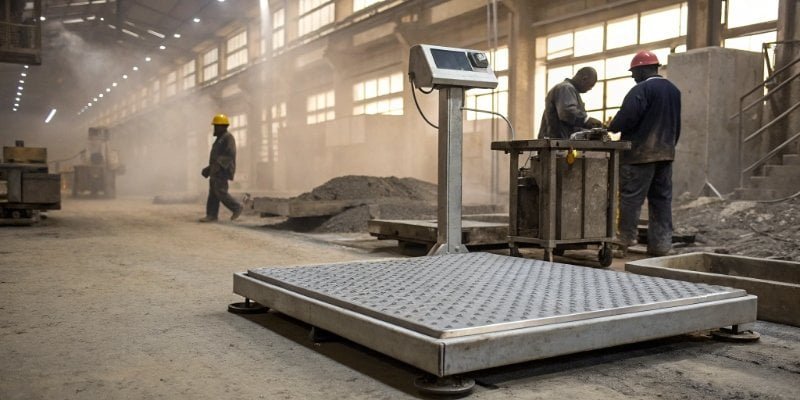
I've been in this industry for 18 years, and I've seen it all. I once had a client whose scales kept breaking down in their food processing plant. The constant moisture was ruining the electronics. They were frustrated and losing money. It's a common story, but it doesn't have to be yours. Understanding the key features that make a scale tough is the first step. Let’s break down what really matters.
What features are essential for a scale to survive in a harsh industrial setting?
Unsure which scale features truly matter for durability? Choosing the wrong ones leads to frequent replacements and operational headaches. Focus on these essential features to guarantee longevity and peace of mind.
Essential features include robust construction materials like stainless steel, high IP ratings for water and dust protection, and sealed load cells. Overload protection and components resistant to shock and vibration are also critical for a scale's survival in demanding industrial environments.

When we talk about "essential features," we're really talking about the scale's armor. It's not just one thing, but a combination of elements working together. I always tell my clients to think about it systematically. You need to consider both the physical build and the protective certifications. A scale might look tough, but without the right internal protection and certified ratings, it's just a cosmetic fix. For our clients who are software vendors, this is extra important. The scale's hardware must be reliable for their software to function correctly. A hardware failure means a total system failure for them and their customers.
Key Protective Features
- Sealed Components: Electronics and load cells must be fully sealed to keep out contaminants. We use hermetically sealed load cells1 for the toughest jobs, ensuring no moisture or dust gets in.
- Overload Protection: Physical stops are built into the scale's frame. These stops prevent damage from accidental overloading, which is a common issue in busy warehouses and production lines.
- Durable Housing: The case protecting the digital indicator and other electronics should be just as tough as the platform. We use impact-resistant plastics2 or stainless steel3 enclosures.
How do you choose a scale based on specific hazards like water, dust, or chemicals?
Specific hazards are destroying your scales. Water damage, dust clogs, and chemical corrosion cause constant failures and disrupt your operations. Match your scale's specifications directly to the hazard to stop this cycle.
For water, choose a high IP-rated waterproof scale. For dusty areas, ensure the scale is dust-tight (e.g., IP6X). For chemicals, select a scale made from corrosion-resistant materials like 304 or 316 stainless steel. Always verify the material's compatibility with your specific chemicals.
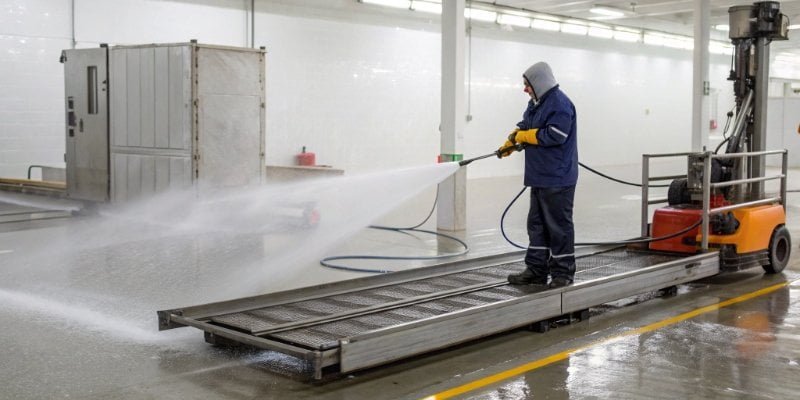
Selecting a scale for a specific hazard is like picking the right tool for a job. You wouldn't use a hammer to turn a screw. I once worked with a chemical processing plant that was using standard painted steel scales. The acidic fumes in the air were eating away at the paint and steel within months. The solution was simple. We switched them to a scale made entirely of 316 stainless steel. This material is highly resistant to a wide range of corrosive chemicals. The problem disappeared. To help you choose, I've created a simple table below. This is how we approach custom solutions for our clients. We first identify the primary threat to the equipment.
| Hazard | Recommended Feature | Why It's Important |
|---|---|---|
| Water/Moisture | IP67, IP68, or IP69K rating | Prevents water from entering the electronics, even during high-pressure washdowns4. |
| Fine Dust | IP6X rating | Guarantees the enclosure is completely sealed against dust ingress. |
| Chemicals | 304 or 316 Stainless Steel construction | Resists corrosion from acids, alkalis, and salts, extending the scale's lifespan. |
| Explosive Areas | Explosion-proof (Ex) rating / Intrinsically Safe Design | Prevents the scale from becoming an ignition source in volatile atmospheres. |
By matching the feature to the hazard, you ensure the scale not only performs accurately but also lasts. This simple step saves you so much time and money in the long run.
What do IP and NEMA ratings mean when selecting a scale for a wet or washdown environment?
Confused by IP and NEMA ratings? Misunderstanding them could lead you to buy a scale that looks tough but fails quickly in wet conditions. Here is a simple breakdown to help you choose wisely.
IP (Ingress Protection) ratings define protection against solids and liquids with two numbers (e.g., IP67). The first digit is for solids (dust), the second for liquids (water). NEMA ratings also indicate protection, but they include factors like corrosion resistance, making them common in North America.
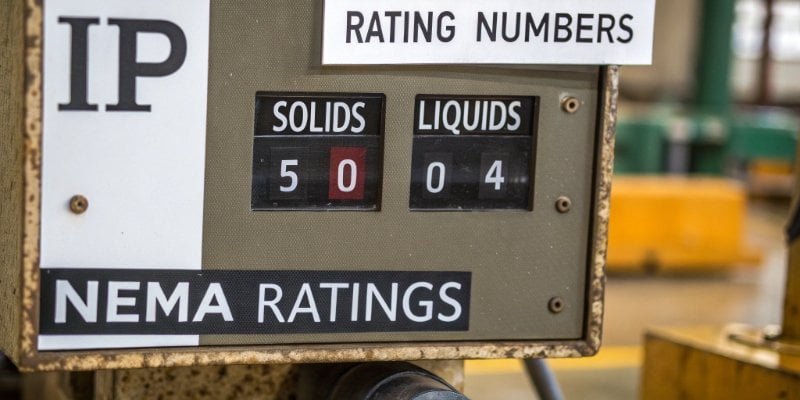
IP and NEMA ratings5 are your best friends when buying a scale for a wet environment. Think of them as a universal language for toughness. I've had clients buy a "water-resistant" scale, only to see it fail after the first power wash. The problem was they bought an IP65 scale when they needed an IP68 or IP69K. The difference is huge. An IP65 scale can handle water jets, but it can't be submerged. An IP68 can. And an IP69K can withstand high-pressure, high-temperature steam cleaning.
Quick Guide to IP Ratings for Wet Environments
- IP65: Protected against low-pressure water jets. Good for general cleaning, not for heavy washdowns.
- IP67: Protected against temporary immersion in water (up to 1 meter for 30 minutes).
- IP68: Protected against continuous immersion in water. This is what we recommend for most heavy washdown areas. It's a reliable choice.
- IP69K: The highest level of protection. It handles powerful, hot water jets. This is ideal for food processing and pharmaceutical applications6 where hygiene is critical.
NEMA ratings are similar but are more common in North America. A NEMA 4X rating is often compared to IP66 and also indicates corrosion resistance. Knowing these details ensures your investment is safe and your equipment will last.
Which construction materials, like stainless steel, offer the best durability in corrosive areas?
Your scales are rusting and corroding away. This not only looks unprofessional but also compromises weighing accuracy and creates safety hazards. Choose the right type of stainless steel for maximum durability.
For corrosive areas, stainless steel is the best choice. Type 304 stainless steel is excellent for most food processing and general industrial use. For environments with harsh chemicals, chlorides, or saltwater, Type 316 stainless steel offers superior corrosion resistance and is the preferred material.

Not all stainless steel is created equal. This is a lesson many learn the hard way. As a manufacturer for 18 years, we pay very close attention to the grade of steel we use. The choice between 304 and 316 stainless steel can be the difference between a scale that lasts 10 years and one that fails in two. A customer in the seafood industry was having issues with scales rusting from constant exposure to saltwater. We built them a custom solution using 316 stainless steel for everything—the platform, the frame, the load cell, and the indicator housing. The problem was solved immediately.
Comparing Common Stainless Steel Grades
- 304 Stainless Steel: This is the workhorse of the industry. It contains chromium and nickel, giving it good resistance to oxidation and many corrosive agents. It is perfect for most food and beverage applications where cleanliness is key.
- 316 Stainless Steel: This grade includes molybdenum in its chemical makeup. That small addition makes a huge difference. It provides significantly better resistance to chlorides (like salt) and a broader range of industrial chemicals. We always recommend 316 for marine, chemical, and pharmaceutical applications.
When you're dealing with corrosive elements daily, spending a little more on 316 stainless steel is one of the smartest investments you can make. It pays for itself in longevity and reliability.
Conclusion
In harsh environments, choosing the right industrial scale is an investment in uptime and accuracy. Match the scale's features, ratings, and materials to your specific hazards to ensure reliability.
-
Find out how sealed load cells enhance the durability of scales in harsh conditions. ↩
-
Discover how impact-resistant plastics can enhance the durability of your scales in tough settings. ↩
-
Discover the benefits of stainless steel in scale construction, especially in corrosive environments. ↩
-
Find scales that can withstand high-pressure washdowns, ensuring hygiene and functionality. ↩
-
Learn how NEMA ratings can impact your scale's performance in wet environments, ensuring you make an informed choice. ↩
-
Learn about scales that meet the stringent requirements of pharmaceutical applications for accuracy and safety. ↩


[…] IP ratings1 (e.g., IP67/IP68) for water/dust […]
[…] But for more corrosive environments, like those with salt or cleaning chemicals, we must use Grade 3163. It contains molybdenum, which significantly boosts its resistance to chlorides and other harsh […]