

Struggling to find a lab scale that delivers consistent results? Inaccurate measurements can ruin experiments and waste resources. But selecting the perfect scale is simpler than you think.
To choose the right laboratory scale, first define your application's required precision (readability) and maximum weight (capacity). Then, consider environmental factors like dust or moisture and any special functions needed. Finally, evaluate brand reputation against your budget for the best value.

This initial checklist is a great starting point. However, a lot more goes into a scale's performance. In my 18 years of manufacturing industrial and lab scales, I’ve seen how a small, overlooked detail can make a huge difference in long-term performance. Let's break down the process step-by-step, so you can choose your next laboratory scale1 with complete confidence.
What are the core factors for choosing the right weighing scale?
Overwhelmed by countless scale options and technical specs? Choosing the wrong one means wasted money and faulty data. The key is to start by focusing on just two critical factors.
First, determine the smallest increment you need to measure (this is called readability or precision). Second, identify the heaviest item you will ever weigh (this is the capacity). These two factors will immediately narrow down your options and form the foundation of your choice.

When you start looking for a scale, your budget is always the first consideration. Once you have a number in mind, everything comes down to precision2 and capacity3. These two factors work together. I once worked with a client in the pharmaceutical industry who was about to buy a high-precision scale. The readability4 was perfect for their formulas, but the capacity was too low for their bulk ingredient mixing stage. They would have needed a second, more expensive scale just for that one task.
Understanding Precision Beyond Readability
Readability is the number you see on the display, but true precision also involves:
- Repeatability: Can the scale show the same result if you weigh the same object multiple times?
- Linearity: Is the scale's accuracy consistent across its entire weighing range, from light to heavy objects?
A good manufacturer will provide specifications for all three.
Matching Capacity to Your Needs
Always choose a capacity that is slightly higher than the heaviest sample you plan to weigh. This gives you a safety buffer and prevents overloading, which can permanently damage the scale's sensitive load cell.
| Factor | What to Ask | Why It Matters |
|---|---|---|
| Readability | What is the smallest mass I need to measure? | Determines the sensitivity of the scale you need. |
| Capacity | What is the heaviest total load (including container) I will weigh? | Prevents you from buying a scale you can't use for all tasks. |
| Precision | How repeatable and linear are the measurements? | Ensures your results are scientifically valid and consistent. |
We found a single model for that pharmaceutical client that had the right readability and a higher capacity. It saved their budget and, just as importantly, their valuable bench space. Thinking about these two factors together is the most efficient way to start.
What special features and environmental protections do I need?
Is your lab environment challenging for standard electronics? Dust, moisture, or even static electricity can wreak havoc on a sensitive scale, leading to frustrating errors and potential damage.
Look for scales with IP ratings for dust and water protection (e.g., IP65). For hazardous areas, you need an explosion-proof certified scale (ATEX or IECEx). Also, consider built-in draft shields or anti-static features to maintain accuracy in difficult conditions.
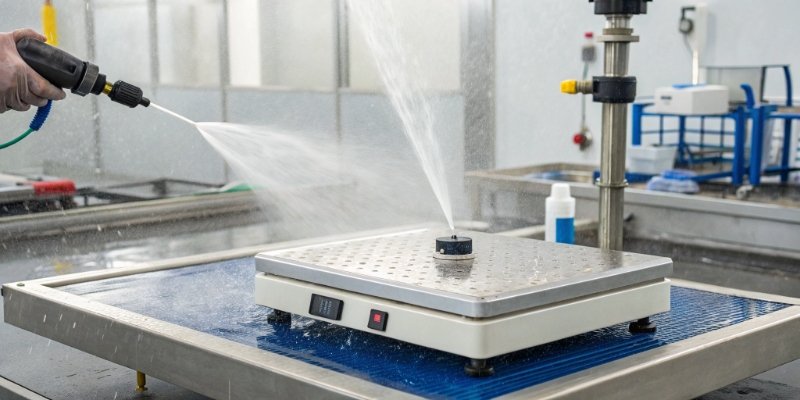
Your laboratory isn't a perfect bubble. The real world is messy, and your instruments need to handle it. As a manufacturer, we often build scales for very specific and demanding environments. You need to match the scale's features to your workplace reality.
Decoding IP Ratings for Your Lab
The Ingress Protection (IP) rating tells you how well a scale is sealed against solids and liquids. The first digit is for solids (like dust), and the second is for liquids.
- IP54: Protected from dust and splashes of water. Good for general use.
- IP65: Fully dust-tight and can withstand water jets. Ideal for environments where you need to wash down equipment.
- IP67/68: Dust-tight and can be temporarily or continuously submerged in water.
When Do You Need an Explosion-Proof Scale?
If you work with flammable gases, vapors, or combustible dust, you cannot use a standard scale. An explosion-proof (Ex) scale is required by law and for safety. These scales are designed to prevent any internal spark from igniting the atmosphere.
Essential Features for Lab Productivity
Beyond protection, some features just make your job easier.
- Formulation: For mixing multiple components.
- Parts Counting: If you need to count large quantities of small, identical items.
- Density Determination: For material science and quality control5.
Many of these features come from direct feedback from clients like you. We've developed custom software for companies that need a scale to "talk" directly to their data management systems. This kind of targeted solution, built for your specific workflow, can dramatically improve efficiency.
| Environment | Potential Hazard | Recommended Feature |
|---|---|---|
| Dusty Lab | Particle ingress, inaccurate readings | IP6X rating (dust-tight) |
| Wet/Wash-down Area | Water damage, corrosion | IPX5 or higher rating |
| Chemical Lab | Fumes, flammable materials | Explosion-Proof (Ex) certification6 |
| Drafty Room | Air currents affecting readings | Draft Shield |
Which scale is used in a laboratory?
Are you confused by terms like analytical, precision, and microbalance? Buying the wrong type of laboratory scale is a costly mistake that can set back your work and budget.
Laboratories use several types of scales based on the required precision. Analytical balances are for highly precise measurements (0.1mg or less). Precision balances handle heavier loads with lower readability (1mg to 1g). Microbalances offer the highest precision for extremely small samples.
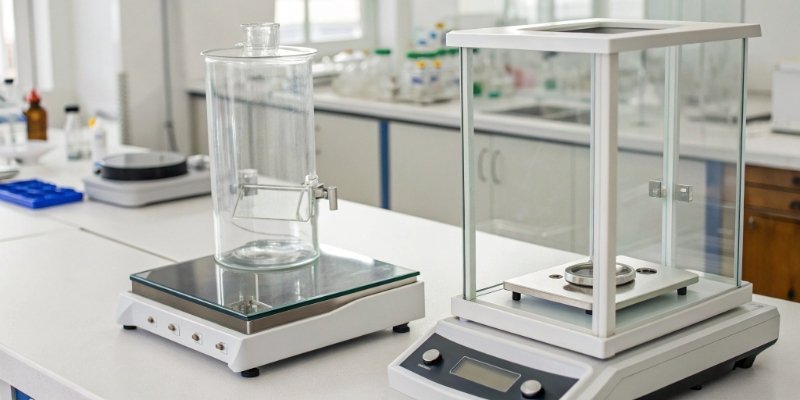
The term "laboratory scale" covers a wide range of instruments. Choosing the right one means matching the tool to the task. I once visited a university research lab that was about to spend its entire equipment budget on high-end analytical balances7 for every student workstation. It seemed excessive. After we discussed their actual experiments, it became clear that most students only needed rugged, reliable precision balances for their daily work.
The High-Precision World of Analytical Balances
These are the most common high-precision scales. They typically measure to four decimal places (0.0001g) or more and have a glass draft shield to protect the weighing pan from air currents. They are essential for chemical analysis, sample preparation, and formulation8 where the smallest error matters.
The Workhorse: Precision Balances
Also known as top-loading balances, these are the versatile workhorses of the lab. Their readability is lower than analytical balances (usually 0.001g to 1g), but they offer higher capacities. They are perfect for preparing larger samples, quality control checks, and any task where extreme precision is not the top priority.
For a Specialist: Microbalances and Moisture Analyzers
- Microbalances & Ultra-Microbalances: When you need to weigh tiny samples (e.g., particulate matter on a filter), these scales provide the ultimate precision, measuring in micrograms (0.000001g).
- Moisture Analyzers: These are a combination of a balance and a heating element, designed to determine the moisture content of a sample.
By helping that university lab choose the right mix of scales—a few analytical balances for sensitive tasks and many precision balances for general use—we saved them over 40% of their budget. That money was then used for other critical equipment.
| Scale Type | Typical Readability | Typical Capacity | Common Use Case |
|---|---|---|---|
| Analytical Balance | 0.01mg - 0.1mg | 120g - 320g | Quantitative chemical analysis, formulation |
| Precision Balance | 1mg - 1g | 220g - 8,200g+ | General lab weighing, quality control |
| Microbalance | 0.1µg - 1µg | 2g - 10g | Filter weighing, stent coating measurement |
How do you assess the accuracy of a laboratory scale?
Are you worried that a new scale won't perform accurately over time? Poor accuracy can invalidate your research, cause production failures, and lead to failed quality audits.
Assess accuracy by reviewing the manufacturer's specifications for repeatability and linearity. More importantly, verify its performance through routine calibration with certified weights. For convenience and consistency, look for models with internal calibration, and always ask about the manufacturer's quality control.

A scale's accuracy on day one is important, but its accuracy on day 100 is what truly matters. As a manufacturer, this is our focus. Every single scale we build goes through a comprehensive series of tests in our quality control department before it can be shipped. We test its performance with different weights, check the battery, and verify the software. This is why we confidently offer a 12-month service guarantee.
Internal vs. External Calibration: What's the Difference?
- External Calibration: You manually place a certified weight on the scale and run the calibration routine. It's reliable but requires you to handle and store weights properly.
- Internal Calibration: The scale has a built-in motor and weight. It can calibrate itself at the press of a button or automatically in response to temperature changes. This ensures the scale is always performing at its best.
Why Repeatability and Linearity Matter
A scale can be readable to 0.1mg, but if it gives you a different reading every time you weigh the same object (poor repeatability), that readability is useless. Similarly, if it's accurate with a 10g weight but inaccurate with a 100g weight (poor linearity9), you can't trust your results. These specs tell you the true story of a scale's performance.
The Role of Certification and Quality Assurance
Look for international certifications like CE, which indicate the product meets high safety, health, and environmental protection standards. But don't stop there. Ask your supplier about their specific QC process. A big brand name is one indicator of quality, but partnering with a source factory like us gives you more direct transparency. We can provide testing reports for the exact unit you are buying before it even leaves our facility. This offers a different, often more reassuring, level of quality assurance than simply trusting a logo.
Conclusion
Choosing the right lab scale is a clear process: define precision and capacity, assess your environment, identify key features, and finally, select a supplier—brand name or source factory—that guarantees quality.
-
Explore this link to find top-rated laboratory scales that ensure precision and reliability for your experiments. ↩
-
Understanding precision is crucial for accurate measurements; this resource explains its significance in lab scales. ↩
-
This link provides insights on selecting the right capacity for your laboratory scale to avoid overloading. ↩
-
Learn about readability and its impact on measurement accuracy in laboratory scales. ↩
-
Understand the significance of quality control in ensuring the reliability of laboratory scales. ↩
-
Learn about important certifications that indicate the quality and safety of laboratory scales. ↩
-
Learn about analytical balances and their critical role in precise measurements for chemical analysis. ↩
-
Explore how formulation features in scales can streamline mixing processes in the lab. ↩
-
Explore the concept of linearity and its role in ensuring accurate measurements across different weights. ↩



Comments (0)