

Are your digital scales failing sooner than expected? The constant cycle of repairs and replacements drains your budget and halts operations, creating frustrating bottlenecks you can't afford.
The secret to doubling your scale's lifespan is a combination of routine maintenance, proper operation, and environmental control. Simple, consistent actions in these three areas can extend equipment life by up to 100%, preventing most common failures and costly downtime.
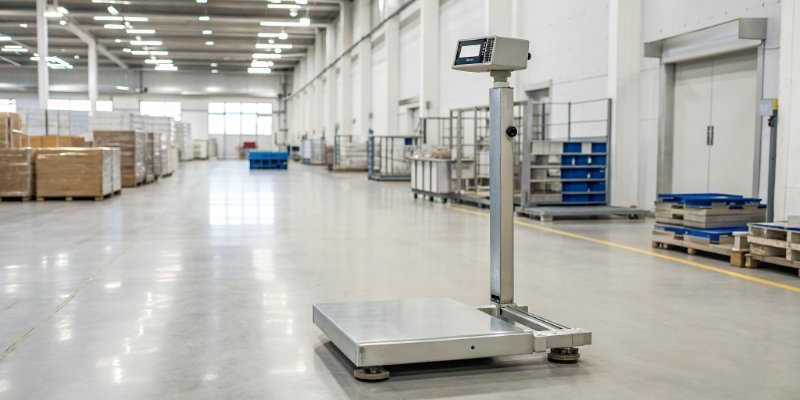
For over 18 years, I've seen firsthand how industrial scales perform in the real world. We've built thousands of them, and we've also seen what causes them to fail. It’s rarely a single big event. Instead, it's usually a series of small, overlooked issues that add up over time. The good news is that these are almost always preventable. You don't need to be a technical expert to make a huge difference. Let's look at the practical steps you can take to protect your investment and keep your operations running smoothly.
What routine maintenance tasks can prevent costly repairs on digital scales?
Are unexpected repair bills eating your budget? A broken scale halts production and, as a purchasing manager or technical director, you're the one who feels the pressure.
Implement a simple maintenance schedule. Focus on quarterly calibration for accuracy, weekly cleaning to prevent corrosion, and monthly cable checks for secure connections. Also, manage batteries and data backups to avoid electronic failures. This routine prevents the most common problems.

In my experience, the most reliable equipment is the best-maintained equipment. It's not about complex procedures; it's about consistency. A simple checklist can transform an unreliable scale into a workhorse. We advise our clients to think of maintenance in three core areas: accuracy, physical integrity, and electronic health. Breaking it down this way makes it much easier to manage.
Calibration and Cleaning: The Core of Physical Health
Think of calibration1 as a regular health check. It confirms your scale is accurate. We recommend a zero-point calibration every quarter. This ensures the scale reads "0.00" when empty. If you see it drifting more than 0.1% of its full scale capacity, it's a sign that something needs adjustment. This simple check prevents inaccurate measurements that can lead to bigger problems. Next is cleaning. Once a week, wipe down the scale platform and housing with a soft, dry cloth. This removes residue that can corrode sensors or interfere with the weighing mechanism over time.
Inspection and Power: Protecting the Electronics
Your scale's electronics are its brain. Every month, take a moment to inspect the cables connecting the sensor to the controller. Make sure the connections are tight and the shielding is intact. A loose connection or damaged cable can cause signal interference and data errors. Battery health is also critical. Always use high-quality batteries and replace them as soon as the low-battery indicator appears. If a scale will be unused for a long time, remove the batteries completely to prevent leakage, which is a disaster for internal circuits.
Here is a simple schedule you can adapt:
| Task | Frequency | Why It's Important |
|---|---|---|
| Visual Cleaning | Weekly | Prevents residue buildup and corrosion. |
| Cable & Connection Check | Monthly | Ensures stable data transmission and power. |
| Zero-Point Calibration | Quarterly | Guarantees accuracy and detects sensor drift2 early. |
| Full Calibration | Annually | Confirms accuracy across the entire weighing range. |
| Data & Parameter Backup | Before Updates | Prevents data loss during software changes. |
How does proper calibration contribute to the longevity of weighing equipment?
Do you think calibration is just about getting an accurate number? Ignoring it can secretly wear down your equipment, leading to a much shorter lifespan and unexpected failures.
Proper calibration extends equipment life by preventing inaccurate readings that lead to accidental overloading. It also acts as an early warning system, identifying component stress and sensor drift before they cause a catastrophic breakdown.

As a manufacturer, I can tell you that a load cell3's enemy is stress. Calibration is your number one tool for managing that stress. When a scale is not calibrated, it doesn't just give you the wrong weight; it operates under a false sense of its own limits. This is where the real damage starts. We've seen perfectly good equipment fail years ahead of schedule simply because calibration was treated as an afterthought.
Preventing Overload and Strain
Imagine a scale with a 100 kg capacity that is miscalibrated to read 5% low. When your operator loads what they think is 100 kg, they are actually loading 105 kg. If they occasionally push the limit to what they believe is 110 kg, the real load is over 115 kg. Our scales are built with a safety margin, but continuous operation beyond the designed capacity puts immense strain on the load cell. This constant micro-overloading4 weakens the sensor over time, leading to premature failure. Proper calibration ensures that 100 kg on the platform is read as 100 kg, keeping usage within safe limits.
An Early Warning System for Failures
Sometimes, a scale that won't hold its zero-point is telling you something. This "zero drift" can be the first sign that a load cell is failing or an electronic component is under stress. During a routine calibration, a technician will spot this immediately. They can investigate whether it’s due to environmental changes or a degrading part. By catching this early, you can schedule a repair or replacement on your terms, rather than dealing with an emergency shutdown when the component finally fails completely.
What are the most common usage mistakes that shorten a scale's lifespan?
Are your operators unknowingly killing your expensive scales? Simple daily habits that seem harmless can cause severe damage, leading to premature failures and high replacement costs.
The most common mistakes are overloading the scale beyond its capacity, dropping items onto it (impact loading), and using improper power sources. These actions directly stress and damage the sensitive internal sensors and electronics.

We design our industrial scales to be tough, but they are still precision instruments. Over my 18 years in this business, I’ve learned that operator training is just as important as the quality of the scale itself. A few bad habits, repeated daily, can shorten a 10-year lifespan to just two or three. The frustrating part for our clients is that these failures are almost always avoidable.
The Big Three Mistakes
Let's break down the most damaging habits I see. First is overloading. A scale has a maximum capacity for a reason. Pushing it past that, even by a little, puts a strain on the load cell it was not designed for. As a rule, never exceed 120% of the maximum capacity. The second mistake is impact loading5. Dropping a heavy box onto the weighing platform generates a force far greater than the box's actual weight. It sends a shockwave through the system. Always place items gently. Third is improper power management6. Connecting a scale to a circuit with heavy machinery like motors or welders can cause power surges and dips that fry the delicate electronics inside.
I always recommend our clients create simple, visual guides for their teams. Here’s a quick reference:
| Common Mistake | The Correct Procedure | Why It Matters |
|---|---|---|
| Dropping items on the scale | Gently place items in the center of the platform. | Avoids impact force, which can damage the load cell instantly. |
| Pushing a loaded cart onto the scale | Lift items onto the scale or use a ramp. | Avoids side-loading forces that strain the scale's structure. |
| Using sharp objects on keys | Press keys with your fingertip. | Prevents damage to the keypad's protective membrane. |
| Connecting to a shared power line | Use a dedicated, stable power source. | Protects sensitive electronics from power surges and drops. |
How can you protect your digital scale from environmental damage?
Is your factory’s environment a silent killer for your weighing equipment? Invisible threats like dust, humidity, and temperature swings can cause serious, irreversible damage from the inside out.
Protect your scale by controlling its environment. Keep it in a stable temperature (20-25°C) and humidity (40-60%) zone. In harsh areas, use protective dust covers or IP65+ rated housing. A dedicated, stable power source is also essential.

When we design a custom weighing solution, the first questions we ask are about the environment. A scale for a dusty workshop needs a different design than one for a cleanroom. We have helped countless clients save money by choosing the right level of protection upfront. Environmental damage is slow and steady, but the end result is always the same: a dead scale.
The "Goldilocks Zone": Temperature and Humidity
Electronic components and load cells have an ideal operating range. We recommend keeping the environment between 20-25°C and 40-60% humidity. Why? Extreme heat can accelerate the aging of components, while cold can make them brittle. High humidity can lead to condensation inside the housing, which is a death sentence for circuit boards. Keep scales away from direct sunlight, air conditioning vents, and heaters. These create rapid temperature changes that cause expansion and contraction, stressing internal connections.
Fighting Back Against Dust and Water
For many industries, a perfect environment isn't possible. In dusty workshops, fine particles can work their way inside a standard enclosure, interfering with moving parts and shorting out electronics. Here, a simple dust cover for the controller can make a huge difference. In wet environments, like food processing, you need a higher level of protection. This is where IP ratings7 come in. An IP65-rated scale is protected against dust and low-pressure water jets. For heavy washdown areas, we provide IP67 or IP68 models. Sealing cable entry points with waterproof tape is another small, effective step. We build scales that last in these conditions, but these simple measures ensure they reach their full potential.
Conclusion
By controlling the environment, operating the scale correctly, and performing simple, regular maintenance, you can dramatically extend the life of your equipment and ensure long-term reliability and accuracy.
-
Understanding calibration is crucial for accuracy and longevity; this resource provides in-depth insights. ↩
-
Learn about sensor drift, its implications, and how to detect it early to avoid equipment failure. ↩
-
Gain insights into load cells, their function, and how they contribute to the accuracy of scales. ↩
-
Find out how overloading can lead to premature failures and how to avoid this common mistake. ↩
-
Learn about the dangers of impact loading and how to handle items properly to protect your scales. ↩
-
Explore the importance of proper power management to prevent damage to sensitive electronics in scales. ↩
-
Understand IP ratings and how they indicate the level of protection against dust and water for your scales. ↩



Comments (0)