
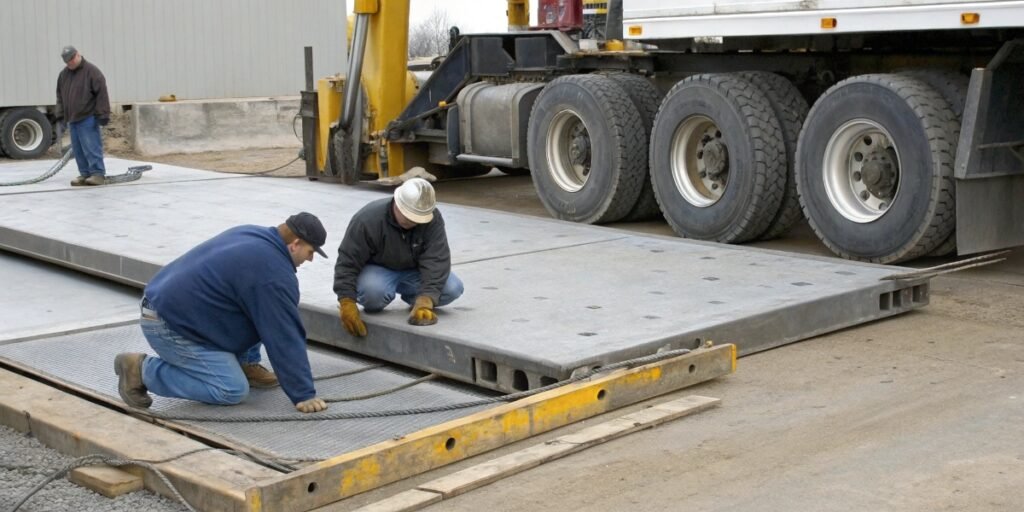
Installing a new truck scale feels like a huge project. A mistake can be very expensive and stop your work. But we can break it down into simple steps.
A successful truck scale installation involves preparing the site, building the foundation, assembling the scale, and finally, calibration. We help you choose the right foundation and deck material to build a precise and durable weighing system that fits your exact business needs.
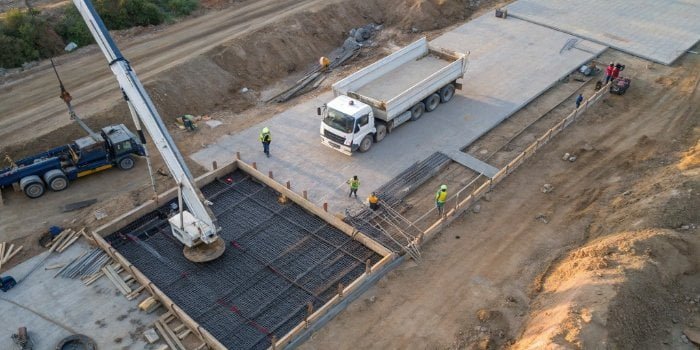
A good installation always starts with good planning. If you get the planning right, the rest of the work is much easier. In this guide, I will walk you through the most common questions my clients ask. Answering them will help you plan your own project much better and avoid costly mistakes down the road. Let's get started.
How long does it take to install a new truck scale, including foundation curing?
You need your new truck scale working fast. But unexpected delays can stop your whole business. Knowing the timeline helps you plan your work and logistics around the installation.
A typical truck scale installation takes about 4 to 6 weeks. Most of this time, around 28 days, is for the concrete foundation to cure. The actual scale assembly and setup only take 1 to 3 days after the foundation is ready.
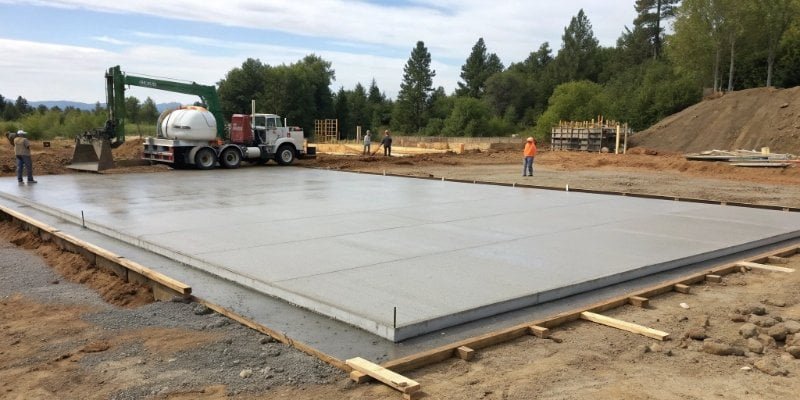
Many people are surprised by the total time. The key is to understand that the process has distinct phases, and the longest one requires patience. Rushing the process can lead to big problems later. From my 19 years of experience, I once saw a client rush the foundation curing1 to save a week. Two years later, the foundation cracked, which made their weight readings2 inaccurate and led to very expensive repairs. It's a lesson we always share: patience during the curing phase pays off for years.
Here is a typical breakdown of the installation timeline:
Phase 1: Planning and Site Preparation (1-2 weeks)
This is where the groundwork happens. It involves site surveys to check the soil, getting any necessary permits from local authorities, and excavating the area for the foundation. Good preparation here prevents surprises later.
Phase 2: Foundation Pouring and Curing (4 weeks)
Once the site is ready, we pour the concrete foundation. Then, the most critical waiting period begins. Concrete needs about 28 days to reach its full design strength. This strength is essential for supporting the scale and heavy trucks, ensuring accurate measurements for its entire lifespan.
Phase 3: Scale Installation and Calibration (1-3 days)
After the foundation is fully cured, our technical team comes in. This part moves quickly. We assemble the scale deck, install the sensitive load cells3, connect all the wiring to the indicator, and then perform the final calibration using certified test weights4.
| Phase | Typical Duration | Key Activities |
|---|---|---|
| Planning & Site Prep | 1-2 Weeks | Surveying, permits, excavation5 |
| Foundation Curing | 4 Weeks | Pouring concrete and allowing it to fully harden |
| Mechanical & Electrical Install | 1-3 Days | Scale assembly, wiring, calibration, testing |
| Total Estimated Time | ~6 Weeks | From start to fully operational |
What are the site requirements for installing a truck scale?
You might think you have the perfect spot for a scale. But the wrong site can cause drainage problems, foundation issues, and inaccurate weights. Let's check the critical site requirements first.
A good site must have stable, well-draining soil to support the scale and traffic. The area needs to be level, with at least 10 feet of straight, level road on each end for accurate weighing. You also need a reliable power source and shelter from bad weather.
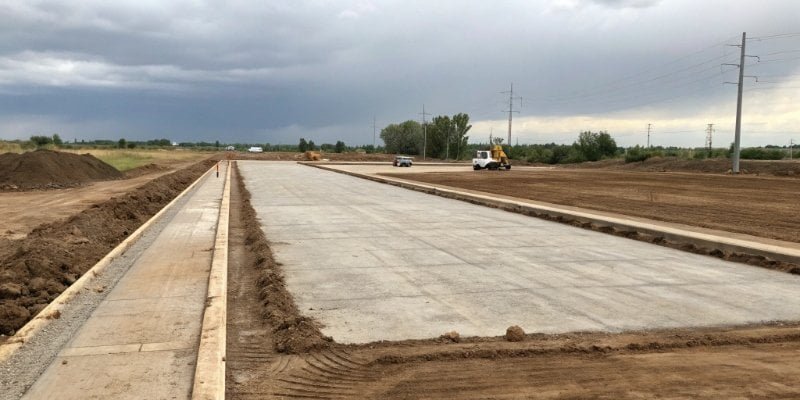
Choosing the right location is just as important as choosing the right scale. The performance and lifespan of your scale depend heavily on where you put it. We helped a client in a very rainy area design a custom drainage system for their pit scale. This simple step prevented the pit from flooding, which is a common problem that can ruin expensive electronics. Proper site preparation6 is your best insurance for your investment. Here are the key things we look for.
Solid Ground and Good Drainage
The ground must be firm enough to support the concrete foundation, the scale itself, and the weight of the heaviest trucks you expect. We often recommend a soil test to be sure. Also, water is the enemy of electronics. The site must have good drainage so that water flows away from the scale, protecting the load cells and foundation from damage.
Straight and Level Approaches
For an accurate weight, a truck must drive onto the scale straight and be completely level during weighing. That's why we require a straight and level approach of at least 10 feet (about 3 meters) on both the entry and exit sides of the scale. Any slope can shift the weight and give you an incorrect reading.
Power and Data Connections
Your scale's indicator and any accessories like printers or remote displays will need a stable power source7. If you are using a modern IoT scale that sends data to your software systems, you will also need to plan for a reliable internet or network connection.
Here's a simple checklist to help you evaluate your site:
| Requirement | Yes/No | Notes |
|---|---|---|
| Stable, Firm Soil | Consider a professional soil report. | |
| Good Drainage | Is the area prone to flooding or standing water? | |
| Level Surface | The foundation area must be flat. | |
| Straight Approaches | Min. 10 feet on each end. More is better. | |
| Access to Power | Is a reliable electrical source nearby? | |
| Weather Protection | Can you protect the scale from extreme conditions? |
What is the difference between a pit foundation and a slab foundation, and which one should I choose?
You have to decide: pit or slab foundation? Making the wrong choice can waste valuable space on your property or turn into a constant cleaning headache. Let's compare them so you can choose wisely.
A pit foundation sits flush with the ground, which saves space but needs a good drainage system and more cleaning. A slab foundation, or above-ground scale, is easier to clean and maintain but requires ramps and more total space.
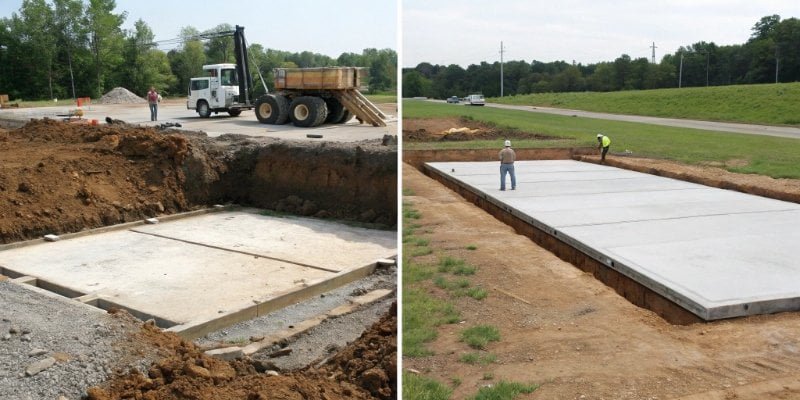
The foundation is the literal base of your entire weighing operation, so this choice is important. It really depends on your specific site conditions, how you use the scale, and your budget. As a manufacturer, we've installed thousands of both types. The right choice for one customer is often the wrong one for another. The key is to match the foundation type to your daily operations and environment.
Let's break down the pros and cons of each.
Pit Foundation
This style is great when space is limited. Because the scale is level with the ground, vehicles can easily drive over it even if they aren't being weighed. This is very useful in busy yards. However, the pit can collect water, dirt, and debris. This means you must have a good drainage plan and clean it regularly to protect the load cells and steel frame.
Slab (Above-Ground) Foundation
This is the most common type of installation. The scale sits on top of a concrete slab, and trucks use ramps to get on and off. This design keeps the scale components away from mud and water, making it much easier to clean and service. The main downside is that it takes up more space because of the ramps.
Here is a table to help you compare:
| Feature | Pit Foundation | Slab (Above-Ground) Foundation |
|---|---|---|
| Space Usage | Excellent. Saves space, vehicles can cross. | Poor. Requires more space for ramps. |
| Maintenance | Harder. Requires pit cleaning and drainage. | Easier. Open access for cleaning and service. |
| Drainage | Critical. Sump pump often needed. | Natural drainage, less of a concern. |
| Initial Cost | Can be higher due to complex concrete work. | Often lower and simpler to construct. |
| Best For | Busy sites with limited space, waste transfer stations. | New sites with ample space, agriculture, and most industrial applications. |
Is there a difference in long-term cost between a steel deck and a concrete deck scale?
Steel or concrete deck? The first price you see is only part of the story. A choice that seems cheaper now can lead to higher maintenance costs over time. Let's look at the total cost.
Yes, there is a big difference in long-term cost. Steel decks are cheaper and faster to install but may need repainting to prevent rust. Concrete decks cost more upfront and take longer to install but are more durable and resist rust, lowering maintenance costs over the years.
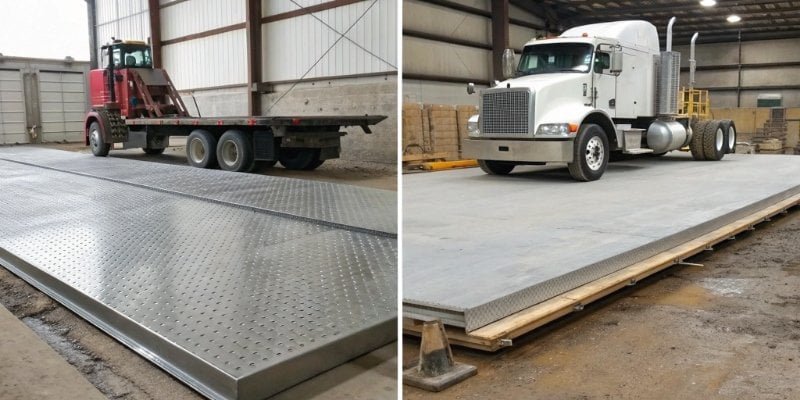
This is another decision that depends entirely on your situation—your environment, traffic volume8, and the types of materials you're weighing. For a client at a coastal shipping port, we strongly recommended a concrete deck9. The salty, humid air would have quickly rusted a steel deck10. But for another client who needed to move their gravel pit operation in a few years, a portable steel deck was the perfect, flexible solution. It's all about matching the product to your real-world needs.
Let's compare them on the factors that matter most for long-term value.
Steel Deck Scales
Steel deck scales are built in our factory and shipped to your site ready for installation. This makes installation very fast. They are also lighter, which can be an advantage if you ever need to move the scale. The main long-term cost is maintenance. In wet or corrosive environments, you will need to monitor the paint and address any rust to maintain the deck's strength.
Concrete Deck Scales
For a concrete deck scale, we ship the steel frame, and the concrete is poured on-site. The concrete adds a lot of mass, which provides great stability. More importantly, concrete does not rust. This makes it the best choice for industries that handle corrosive materials like salt or fertilizer, or for sites near the ocean. The initial cost is higher, but the maintenance costs over a 20-30 year lifespan are often much lower.
| Factor | Steel Deck | Concrete Deck |
|---|---|---|
| Initial Cost | Lower. | Higher. |
| Installation | Faster. Arrives ready to be placed. | Slower. Requires on-site concrete pouring/curing. |
| Maintenance | Higher. Requires repainting to prevent rust. | Lower. Naturally resists corrosion. |
| Lifespan | Good, but depends on maintenance and environment. | Excellent, very durable in harsh conditions. |
| Best Use Case | Moderate traffic, temporary sites, dry climates. | Heavy traffic, corrosive environments, permanent sites. |
Conclusion
A successful truck scale installation comes down to good planning. Consider your timeline, site, foundation, and deck material carefully. We can help you make the right choices for your business.
-
Understanding foundation curing timelines can help you plan your truck scale installation effectively. ↩
-
Discover tips for maintaining accurate weight readings to avoid costly errors. ↩
-
Gain insights into load cells to understand their role in accurate weight measurement. ↩
-
Learn about the importance of certified test weights in ensuring accurate scale calibration. ↩
-
Understand the excavation process to prepare your site effectively for truck scale installation. ↩
-
Learn about essential site preparation steps to avoid costly mistakes during truck scale installation. ↩
-
Find out what power requirements are necessary for optimal truck scale operation. ↩
-
Explore how traffic volume influences the type of truck scale you should choose. ↩
-
Learn why concrete deck scales may be the best choice for durability and maintenance. ↩
-
Explore the advantages and disadvantages of steel deck scales for informed decision-making. ↩



Comments (0)