
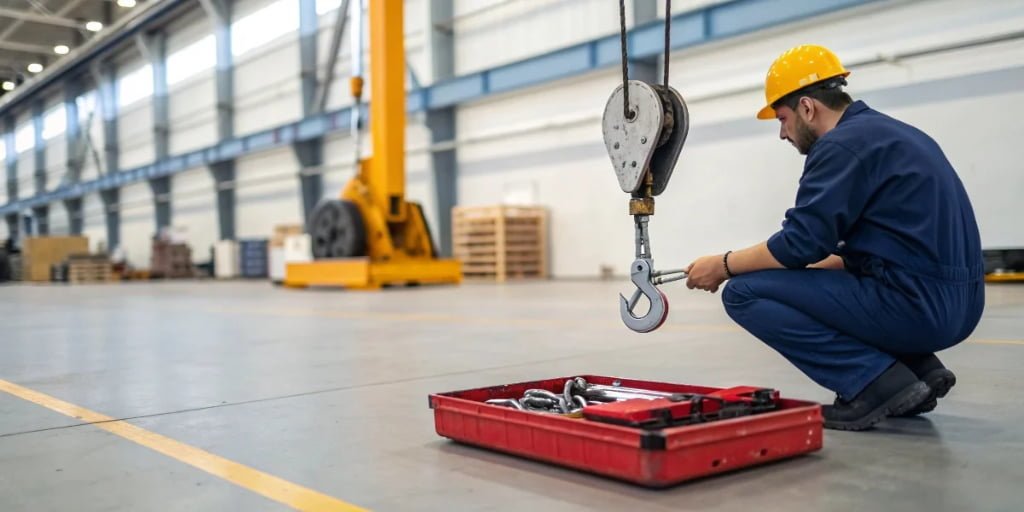
Worried about your crane scale's accuracy? An unnoticed issue can cause costly errors or even dangerous accidents. Regular maintenance is the simple solution to ensure safety and reliability.
To maintain your crane scale, regularly inspect for damage, keep it clean, check the battery, and store it properly. Crucially, schedule periodic professional calibration to guarantee both accuracy and operational safety.
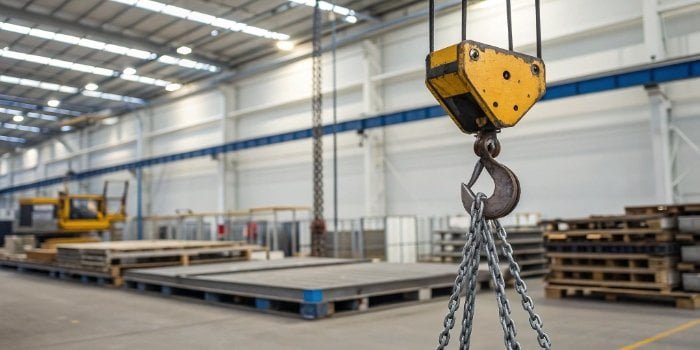
A well-maintained crane scale1 is a cornerstone of a safe and efficient workplace. Based on my 19 years of experience in manufacturing industrial scales2, I’ve seen firsthand how simple checks can prevent major disasters. It’s not just about the numbers; it’s about the people who rely on them. So, let’s explore the essential practices that will extend the life of your equipment and protect your team.
How do you maintain a weighing scale?
Unsure about your scale's daily upkeep? Neglecting basic maintenance can lead to inaccurate readings and costly errors. Follow a simple checklist to ensure consistent performance and longevity.
Maintaining a weighing scale requires a routine. Regularly clean the surface and components, inspect for any visible wear or damage, check power sources, and test its accuracy with known weights.
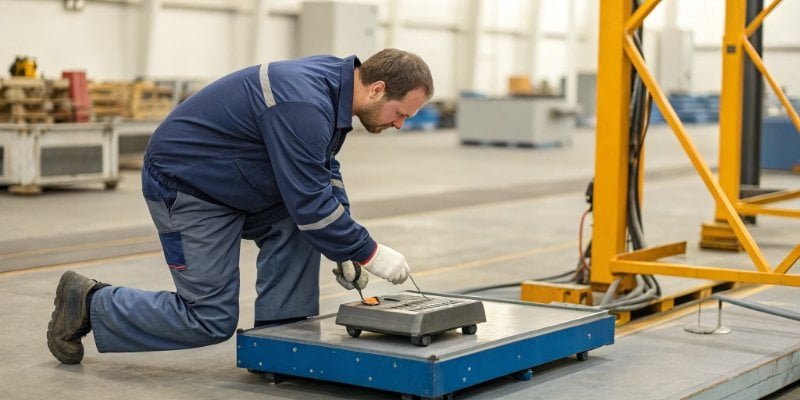
Proper maintenance is a proactive process, not a reactive one. It's about creating a schedule and sticking to it. In our factory, every scale we produce undergoes rigorous testing, but its long-term performance depends on the user's care. Think of it like a car; you wouldn't drive it for years without an oil change. Your scale needs the same attention. A consistent maintenance routine prevents small issues from becoming big, expensive problems. This discipline ensures your measurements remain reliable, which is critical for inventory, billing, and safety compliance. We build our scales to last, but partnership in maintenance is key.
A Simple Maintenance Checklist
Here is a basic schedule you can adapt for your crane scale. This simple routine is your first line of defense against failure.
| Frequency | Task | Purpose |
|---|---|---|
| Daily | Clean debris from scale surface and hook. | Prevents buildup and ensures accuracy3. |
| Daily | Visually inspect for cracks or damage. | Catches safety hazards early. |
| Weekly | Test with a known, smaller weight. | Verifies basic accuracy and function. |
| Monthly | Check battery charge and connections. | Ensures uninterrupted operation. |
| Annual | Schedule professional calibration4. | Guarantees legal and safety standards. |
What are the safety precautions for scales?
Using a crane scale involves serious risks. Overlooking safety rules can lead to catastrophic failures. Knowing and enforcing key precautions protects your team and your assets effectively.
Key safety precautions include never exceeding the scale's maximum capacity, ensuring the load is centered and secure, and regularly inspecting hooks for wear. Always clear the area below the lift.

Safety is non-negotiable when dealing with heavy loads. I've heard horror stories from the industry about accidents caused by simple negligence. A crane scale isn't just a measurement tool; it's a critical piece of lifting equipment. When it fails, the consequences are disastrous, potentially involving serious injury or worse. That's why we build our scales with robust safety features, but the ultimate responsibility lies with the operator. You must treat every lift with the utmost seriousness and follow strict safety protocols5. These rules aren't just suggestions; they are lifelines for everyone on the site.
Critical Safety Rules
Adhering to these rules is essential for preventing accidents.
- Know Your Limits: Always be aware of the scale's Working Load Limit (WLL)6 and never exceed it. Overloading is the single biggest cause of accidents.
- Inspect Before Use: Before every lift, check the hook, latch, and body of the scale for signs of cracks, stretching, or damage.
- Secure the Load: Ensure the load is balanced and securely attached to the hook. An unstable load can shift and fall.
- Clear the Area: Never allow personnel to stand or walk under a suspended load.
What Not to Do
Avoid these common but dangerous practices:
- Do not "shock load" the scale by dropping a load onto it suddenly.
- Do not use a scale that has been dropped or shows signs of damage.
- Do not modify the scale or its components in any way.
- Do not use the scale in extreme weather conditions unless it is rated for it.
How do you calibrate a crane scale?
Is your scale providing inaccurate readings? An uncalibrated scale can cause major financial and operational errors. Calibration restores its accuracy, but it must be done correctly by a professional.
Calibration involves adjusting the scale to match a known, certified weight standard. A certified technician uses traceable test weights to ensure the scale is accurate across its entire capacity range.
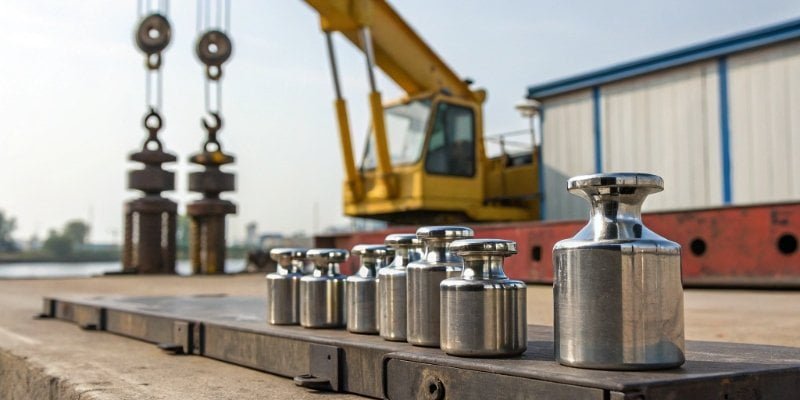
Calibration is the process of fine-tuning your scale to ensure it measures correctly. Think of it as resetting the scale back to its factory-perfect state. As a manufacturer, we calibrate every single unit before it leaves our facility. However, over time, factors like temperature changes, frequent use, and minor impacts can cause it to drift. This drift might seem small, but on a large scale, it can add up to significant product loss or incorrect billing. Regular calibration isn't just a good practice; in many industries, it's a legal requirement. It provides a traceable record that your measurements are accurate and reliable, which is essential for quality control and audits.
Understanding the Process
While a user can perform a quick check, true calibration is a professional task.
- Preparation: The scale is stabilized in its working environment.
- Zeroing: The scale is set to zero with no load attached.
- Span Calibration: A certified test weight, often close to the scale's capacity, is used to adjust the scale's internal measurement parameters.
- Linearity Test: Multiple test weights are used at different points (e.g., 25%, 50%, 75%, 100% of capacity) to ensure accuracy across the entire weighing range.
You should schedule professional calibration at least once a year, or more frequently if the scale is used heavily or in harsh conditions.
How accurate are crane scales?
Doubting the precision of your crane scale? In many jobs, "close enough" isn't good enough. Understanding its accuracy level is key to trusting your measurements and results.
The accuracy of a crane scale is typically around ±0.05% to ±0.1% of its full capacity. For a 10,000 kg scale, this means a precision of ±5 to ±10 kg.
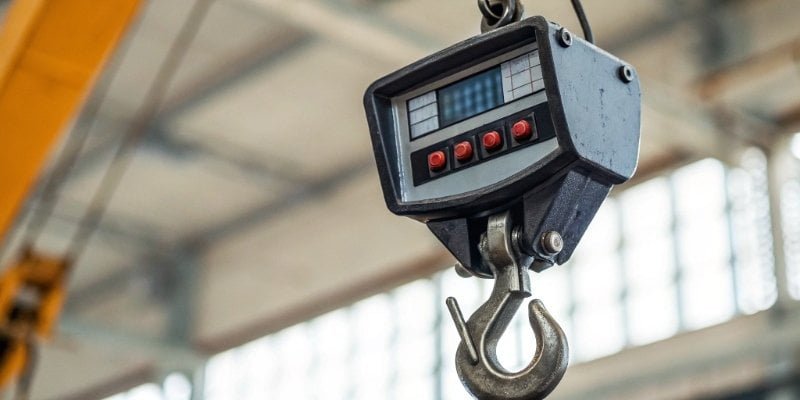
When our clients ask about accuracy, they are really asking, "Can I trust the number I see on the display?" The answer is a resounding yes, provided the scale is used correctly. We design our scales for high precision, because we know our customers in sectors like logistics, manufacturing, and metallurgy depend on it. A high-quality crane scale is a precision instrument. Its accuracy is defined by industry standards, such as OIML Class III. This means the scale has passed rigorous tests for repeatability and sensitivity to ensure its readings are consistently reliable within a very small margin of error.
Accuracy in Real Numbers
Let's see what accuracy looks like for a typical industrial crane scale with a ±0.1% accuracy rating.
| Scale Capacity | Typical Error Margin |
|---|---|
| 1,000 kg | ±1 kg |
| 5,000 kg | ±5 kg |
| 10,000 kg | ±10 kg |
| 20,000 kg | ±20 kg |
Factors That Can Influence Accuracy
Even the most accurate scale can give wrong readings if not handled properly.
- Temperature: Extreme heat or cold can affect electronic components.
- Improper Loading: Side-loading or shock-loading can introduce errors.
- Low Battery: A weak power source can lead to unstable readings.
- Calibration Drift: All scales drift over time and need recalibration.
Conclusion
Consistent maintenance, strict safety adherence, and regular professional calibration are essential. They ensure your crane scale remains a reliable, accurate, and safe tool for your business operations.
-
Explore expert tips on maintaining crane scales to ensure accuracy and safety in your operations. ↩
-
Find expert advice on maintaining industrial scales for optimal performance. ↩
-
Learn how to maintain and verify the accuracy of your crane scale for reliable measurements. ↩
-
Discover why professional calibration is crucial for maintaining scale accuracy and compliance. ↩
-
Learn about critical safety protocols to follow when operating cranes and scales. ↩
-
Learn about the importance of WLL in ensuring safe lifting operations with crane scales. ↩



Comments (0)