
You need to weigh an item, but there's no scale in sight. Inaccurate measurements can compromise your project, leaving you to guess. Here are some clever methods for emergencies.
The easiest way to measure 4 kg without a scale is by using items of a known weight for comparison. For example, a standard 1-liter bottle of water weighs exactly 1 kilogram. Therefore, four of these bottles will equal 4 kg. Other methods include DIY balances and volume estimations.

These tricks are useful in a pinch, and as a weighing expert, I appreciate the ingenuity. But how reliable are they for different needs, and what are the hidden risks? Let's explore these methods, from simple comparisons to using your smartphone, and see where they fall short for professional use.
How Can You Measure Kilograms Without a Scale?
You're stuck without a professional scale when you really need one. Your project’s accuracy is at stake, and you're relying on pure guesswork. You can actually use everyday objects and basic physics.
To measure kilograms without a professional scale, you can use comparison or make a simple tool. Use items with known weights, like a 1kg bag of sugar or a 1-liter bottle of water, as a reference. You can also build a simple lever balance to compare unknown weights.
In my 18 years in the industrial weighing1 industry, I’ve seen some truly creative workarounds. It's fascinating how basic physics can provide a rough answer when you're in a bind. Let's break down the most common methods I’ve encountered.
The Comparison Method
The most straightforward technique is to use pre-packaged goods with clearly marked weights. A 1 kg bag of sugar or flour from the supermarket is a great standard. The most reliable reference, however, is water. Because of its density, 1 liter of water weighs almost exactly 1 kilogram. If you need to measure 4 kg, you just need four 1-liter bottles of water. This method is best for heavier items where a small percentage of error is less critical.
The DIY Balance Method
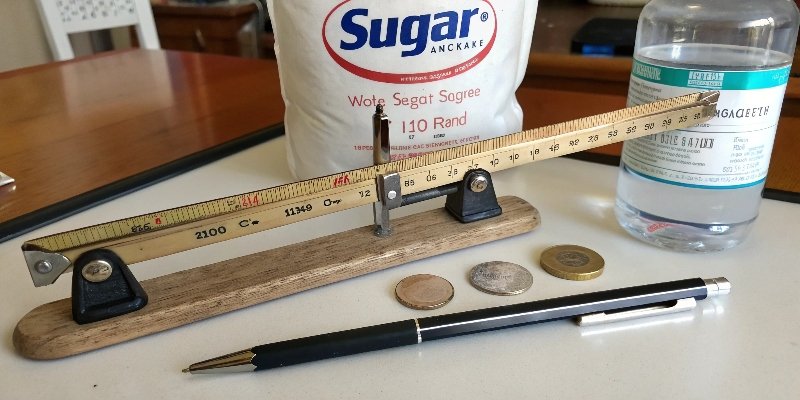
For smaller items, you can create a simple balance. All you need is a rigid ruler, a pen to act as a fulcrum, and some items with a known small weight. Coins are perfect for this. For instance, a common 1-yuan coin weighs about 6 grams. By placing your item on one end of the ruler and adding coins to the other until it balances, you can calculate the weight. This DIY scale is surprisingly effective for demonstrating the principle of leverage, but its accuracy depends heavily on how well you center the fulcrum.
| Method | Principle | Best For | Estimated Accuracy |
|---|---|---|---|
| Comparison | Direct A-B contrast | Larger weights (e.g., comparing to a 1kg bag) | Low to Medium |
| DIY Balance | Lever and fulcrum | Smaller weights, relative measurements | Medium |
| Volume Estimation | Density x Volume | Known, uniform substances (liquids, powders) | Varies Greatly |
These techniques are fine for home use, but they are not suitable for business. In commercial applications, profit and quality depend on precision. Inaccurate data input can disrupt an entire supply chain, which is why professional, calibrated equipment is essential.
Can You Really Use Your Phone as a Scale?
You hear that apps can turn your phone into a scale. But is it a cool tech trick or a gimmick that could damage your expensive device? Let's uncover the truth about how it works.
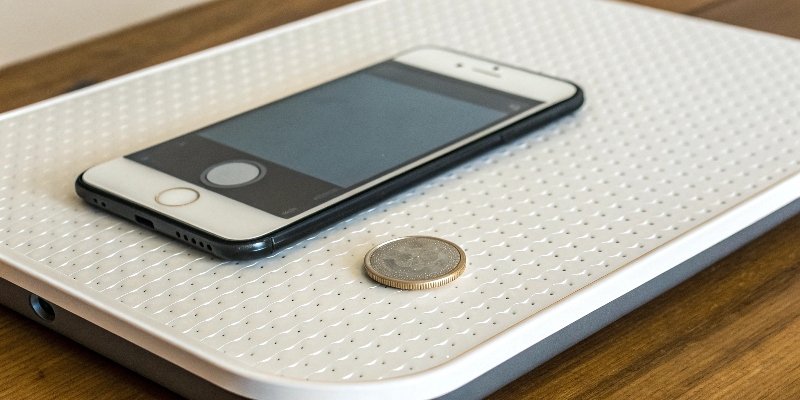
Yes, some phones can function as a simple scale for very light objects. Models with pressure-sensitive screens, like iPhones with 3D Touch, use specific apps to estimate weight. However, the range is typically limited to 10-200 grams and they require careful calibration to be remotely accurate.
As someone who designs IoT weighing systems2, I find the concept of using existing phone sensors quite clever. It’s a great example of repurposing technology. However, it's important to understand the significant limitations before you even consider it for a serious task.
How Does It Work?
A phone scale app doesn't work like a real scale. It uses the screen's built-in pressure sensors—the same technology behind Apple's 3D Touch or Force Touch on some Android devices. These sensors can detect how much force is applied to a specific area of the screen. The app then takes this pressure reading and converts it into an estimated weight. It’s an indirect measurement, and its accuracy is affected by many factors, including the object's shape and where you place it on the screen.
The Major Limitations
This is where the idea breaks down for any professional. For a software provider whose systems rely on accurate data, a phone scale is a liability.
- Accuracy: An error of ±5% is common. In our industry, we produce scales with an accuracy of 0.01% or better. Imagine an inventory system where every item's weight could be off by 5%. The cumulative error would make your data useless.
- Range: The typical 10-200 gram range is too small for most commercial or industrial parts.
- Durability: Smartphone screens are made of glass, not reinforced steel. They are not designed to bear weight. You could easily damage a $1,000 phone trying to avoid buying a $50 purpose-built scale.
- Calibration: You must calibrate the app before each use with a known weight. Our industrial scales are professionally calibrated and certified to maintain accuracy over thousands of uses.
In short, using your phone as a scale is a fun novelty. It's a toy, not a tool for business.
What Are Some Practical Ways to Estimate Weight?
Sometimes you just need a rough estimate, not high precision. But simply "eyeballing it" can be wildly inconsistent and lead to big mistakes. You can train your brain with some simple estimation tricks.
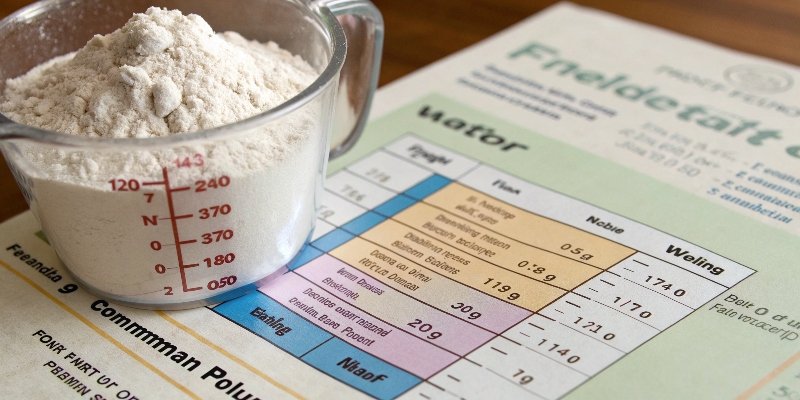
You can estimate weight by relating it to the volume of common substances. For water, one milliliter is equal to one gram. For other materials like flour or sand, you can find their density online and use a measuring cup to calculate the approximate weight (Weight = Volume × Density).
In my line of work, we sometimes need a quick "sanity check" before setting up precise equipment. Developing an intuitive feel for weight is a useful skill that I encourage my teams to develop. It helps you spot obvious errors later on.
Using Volume and Density
This method brings a bit of science into estimation. If you know a material's density, you can calculate its weight from its volume. This is especially useful for liquids and powders. For example, if you have a software system that tracks plastic pellets, knowing their density allows you to use volume for a very rough inventory check. However, remember that the density of powders can change based on how tightly they are packed.
| Substance | Density (g/cm³ or g/ml) | Weight of 1 Cup (~237ml) |
|---|---|---|
| Water | 1.0 | ~237g |
| Flour (All-Purpose) | ~0.52 | ~123g |
| Granulated Sugar | ~0.85 | ~201g |
| Cooking Oil | ~0.92 | ~218g |
Reference Objects in Your Pocket
This trick can be a lifesaver for field technicians. Many common coins have a standardized weight. A U.S. quarter weighs 5.67g, and a one-euro coin is 7.5g. I've personally used coins to do a quick check on a small component's weight when I didn't have a pocket scale. It’s not for official records, of course. It's for a quick, on-the-spot confirmation. It is all about building an intuitive sense of weight that makes you better at your job.
How Can You Visualize 100 Grams Without a Scale?
You need to measure exactly 100g for a specific formula or sample. Without a scale, you're stuck guessing, which could ruin the entire batch. You can use these common items that weigh almost exactly 100g.
To get 100 grams, use common reference items. Two large eggs weigh approximately 100 grams combined. A standard deck of 52 playing cards is also very close to this weight. Easiest of all, 100ml of water weighs exactly 100 grams, measurable with a kitchen cup.
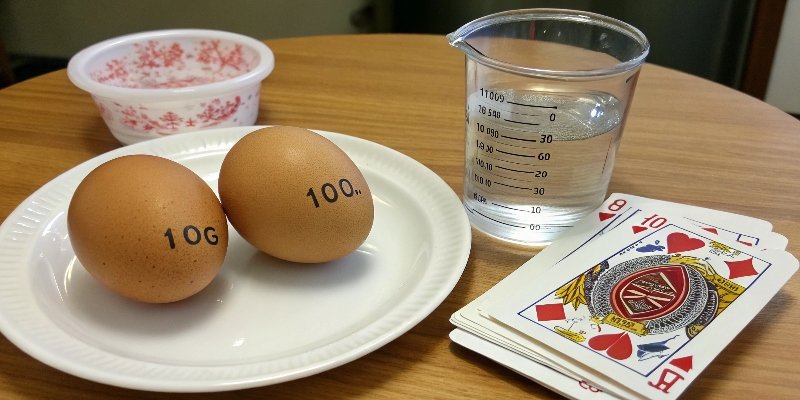
Breaking down a specific weight like 100g is a great practical exercise. It helps calibrate your hands and eyes, which is useful in any industry dealing with physical goods. Let's look at some reliable references for this common sample weight.
Household and Office References
You can find items that weigh close to 100 grams almost anywhere.
- In the Kitchen: Two large-sized eggs are a great reference, as each one is about 50g. A U.S. stick of butter is 113g, so slightly less than a full stick is 100g. And again, the most accurate is 100ml of water.
- In the Office: A standard 52-card deck of playing cards without the box is remarkably close to 100g. If you have U.S. currency, about 17 quarters will get you there. These items are consistent and easy to find.
Why This Matters for Software Integration
Let’s connect this back to your world as a software provider. Imagine your software manages a parts-kitting process. A worker needs to create a kit containing 100g of small, critical screws. If they "estimate" this weight using eggs or playing cards, one kit might have 90g and the next 110g. Over thousands of kits, that 10-20% variance creates huge inventory issues3 and quality control failures. Your software is only as good as the data it receives. This is precisely why our IoT-enabled scales are so valuable. They feed exact, reliable weight data directly into your systems, eliminating human error and providing the ground truth your software needs to perform flawlessly.
Conclusion
These estimation tricks are clever and useful for non-critical tasks. But for professional applications, precision is everything. For reliable data and quality control, nothing replaces a properly calibrated industrial scale.


Comments (0)